Time Traveler's Guide to Mauryan Pataliputra, 250 BC
Your survival guide to Mauryan Pataliputra in 250 BC - eat incredible food, dodge war elephants, and visit the Buddhist capital that made medieval Europe look primitive.
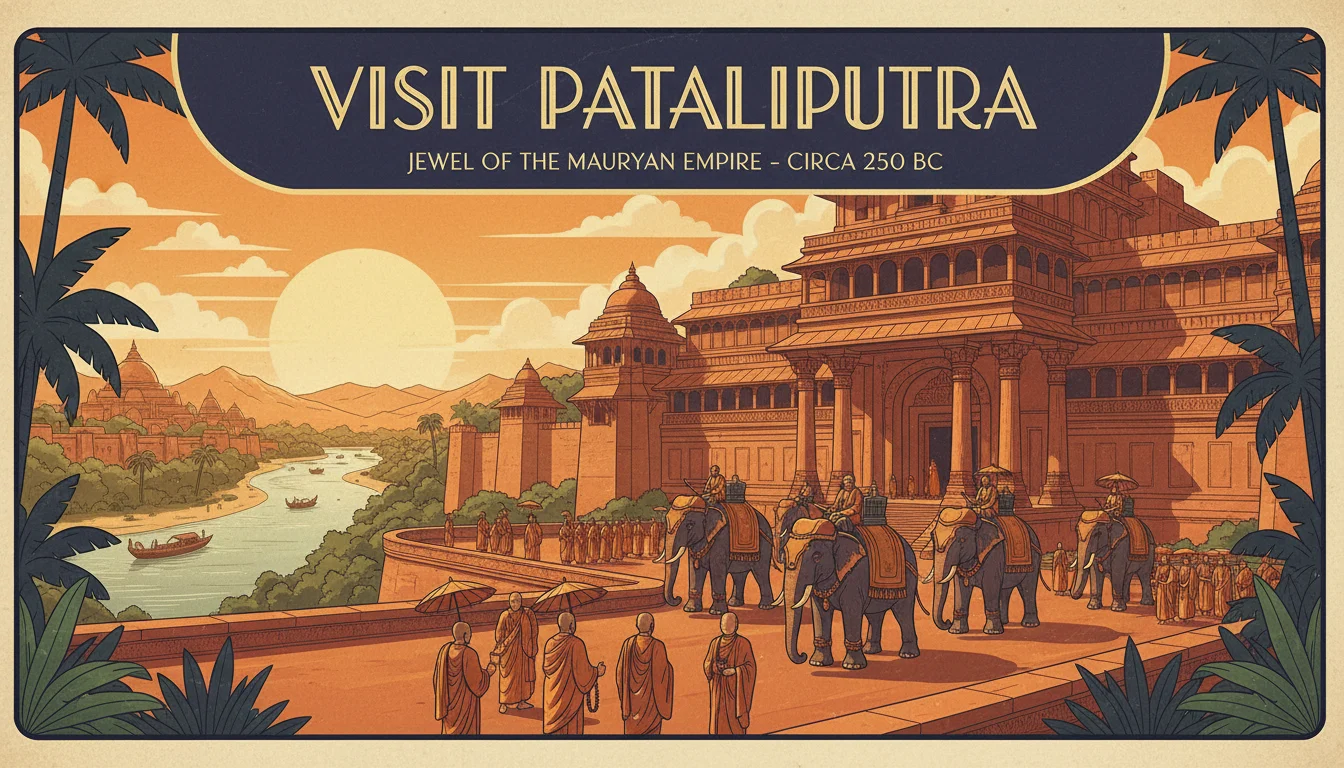
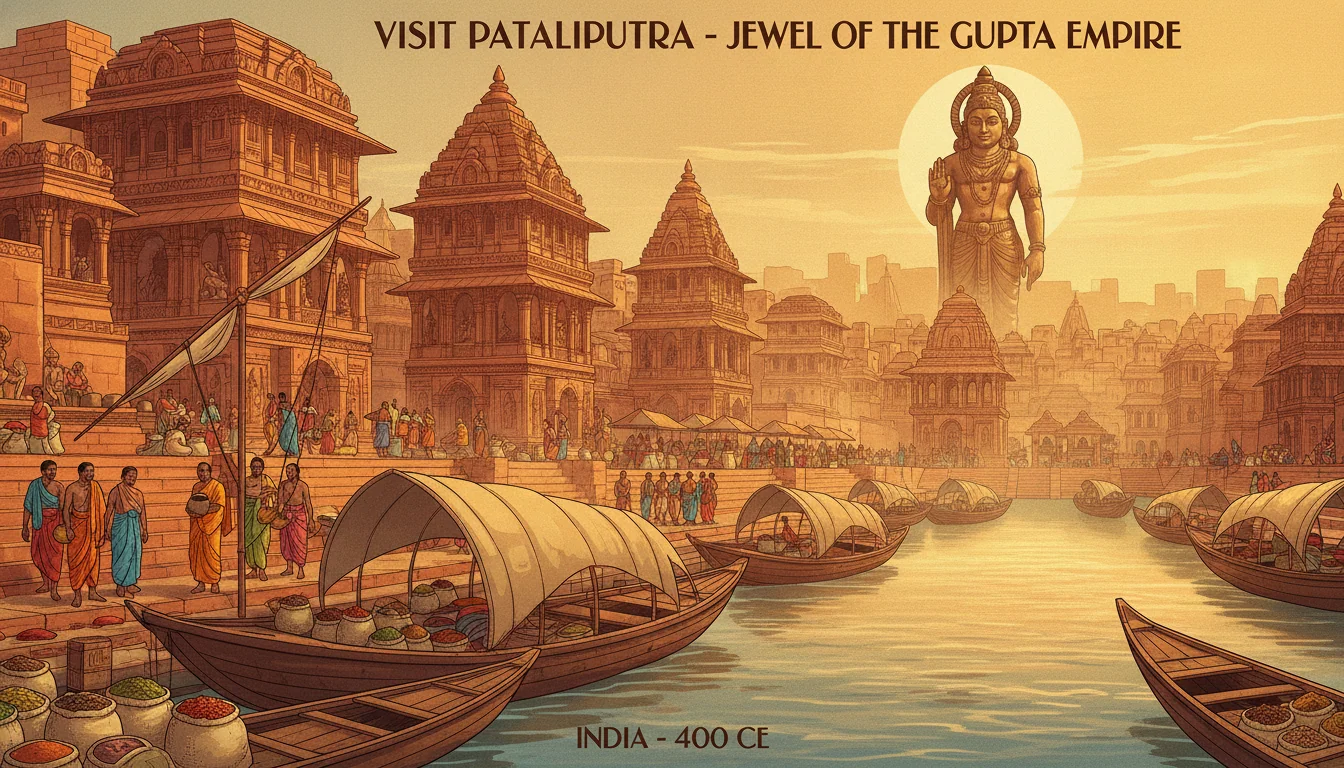
Welcome, temporal tourist, to Mauryan Pataliputra (modern Patna) in 250 BC, during the golden age of Emperor Ashoka's Mauryan Empire. You've arrived at one of the largest and most sophisticated cities in the ancient world - a sprawling capital of perhaps 400,000 souls, where Buddhist monks walk alongside war elephants and Greek ambassadors.
Congratulations: you've picked the one brief window in Indian history when the emperor has renounced violence, embraced Buddhism, and stopped executing people for fun. Timing is everything.
What to Wear
Men: Wear an unstitched cotton dhoti (draped loincloth) with an uttariya (shawl) over your shoulder. White or undyed natural cotton is universal. If you're wealthy, spring for fine muslin from Bengal. If you're poor, coarser cotton. Sandals are optional; most people go barefoot. Jewelry is for the elite: gold armlets, necklaces, earrings.
Women: Wear a draped sari (yes, they existed, though not quite like today's version) - a long cloth wrapped around the body, with one end over the shoulder. Colorful dyes (madder red, indigo blue, turmeric yellow) are expensive but impressive. Married women wear kohl around their eyes, henna on their hands, and toe rings. Nose rings are common. Wealthy women drip with gold jewelry.
Don't: Show up in black (color of bad omens) or stitched clothing (foreign barbarian fashion). Don't wear leather around Buddhists or Jains (they'll be horrified). Don't forget your parasol - it's both sun protection and status symbol.
What to Eat
Pataliputra sits on the fertile Gangetic plain, so you're eating well.
Street food (cheap):
- Puffed rice (murmura) - the original breakfast snack
- Vegetable curry with lentils (dal) - served on banana leaves
- Flatbreads - barley, millet, or wheat roti, hot off the griddle
- Sugarcane juice - freshly pressed, sickeningly sweet
- Yogurt drinks (lassi) - cooling and probiotic
Wealthy dining:
- Rice pilaf (pulao) with ghee, saffron, and cardamom
- Roasted meats - chicken, goat, fish (but NOT beef - cows are sacred, and NOT pork - considered unclean by many)
- Sweets made from milk, sugar, and nuts
- Wine (imported from Gandhara or Persia)
Spices: India invented the flavor game. Expect black pepper, cumin, coriander, turmeric, ginger, and fenugreek. Your taste buds will never be the same.
Don't: Eat beef (seriously, don't). Don't eat with your left hand (that's for... other purposes). Don't refuse food offered by a host. If you're invited to a brahmin's home, watch for ritual purity rules - wash your hands, take off your shoes, sit where you're told.
Where to Stay
Budget: Find a dharmasala (rest house for travelers and pilgrims) near one of the city's many Buddhist monasteries (viharas). Free accommodation, simple vegetarian meals, and you'll wake up to chanting monks. The catch? You're expected to meditate and behave yourself.
Mid-range: Rent a room in a merchant's compound. Pataliputra is a commercial powerhouse, and traders from Persia, Greece, and Southeast Asia need lodging. You'll get a private room, courtyard access, and decent food. Pay in silver panas (the Mauryan punch-marked coins).
Luxury: If you've got serious cash (or can fake being a foreign diplomat), talk your way into the royal palace complex. The Mauryan palace is one of the wonders of the ancient world - a sprawling wooden structure supported by 80 sandstone pillars, surrounded by gardens, fishponds, and parkland. Greek historian Megasthenes called it superior to the palaces of Persia. (It will burn down later, but for now, it's glorious.)
Must-See Attractions
The Royal Palace: Even if you can't stay there, tour it. The throne room is mind-blowing. The timber pillars are polished to a mirror shine. The gardens feature exotic animals and plants from across the empire.
Ashoka's Pillars: The emperor is erecting massive stone pillars (up to 50 feet tall) inscribed with his edicts. They're topped with animal capitals (lion, bull, elephant) and polished until they gleam. Find one, read the inscription (in Brahmi script or Greek), and ponder a king who publicly regrets his own conquests.
Buddhist Monasteries: Pataliputra is Buddhism's intellectual capital. Visit the great monasteries, attend debates, listen to sermons. Even if you're not Buddhist, the architecture and atmosphere are worth the trip.
The Ganges River: Walk to the riverside at dawn. Watch pilgrims bathe, fishermen cast nets, and boats loaded with goods heading downstream to the Bay of Bengal. The river is sacred, polluted, and essential to everything.
The Great Assembly Hall: If you're here during a royal audience, witness Ashoka hold court. He's accessible (for an emperor), listens to complaints, dispenses justice, and grants pardons. Post-Buddhist Ashoka is shockingly restrained compared to most ancient kings.
Cultural Customs
Caste matters: India's varna system (brahmins, kshatriyas, vaishyas, shudras) is entrenched. Don't argue with it; you can't fix it in a weekend. If you're light-skinned, people may assume you're brahmin or kshatriya. If you're dark-skinned, you'll face bias. Unfair? Absolutely. Changeable by a time traveler? No.
Buddhism is ascendant: Ashoka's conversion means Buddhism gets royal patronage, but Hinduism (or what will become Hinduism) is still the majority faith. Jainism is also popular. Respect all three. Don't mock anyone's gods. Indians take religion seriously.
Language: The official court language is Sanskrit (for ritual and administration), but on the street you'll hear Magadhi Prakrit (a vernacular language). If you don't speak either, gesture wildly and smile. Greek and Persian traders manage; so can you.
Greetings: Fold your hands in front of your chest (anjali mudra) and bow slightly. Say "Namaste" (I bow to the divine in you). It works for everyone from beggars to kings.
Gender rules: Women have more freedom here than in many ancient societies (some queens wield political power, courtesans are educated and influential), but public life is still male-dominated. Female travelers should dress modestly, avoid traveling alone at night, and expect curious stares.
Dangers
War elephants: Pataliputra's army fields thousands of war elephants. They're usually docile (when well-fed), but don't startle them, don't stand behind them, and don't walk under them. An elephant can crush you without noticing.
Disease: Monsoon season (June-September) brings cholera, dysentery, and malaria. Drink only boiled water (or wine). Avoid street food during the rains. If you get sick, find an Ayurvedic physician - they know herbal medicine, surgery, and hygiene practices that won't be rediscovered in Europe for 1500 years.
Thieves: Any big city has crime. Don't flash wealth. Travel in groups. The Mauryan police (dandapala) are efficient, but punishments are brutal (fines, mutilation, or impalement, depending on the crime).
Flooding: Pataliputra sits at the confluence of the Ganges and Son rivers. Monsoon floods are a regular hazard. If the water starts rising, head to higher ground (the palace district or the city walls). Locals know the drill.
Religious offense: Accidentally insulting someone's religion can get you mobbed. Don't touch sacred objects without permission. Don't interrupt rituals. Don't mock ascetics (even the naked Jain ones). When in doubt, bow respectfully and back away.
Language Cheat Sheet
- Namaste - Hello/goodbye (formal)
- Dhanyavaad - Thank you
- Kshama - Sorry
- Pani - Water
- Bhojana - Food
- Kitna? - How much? (for haggling in the market)
- Maha-raja - Great king (how to address Ashoka, though you probably won't meet him)
What to Bring Back
Legal souvenirs:
- Mauryan punch-marked silver coins (they're currency here, antiquities in your timeline)
- Silk from China (traded along the Silk Road)
- Muslin cloth from Bengal (so fine it was called "woven wind")
- Spices (black pepper, cardamom, cinnamon)
- Buddhist texts on birch bark or palm leaf
- Small stone carvings or terracotta figurines
Illegal/impossible:
- Ashoka's pillar inscriptions (they're 20 tons of carved sandstone - good luck)
- War elephants (too big for the time machine)
- Chanakya's original Arthashastra manuscript (if you can find it, historians will worship you)
Final Tips
-
Visit during the dry season (October-March). Monsoons make travel miserable and disease rampant.
-
Learn a few Sanskrit phrases. You'll earn respect and better prices in the market.
-
Attend a Buddhist sermon at a monastery. Even if you don't understand Pali or Prakrit, the atmosphere is meditative and profound.
-
Watch the sunrise over the Ganges. It's one of the most beautiful sights in the ancient world.
-
Try the sweets. India invented dessert. Don't leave without sampling milk-based sweets like kheer (rice pudding) or peda (milk fudge).
-
Respect the elephants. Seriously. They're massive, intelligent, and occasionally grumpy. Give them space.
-
Don't discuss politics. The Mauryan secret service (gupta-spasa) is legendary for its network of spies. Complaining about the emperor can get you arrested. Ashoka is enlightened, but his police state is not.
Why Visit?
Because you'll witness a unique moment: the largest empire in Indian history ruled by a warrior-king who chose peace, a cosmopolitan capital where Greek philosophers debate Buddhist monks, and a civilization that excelled in everything from urban planning to advanced surgery. Pataliputra in 250 BC is India at its intellectual, economic, and architectural zenith.
Plus, the food is incredible.
Welcome to Pataliputra. Bow to the elephants. Don't drink the river water. Enjoy the enlightenment.
For other South and Southeast Asian capitals across the centuries, our guide to Mughal Delhi, 1650 shows the subcontinent at another imperial peak, and Vijayanagara Hampi, 1500 takes you to the Hindu empire that flourished between the Mauryan and Mughal eras.

Need Advice from Someone Who Lived There?
Get firsthand accounts from people who actually lived through these moments in history.
Ask Them YourselfJoin the HistorIQly Club
Get smarter about the past.
Weekly stories, deep dives, and exclusive content straight to your inbox.