Time Traveler's Guide to Ptolemaic Alexandria, 250 BC
Your survival guide to Ptolemaic Alexandria in 250 BC - the greatest city of the ancient world, from the Lighthouse of Pharos to the legendary Library.
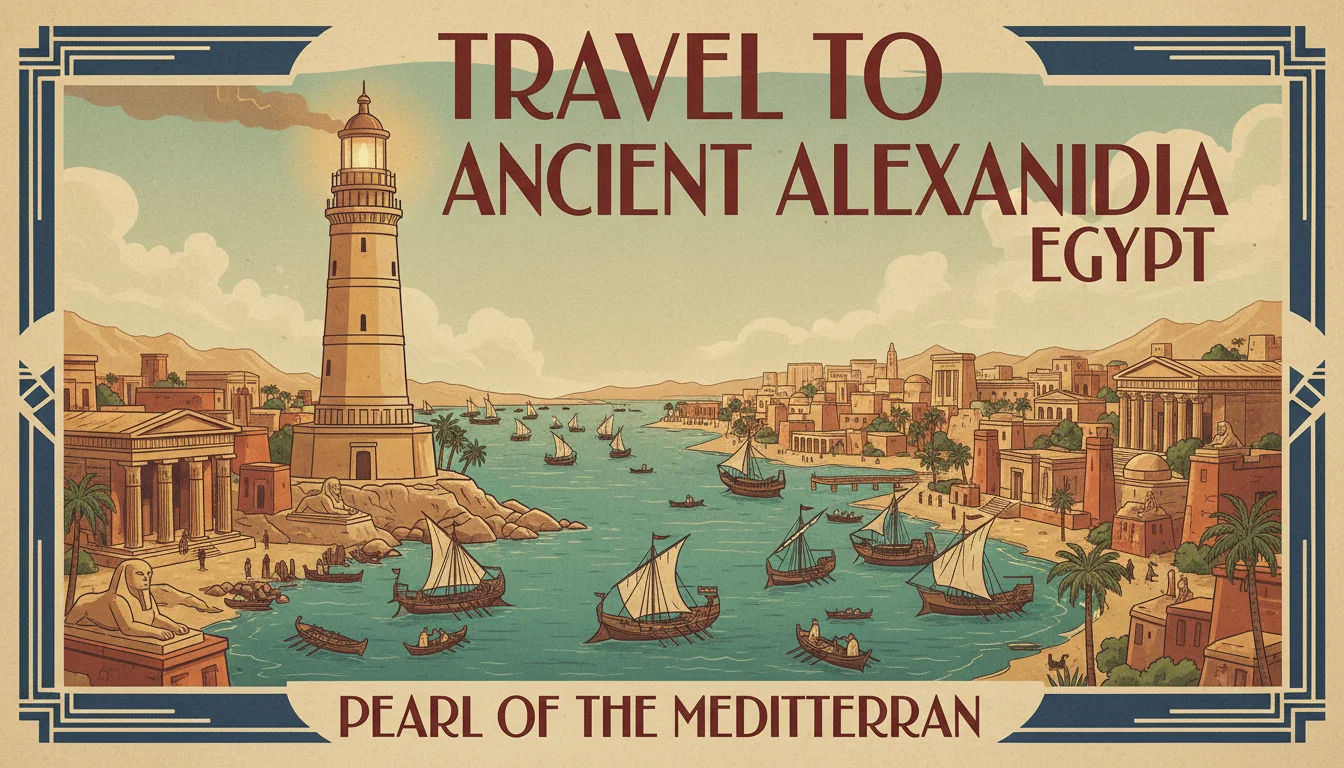
So you've set your time machine coordinates to Alexandria, Egypt, 250 BC. Excellent choice. You're about to step into the most cosmopolitan, intellectually electric city the ancient world has ever seen. Founded by Alexander the Great himself just 81 years earlier, Ptolemaic Alexandria has already become the crossroads of Greek, Egyptian, Jewish, and Persian culture, all packed into a gleaming Mediterranean metropolis that makes every other city look like a farming village.
But before you go strutting around like you own the place, let's make sure you don't get sold into slavery or accidentally insult a pharaoh. Here's your survival guide.
What to Wear
First things first: ditch the jeans. Alexandria is a Greek city on Egyptian soil, and your wardrobe needs to reflect that hybrid identity. For men, the standard outfit is a chiton, a rectangular piece of linen draped over one shoulder and belted at the waist. If you want to look like you have money (and trust me, you do), throw a himation over it, which is basically a large cloak draped artfully around your body. Think "philosopher at a dinner party."
Women should wear a longer chiton reaching the ankles, often with a second layer called a peplos. The color matters. Undyed linen in natural off-white is the safe default. If you show up in Tyrian purple, people will assume you're royalty or dangerously wealthy, and either assumption invites trouble.
Footwear? Simple leather sandals. Go barefoot only if you enjoy stepping on things best left unmentioned in Alexandria's busier streets.
One critical detail: linen is king here, not wool. Egypt's heat will punish you for wearing anything heavy. The locals have been perfecting linen production for thousands of years, and for good reason. Buy some as soon as you arrive.
What to Eat (and What to Avoid)
Alexandria's food scene is a beautiful collision of Greek and Egyptian traditions. Bread is the foundation of every meal, and the local Egyptian bread, baked from emmer wheat, is dense, filling, and surprisingly good. You'll find bakeries on nearly every block.
For protein, fish is everywhere. The city sits on the Mediterranean, and the nearby Lake Mareotis supplies freshwater fish too. Try the grilled mullet from the harbor vendors. Pair it with lentil soup, a staple that Egyptians have been making for centuries and that Greeks have enthusiastically adopted.
Cheese, olives, figs, and dates round out most meals. If you're invited to a symposion (a Greek drinking party), expect wine diluted with water, because drinking wine straight is considered barbaric. The local wine from the Mareotic region is actually famous throughout the Mediterranean, so don't turn up your nose at it.
Avoid drinking unboiled water from the canals. The city has a sophisticated underground cistern system fed by the Nile via canals, but the water quality varies. Stick to wine or boiled water, and you'll keep your intestines intact.
Also, be warned: street food vendors near the docks are not above selling you mystery meat of questionable origin. If you can't identify the animal, walk away.
Customs and Social Rules
Alexandria in 250 BC is ruled by Ptolemy II Philadelphus, a pharaoh of Greek Macedonian origin who has turned the city into the intellectual capital of the world. He's the guy who expanded the Great Library and built the famous Lighthouse. He also married his own sister, Arsinoe II, which the Greeks found shocking but the Egyptians considered perfectly normal. Don't bring it up at dinner parties. Just nod and move on.
The city operates in Greek, which is the language of government, commerce, and culture. If you speak some ancient Greek, you'll be fine. Egyptian (Demotic) is spoken by the native population, and you'll hear Hebrew, Aramaic, and Persian in the merchant quarters. It's genuinely multilingual.
Social hierarchy matters. Greeks sit at the top, followed by Hellenized Egyptians, then native Egyptians, then everyone else. This isn't fair, but it's reality. As a stranger, people will try to figure out your status immediately. Speaking Greek well and wearing decent clothes will place you in a comfortable social zone.
Religious life is a fascinating blend. The Ptolemies invented Serapis, a god specifically designed to unite Greek and Egyptian worshippers, combining elements of Osiris, Apis, Zeus, and Hades. The Serapeum temple is massive and worth visiting. Just remember to remove your sandals before entering any Egyptian temple, and bring a small offering, even just a handful of grain.
The Biggest Dangers
Let's be honest about what can kill you here.
Disease is your number one enemy. Alexandria is hot, crowded, and sanitation is, let's say, aspirational. Gastrointestinal infections are common. Malaria exists in the Nile Delta region. Bring any modern medicine you can smuggle through your time portal.
Crime in the harbor district is real. Alexandria's port is one of the busiest in the Mediterranean, and where there are sailors, there are thieves, con artists, and worse. Don't flash wealth near the docks after dark.
Political intrigue can also be lethal if you get too close to the royal court. The Ptolemaic dynasty is famous for its internal family murders. Cousins poisoning cousins, siblings overthrowing siblings. It's like a soap opera with actual consequences. Stay clear of palace politics entirely.
And then there's the sun. This is North Africa in the 3rd century BC with zero sunscreen. The locals have adapted over generations. You haven't. Cover your head, stay in the shade during midday, and drink constantly.
Must-See Experiences
For other ancient capitals that defined their civilizations, see the guide to Babylon in 1750 BC or ancient Rome in 44 BC.
The Great Library of Alexandria. This is the main event. The Library and its associated research center, the Mouseion (literally "Temple of the Muses"), house hundreds of thousands of scrolls from every civilization in the known world. Scholars live and work here on royal stipends, including some of the greatest minds in history. Eratosthenes, who will calculate the Earth's circumference with stunning accuracy, is either already here or about to arrive. Euclid may still be around. The atmosphere is like a cross between Oxford, Silicon Valley, and a monastery. You might be able to talk your way in if you present yourself as a traveling scholar.
The Pharos Lighthouse. Standing roughly 100 meters tall on the island of Pharos, connected to the mainland by a long causeway called the Heptastadion, this is one of the Seven Wonders of the Ancient World for a reason. Its fire and mirror system is visible for miles out to sea. Try to visit at dusk when the flame is lit. It's genuinely awe-inspiring.
The Royal Quarter (Broucheion). This is the palatial district where the Ptolemaic royals live. You can't just waltz in, but the surrounding area features beautiful gardens, colonnaded streets, and the tomb of Alexander the Great himself, housed in a spectacular mausoleum. Yes, you can actually go see Alexander's preserved body. It's a major tourist attraction even now.
The Agora and Canopic Street. The main thoroughfare of Alexandria runs east-west and is lined with columns, shops, and public buildings. It's reportedly 30 meters wide. Walking down it during market hours is an experience in organized chaos, merchants hawking papyrus, spices, glassware, and perfumes from three continents.
Lake Mareotis. If the city overwhelms you, head south to the lake. It's a major trade hub in its own right but also offers quieter surroundings, vineyards, and gardens where wealthy Alexandrians keep country estates.
Final Tips
Carry small bronze coins (the Ptolemaic drachma system is in effect). The economy is partially monetized, but barter still works in markets. Learn to haggle, because fixed prices are not a concept anyone recognizes.
Buy papyrus as a souvenir. Alexandria essentially controls the Mediterranean papyrus trade, and it's cheaper here than anywhere else in the world. A few sheets will last centuries if stored properly, as countless museum curators can confirm.
And finally: be humble. You're visiting a city that genuinely believes it's the center of the civilized world, and honestly? In 250 BC, it's not wrong. Enjoy the greatest city on Earth while it lasts. History won't always be this kind to Alexandria.
Safe travels, time traveler. Try not to accidentally set the Library on fire.

Need Advice from Someone Who Lived There?
Get firsthand accounts from people who actually lived through these moments in history.
Ask Them YourselfJoin the HistorIQly Club
Get smarter about the past.
Weekly stories, deep dives, and exclusive content straight to your inbox.