A Time Traveler's Guide to Nineveh, 650 BC
How to survive and thrive in Nineveh at the height of the Assyrian Empire - the world's first true megacity, teeming with warriors, merchants, and royal intrigue.
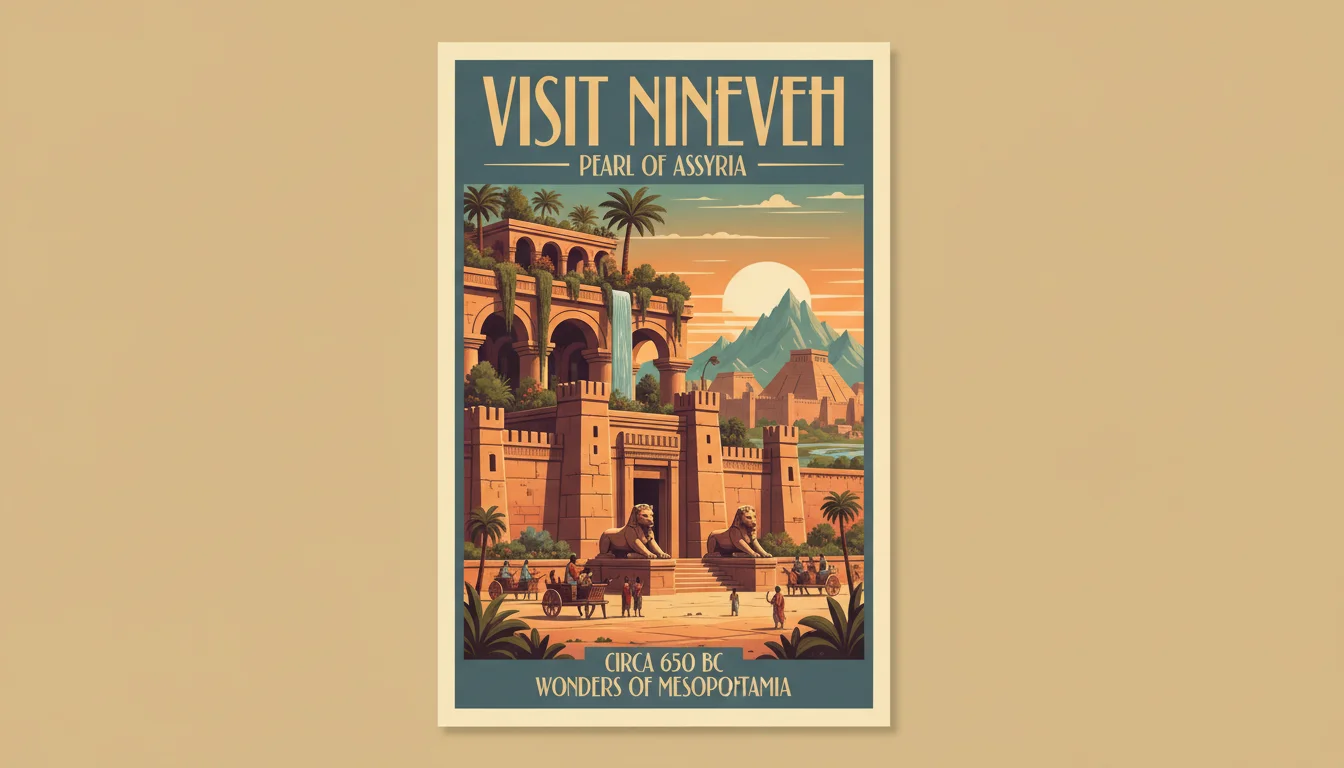
Welcome to 650 BC. If you’ve just stepped out of your chronosphere onto the banks of the Tigris, take a deep breath. That smell? That’s the scent of the greatest empire the world has ever seen, mixed with a healthy dose of dust, incense, and the sweat of a quarter-million people.
You are standing in Nineveh, the crown jewel of the Neo-Assyrian Empire. Under King Ashurbanipal, this isn't just a city; it’s a statement. It is the largest, most technologically advanced, and arguably the most terrifying place on Earth. Before you start wandering toward the North Palace, here is everything you need to know to keep your head (literally) while visiting the Lion’s Den.
The First Rule: Don't Look Like a Barbarian
Assyrians are obsessed with grooming. If you show up with a patchy, unkempt beard or - heaven forbid - a clean-shaven face (unless you’re a eunuch or a priest), you’re going to stand out for all the wrong reasons.
The Beard: For men, the beard is the ultimate status symbol. It should be long, square-cut, and meticulously curled into tight, horizontal rows. If your natural growth isn't up to par, local barbers can weave in extensions or apply scented oils that smell like cedar and frankincense.
The Wardrobe: Leave your denim and zippers in the future. You want a knee-length or floor-length linen tunic. The real secret to "The Nineveh Look" is fringes. If your garment doesn't have fringes, you’re basically wearing pajamas. Wealthier citizens wear heavy wool shawls draped over one shoulder, fastened with massive bronze or gold pins.
The Accessories: Assyrians love jewelry. Armlets, bracelets, and heavy earrings are standard for both genders. If you can afford it, a cylinder seal worn on a cord around your neck is the 7th-century equivalent of a black Amex - it’s how you sign documents and prove you’re someone worth talking to.
Navigating the Megacity
Nineveh is huge - nearly 1,700 acres enclosed by a massive wall with fifteen great gates. You’ll likely enter through the Shamash Gate or the Quay Gate.
The streets are surprisingly organized compared to other ancient cities. King Sennacherib (Ashurbanipal’s grandfather) was a bit of an urban planning fanatic. He widened the squares and ensured the "Royal Road" remained clear of encroachments. However, "clear" is a relative term. You will still be dodging chariots, military units in scale armor, and teams of laborers dragging massive stone slabs.
Pro-tip: Stay off the Royal Road unless you want to be trampled. Chariot drivers in Nineveh have the right of way, and they drive like they’re in a perpetual action movie.
The Must-See: The House of Tablets
If you only visit one place, make it the Library of Ashurbanipal. The King is a rare breed - a warrior-monarch who can actually read and write. He has sent agents across Mesopotamia to collect every scrap of knowledge available.
The library contains tens of thousands of clay tablets. You’ll find the Epic of Gilgamesh, medical texts, astronomical observations, and thousands of omens.
A Word of Caution: Do not try to "borrow" a tablet. The colophons (the fine print at the end of the tablets) often contain terrifying curses. A typical one might read: "May the gods strike down anyone who steals this tablet or erases my name, and may his seed be scattered to the wind." In 650 BC, people take these threats very seriously. Also, the library guards are heavily armed and lack a sense of humor.
The "Hanging Gardens" (Yes, They’re Here)
You might have heard about the Hanging Gardens of Babylon. Well, here’s a time traveler’s secret: they aren't in Babylon. They’re right here in Nineveh.
Sennacherib built a massive, lush garden that mimics a mountain forest, complete with exotic trees from all over the empire. He even invented a sophisticated bronze screw (centuries before Archimedes) to pump water up to the elevated terraces. It’s an engineering marvel that will take your breath away - partly because of the beauty, and partly because of the sheer amount of humidity in the middle of the desert.
Dining in the Empire
Nineveh is a cosmopolitan hub, so the food is excellent if you have the shekels for it.
- The Staples: Flatbread (emmer or barley) served with onions, garlic, and chickpeas.
- The Good Stuff: Roasted lamb or duck seasoned with cumin, coriander, and mustard seeds.
- The Fruits: Pomegranates are everywhere. They are the unofficial fruit of the empire.
- Drink: Beer is the drink of the masses, often drunk through a straw to filter out the mash. However, the elite prefer wine from the northern hills. If a local offers you "The King's Wine," take a small sip first - it’s significantly stronger than your modern Pinot Noir.
Survival Tips: Avoiding the King’s Justice
The Assyrians have a reputation for being... intense. You’ve probably seen the palace reliefs showing rows of impaled rebels or piles of heads. While these are partially propaganda to keep the provinces in line, the threat is real.
- Watch Your Tongue: Do not criticize the King. Ashurbanipal is "King of the World, King of Assyria." Saying otherwise is a fast track to a very public execution.
- Respect the Military: Nineveh is a garrison city. You will see soldiers everywhere. They are professionals, highly disciplined, and they expect civilians to give way.
- Omens Matter: If you see a priest looking at a sheep’s liver or watching the flight of birds, don't interrupt. National policy is often decided based on which way a crow flies on Tuesday morning.
- The "Secret Police": The Assyrian intelligence network is legendary. That "friendly" merchant asking where you’re really from might be a royal agent (a tamkaru). Stick to your cover story: you’re a trader from a remote mountain village in the North. If they ask why your accent is weird, tell them your village is very remote.
Health and Hygiene
The Tigris is your lifeline, but don't drink directly from it. The city’s aqueducts bring fresh water from the mountains, which is much safer. Still, stick to beer or wine when possible.
Bring some modern sunscreen hidden in a vintage-looking ceramic jar. The Mesopotamian sun is brutal, and a "sunburn" isn't a concept the locals understand - they'll just think you have a demonic plague and might try to exorcise you with cedar smoke and incantations.
Why Visit Nineveh?
Despite the risks, Nineveh is an intoxicating experience. At night, the whitewashed walls of the palaces gleam under the moon, and the sound of harps and drums drifts from the courtyards. You are at the center of the world's consciousness. For a brief window in history, all roads, all gold, and all knowledge lead to this spot on the Tigris.
Just remember to bow low, keep your fringes straight, and never, ever touch the King’s tablets.
Enjoy your stay in the 7th Century BC. And if you see a guy named Nabopolassar hanging around the gates looking suspicious... maybe it’s time to set your chronosphere for a different era. Nineveh’s golden age won’t last forever. For other ancient Mesopotamian capitals worth visiting, see the guide to Babylon in 1750 BC or the guide to Achaemenid Persepolis in 500 BC.

Need Advice from Someone Who Lived There?
Get firsthand accounts from people who actually lived through these moments in history.
Ask Them YourselfJoin the HistorIQly Club
Get smarter about the past.
Weekly stories, deep dives, and exclusive content straight to your inbox.