Time Traveler's Guide to Phoenician Tyre, 800 BC
Your survival guide to Phoenician Tyre - the ancient maritime superpower that invented the alphabet, traded purple dye for fortunes, and ruled the Mediterranean.
Read Wikipedia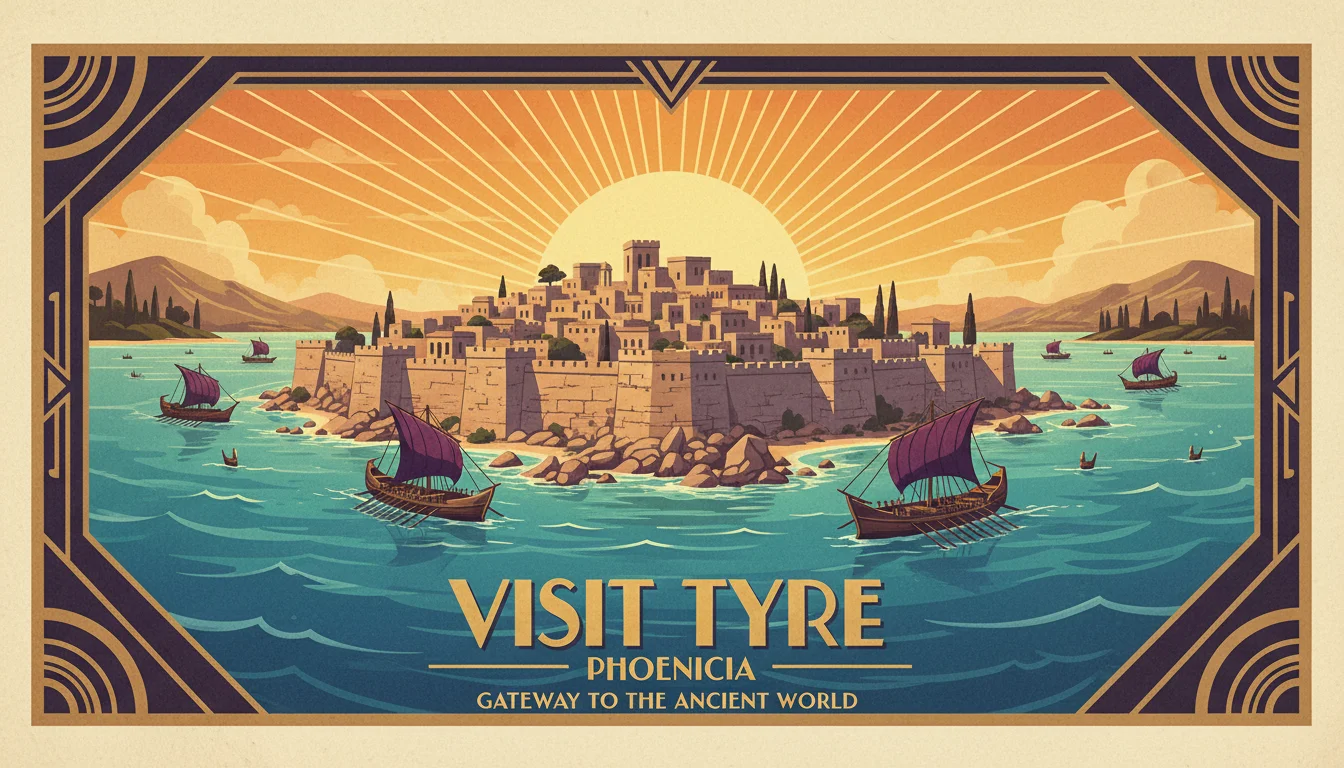
Welcome to Phoenician Tyre, 800 BC - the beating heart of the ancient world's greatest maritime trading empire. This island city is where fortunes are made, purple dye flows like gold, and ships depart for lands no one else dares to reach. You're about to visit the civilization that gave the world its alphabet, mastered the sea, and turned commerce into an art form.
Pack light. The Mediterranean waits for no one.
When You Arrive
You'll find Tyre split between the mainland settlement and the fortified island city connected by a narrow causeway. The island fortress rises dramatically from the turquoise waters, protected by massive stone walls and towers. This isn't just a city - it's a statement. "We own the sea."
Climate: Mediterranean perfection. Hot, dry summers (bring a wide-brimmed hat), mild winters with occasional rain. The sea breeze keeps things tolerable, but midday sun is brutal. Think modern Cyprus, but without the tourists.
Population: Around 30,000 souls packed into the island and mainland quarters. Phoenicians, Egyptian merchants, Greek traders, Assyrian envoys, Hebrew craftsmen, and sailors from dozens of ports you've never heard of.
What to Wear
Men: A simple knee-length tunic in linen or wool. White or undyed fabric is cheapest, but if you want to blend in with the merchant class, spring for something in red or purple trim (just a hint - full purple screams "I robbed a dye works"). Leather sandals. A woven belt to hold your money pouch.
Women: Ankle-length tunics with a shawl or mantle. Phoenician women enjoy more freedom than their inland neighbors, so you'll see plenty working in markets and workshops. Veils are optional unless you're in a formal religious setting. Jewelry is everywhere - gold earrings, carnelian beads, ivory bracelets. You'll stand out more without accessories than with them.
Don't wear: Anything in full Tyrian purple unless you're royalty or prepared to explain where you stole it. That shade requires 12,000 murex snails per gram of dye. It's worth more than gold.
Language Survival
Phoenician is the lingua franca, but you'll hear Aramaic, Egyptian, Greek, and Hebrew in the markets. The good news? Phoenicians invented the alphabet your language probably uses, so you've got a head start on reading signs (if you can find any - most business is oral).
Essential phrases:
- "Shalim!" - Peace/Hello
- "Kam?" - How much?
- "Lo!" - No (you'll use this constantly in the markets)
- "Ba'al yashar!" - Safe voyage! (say this to literally everyone, they'll love you)
Where to Stay
The Dockside Quarter offers cheap lodging for sailors and merchants. Noisy, smelly, potentially dangerous, but authentic. Expect shared rooms, straw mattresses, and the sound of ships loading all night.
Uptown near the Temple of Melqart costs more, but you get actual beds, courtyard gardens, and neighbors who won't steal your sandals. Worth it if you value sleep.
Pro tip: Never mention you're staying long-term. Phoenicians assume everyone is either buying, selling, or leaving. Permanent residents pay taxes. Transient merchants don't.
What to Eat
Seafood. So much seafood. Grilled fish, dried fish, fish stew, fish sauce. If it swims, Tyrians will catch it and sell it to you.
Street food favorites:
- Roasted chickpeas - cheap, filling, everywhere
- Flatbread with olive oil and herbs - the ancient Mediterranean's perfect snack
- Dates and figs - imported from inland, sweet energy
- Salted fish - tastes better than it sounds (after three days, you'll crave it)
What to avoid:
- Murex snails - unless you're dining with dye merchants. They're an acquired taste, and by "acquired" I mean "probably never."
- Street wine - Phoenicians drink, but the cheap stuff is vinegar with ambition. Stick to beer or import wine from Cyprus if you can afford it.
Dining etiquette: Eat with your hands. Bread serves as both food and utensil. If someone offers you the first portion from a shared dish, accept it - refusal is insulting.
Things to See
1. The Purple Dye Works
Located on the southern shore (you'll smell it before you see it). Mountains of crushed murex shells create a permanent stench, but watching the dye-makers extract that legendary purple is mesmerizing. One drop of dye from 12,000 snails. This is why empires pay fortunes for purple cloth.
Entry: Restricted, but a few shekels to the foreman gets you a tour. Don't wear nice clothes - the smell sticks.
2. Temple of Melqart
The city's patron god deserves the finest. Towering bronze pillars, cedar-wood doors overlaid with gold, courtyards filled with incense smoke. Priests perform rituals at dawn and sunset. Non-Phoenicians can watch from the outer courts, but don't touch anything sacred unless you enjoy being dragged to the harbor and thrown in.
3. The Harbor
Two harbors, actually - the Egyptian Harbor (south) for African and Levantine trade, and the Sidonian Harbor (north) for European routes. You'll see triremes being loaded with cedar logs from Lebanon, amphorae of wine and olive oil, ingots of silver from Spain, and luxury goods from Assyria.
Must-see: Watch a ship launch at dawn. Phoenician sailors perform a ritual blessing before every voyage, pouring wine into the sea and calling on Yamm, god of the ocean.
4. The Bazaar Quarter
Tyre's markets are legendary. You'll find:
- Glassware from Sidon (Phoenicians perfected glassblowing)
- Ivory carvings from Africa
- Incense from Arabia
- Linen from Egypt
- Weapons from Damascus
- Slaves (if you've got the stomach for it - this is 800 BC, slavery is normalized)
Haggling is mandatory. Start at half the asking price. If a merchant accepts your first offer, you paid too much.
Cultural Norms
Phoenicians are merchants first, everything else second. They'll trade with anyone - Assyrians, Egyptians, Greeks, Hebrews - as long as the price is right. Loyalty is to profit and family, in that order.
Women have unusual freedom compared to neighboring cultures. You'll see women running businesses, negotiating contracts, and owning property. Don't assume they're property or servants - that's a fast way to offend an entire family.
Religion is transactional. Phoenicians worship Ba'al, Astarte, Melqart, Eshmun, and a dozen other deities. They'll also happily honor your god if it improves business relations. Syncretism is standard operating procedure.
Don't insult the sea. Phoenicians live and die by maritime trade. Mock their ships, sailors, or navigation skills, and you'll find yourself unwelcome in every tavern, market, and temple.
Safety Tips
Petty crime: Markets are crowded and full of skilled pickpockets. Keep valuables under your tunic, not on your belt.
Violence: Rare inside the city walls, but the docks after dark are lawless. Travel in groups. If you're carrying serious wealth, hire a guard.
Piracy: If you're sailing between ports, understand that Phoenician ships are targets. Travel with merchant convoys or armed vessels. Solo travelers end up in chains.
Political tensions: Tyre pays tribute to the Assyrian Empire (for now). Don't get involved in debates about independence vs. submission unless you enjoy watching people get very, very angry.
Disease: Drink boiled water or wine. Avoid raw shellfish. Plague, dysentery, and parasites are common. If you get sick, find a temple healer - they know herbs and basic medicine.
What to Bring Back
Tyrian purple fabric - if you can afford even a scrap, it's the ultimate souvenir. Worth its weight in silver back home (literally).
Glass jewelry - Phoenician glass is unmatched. Beads, bottles, amulets.
Cedar oil - from the famous Lebanese cedars. Used for perfume, medicine, and embalming.
Alphabet tablet - A clay tablet with Phoenician script. You're holding the ancestor of every alphabetic writing system in the Western world.
Final Thoughts
Tyre in 800 BC is a city of contradictions - brutal and beautiful, wealthy and dangerous, cosmopolitan and insular. It's the Silicon Valley of the ancient world, except instead of apps, they're selling purple dye and navigation secrets that will change history.
You'll smell the murex works for weeks after you leave. You'll dream of harbor sunrises and market chaos. And you'll understand why Phoenicians didn't just trade goods - they traded the future.
Safe voyage, traveler. The sea is waiting.
For other ancient-world time travel guides, Ancient Thebes, 1250 BC takes you to the height of Egyptian imperial power, and Achaemenid Persepolis, 500 BC brings you to the Persian empire at its zenith.

Need Advice from Someone Who Lived There?
Get firsthand accounts from people who actually lived through these moments in history.
Create your free account →No card required. Talk to anyone in history with 8 free credits a day. Some features require a paid plan.
Join the HistorIQly Club
Get smarter about the past.
Weekly stories, deep dives, and exclusive content straight to your inbox.