Time Traveler's Guide to Teotihuacan, 400 AD
Survive and thrive in Teotihuacan at its peak: 150,000 people, towering pyramids, and a civilization so secretive we still don't know what language they spoke.
Read Wikipedia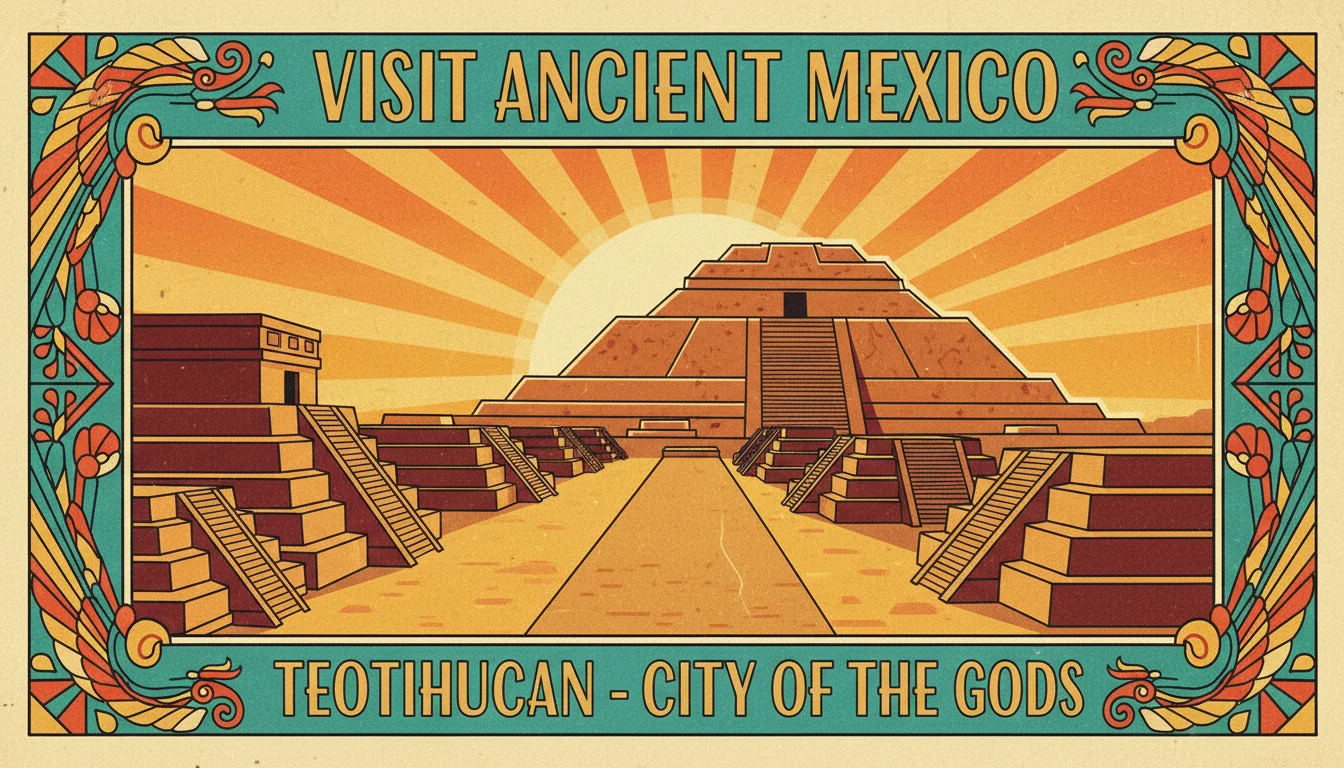
Welcome to Teotihuacan, 400 AD - the largest city in the Americas and one of the most mysterious civilizations ever built. With 150,000 inhabitants, massive pyramids, and a culture so secretive we still don't know what language they spoke, this is urban planning on a scale that won't be matched in the Americas for another thousand years.
But who built it? Nobody knows. By 750 AD, Teotihuacan will be mysteriously abandoned, its secrets buried under ash and time. For now, though, you're stepping into the peak of its power. Here's how not to screw it up.
What to Wear
The Look: Vivid colors, cotton tunics, and feathered headdresses. Status is everything here, and clothing tells the story.
- Commoners wear simple white or brown cotton tunics. If you're pretending to be a merchant, add some jade beads or obsidian jewelry.
- Nobles drape themselves in brilliant red, blue, and green cloaks embroidered with geometric patterns. Feathers = wealth. The more exotic the bird, the higher your rank.
- Priests are the real peacocks: jaguar pelts, elaborate headdresses studded with quetzal feathers, jade face masks, and body paint in black and ochre.
Pro tip: Don't dress too fancy unless you want to end up in a temple procession… as the guest of honor on the sacrificial altar.
Footwear: Leather sandals. The streets are paved, so you won't be trudging through mud like in most ancient cities.
Weather: Hot and dry year-round at 7,000 feet elevation. The sun is brutal. Bring a wide-brimmed hat woven from palm leaves if you want to keep your scalp intact.
What to Eat
Teotihuacan's cuisine is built on the holy trinity: maize, beans, and squash. But the city's trade networks stretch from the Gulf Coast to Guatemala, so you'll find some serious variety.
Street food highlights:
- Tamales - Steamed maize dough stuffed with turkey, rabbit, or chili peppers. Grab one from a market stall and eat it on the Avenue of the Dead.
- Atole - A warm, thick drink made from ground maize, flavored with honey or vanilla. Perfect for breakfast.
- Xocolatl - Bitter chocolate drink mixed with chili and ground maize. It's not sweet like modern hot cocoa. It's frothy, spicy, and mildly psychoactive. Drink cautiously.
- Roasted dog - Yes, seriously. Hairless Xoloitzcuintli dogs are bred specifically for eating. They taste like pork. Don't judge.
Fancy dining: If you're invited to a noble's banquet, expect multi-course meals featuring roasted turkey, venison stewed with squash blossoms, freshwater shrimp from Lake Texcoco, and cactus fruit desserts. Everything is served on intricately painted ceramic plates.
Avoid: Tap water from the canals. Drink only pulque (fermented agave sap) or freshly collected rainwater. Dysentery is not part of the authentic experience you want.
Where to Stay
Accommodation depends on your budget and connections.
Budget option: Rent a room in one of the massive apartment compounds that house commoners. These are multi-family stone complexes with shared courtyards, open-air kitchens, and communal shrines. Not private, but safe and functional.
Mid-tier: Stay with a merchant family near the Great Compound (the city's commercial district). You'll get your own room, meals included, and insider tips on where not to wander after dark.
Luxury: If you've got serious resources, rent a room in one of the palaces along the Avenue of the Dead. Murals on every wall, private courtyards with fountains, servants, and proximity to the action (aka the pyramids).
Safety note: Teotihuacan is remarkably well-planned and orderly. Crime is low because the state is… everywhere. Religious police patrol the streets. Keep your head down and you'll be fine.
What to See
The Pyramid of the Sun - The third-largest pyramid in the world (after Giza and Cholula). Climb all 248 steps to the summit for panoramic views of the city and valley. Don't try it in sandals. The steps are steep and unforgiving.
The Pyramid of the Moon - Smaller but more ornate. The plaza at its base is where public rituals happen, including sacrifices. If you see a procession heading this way, follow the crowd but stay at the back.
The Avenue of the Dead - The 2.5-mile main boulevard running through the city. Lined with temples, palaces, and platforms. Walk it at sunrise when the city is waking up - street vendors setting up, priests chanting, smoke rising from a thousand hearths.
The Feathered Serpent Pyramid (Temple of Quetzalcoatl) - Covered in carved serpent heads and talud-tablero architecture. Dozens of sacrificial victims were buried in its foundations when it was built. The energy here is… intense.
The Great Compound - The marketplace. You'll find obsidian blades from Pachuca, jade from the Olmecs, cacao from the lowlands, ceramics, textiles, exotic birds, and everything in between. Barter with shells or cacao beans (the local currency).
Customs & Etiquette
- Hierarchy is everything. Bow to priests and nobles. Eye contact with the wrong person can get you in trouble.
- Blood rituals are normal. Don't freak out when you see priests piercing their tongues or earlobes and dripping blood onto paper. It's religious devotion, not a medical emergency.
- Public drunkenness is a crime. Pulque is sacred and reserved for ritual use, elders, and special occasions. If you're under 50 and stumbling drunk in public, you're getting arrested.
- Learn the calendar. Teotihuacan runs on a 260-day sacred calendar and a 365-day solar calendar. Important rituals happen when the two align. If you're here during a major ceremony, witness it from a respectful distance.
Dangers to Avoid
Human sacrifice: It happens, but not as frequently as later Aztec culture. Still, certain festivals involve offerings to the rain god Tlaloc (often children) and the sun (prisoners of war). If you're foreign, keep your head down during these times.
Obsidian workshops: The city is the obsidian capital of Mesoamerica. Workshops are everywhere, and workers are skilled but dangerous. Don't wander into a blade-making district without a guide. Cuts here = infection = bad time.
Political intrigue: Teotihuacan's ruling class is secretive. We don't even know if they had kings or a council. Don't ask too many questions about governance unless you want to be quietly disappeared.
Volcanic ash: The nearby Popocatépetl volcano occasionally burps. If you see ash falling, stay indoors and cover your mouth.
Language
We still don't know what language they spoke. Scholars debate whether it was Nahuatl, Totonac, Otomi, or something else entirely. Your best bet:
- Learn basic Nahuatl (the lingua franca of later Mesoamerica). It might work.
- Hire a translator at the market.
- Use hand gestures liberally.
Useful phrases (Nahuatl guesses):
- Niltze - Hello
- Tlazohcamati - Thank you
- Cuix oncan ca tianquiztli? - Where is the market?
- Amo nicmati - I don't understand (you'll say this a lot)
The Experience
Teotihuacan in 400 AD is a city at the height of its power - massive, organized, cosmopolitan, and deeply religious. It shares the grandeur of other great pre-Columbian cities - see our guides to Aztec Tenochtitlan in 1500 and Andean Tiwanaku in 500 AD for more ancient Americas time travel. The pyramids dominate the skyline. The markets buzz with trade from across Mesoamerica. Murals depict gods, jaguars, and mysterious rituals in brilliant reds and greens.
But beneath the order lies mystery. Who rules this place? Why is there no palace? Why so few written records? And why, in just a few centuries, will it all burn and collapse into silence?
For now, though, it's the greatest city in the Americas. Walk the Avenue of the Dead at sunset, climb the Pyramid of the Sun at dawn, and drink xocolatl under the stars. Just don't ask too many questions.
And whatever you do - don't insult the priests.

Need Advice from Someone Who Lived There?
Get firsthand accounts from people who actually lived through these moments in history.
Create your free account →No card required. Some figures and features require a paid plan.
Join the HistorIQly Club
Get smarter about the past.
Weekly stories, deep dives, and exclusive content straight to your inbox.