Time Traveler's Guide to Victorian London, 1850
Your survival guide to Victorian London 1850: cholera, coal smog, class codes, and a Thames that smells like an open sewer. The world's largest city at its worst.
Read Wikipedia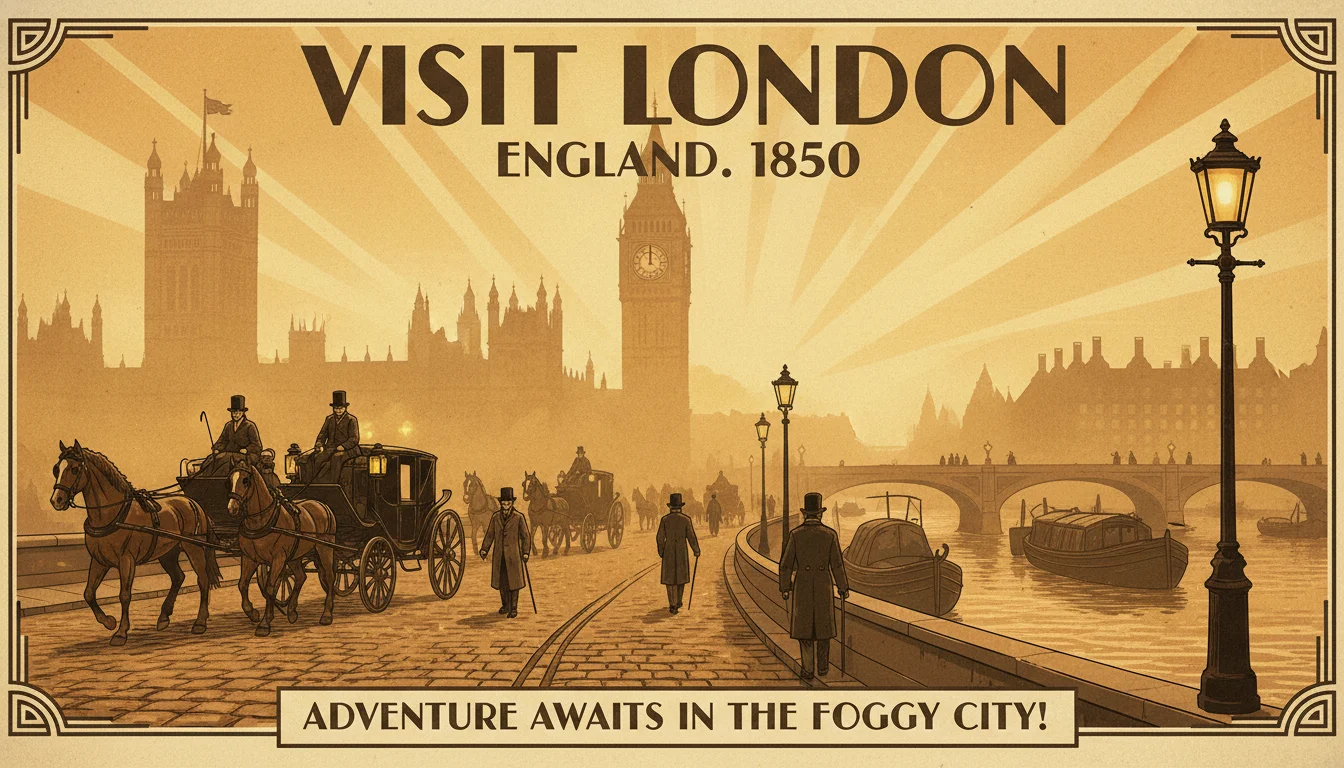
Welcome to London, 1850 - the largest city in the world, where two million souls cram into foggy streets, gas lamps flicker through the infamous "pea-souper" smog, and the Thames stinks so badly it's called the "Great Stink." This is peak Victorian England: empire, industry, and inequality packed into one grimy, glorious metropolis. Let's make sure you survive it.
What to Wear
Men: Dark wool suit (black or charcoal), white linen shirt, waistcoat, top hat, leather boots, walking stick, pocket watch on a chain. Gloves are essential - bare hands mark you as lower class. If you're posing as working class, swap the suit for rough tweed trousers, a flat cap, and sturdy boots caked in mud.
Women: Full crinoline gown (hoop skirt beneath layers of petticoats), tight corset, bonnet, gloves, shawl. Colors matter - pastels for daytime, jewel tones for evening. Showing an ankle is scandalous. Hair in tight ringlets or a bun. Mourning black is everywhere (Queen Victoria is still grieving Prince Albert's future death in 1861, but grief culture is already entrenched).
Pro tip: Bring a scarf or handkerchief soaked in lavender oil. You'll need it to cover your nose when walking past open sewers, slaughterhouses, or the Thames at low tide.
What to Eat
Victorian London runs on tea, meat pies, and class stratification.
Upper/Middle Class:
- Breakfast: Porridge, kidneys, bacon, toast with marmalade
- Tea Time: Scones, clotted cream, finger sandwiches (cucumber or watercress)
- Supper: Roast beef, mutton chops, boiled vegetables, trifle for dessert
Working Class:
- Street Food: Meat pies (questionable filling), oysters (cheap!), eel pie, jellied eels, hot chestnuts
- Pubs: Steak and kidney pudding, bread and dripping, pickled eggs, ginger beer
What to avoid: Don't ask what's in the sausages. The answer is "whatever swept off the slaughterhouse floor." Also, cholera outbreaks love contaminated water - stick to boiled tea or ale.
Customs and Etiquette
Class is everything. Your accent, posture, and the cut of your coat determine where you can go and who will speak to you. The upper class owns the West End (Mayfair, Belgravia). The working poor crowd the East End (Whitechapel, Spitalfields). Don't mix them.
Politeness is armor. Never make direct eye contact with someone above your station. Always address aristocracy as "Sir" or "Madam." Tipping your hat is mandatory. Overfamiliarity can get you dismissed, arrested, or challenged to a duel.
Women have zero rights. Married women legally don't exist - property, earnings, even children belong to husbands. Single women must have a chaperone. Walking alone after dark brands you a prostitute. If you're female, bring a male companion or invent a fictional brother.
Sundays are sacred. Everything shuts down. Church attendance is expected. Public drunkenness is tolerated Monday–Saturday, but on Sunday it's a moral outrage.
Dangers to Avoid
Cholera: The 1854 outbreak is coming. Don't drink from public pumps. Stick to boiled water or beer. If you see people vomiting blue liquid, run.
The Thames: It's an open sewer. One million Londoners dump waste into it daily. Avoid touching the water. The "Great Stink" of 1858 will force Parliament to finally build sewers, but for now, it's a biohazard.
Air Pollution: Coal fires from a million chimneys create "London Fog" so thick you can't see five feet ahead. Respiratory disease kills thousands. Bring a respirator if you can.
Crime: Pickpockets, garroting gangs, body snatchers (grave robbers selling corpses to medical schools), and "resurrection men" who sometimes kill to meet demand. The Metropolitan Police exist but are stretched thin. Stay in lit areas. Carry a weapon.
Child Labor: Five-year-olds work 12-hour shifts in factories, mines, and chimneys. If you try to "rescue" them, you'll be arrested for kidnapping. Victorian morality says poverty is a character flaw, not a social failure.
Must-See Attractions
The Crystal Palace (Hyde Park): The 1851 Great Exhibition hasn't opened yet, but construction is underway. Sneak a peek at Joseph Paxton's revolutionary iron-and-glass cathedral to industry. Next year, six million visitors will gawk at 100,000 exhibits from around the empire.
The British Museum: Free entry. Gaze at the Elgin Marbles (stolen from Greece), the Rosetta Stone (stolen from Egypt), and countless artifacts looted during colonial expansion. The Victorians call it "preserving history."
The Thames Tunnel (Rotherhithe to Wapping): The world's first underwater tunnel, opened in 1843. Walk beneath the river while dodging beggars and pickpockets. It's damp, eerie, and smells like sewage, but it's an engineering marvel.
Gin Palaces: Gilded, gas-lit pubs where the poor drink away their misery. Gin is cheaper than food. Drunkenness is rampant. Bring cash (no credit cards) and don't flash wealth.
Madame Tussaud's Wax Museum (Baker Street): See lifelike wax figures of Napoleon, Queen Victoria, and executed criminals. The "Chamber of Horrors" features guillotine victims and serial killers. Perfect date night.
The Rookeries (Seven Dials, St. Giles): London's worst slums. Entire families live in single rooms. Tuberculosis, typhus, and violence are endemic. Only visit with a local guide (and a strong stomach).
Language Tips
Victorian slang is its own beast:
- "How do you do?" = Standard greeting (answer with the same phrase, don't explain how you actually are)
- "Taking the air" = Going for a walk
- "Bamboozled" = Confused
- "Coppers" = Police (from the copper buttons on uniforms)
- "Flash house" = Pub frequented by criminals
- "Swells" = Rich people
- "On the game" = Sex work
Drop modern slang like "cool," "awesome," or "okay" and you'll be immediately suspicious.
Money
British currency is pre-decimal and confusing:
- 1 pound (£) = 20 shillings
- 1 shilling (s) = 12 pence (d)
- 1 guinea = 21 shillings (used for luxury goods)
A working-class laborer earns ~15 shillings/week. A loaf of bread costs 1 penny. A pint of beer costs 2 pence. Bring small change - shopkeepers won't break large notes.
Final Survival Tips
- Lie about your origins. If asked where you're from, say "the colonies" (Australia, India, Canada). The empire is vast; no one can verify.
- Avoid politics. The Chartist movement (workers demanding voting rights) is simmering. Expressing radical ideas can get you deported to Australia.
- Respect the Queen. Victoria is 31 and deeply popular. Criticizing her is treasonous.
- Mind the train schedule. The railway network is booming. Stations like King's Cross and Paddington are new. Trains are fast but smoky.
- Don't photograph anything. Photography exists (daguerreotypes), but it's slow and expensive. Pulling out a smartphone will get you burned as a witch.
Why Visit?
London in 1850 is a paradox: magnificent and monstrous. It's Dickens's London - foggy streets, orphans, and inequality - but also the engine of the world's most powerful empire. You'll see humanity at its most innovative (railways, telegraphs, industry) and most brutal (child labor, colonialism, disease). It's uncomfortable, dangerous, and absolutely unforgettable.
Just don't drink the water.
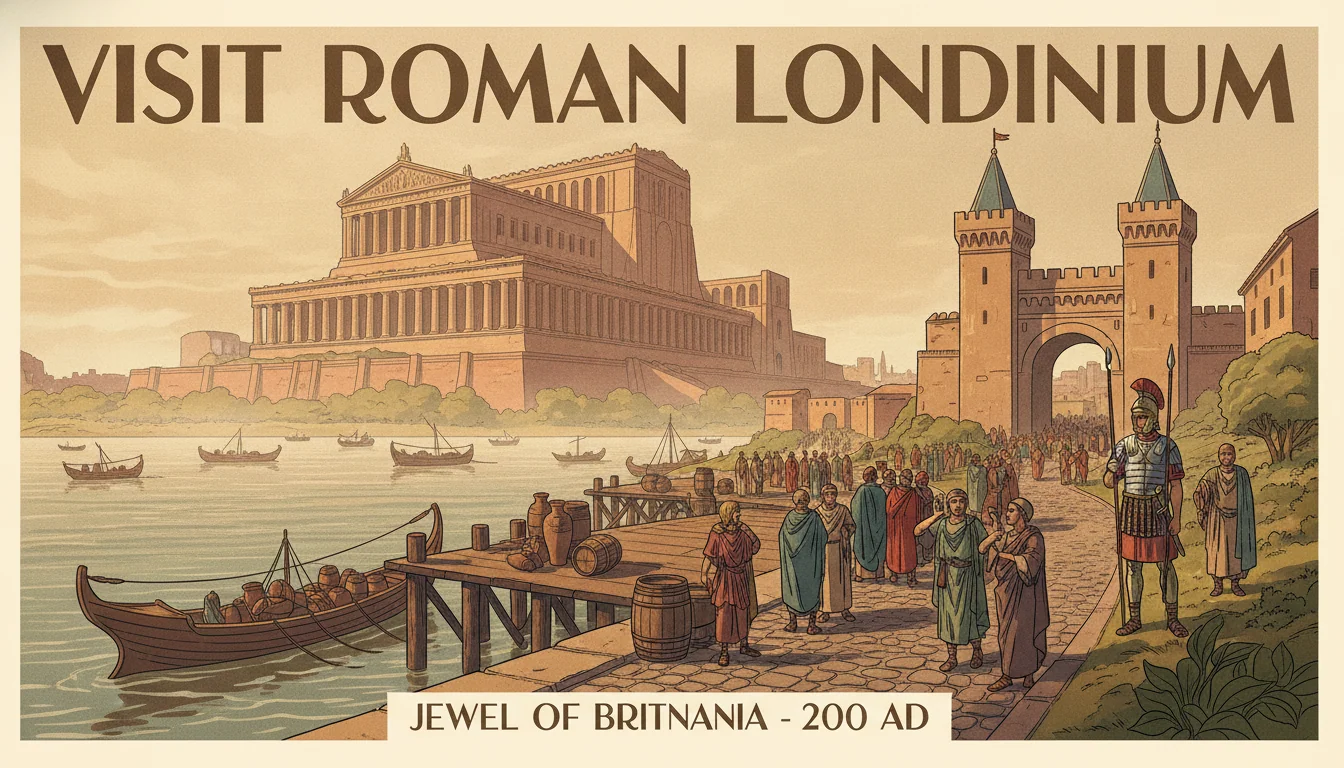
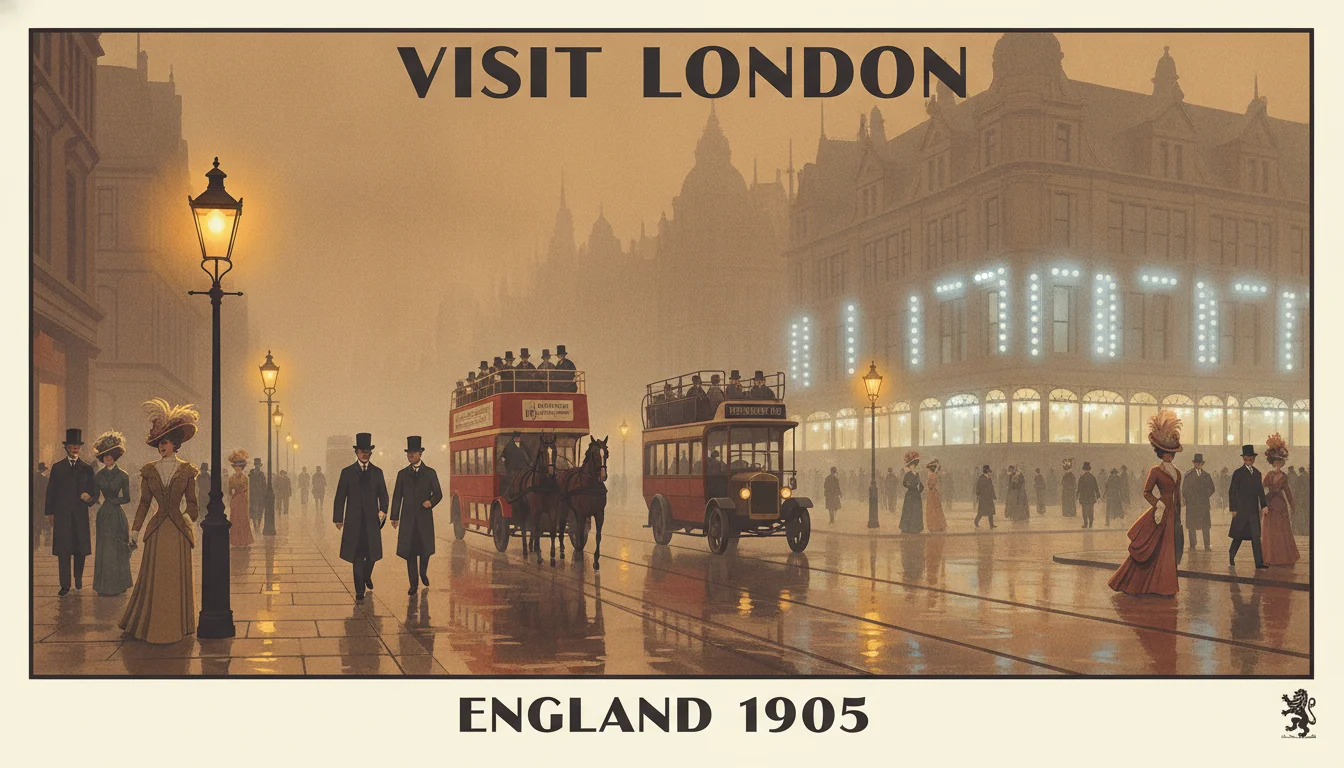
For what London looked like half a century later, see Edwardian London in 1905. For an earlier chapter, try Restoration London in 1665.

Need Advice from Someone Who Lived There?
Get firsthand accounts from people who actually lived through these moments in history.
Create your free account →No card required. Some figures and features require a paid plan.
Join the HistorIQly Club
Get smarter about the past.
Weekly stories, deep dives, and exclusive content straight to your inbox.