Time Traveler's Guide to Weimar Berlin, 1929
Your survival guide to Weimar Berlin in 1929: jazz, cabaret, political gangs, and a glorious creative scene that is eight months from economic collapse.
Read Wikipedia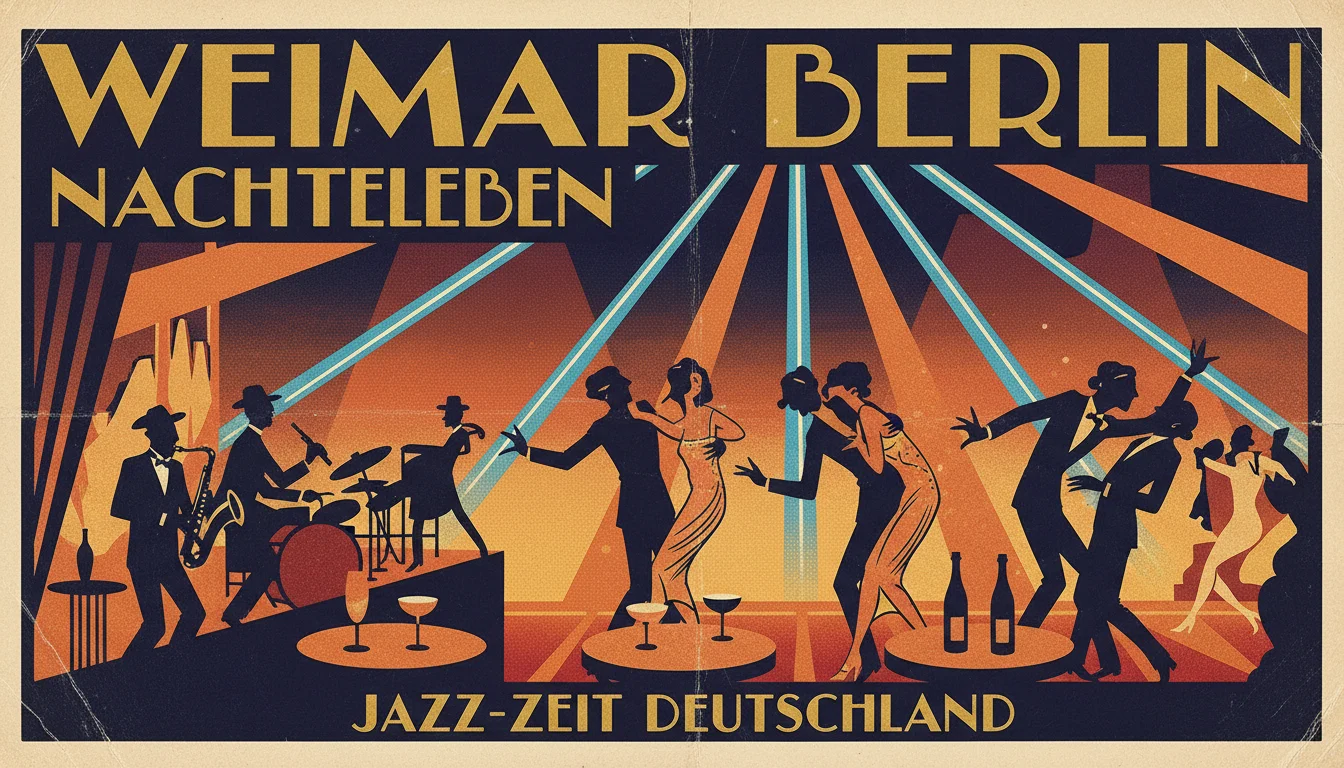
Welcome to Berlin, 1929 - the most electric, dangerous, and artistically explosive city on the planet. You've landed in the brief golden window when Weimar Germany hit peak decadence before the whole thing came crashing down. Jazz, cabaret, expressionist cinema, political street fights, and more cocaine than you can shake a monocle at. Buckle up.
When You Should Arrive
Summer (June-August): Outdoor beer gardens, warm nights, lighter crowds.
Late Fall/Winter (October-December): Peak cabaret season when the best acts are running. Christmas markets if you want charming, but honestly you're here for the seedier side.
Avoid: 1933 onward (for obvious reasons).
What to Wear
Men: Three-piece suit or a sharp double-breasted jacket. Fedora or flat cap. Pocket watch if you want to blend in at upscale venues. Tie is essential - you're not a bohemian artist (unless you are, then go wild).
Women: Drop-waist dresses, cloche hats, T-strap heels. Darker fabrics like velvet or silk. Bobbed hair is all the rage. If you're hitting the cabarets, a feather boa and some dramatic kohl eyeliner will fit right in.
Both: A good coat. Berlin winters are brutal, and central heating is inconsistent at best.
Avoid: Anything that looks too military or paramilitary. The streets are tense with political factions - you don't want to accidentally signal allegiance to the wrong side.
The Money Situation
You're post-hyperinflation (that nightmare ended in 1923), so the Rentenmark is stable again. 1 Reichsmark = 100 Pfennig.
Prices:
- Beer: 30-50 Pfennig
- Cabaret cover charge: 2-5 Reichsmarks
- Decent meal: 1-2 Reichsmarks
- Cinema ticket: 50 Pfennig - 1 Reichsmark
- Streetcar fare: 20 Pfennig
Exchange your modern currency at a bank on Unter den Linden - the grand boulevard that's still clinging to Imperial dignity.
Where to Stay
Adlon Hotel (Unter den Linden): If you've got cash, this is peak luxury. Marble, chandeliers, doormen in top hats. Chaplin stayed here.
Pension Schmidt (Schöneberg): Cheaper, cleaner, run by a nice widow who minds her own business. Perfect for travelers who don't want questions.
Artists' squats (Kreuzberg/Prenzlauer Berg): If you can talk your way in, the bohemian crowd will let you crash for free in exchange for interesting conversation or black-market cigarettes.
What to Eat
Berlin food isn't fancy, but it's hearty and cheap.
Currywurst: Doesn't exist yet! It's invented post-WWII. Don't ask for it or you'll look insane.
Eisbein mit Sauerkraut: Pork knuckle with pickled cabbage. The ultimate working-class meal.
Kartoffelpuffer: Potato pancakes. Crispy, greasy, delicious.
Berliner Weiße: Wheat beer mixed with raspberry or woodruff syrup. Refreshing and slightly sweet.
Schnitzel: Breaded pork cutlet. Can't go wrong.
Where to eat:
- Aschinger (multiple locations): Cheap, fast, open late. The Weimar equivalent of a diner. Endless pea soup with your meal.
- Horcher (Lutherstraße): If you want fine dining. White tablecloths, French cuisine, reservations required.
Avoid: Anything advertised as "exotic" or "Oriental" unless you enjoy food poisoning.
What to Do
See a Cabaret (Obviously)
This is peak cabaret era. Political satire, risqué performances, jazz bands, cross-dressing, all under one smoky roof.
Eldorado (Motzstraße): The most famous gay and transgender cabaret in the city. Drag performances that would still be shocking today. Marlene Dietrich was known to stop by.
Weisse Maus (Jägerstraße): More underground, grittier, cheaper drinks. Comedians mock Hitler, who's still a fringe lunatic at this point.
Wintergarten (Friedrichstraße): The big commercial venue. Less edgy, more variety show, but high production value.
Shows typically start at 10 PM and run until 3 AM. Expect cigarette smoke so thick you could cut it with a knife.
Hit the Jazz Clubs
Berlin is Europe's jazz capital. American musicians fled Prohibition and found paradise here.
Haus Vaterland (Potsdamer Platz): Multi-floor mega-club with different themed rooms. One floor is a fake Wild West saloon, another is a Turkish café. The jazz floor is where the real action is.
Kakadu Bar (Joachimsthaler Straße): Tiny, cramped, incredible musicians. Locals only - if you find it, you've made it.
Watch a Film
Berlin is the cinema capital of the world right now. You're living through the tail end of German Expressionism.
- Metropolis (Fritz Lang, 1927) is still in theaters on re-release.
- The Blue Angel (1930) with Marlene Dietrich is about to premiere - try to catch early buzz.
Cinemas are ornate, palatial, and cheap.
Walk the Streets (Carefully)
Kurfürstendamm: The glamorous shopping boulevard. Cafés full of intellectuals arguing about Nietzsche.
Alexanderplatz: Working-class hub. Street markets, pickpockets, political agitators. Alfred Döblin is about to publish a novel about this exact spot.
Friedrichstraße: Theater district, nightlife, prostitution. Vibrant and slightly dangerous after dark.
Avoid: Street brawls between Communists (KPD) and Nazis (NSDAP). Both groups are recruiting, and fists fly regularly. Don't get caught in the middle.
Cultural Notes
Language: German, obviously. English will get you by in tourist spots, but learn basic phrases or people will assume you're a clueless American (which, fair).
Tipping: Round up to the nearest mark. Don't overdo it or you'll look like a rube.
Drugs: Cocaine is everywhere. Legal, cheap, and socially acceptable in artistic circles. Morphine too. Proceed at your own risk.
Sex work: Legal and regulated. The city has designated "tolerance zones." Don't be shocked by open solicitation.
Politics: Things are getting weird. The economy is about to nosedive (Great Depression hits in October 1929), and extremism is rising. Enjoy the party while it lasts, because this whole scene is about to get snuffed out.
Dangers
Street violence: Political gangs clash regularly. Stay neutral, keep your head down.
Pickpockets: Alexanderplatz and crowded cabarets are prime hunting grounds. Keep valuables secure.
Scams: Black-market currency exchangers will rip you off. Use banks.
The police: Weimar cops are overworked and underpaid. They're more likely to ignore you than help you.
Dodgy drinks: Some lower-tier clubs water down liquor or serve industrial alcohol. Stick to beer if you're unsure.
Emergency Phrases
- "Ich brauche einen Arzt" - I need a doctor.
- "Hilfe!" - Help!
- "Wo ist die nächste U-Bahn?" - Where's the nearest subway?
- "Das ist ein Missverständnis" - This is a misunderstanding. (Useful if political tensions escalate.)
When to Leave
By late 1930: The Nazis are gaining traction. The cabaret scene is starting to shut down. Jazz is being labeled "degenerate." Get out before 1933 when everything goes to hell.
If you hear about the Reichstag fire (Feb 1933): Run. Democracy is over.
Final Thoughts
Weimar Berlin in 1929 is a glorious mess. It's chaotic, creative, indulgent, and doomed. You're witnessing the last gasp of freedom before one of history's darkest chapters. Soak it in, see the shows, drink the beer, and get out before the music stops.
And if someone in a small mustache starts giving speeches about "national rebirth," don't stick around for the finale. When the music stops, the exiles scatter: Stalinist Moscow, 1937 is where one line of them ends up. For the version of European urban glamour that preceded this one, Belle Epoque Paris, 1900 was the earlier peak.

Need Advice from Someone Who Lived There?
Get firsthand accounts from people who actually lived through these moments in history.
Create your free account →No card required. Some figures and features require a paid plan.
Join the HistorIQly Club
Get smarter about the past.
Weekly stories, deep dives, and exclusive content straight to your inbox.