The Tylenol Murders: The Poisoner Who Changed America Forever
In the Tylenol murders 1982, seven people in Chicago died from cyanide-laced capsules. The killer was never caught - but transformed American consumer safety forever.
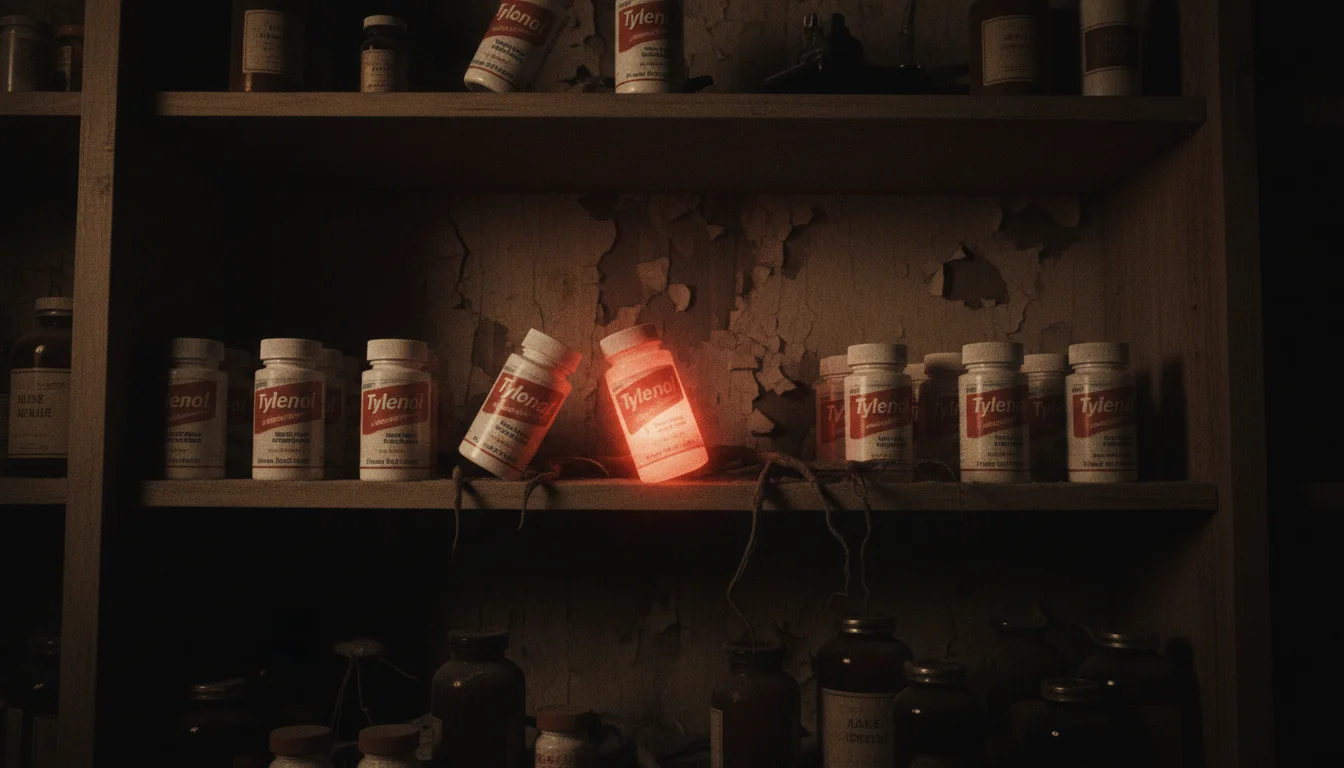
On September 29, 1982, a 12-year-old girl named Mary Kellerman woke up with a sore throat. Her parents did what millions of American parents had done countless times before - they gave her a Tylenol. Within hours, she was dead.
That same day, across the Chicago suburbs, six more people would collapse after taking the same trusted medicine. By the time anyone understood what was happening, seven people were dead, killed by a phantom who had turned America's most popular painkiller into a weapon of mass murder.
The Tylenol murders 1982 case remains one of the most disturbing unsolved crimes in American history - not because of their brutality, but because of their randomness. Someone, somewhere, had walked into ordinary stores, poisoned ordinary medicine, and walked away. Forty-three years later, we still don't know who.
The First Victims
It started with Mary Kellerman in Elk Grove Village. Her death was initially attributed to a stroke - unusual for a child, but not impossible. The medical examiner noted something strange, but moved on.
Hours later, in Arlington Heights, 27-year-old postal worker Adam Janus collapsed in his kitchen. He had taken Tylenol for chest pain. By the time paramedics arrived, he was gone.
Then came the cruel twist that would crack the case wide open.
Adam's brother Stanley and his wife Theresa came to the family home to mourn. Both complained of headaches from the stress. Someone found Adam's Tylenol bottle in the kitchen. They each took a pill.
Within hours, Stanley was dead. Theresa died two days later. Three members of the same family, killed by the same bottle of medicine.
Meanwhile, 31-year-old Mary McFarland died in a Lombard hospital. Then 27-year-old Mary Reiner in Winfield. Then 35-year-old Paula Prince, a flight attendant found dead in her Chicago apartment.
Seven people. Seven ordinary lives ended by something as mundane as a headache.
The Discovery
The break came from an unlikely hero - Helen Jensen, Arlington Heights' only public health official. Investigating the Janus deaths, she noticed something the coroner had missed: all three victims had taken pills from the same Tylenol bottle. The receipt showed it had been purchased that very day.
Jensen turned the bottle over to investigators with a terrible suspicion forming in her mind. When Cook County's chief toxicologist tested the remaining pills, he found something horrifying: four of the 44 capsules contained nearly three times the lethal dose of potassium cyanide.
The pills smelled faintly of almonds - the signature scent of cyanide.
Within hours, authorities traced the contaminated bottles. They had been manufactured at two different plants - one in Pennsylvania, one in Texas - but all had been purchased in the Chicago area. The conclusion was inescapable: someone had bought Tylenol off store shelves, opened the packages, replaced pills with cyanide capsules, and returned them to the stores to be purchased by strangers.
This was not a targeted killing. This was random. Malicious. Almost incomprehensible.
The Panic
Chicago went into crisis mode. Mayor Jane Byrne ordered all Tylenol pulled from every store in the city. Johnson & Johnson, Tylenol's manufacturer, recalled 31 million bottles nationwide - over $100 million worth of product, wiped from shelves in days.
Police cruisers drove through neighborhoods with loudspeakers: "Don't take Tylenol." Television stations interrupted programming with emergency bulletins. Customs agents at international airports asked travelers if they were carrying any American painkillers.
Halloween was two weeks away. Towns across America canceled trick-or-treating entirely, terrified that candy could be next.
The nation's most trusted pain reliever had become a symbol of terror.
The Hunt for a Ghost
The investigation that followed was massive. The FBI, Illinois Attorney General's office, and dozens of local police departments mobilized. They had an unprecedented crime scene - seven victims, multiple stores, bottles manufactured hundreds of miles apart.
In a creative but desperate move, the FBI leaked the address and gravesite of young Mary Kellerman to the press, hoping the killer might visit out of guilt or curiosity. Both locations were placed under 24-hour surveillance for months.
No one came.
A surveillance photo emerged of Paula Prince buying her fatal bottle at a Walgreens. Just feet behind her stood a bearded man. Investigators wondered: was this the killer, watching his victim purchase her own death?
They never identified him.
James Lewis: Suspect or Opportunist?
One man emerged as the prime suspect: James William Lewis, a New York City resident with a troubled past. Three days after the first death, Lewis sent a letter to Johnson & Johnson demanding $1 million to "stop the killings."
Lewis claimed he'd worked on the letter for three days - which meant, investigators later realized, he would have started writing it before the murders were publicly known.
When confronted with this timeline, Lewis changed his story. He admitted writing the extortion letter but denied committing the murders, claiming he only wanted to embarrass his wife's former employer. His fingerprints were found on pages about cyanide in a poisoning book he owned.
Lewis was convicted of extortion and served ten years in prison. But prosecutors never charged him with the murders. They couldn't prove it.
In 2010, Lewis and his wife voluntarily submitted DNA samples. They didn't match any DNA found on the contaminated bottles.
Lewis died in 2023 at age 76, maintaining his innocence until the end.
The Other Suspect
Roger Arnold, a dock worker at a Jewel-Osco grocery store, also drew investigators' attention. He told police he possessed potassium cyanide. A bar owner reported that Arnold had talked about killing people with "a white powder." A copy of The Poor Man's James Bond - containing instructions for making potassium cyanide - was found in his home.
Arnold was questioned repeatedly but never charged. The experience destroyed him. In 1983, consumed by paranoia, Arnold shot and killed an innocent man named John Stanisha, whom he mistook for the bar owner who had reported him to police.
Arnold served 15 years for murder. His DNA was eventually tested against the Tylenol evidence after his death in 2008.
No match.
The Legacy That Lasts
The Tylenol murders were never solved. But they changed everything.
In 1982, you could buy medicine in a simple cardboard box. By 1983, that was impossible. Johnson & Johnson pioneered the tamper-evident packaging that now covers every medicine, every food product, every bottle you buy. Triple seals. Shrink wrapping. "Do not use if seal is broken."
Congress passed the Federal Anti-Tampering Act in 1983, making it a federal crime to tamper with consumer products. The FDA mandated new packaging standards for all over-the-counter medications.
The entire pharmaceutical industry - indeed, the entire consumer products industry - was rebuilt because of seven deaths in Chicago.
The Unanswered Questions
Who killed Mary Kellerman? Who killed the Janus family? Who walked into stores across Chicago, methodically poisoning medicine bottles, and walked away without a trace?
Some investigators believe James Lewis was the killer and simply escaped justice through lack of evidence. Others think the murderer was someone never identified - a random actor whose motive died with them.
The most disturbing theory is the simplest: maybe there was no motive at all. Maybe someone wanted to prove they could kill strangers at random and get away with it.
They did.
Every time you peel back the safety seal on a medicine bottle, every time you check that the tamper-evident wrapper is intact, you are living in the world the Tylenol killer created. Their crimes are unsolved, but their legacy touches every American, every day.
The case remains open. The FBI still accepts tips. Somewhere, perhaps, someone knows what happened in Chicago in September 1982.
But as the decades pass and the witnesses age and the evidence degrades, it becomes increasingly likely that we will never know who turned a simple painkiller into an instrument of terror - and got away with murder.
For other cases where a killer's identity remains unknown, the Monster with 21 Faces used product tampering for extortion two years later in Japan. And Jack the Ripper remains the gold standard of unsolved murders - studied for over a century with no definitive answer.

Want to Interrogate the Suspects?
Chat with historical figures and uncover the truth behind history's greatest mysteries.
Start Your InvestigationJoin the HistorIQly Club
Get smarter about the past.
Weekly stories, deep dives, and exclusive content straight to your inbox.