The Untouchables vs. History: How Accurate Is Brian De Palma's Gangster Classic?
The Untouchables historical accuracy is rated 4/10 - Costner and De Niro deliver iconic performances, but three of the four main characters never existed.
Read Wikipedia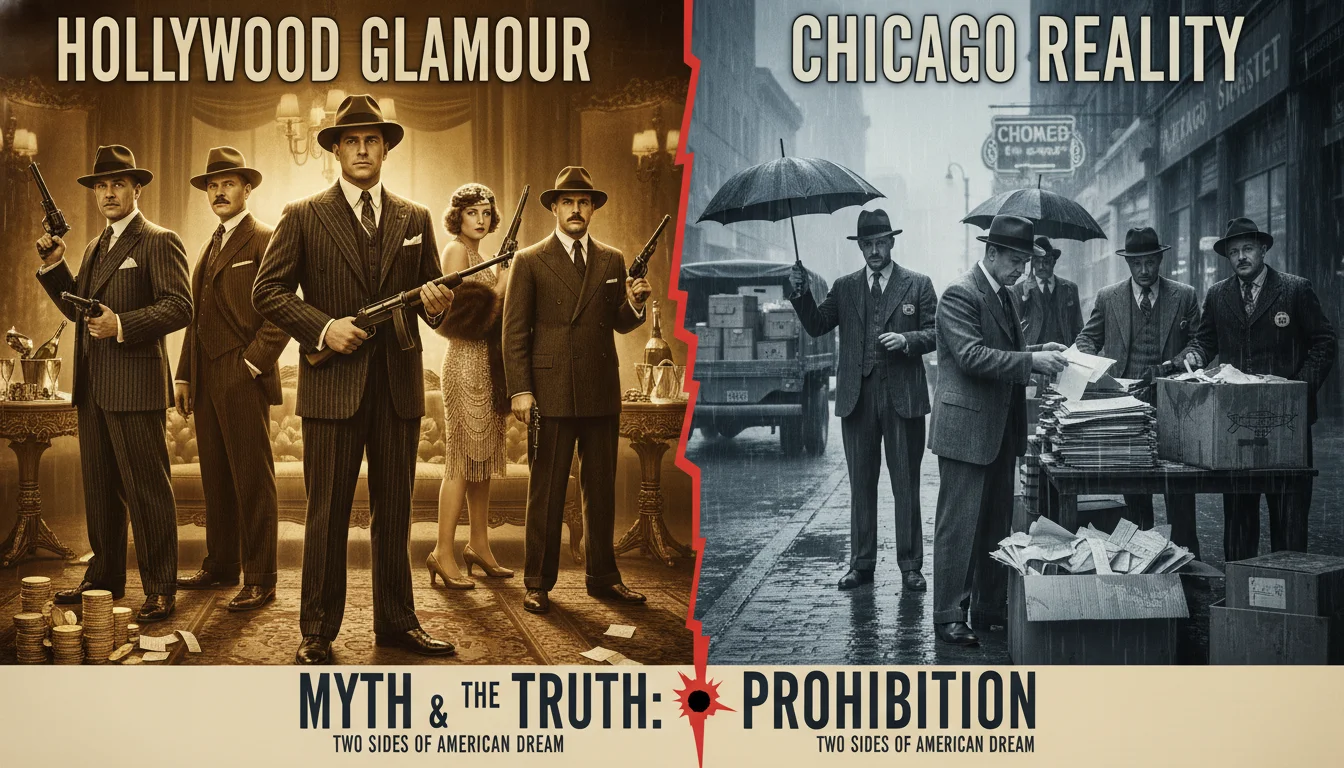
Brian De Palma's 1987 crime epic The Untouchables remains one of cinema's most stylish gangster films. With Kevin Costner as the idealistic Eliot Ness, Robert De Niro delivering an Oscar-worthy Al Capone, and Sean Connery in his Academy Award-winning role as the grizzled Irish cop Jimmy Malone, the film has cemented itself in popular culture as the definitive telling of how law enforcement brought down America's most notorious gangster.
But how much of this slick, operatic thriller actually happened? Let's separate the bootleg from the genuine article.
Quick verdict: The Untouchables uses real figures, a real Prohibition campaign, and Capone's tax conviction, but invents three members of Ness's team, exaggerates Ness's role, and fabricates its famous action scenes. Historical accuracy: 4/10.
What Hollywood Got RIGHT
Eliot Ness and His Incorruptible Team
The core premise is historically sound: Eliot Ness was a real Prohibition Bureau agent who assembled a small team of incorruptible agents in 1930-1931 to target Al Capone's bootlegging empire. The nickname "The Untouchables" was genuine - Ness himself coined it to emphasize that his team couldn't be bought by Capone's deep pockets, unlike the notoriously corrupt Chicago police force.
Ness did conduct numerous successful raids on Capone's breweries and distilleries, causing the crime boss significant financial damage and public embarrassment. The film accurately portrays the atmosphere of rampant corruption in Prohibition-era Chicago - Capone had police, judges, and politicians on his payroll.
Al Capone's Public Persona and Violence
Robert De Niro's portrayal captures much of the real Capone's character: the media-savvy showman who cultivated a public image while running a brutal criminal empire. The infamous baseball bat dinner scene, while dramatized, is based on real events. In 1929, Capone personally beat three of his own men to death at a banquet after discovering they planned to betray him - reportedly using a baseball bat or similar weapon. The victims were likely Albert Anselmi, John Scalise, and Joseph Guinta.
The Tax Evasion Angle
The film correctly identifies that it was tax evasion, not bootlegging or murder, that finally brought Capone down. On October 17, 1931, Capone was convicted on five counts of income tax evasion and sentenced to eleven years in federal prison. The movie's acknowledgment that accounting proved mightier than guns is historically accurate.
Period Authenticity
De Palma and his production team nailed the visual atmosphere of 1930s Chicago. The costumes, vehicles, architecture, and technology - especially those iconic Thompson submachine guns - are all period-appropriate. The sense of a city drowning in corruption while flashy gangsters lived like kings captures the era perfectly.
What Hollywood Got WRONG
The Entire Team Is Fictional
Here's the biggest historical liberty: Jimmy Malone, George Stone, and Oscar Wallace - the three men who form Ness's team alongside him in the film - never existed. Sean Connery's beloved Irish beat cop? Invented. The Italian sharpshooter who changes his name to assimilate? Made up. The nerdy accountant who joins the raids? Pure fiction.
The real Untouchables numbered around ten agents, and none bore any resemblance to these characters. Their names included Marty Lahart, Sam Seager, Barney Cloonan, and Lyle Chapman - men who've been completely forgotten while movie audiences remember fictional characters instead.
Ness's Role Was Massively Exaggerated
The film presents Ness as the central figure in Capone's downfall. In reality, his contribution was secondary. The crucial tax evasion investigation was conducted primarily by IRS agents Frank J. Wilson and Elmer Irey - not by Ness's Prohibition unit. Ness's brewery raids were important for generating publicity and hurting Capone's cash flow, but they were essentially diversionary tactics while the real case was built by accountants poring over financial records.
The movie's climactic courtroom scenes show Ness leading the prosecution. In reality, he had little involvement in the actual trial.
The Real Eliot Ness Was No Boy Scout
Kevin Costner plays Ness as a clean-cut family man who refuses to let his team drink while enforcing Prohibition. The historical Ness was considerably more complicated. He was known as a heavy drinker himself - ironic for a Prohibition agent - and was married three times due to multiple infidelities. His later life was marked by failed business ventures, alcoholism, and depression. He died in 1957, aged 54, just before his memoir "The Untouchables" was published and made him posthumously famous.
That Train Station Shootout Never Happened
The film's most visually stunning sequence - the slow-motion baby carriage rolling down the Union Station steps while a gunfight erupts around it, inspired by Eisenstein's Battleship Potemkin - is complete fabrication. It's gorgeous cinema, but pure fantasy.
Similarly, the dramatic horseback raid at the Canadian border never occurred. While liquor smuggling from Canada was common, Ness never led any such mounted assault.
Frank Nitti's Death Is Completely Wrong
The film shows Ness throwing Frank Nitti off a rooftop after Nitti murders members of his team. In reality, Nitti died in 1943 - twelve years after Capone's conviction - by suicide. He shot himself rather than face federal indictment on extortion charges. Ness had nothing to do with it.
The Murdered Team Members Never Existed
Wallace and Malone's dramatic deaths at Nitti's hands make for powerful cinema, but since these characters were fictional, so were their deaths. No members of the real Untouchables were killed during the Capone investigation.
Historical Accuracy Score: 4/10
The Untouchables is a masterclass in style, atmosphere, and operatic storytelling - but it's historical fiction with heavy emphasis on the fiction. The film takes a real setting (Prohibition Chicago), real central figures (Ness and Capone), and a real outcome (Capone's tax conviction), then invents almost everything in between.
Three of the four main protagonists never existed. The fourth, Ness, is transformed from a flawed, self-promoting alcoholic into an idealistic crusader. The IRS agents who actually built the case are erased from history. Dramatic shootouts and heroic deaths are fabricated wholesale.
Does this make it a bad film? Absolutely not - it's a thrilling piece of cinema that earned its place in the gangster movie pantheon. But anyone who walks away thinking they understand the real story of Capone's downfall has been sold a stylish bill of goods.
The real Untouchables deserved recognition for their genuine courage in a corrupt city. Instead, they've been replaced by fictional characters while the actual heroes - the IRS accountants who followed the money - remain unknown. In Hollywood's version of history, apparently even tax men can't catch a break.
For more gangster films tested against the record, see Public Enemies and Goodfellas.
Quick Answers
Common questions about this topic
Is The Untouchables based on a true story?
Loosely. Eliot Ness, Al Capone, the Untouchables, and Capone's tax conviction were real, but the film invents most of its central team and action scenes.
How accurate is The Untouchables?
The film captures Prohibition-era corruption and Capone's tax conviction, but it heavily exaggerates Ness's role and fabricates major characters and set pieces. This review rates it 4/10.
Was Jimmy Malone a real person?
No. Sean Connery's Jimmy Malone is a fictional character, as are George Stone and Oscar Wallace.
Did Eliot Ness bring down Al Capone?
Ness's raids hurt Capone's bootlegging operation, but IRS investigators Frank J. Wilson and Elmer Irey built the tax-evasion case that sent Capone to prison.

Debate the Accuracy with the Real Figures
Ask the real people what Hollywood got wrong about their lives.
Create your free account →No card required. Some figures and features require a paid plan.
Join the HistorIQly Club
Get smarter about the past.
Weekly stories, deep dives, and exclusive content straight to your inbox.