Time Traveler's Guide to Aztec Tenochtitlan, 1500 CE
Your guide to Aztec Tenochtitlan in 1500 - the Venice of the Americas, a floating city of 200,000 souls where chocolate is currency and the gods demand blood.
Read Wikipedia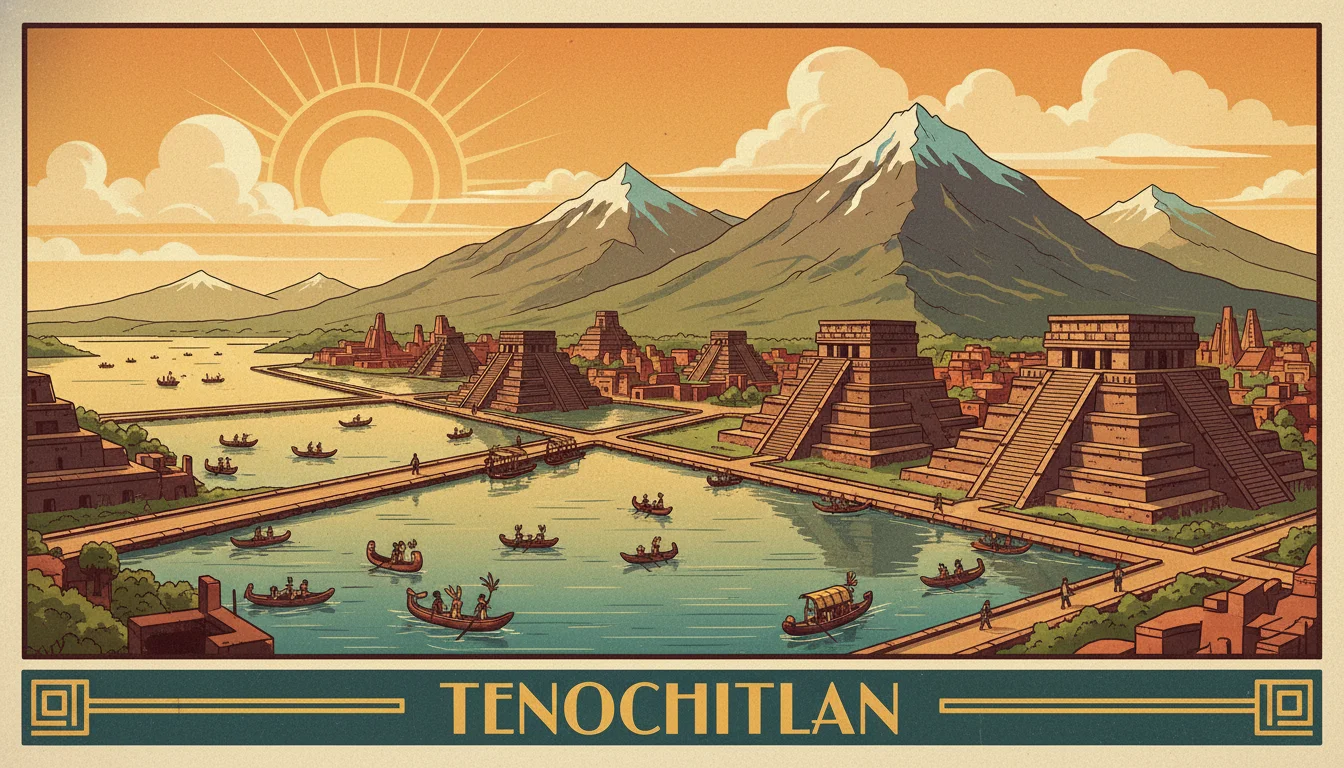
You materialize on a stone causeway stretching across a vast lake, and your jaw drops. Rising from the water before you is Tenochtitlan - the capital of the Aztec Empire and one of the largest cities on Earth. With over 200,000 inhabitants, it dwarfs London and most European capitals of this era, rivaled in scale only by Paris, Venice, and Constantinople. Welcome to Mexico's great lake, nineteen years before Hernan Cortes arrives to change everything.
Getting Your Bearings
Tenochtitlan sits on an island in Lake Texcoco, connected to the mainland by three massive causeways. The city is laid out in a precise grid pattern that would make modern urban planners weep with envy. Canals serve as streets, and canoes are the Ubers of 1500.
The Templo Mayor - the great twin pyramid at the city's heart - dominates the skyline. One temple honors Tlaloc, god of rain, painted in blue and white. The other belongs to Huitzilopochtli, god of war and the sun, decorated in red. You'll want to admire these from a respectful distance.
What to Wear
Forget your jeans. Social status here is literally worn on your sleeves - or lack thereof.
Commoners (macehualli) wear simple cotton loincloths (maxtlatl) for men and wrap-around skirts with blouses (huipil) for women. If you're posing as a merchant or noble, you can add a cloak (tilmatli) - but be careful. Wearing cotton if you're supposed to be a commoner is illegal. Nobles wear cloaks made from maguey fiber adorned with elaborate designs.
Leave the feathers to the priests and warriors. That quetzal plume headdress might look cool, but wearing one without proper rank could get you killed.
Go barefoot. Only the emperor and highest nobles wear sandals within city limits.
What to Eat
Good news: you're about to discover why the Aztecs were food pioneers.
Breakfast: Atole - a warm, thick maize drink flavored with vanilla or chili. It's basically the original smoothie bowl, minus the Instagram.
Lunch and Dinner: Tamales are everywhere, stuffed with beans, turkey, fish, or even insects. Tortillas accompany everything. Try the tlacoyos - thick oval tortillas stuffed with beans.
Protein Sources: Turkey, duck, fish, and - here's where it gets interesting - insects. Maguey worms, ant larvae, and grasshoppers are delicacies. Don't knock them until you've tried them with a sprinkle of chili.
Chocolate: The drink of nobles, made from cacao beans ground with water, vanilla, and chili. It's bitter, frothy, and absolutely nothing like your Swiss Miss. Cacao beans double as currency, so drinking chocolate is literally consuming money.
What to Avoid: If someone offers you "special meat" from a temple ceremony... politely decline and change the subject.
Money and Markets
The Tlatelolco market is the beating commercial heart of the empire. Thousands of merchants gather daily to trade goods from across Mesoamerica. Spanish conquistadors who later witnessed it compared it favorably to the markets of Constantinople and Rome.
Currency: Cacao beans for small purchases. Cotton cloaks (quachtli) for larger transactions. A rabbit might cost about 30 cacao beans. A slave? Around 20 quachtli.
Haggling: Expected and respected. Just remember - marketplace judges patrol the aisles and severely punish fraud or theft.
What to Buy: Obsidian mirrors make excellent souvenirs. Jade if you can afford it. Vanilla and chili peppers to revolutionize cooking back home.
Customs That Could Save Your Life
Greetings: Touch the ground with your finger, then touch your lips. This shows respect and humility.
Eye Contact: Avoid it with nobles and priests. Looking directly at someone of higher status is considered rude and possibly threatening.
The Calendar: The Aztecs run on two interlocking calendars - a 365-day solar calendar and a 260-day ritual calendar. Certain days are considered lucky or unlucky for various activities. Before making any major purchases or decisions, ask a local what kind of day it is.
Blood Offerings: Minor self-sacrifice is common piety. Pricking your earlobes or tongue with maguey spines and offering a few drops of blood to the gods is expected, especially at temples. If this seems extreme, remember that the alternative - being chosen for the main event - is considerably worse.
Dangers to Watch For
Human Sacrifice: Yes, it's real, and it's central to Aztec religion. The gods gave their blood to create humanity - humanity must reciprocate. Most sacrifices are war captives, but festivals occasionally require other participants. Keep a low profile during major religious celebrations like Toxcatl (May) or Panquetzaliztli (December).
The Flower Wars: The Aztecs and neighboring states wage ritual battles specifically to capture prisoners for sacrifice. These aren't like European wars - the goal is to capture, not kill. Being taken alive in a flower war means a one-way trip up the temple steps.
Disease: You're actually the danger here. If you're carrying smallpox, measles, or influenza, you could accidentally cause a catastrophe that historically killed 90% of the indigenous population. Please time travel responsibly.
Quicksand and Chinampas: The famous "floating gardens" (chinampas) are agricultural marvels - artificial islands built up from the lake bed. Some are stable, some are not. Watch your step, especially after rain.
Must-See Attractions
The Templo Mayor: The religious heart of the empire. Climb the 114 steps for an incredible view - just time your visit to avoid ceremonies.
The Royal Aviary: Montezuma II maintains a zoo and aviary with creatures from across the empire. Jaguars, eagles, and exotic birds you've never imagined. The emperor employs 300 people just to care for the birds.
The Botanical Gardens: At Huaxtepec, the emperor cultivates medicinal and ornamental plants from every climate zone in the empire. Sixteenth-century Europeans had nothing comparable.
The Causeway of Iztapalapa: The main entrance to the city, featuring gardens, fountains, and views that made the Spanish conquistadors question whether they were dreaming.
Final Tips
- Learn some Nahuatl phrases. "Tlazocamati" (thank you) and "Cualli tonalli" (good day) go a long way.
- Don't mention anything about bearded men from the east. You'll just cause unnecessary anxiety.
- The lake water isn't safe to drink, but the aqueduct from Chapultepec brings fresh spring water into the city.
- Time your departure. Cortes arrives in 1519. By 1521, this magnificent city will be rubble, its population decimated by conquest and disease. Visit now while the eagle still perches proudly on the cactus.
Tenochtitlan isn't just a city - it's a testament to human ingenuity, built literally on water through engineering brilliance that European visitors couldn't comprehend. The Aztecs may be remembered for their sacrifices, but they should equally be remembered for their poetry, their gardens, their chocolate, and the floating metropolis they carved from a lake. For the fate of this city twenty years later, see our guide to Aztec Tlatelolco in 1521, and for a parallel Mesoamerican civilization, the Inca capital at Cusco.
Pack light, respect the gods, and whatever you do - stay away from the temples during the rainy season festivals.
Safe travels, time warrior.

Need Advice from Someone Who Lived There?
Get firsthand accounts from people who actually lived through these moments in history.
Create your free account →No card required. Some figures and features require a paid plan.
Join the HistorIQly Club
Get smarter about the past.
Weekly stories, deep dives, and exclusive content straight to your inbox.