A Time Traveler's Guide to Aztec Tlatelolco, 1521
Aztec Tlatelolco 1521: guide to the largest market in the Americas before the Spanish siege. Navigate the causeways, the tianguis, and the city's final months.
Read Wikipedia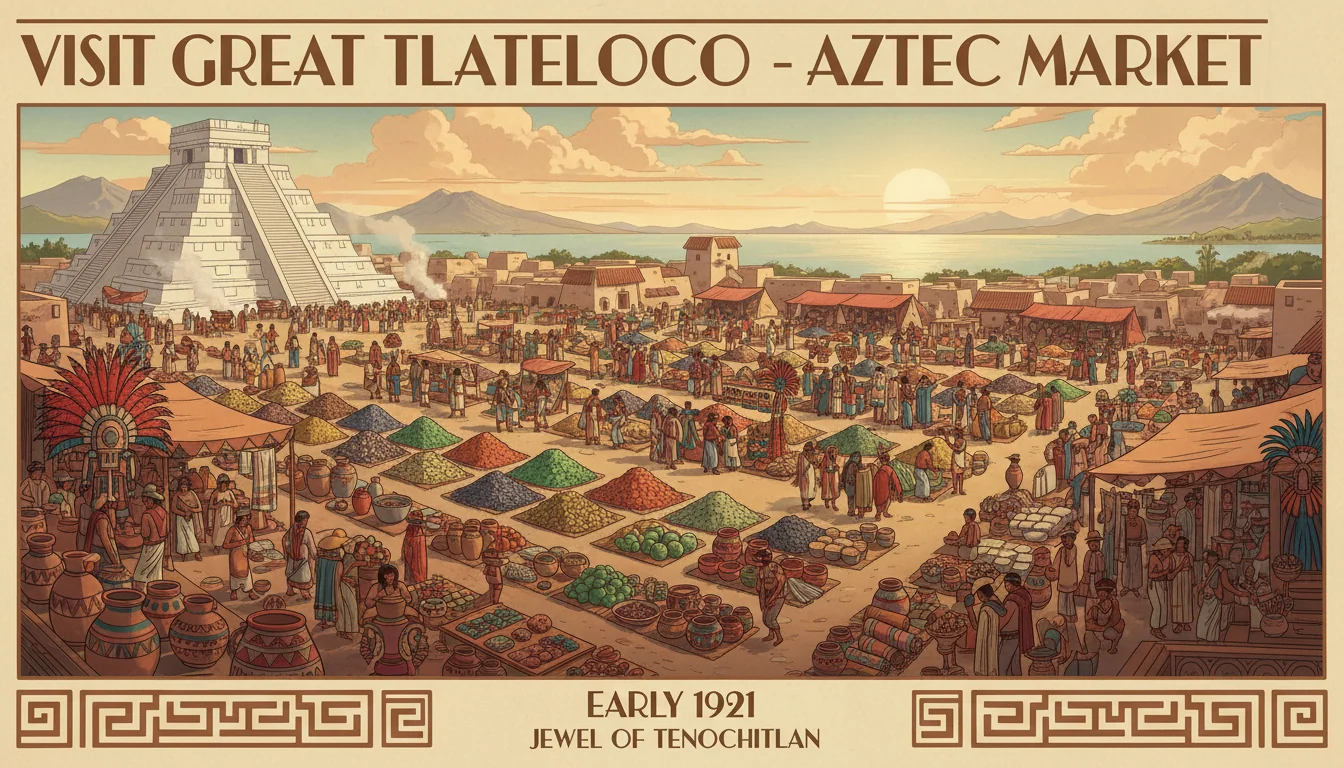
Tlatelolco in early 1521 is both the greatest city in the Americas and a place that is, depending on your timing, about six months from total destruction. You should know this before you go. The Spanish under Hernan Cortes arrived at the island capital of Tenochtitlan in November 1519, spent months as Moctezuma's uneasy guests, and were driven out in the chaotic retreat of the Noche Triste in June 1520. They are now on the mainland, rebuilding their allied army with Tlaxcalan and other indigenous partners, laying the logistical groundwork for a siege. The blockade of the island begins roughly in May or June 1521. The city falls on August 13.
If you arrive in the early months of 1521, you are visiting at peak grandeur and maximum anxiety. The market will still be running. The pyramid will be gleaming. The causeways will be open. But there is fear underneath everything: word spreading through the neighborhoods, a political crisis in the ruling class, and a citizenry that has recently survived a smallpox epidemic that killed a significant portion of the population and has not entirely recovered. Choose your timing carefully. January or February 1521 is the practical window.
What you are actually entering
Tlatelolco is not Tenochtitlan, though the two cities share an island in Lake Texcoco. They were rivals until the 1470s, when the Triple Alliance absorbed Tlatelolco by force after a local ruler attempted independence. Since then, Tlatelolco has been administered by a military governor rather than its own tlatoani, something between a conquered neighborhood and a managed dependency. There is genuine pride here, and old resentment, and the largest commercial market in the known world.
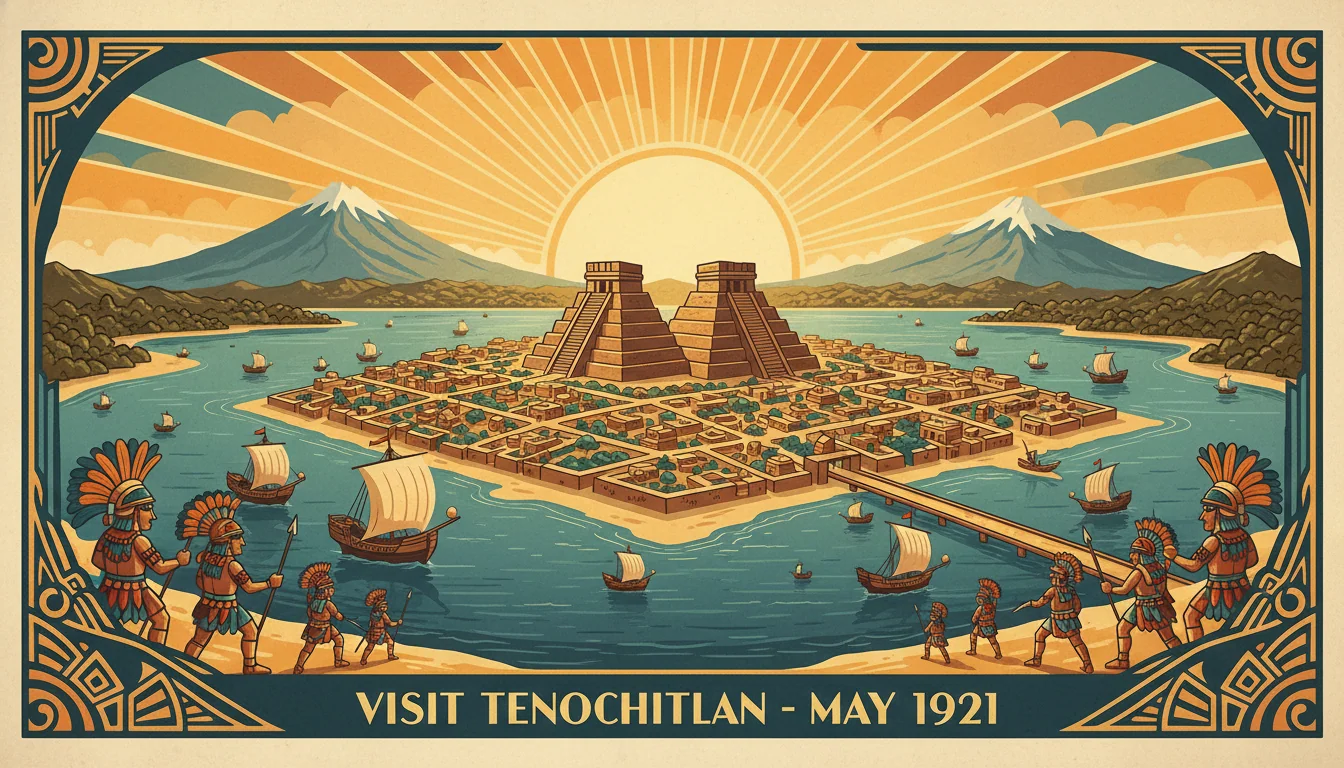
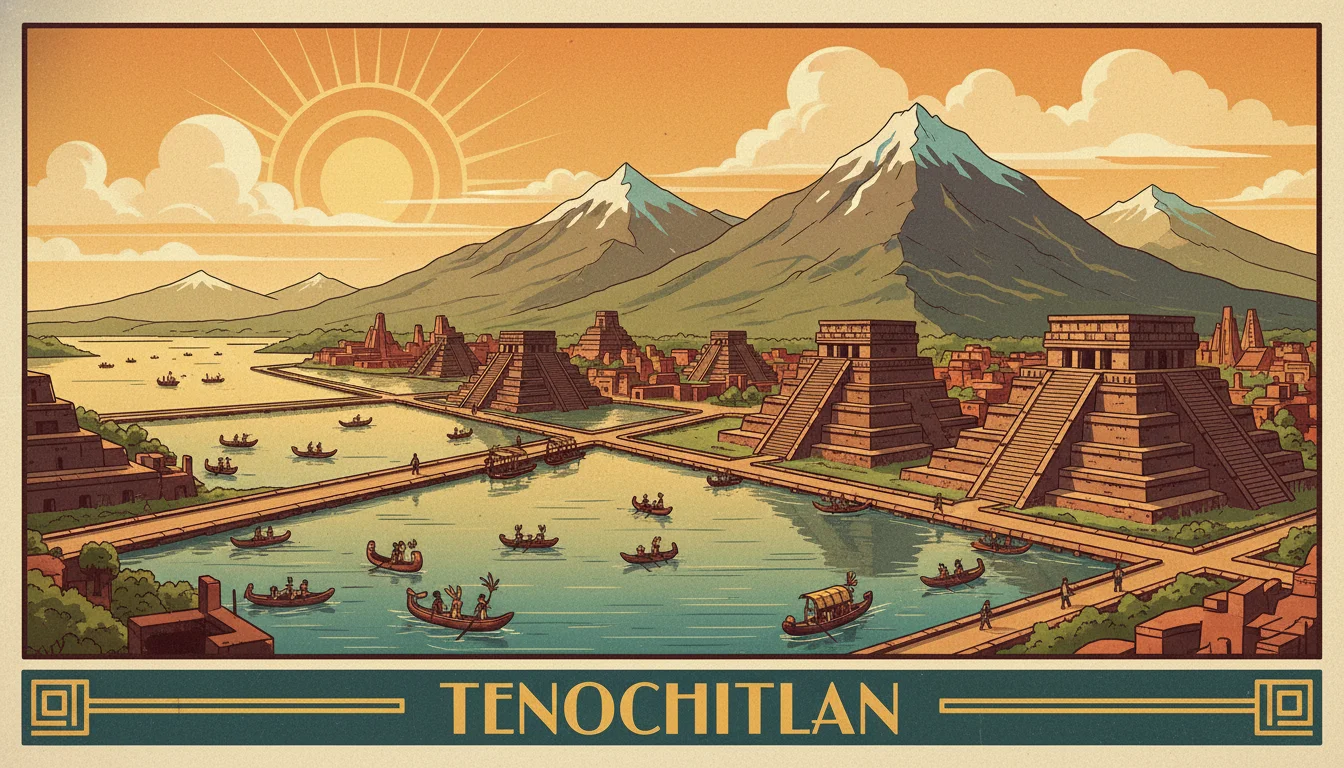
The island sits in the western part of Lake Texcoco at roughly 2,240 meters above sea level, surrounded by water in every direction except via three great causeways. To the south runs the Iztapalapa causeway, broad enough for eight men walking abreast. To the north runs the Tepeyac causeway. To the west, the Tlacopan causeway, which the Spanish later call the road they nearly die fleeing along. Each causeway has removable wooden drawbridge sections that convert the island into a fortress. The city is clean in a way that will surprise you. There are dedicated waste-disposal workers and canoe collection for human waste. Streets are swept daily. Fresh water arrives via an aqueduct from Chapultepec.
Tenochtitlan and Tlatelolco together hold somewhere between 200,000 and 300,000 people, making this among the largest urban concentrations on earth in 1521. Cortes's lieutenant Bernal Diaz del Castillo, who saw the combined city in 1519, wrote that he stood on the great temple and looked out in astonishment because "all was shining in the light, and from the tall and glittering towers arose the sound of trumpets."
Getting past the entrance
You need a cover identity. The most plausible is a pochteca, one of the long-distance merchants who travel between the Triple Alliance's vassal cities and the great central markets. The pochteca are a hereditary guild, recognizable by their plain maguey-fiber cloaks, the heavy loads they carry on tumplines, and their practice of traveling at night or at odd hours to avoid the jealousy of the warrior class. If you cannot convincingly claim to be a pochteca, claim to be a slave or servant accompanying one.
Do not arrive looking prosperous. Overt wealth in a stranger invites inspection, and inspection in early 1521 is particularly dangerous. The warrior class is mobilizing and on edge. Men who cannot explain their business clearly, or who look like they might be messengers or scouts from the mainland factions, are questioned at the causeways.
Nahuatl is the language of the city. You do not need fluency - many peripheral traders speak only their regional languages - but you should know the numerals, the words for common goods, and the basic greeting formula for entering someone's presence. A slight bow with downcast eyes signals respect. Looking a warrior or a noble directly in the face is an act of presumption. Do not make that error twice.
The market
The Tianguis of Tlatelolco is the reason most people would want to visit 1521, and it exceeds any description you have read. Bernal Diaz wrote that he had seen great markets in Italy and in Spain and had "never beheld so large a marketplace nor so well regulated and crowded with people." He estimated the market drew 60,000 people on ordinary days, more on the five-day festival market cycle.
The market is organized by product. Goldworkers occupy one section, potters another, featherworkers another. There is a section for slaves: men and women walked on leashes attached to wooden yokes around their necks, carrying tags identifying their history and the circumstances of their sale. There is a section for cacao, which functions both as food and as currency. Stalls sell ground maize, prepared tortillas, tamales, dog meat both live and butchered, dried insects, fresh algae from the lake pressed into cakes, rubber balls used in the ceremonial ball game, jade beads, obsidian blades, and cotton goods dyed in colors you will not see in any European market of this period.
The market has its own judiciary. Inspectors patrol the aisles checking that sellers are using correct measures and not adulterating goods. Disputes are resolved on the spot. The administrative order here is sophisticated and consistent, and it runs on fixed prices for common goods and negotiated prices for rare ones.
If you want to buy anything, bring cacao beans or small cotton cloaks called quachtli. Metal coins do not exist here. Do not offer anything that cannot be explained in the terms of the market. If you produce something that does not belong to 1521, you will face questions you cannot answer.
What to eat and what to avoid
The safest food is anything prepared fresh and consumed immediately. Tortillas cooked on a clay griddle called a comal are eaten at every level of society. Tamales steamed in corn husks are sold throughout the market. Atole, a hot maize drink, is taken morning and evening.
The more adventurous options include pulque, a mildly fermented drink made from the sap of the maguey plant. It is legal and widely consumed, but the rules about public drunkenness are real and enforced. Men under elderly age who are visibly drunk in public face punishment. Elderly people, roughly defined as those who have survived past their early sixties, may drink freely - reaching old age in 16th-century Mesoamerica is considered its own credential. If you are obviously not elderly, drink lightly in public.
Avoid eating anything you cannot identify. The market sells meat from turkey, dog, deer, and fish from the lake. On certain ritual occasions, other foods are available that you are better off not investigating.
The pyramid and the ceremonies
The Great Temple of Tlatelolco stands at the heart of the ceremonial precinct. It is smaller than the Templo Mayor of neighboring Tenochtitlan but still formidable: a dual-staircase pyramid with shrines at the summit, painted in red and white, dominating the northern end of the island. There are active priestly colleges in the precinct, and ceremonies follow the 365-day solar calendar, the 260-day ritual calendar, and the interaction between them.
You can observe processions from a respectful distance. Do not attempt to enter priestly precincts or approach the sacrificial areas. Human sacrifice is practiced at this temple as part of the cosmological framework that underpins Aztec religious life, and it will occur on your visit if you stay long enough. What disturbed Spanish observers most was not its existence - European history has its own violence - but its systematic public visibility. It is performed at the summit of the pyramid in full view of the city. You will see it or you will not, but you cannot reasonably pretend not to know it is happening.
The worldview surrounding it - a cosmos requiring periodic human blood to continue running, a universe in which the sun must be fed to rise - is internally coherent and held with genuine conviction by the people around you. Your job as a visitor is to observe without causing an incident.
What to watch for in early 1521
The city knows something is wrong. Word has filtered in about battles on the mainland, about Cortes's army growing with Tlaxcalan allies, about the unusual activities around the lake. The new tlatoani Cuauhtemoc, who took power after his predecessor Cuitlahuac died of smallpox in late 1520, is consolidating the military and fortifying the causeways.
The smallpox epidemic is the detail that tends to disappear from popular accounts of this period. The disease swept through the island city in the winter of 1520-21, killing perhaps a third of the population - estimates vary and the records are incomplete, but the physical evidence in later archaeological analysis suggests catastrophic mortality. You will see the evidence everywhere: houses with too few occupants, families visibly smaller than their households, a civic grief that has not been fully processed. Cuauhtemoc is trying to hold together a city still in shock.
The people you are walking among are not defeated. They are preparing. The fortifications are being extended, the food supplies are being consolidated, warriors are being organized. The siege that starts in May or June will be ferocious and contested on both sides. The city will not fall quickly or without enormous cost to the Spanish and their allies.
Leave before the siege begins if you possibly can. The blockade that Cortes imposes is designed to starve the city into surrender, and it works over three months of brutal fighting. The Tlatelolco market is one of the last places to be surrendered. By August 13, when Cuauhtemoc is captured in a canoe trying to escape across the lake, the city that was the greatest in the Americas is in ruins.
Come in January. See the market. Watch the causeways in the morning light when the mist comes off the lake. Leave before the summer. Aztec Tlatelolco 1521 is a city at its peak and on the edge of catastrophe simultaneously - the most dramatic window in Mesoamerican history.
For earlier Mesoamerican civilization, our guide to Zapotec Monte Alban in 300 CE covers the city that dominated the Valley of Oaxaca a thousand years before the Aztec rose. The Inca capital at Cusco in 1450 offers a contemporary parallel in South America.

Need Advice from Someone Who Lived There?
Get firsthand accounts from people who actually lived through these moments in history.
Create your free account →No card required. Some figures and features require a paid plan.
Join the HistorIQly Club
Get smarter about the past.
Weekly stories, deep dives, and exclusive content straight to your inbox.