Time Traveler's Guide to Bagan, 1100 AD
Your survival guide to Bagan, the ancient Pagan Kingdom's capital in 1100 AD - where to pray, what to offer the monks, and how to avoid offending the nat spirits.
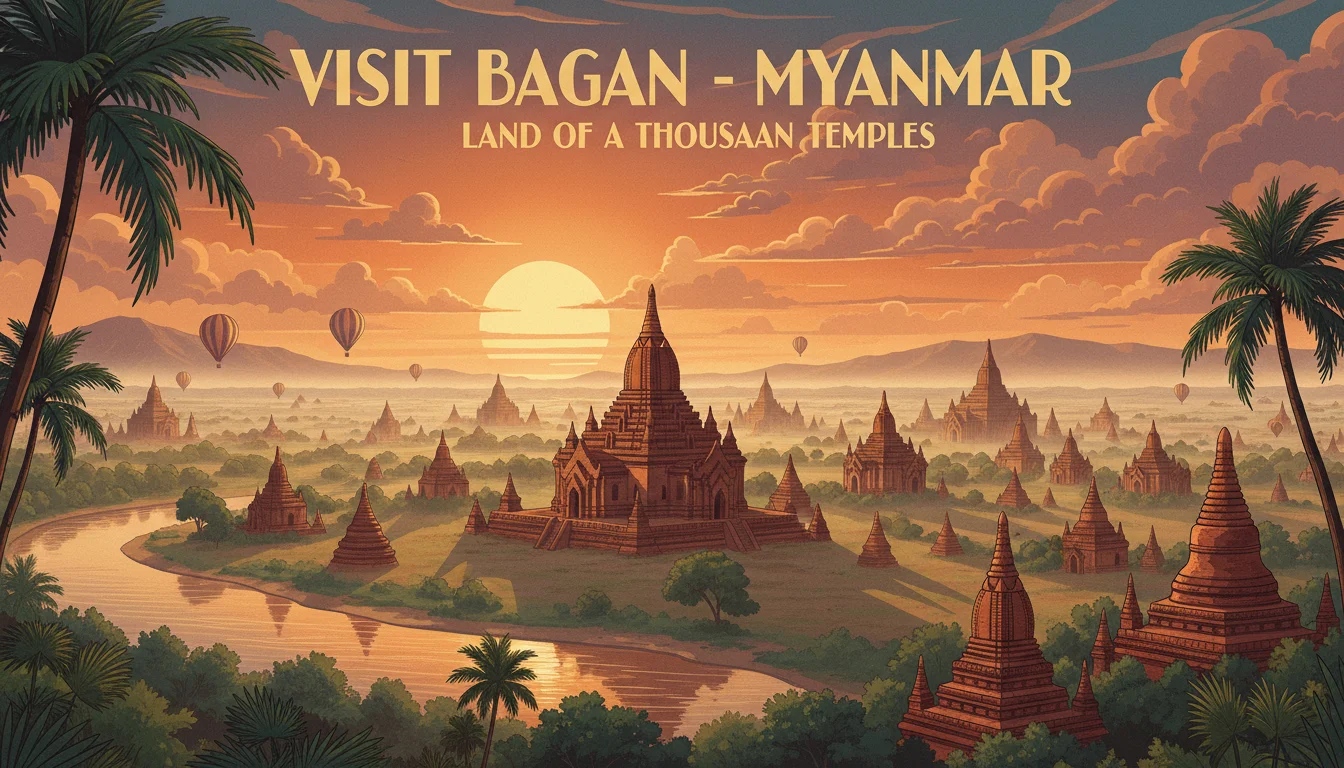
You materialize at dawn on the banks of the Irrawaddy River, and your first thought is that you've stepped into a fever dream. Stretching across the plain before you are thousands - literally thousands - of brick temples, pagodas, and stupas glowing pink and gold in the early light. The air smells of sandalwood incense and river mud. Welcome to Bagan, capital of the Pagan Kingdom, the most temple-dense city the world has ever known.
When You've Arrived
You've landed during the reign of King Kyansittha (1084-1113), one of Bagan's greatest rulers. This is the golden age of Burmese civilization. The kingdom controls most of modern Myanmar and parts of Thailand, and the pious royalty have been building temples at a truly obsessive rate for over a century. By some estimates, there are already over 10,000 religious structures dotting this 26-square-mile plain, with more going up every month.
The population is around 200,000, making this one of the larger cities in Southeast Asia. Theravada Buddhism dominates, but don't be fooled - the old animist spirits called "nats" are very much still worshipped alongside the Buddha.
What to Wear
Men should wear a longyi (wraparound skirt) reaching the ankles, typically in darker colors - maroon, brown, or deep green. Fold it at the front and tuck it in at the waist. Your upper body can be bare (acceptable for commoners working in the heat) or covered with a light cotton jacket. Going barefoot is normal; sandals are acceptable but remove them before entering any temple.
Women wear the htamein, similar to the longyi but wrapped and tucked differently. Colors can be brighter - yellows, pinks, and patterns are popular. A light blouse covers the upper body. Hair should be pulled up and pinned, often decorated with flowers. Married women typically wear their hair in a bun; unmarried women may let some hair fall.
Absolutely critical: remove footwear before entering ANY religious building, no matter how small or ruined it appears. This includes climbing the exterior of temples. Violations could get you arrested or beaten.
Finding Your Way
The city sprawls along the eastern bank of the Irrawaddy in three main areas. The walled city of Bagan proper sits in the north, containing the royal palace and administrative buildings. To the south lies Myinkaba, the original settlement, thick with important temples. Further south still is Thiripyitsaya (modern Nyaung U area), a trading hub.
Bullock carts serve as taxis along the dusty main roads. A ride across town costs a few copper coins. Most people walk. The wealthy travel by palanquin or on horseback.
Riverboats constantly move up and down the Irrawaddy, carrying goods and passengers. For longer journeys, this is your best option - faster and far more comfortable than overland travel through tiger-infested jungle.
The Money Situation
The economy runs on a combination of silver by weight, copper coins, and straight barter. A kyat of silver (about 16 grams) will keep you comfortable for a week. Copper coins handle daily purchases - food, ferry crossings, small offerings.
For major transactions, silver gets weighed on scales. Carry your silver in small pieces so you can chip off what you need. Gold exists but is mostly reserved for royal transactions and temple donations.
Temple lands control much of the agricultural economy. Slaves (war captives and debt bondsmen) work these lands. Yes, slavery is normal here. Try not to make waves about it.
What to Eat
Burmese cuisine is already delicious in this era. Rice is the foundation of every meal, eaten with curries of fish, chicken, or pork swimming in oil (the oil preserves the meat in this climate). Ngapi, a fermented fish paste, flavors nearly everything - it's pungent but addictive once you adjust.
Street food is everywhere. Try mohinga, a fish-based rice noodle soup eaten for breakfast by half the city. Vendors sell banana fritters, sticky rice cakes wrapped in leaves, and grilled river fish.
Tea came from China via the Shan hills, and teahouses are already social centers. Sweet, milky tea served with palm sugar is a revelation.
Betel nut is chewed constantly by both sexes and all classes - it's mildly stimulating and everyone's teeth are stained red because of it. Refusing offered betel is rude; just chew politely and spit discreetly.
Social Survival
The hierarchy is rigid. The king is semi-divine, supported by ministers and an extensive royal family. Below them come the priesthood (highly respected), then military officials, merchants, artisans, farmers, and finally slaves.
Never position yourself physically higher than royalty or senior monks. This means sitting lower, not pointing your feet toward them, and bowing appropriately. Feet are considered the lowest part of the body - pointing them at someone or using them to indicate anything is deeply offensive.
The sangha (monkhood) holds enormous power. Every male is expected to become a monk at least temporarily, usually as a teenager. Monks are fed by the community through daily alms rounds - you'll see orange-robed processions every morning at dawn. If you're Buddhist (or pretending to be), joining these donations builds social capital.
Women have more rights than in many medieval societies. They can own property, run businesses, and divorce. But public life remains largely male, and religious leadership is exclusively so.
The Temple Scene
Every temple tells a story through its architecture and murals. The Mon-influenced temples (older, from the 11th century) tend to have darker interiors and more Indian-style stupas. Newer Burmese-style temples are airier with multiple terraces.
Must-see structures during this era:
Ananda Temple - Completed in 1105, this is the architectural masterpiece of Kyansittha's reign. Four massive standing Buddhas face the cardinal directions, bathed in light from windows angled to illuminate their serene gold faces. The interior murals depict the Buddha's previous lives.
Shwezigon Pagoda - The prototype for all Burmese-style stupas, still being refined and expanded. Its golden bell-shaped dome dominates Nyaung U. Legend says it enshrines a tooth and bone of the Buddha himself.
Manuha Temple - Built by a captive Mon king with cramped, oversized Buddha images that supposedly express his suffering in captivity. The locals argue whether this is brilliant symbolism or just bad planning.
Don't just visit the famous ones. Explore the smaller temples - many contain stunning murals showing daily life, court scenes, and yes, the occasional erotic art hidden in corners (Buddhism here is practical about human nature).
Nat Spirits
Here's where it gets interesting. Official Theravada Buddhism discourages spirit worship, but the Pagan court pragmatically incorporated 37 official nats (spirits) into the religious framework. You'll see nat shrines in homes, at crossroads, in temple courtyards.
Mount Popa, a volcanic peak visible from Bagan on clear days, is the nat spirit homeland. Pilgrimages there are popular. In the city, flower offerings and small food gifts to nat shrines are constant.
Some nats have specific domains - one protects travelers, another ensures good harvests, others govern fertility. Spirit mediums (often women) channel the nats during festivals involving music, dance, and possession trance.
Don't mock the nats. Even skeptical elites hedge their bets with offerings. A traveler dismissing local spirits invites bad luck at best and violent retribution at worst.
Dangers
Health is your biggest threat. Malaria is endemic - the mosquitoes here are relentless at dawn and dusk. Water-borne diseases are common; stick to boiled water and tea. The heat can be brutal from March to May.
Political violence is currently low under Kyansittha's stable rule, but the succession was messy (he may have murdered his predecessor) and the next transition won't be smooth. Keep your head down regarding palace politics.
Wildlife outside the city includes tigers, elephants, cobras, and crocodiles in the river. Don't wander into the jungle alone.
Best Souvenirs
Lacquerware is already a refined Bagan specialty - bowls, boxes, and containers made of woven bamboo coated in layers of black or red lacquer, then decorated with gold leaf or engraved designs. The production process takes months. A high-quality lacquer box is a legitimate treasure.
Palm-leaf manuscripts containing Buddhist texts make excellent gifts, though commissioning one takes time. Bronze Buddha images in various sizes are available from workshops throughout the city.
Cotton and silk textiles woven with local patterns show skilled craftsmanship. Just don't try to take back any sacred temple artifacts - that's a crime here and bad karma anywhere.
The Bagan Experience
Rise before dawn. Find a high temple terrace and watch the plain emerge from the mist - thousands of temple spires appearing like a landscape from another world. Listen to the bells in the monasteries and the calls of birds waking in the tamarind trees.
Bagan isn't just a city; it's a civilization expressing its deepest beliefs in brick and stucco. Every king, queen, minister, and wealthy merchant has tried to earn merit by building something that will endure. The result is a sacred plain unlike anything else on Earth.
Just remember to take off your shoes. Seriously. Every single time.
For other Southeast Asian time-travel destinations of the same era, our guides to Srivijaya Palembang in 850 AD and Khmer Angkor in 1150 AD explore the neighboring empires that shared this world.

Need Advice from Someone Who Lived There?
Get firsthand accounts from people who actually lived through these moments in history.
Ask Them YourselfJoin the HistorIQly Club
Get smarter about the past.
Weekly stories, deep dives, and exclusive content straight to your inbox.