A Time Traveler's Guide to Song Dynasty Hangzhou (1100 AD)
Survive and thrive in the world's largest city. Your practical guide to navigating the canals, night markets, and teahouses of Song Dynasty Hangzhou.
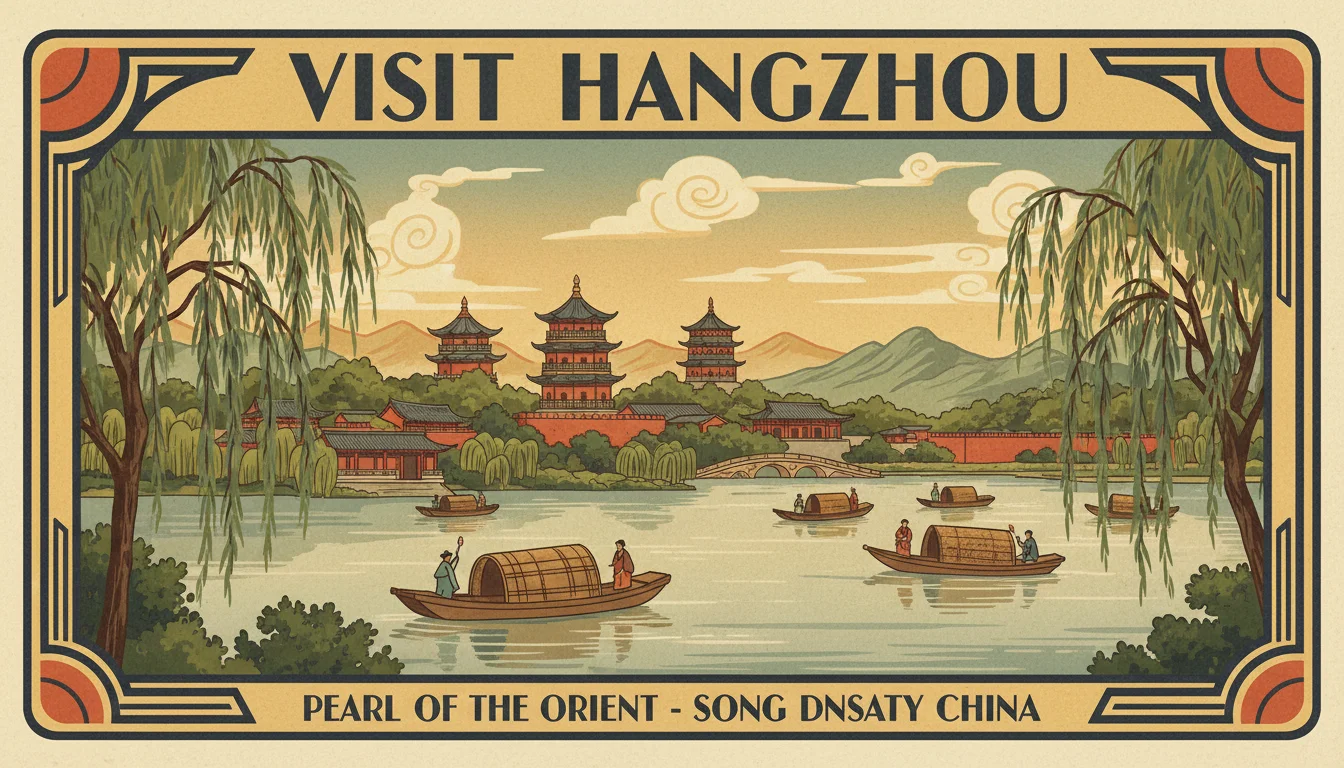
You've just materialized on the shores of West Lake in the year 1100 AD. Congratulations - you're standing in the largest, wealthiest, and most technologically advanced city on Earth. With over a million residents, Hangzhou makes contemporary London (population: maybe 15,000) look like a hamlet. Welcome to the Song Dynasty's crown jewel.
What to Wear
Forget whatever medieval costume you're picturing. Song Dynasty fashion is surprisingly refined. Men wear a changshan - a long, cross-collared robe in muted blues, greens, or grays, cinched with a cloth belt. The collar crosses left over right. Get this wrong and people will think you're dressing a corpse. That's not a joke. Right over left is reserved for the dead.
Women wear layered robes with wide sleeves and high waistlines, often in lighter colors with embroidered borders. Silk is everywhere, but as a newcomer, stick to ramie or cotton unless you want to attract attention for being wealthy. Footwear is cloth shoes with flat soles. Leave your boots at home.
One critical detail: your hair. Men should wear their hair up in a topknot secured with a pin or wrapped in a cloth cap called a futou. Walking around with loose hair signals you've either escaped from prison or lost your mind.
What to Eat (and What to Avoid)
This is where Hangzhou truly shines. The city has restaurants. Hundreds of them. Not taverns or inns that happen to serve food - actual dedicated restaurants with printed menus, specialized cuisines, and delivery services. In the year 1100.
Start your morning at a street stall with mantou (steamed buns) and congee. For lunch, find a restaurant near the Imperial Way and order dongpo rou - braised pork belly slow-cooked in rice wine, soy sauce, and sugar. It's named after the poet Su Dongpo, who served as governor here just a decade ago. The dish is so good it survived a thousand years largely unchanged.
The night markets are where things get exciting. They run until the third watch (roughly midnight) and serve everything from fried fish and noodle soups to sweet rice cakes and candied fruits. Look for stalls selling huntun (wontons) in clear broth - cheap, filling, and safe for sensitive stomachs.
Avoid drinking unboiled water. The locals know this instinctively, which is partly why tea culture is so massive here. Every neighborhood has teahouses, and they're not just for drinking - they're social clubs, business meeting rooms, and entertainment venues rolled into one.
Getting Around
Hangzhou is a water city. Canals crisscross everywhere, and the fastest way to move is by boat. Hire a small sampan for a few copper coins to get across town. The Grand Canal connects Hangzhou to the rest of the empire, and you'll see massive cargo barges hauling rice, silk, and porcelain northward to the capital at Kaifeng.
On land, the main thoroughfare is the Imperial Way, a broad avenue running north-south through the city center. It's paved, lined with shops, and packed with people at all hours. Ox carts, sedan chairs, and pedestrians compete for space. There are no horses in the city center - they're considered a hazard in such dense crowds.
One thing you'll notice: paper money. The Song Dynasty invented it. Merchants carry strings of copper coins for small purchases, but for anything significant, they use jiaozi - government-issued paper bills. Try not to stare when someone pays for a bolt of silk with a piece of printed paper. You're witnessing the future of finance.
The Biggest Danger
Fire. Absolutely, unquestionably, fire.
Hangzhou is a city of wood and bamboo packed so tightly that flames can jump between buildings like stepping stones. Major fires devastate entire neighborhoods regularly. The government maintains fire brigades with watchtowers, bucket teams, and even demolition crews who tear down buildings to create firebreaks. When you hear the fire drums beating at night, move toward the canals immediately. Don't grab your belongings. Don't wait to see if it's close. Just move.
Beyond fire, petty theft is common in crowded markets. Keep your coins in a pouch tied inside your robe, not dangling from your belt. And be careful with your words - the Song government employs a network of informants, and criticizing the emperor or his officials publicly can land you in serious trouble.
What You Must See
West Lake is non-negotiable. The government maintains it as a public park, and it's stunning - willow trees draping over the water, pagodas on tiny islands, painted pleasure boats drifting past lotus flowers. Su Dongpo himself built the causeway that divides the lake. Visit at dawn when the mist hangs low and you'll understand why poets have been writing about this place for centuries.
Lingyin Temple sits in the hills just west of the city. It's one of the largest Buddhist temples in China, with towering halls, carved grottoes in the surrounding cliffs, and hundreds of monks chanting at dawn. Even if you're not religious, the architecture alone is worth the walk.
The Imperial Way night market deserves its own visit. Go after dark when the lanterns come out. Puppet shows, storytellers, acrobats, and musicians compete for crowds alongside food vendors. You'll hear shuochang - a form of musical storytelling that's basically the ancestor of Chinese opera. Find a spot, order some tea, and settle in.
Finally, visit a printing shop. Hangzhou is a center of movable-type printing, and you can watch craftsmen assembling ceramic type pieces into page frames. Books here are affordable and widely available - literacy rates in Song China are the highest in the world. Pick up a poetry collection or a map. They make excellent souvenirs, and they'll survive the trip home better than the pork belly.
Survival Tips
- Learn a few phrases in Song-era Mandarin. The dialect is different from modern Chinese, but basic courtesy phrases will get you far. Bow slightly when greeting someone of higher status.
- Carry copper coins. A string of 100 coins will cover food and basic transport for a day.
- Stay near the canals at night. Street lighting exists (oil lamps maintained by the city) but coverage is patchy in residential areas.
- Don't wander into military areas. The Song army is sensitive about the threat from Jurchen tribes to the north, and unauthorized people near barracks or arsenals will be detained.
- Visit a bathhouse. Public bathing is popular and cheap. You'll blend in better when you don't smell like a time traveler.
Song Dynasty Hangzhou is one of those rare places where the reality exceeds the legend. A million people, cutting-edge technology, world-class cuisine, and a lake that looks like a painting. Just watch out for the fire drums.
For another glimpse of medieval China, see our guide to visiting Tang Dynasty Chang'an in 750 AD. Contrast Song Dynasty prosperity with our guide to Ming Dynasty Beijing in 1420.

Need Advice from Someone Who Lived There?
Get firsthand accounts from people who actually lived through these moments in history.
Ask Them YourselfJoin the HistorIQly Club
Get smarter about the past.
Weekly stories, deep dives, and exclusive content straight to your inbox.