Time Traveler's Guide to Colonial Philadelphia, 1776
Your survival guide to colonial Philadelphia in 1776 - navigate the cobblestone streets, witness history in the making, and avoid arrest as a British spy.
Read Wikipedia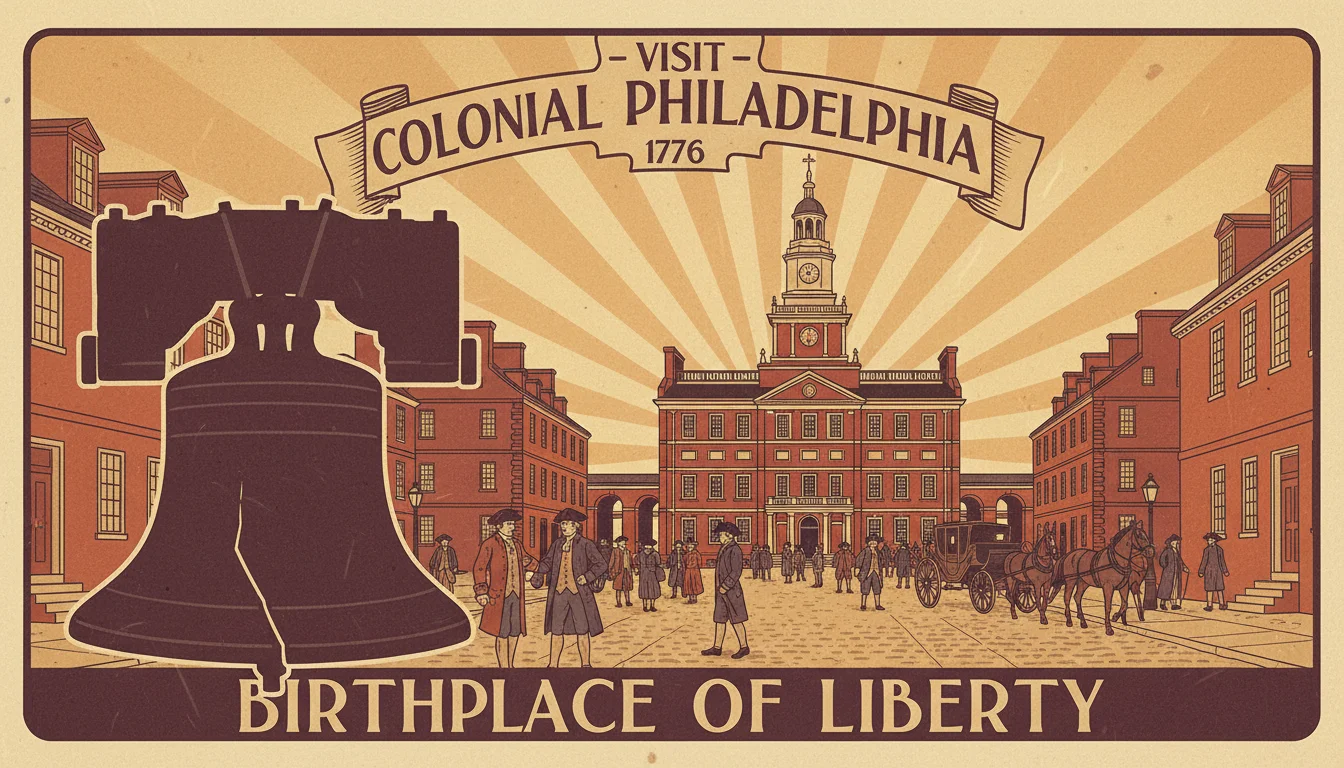
You've just materialized in the largest city in British North America at the most explosive moment in its history. The year is 1776, and Philadelphia is about to become the birthplace of a nation - or a smoldering ruin of treason depending on how the next few months play out. Either way, you're here for it.
First Impressions: The Athens of America
Step off Market Street and prepare for sensory overload. Colonial Philadelphia in 1776 is a city of 30,000 souls crammed into a grid of brick buildings, the air thick with the smell of horse manure, wood smoke, and the distinctly colonial mixture of tar, fish, and revolution.
The city William Penn founded as a "Holy Experiment" has become something else entirely - a powder keg with a very short fuse. You'll notice immediately that everyone seems to be arguing. In taverns, on street corners, in the State House yard. The question on everyone's lips: independence or reconciliation?
Welcome to the most politically charged place on Earth right now.
What to Wear: The Revolutionary Look
Men: A waistcoat, breeches, and a linen shirt are your basics. Add a three-cornered hat (they call it a cocked hat here) and buckled shoes. The color of your coat matters - avoid anything too Tory-looking. Browns, greens, and blues are safe. Skip the powdered wig unless you want to be mistaken for a British sympathizer or a very out-of-touch merchant.
Women: A fitted bodice, petticoats, and a mob cap. Married women cover their hair; unmarried women can show it off a bit more. Your shoes will be leather with a small heel, and yes, they're going to hurt on those cobblestones.
Critical: Do NOT wear red. The British army wears red. Do we need to explain further?
Where to Stay: Colonial Accommodations
The City Tavern on Second Street near Walnut is your best bet - it's where the Continental Congress delegates drink and scheme after hours. You might spot John Adams complaining about the local beer (he prefers New England cider) or Thomas Jefferson being suspiciously quiet in the corner.
Rooms run about two shillings per night, which is steep by colonial standards. If you're budget-conscious, try the Indian Queen Tavern on Fourth Street - slightly rougher clientele but excellent oysters.
Avoid the waterfront inns unless you enjoy sharing a bed with three strangers and waking up without your purse.
What to Eat: Revolutionary Cuisine
Philadelphia is blessed with exceptional food by 18th-century standards:
Breakfast: Coffee (yes, it's popular here - the history of tea took a sharp political turn after the Boston Tea Party, and colonists have largely abandoned it on principle) with bread, butter, and perhaps some cold meat or cheese.
Main meals: Turtle soup is the local delicacy - the Delaware River provides abundant snapping turtles. Pepper pot soup (tripe, vegetables, and enough black pepper to clear your sinuses) is everywhere. Game pies, roast beef, and fresh fish from the nearby rivers round out most menus.
Street food: Meat pies from vendors, gingerbread, and something called "shrub" - a vinegar-based fruit drink that sounds disgusting but is oddly refreshing.
Dessert: Apple tansy (a kind of omelet-cake hybrid), floating island, and syllabub (cream whipped with wine). The sugar's expensive because - you guessed it - trade disputes with Britain.
The Must-See Moments
Independence Hall (The State House): This is it. The brick building on Chestnut Street where the Continental Congress meets. In July 1776, they'll adopt a declaration that makes every delegate a traitor to the Crown, punishable by death. Try to be in the yard when the Liberty Bell rings (yes, it's already cracked).
Benjamin Franklin's House: The great man himself lives on Market Street, though he's currently in France charming the court of Louis XVI. His house has a lightning rod on top - he invented those. Ask his neighbors about him; they have opinions.
The Waterfront: The Delaware River wharves are chaotic and fascinating. Ships from the West Indies, Britain (for now), and other colonies unload goods while sailors from a dozen nations drink and brawl in nearby establishments.
Christ Church: The tallest building in North America at 196 feet. Benjamin Franklin, George Washington, and other founders worship here. The box pews are assigned to wealthy families - don't sit in one unless you've rented it.
What NOT to Do
Don't discuss future events. People in 1776 don't know they're going to win. Many expect to hang. Casually mentioning that the Revolution succeeds will either get you labeled insane or suspected as a spy with concerning intelligence.
Don't carry British currency conspicuously. Continental currency exists but is already depreciating. Coins are universal, but flashing a pocket full of British pounds marks you as suspicious.
Don't question the virtue of slavery in mixed company. Yes, this is deeply uncomfortable. Yes, the Declaration will proclaim all men are created equal while many delegates own slaves. This contradiction haunts the Revolution and will continue to haunt America. Tread carefully - this is 1776.
Don't drink the water. The wells are contaminated. Beer, cider, or wine with every meal. This isn't alcoholism; it's survival.
The Political Landscape: Who's Who
The Patriots: They want independence. Leaders include John Adams (brilliant, abrasive), Benjamin Franklin (charming, dangerous), and George Washington (tall, dignified, currently trying to hold an army together in New York).
The Loyalists: About one-third of the population still supports the Crown. They'll keep quiet in taverns but might report you to the wrong people.
The Fence-Sitters: Another third hasn't decided yet. They have businesses to run and families to protect.
The Quakers: Philadelphia's founders are officially neutral, which satisfies no one. Their pacifism is about to become very unpopular.
Dangers to Avoid
Smallpox: There's an epidemic. Look for the red flags hung outside houses with infected residents. Cross the street.
Press Gangs: The British Navy needs sailors. Don't get drunk near the waterfront after dark unless you want to wake up on a ship bound for God knows where.
Political Violence: Tar and feathering is real. Loyalist printers have had their shops destroyed. Tempers are volcanic. Watch what you say.
Mosquitoes: The marshes around Philadelphia breed them in biblical quantities. Summer is brutal.
Shopping: Revolutionary Retail
- Books: Multiple printers on Market Street sell everything from political pamphlets (Thomas Paine's "Common Sense" is the bestseller) to European literature.
- Silversmith: Philadelphia silversmiths are among the best in the colonies. A tea set makes a perfect souvenir, if ironic.
- Apothecary: Herbs, medicines, and patent remedies of questionable efficacy on nearly every corner.
- The Market: High Street's twice-weekly market is the largest in the colonies. Produce, meat, fish, cheese, and crafts from the surrounding countryside.
Getting Around
Walk. Philadelphia's grid layout makes it one of the most navigable cities in the world. The streets are numbered from the Delaware River westward - logical and ahead of its time.
For longer journeys, hire a horse or catch one of the coaches running between Philadelphia and other cities. The roads are terrible. Budget extra time and bring your own food.
A Day in the Life
5:00 AM: The city wakes. Church bells ring. Servants draw water.
7:00 AM: Shops open. The streets fill with carts, peddlers, and people rushing to their businesses.
12:00 PM: Dinner (the main meal). Everything stops. Taverns fill.
2:00 PM: The State House bell calls Congress back to session. Commerce resumes.
6:00 PM: Shops close. Evening entertainments begin - tavern drinking, card games, theater if you're lucky.
10:00 PM: The streets empty. The watch patrols with lanterns, calling the hour and the weather. "Ten o'clock and all is well!"
The Moment to Witness
If you can only be here for one day, make it July 4, 1776. Stand in the yard of the State House when the Declaration of Independence is read aloud for the first time. Watch the faces of people hearing that they are no longer British subjects - that they are, in a word that barely exists yet, Americans.
Some will cheer. Some will weep. Some will look around nervously, knowing what they've just witnessed makes them all traitors to the most powerful empire on Earth.
History doesn't always announce itself. But this day, in this city, it practically screams. For a later American city at another pivotal moment, see the guide to Gilded Age New York in 1890.
Final Tips
Pack light. Stay hydrated (but not with water). Keep your political opinions flexible. And whatever you do, don't tell anyone you're from the future.
In 1776 Philadelphia, that's the least believable thing you could say.
The Time Traveler's Guide series offers practical advice for visiting history's most fascinating destinations. No actual time machines were harmed in the making of this article.

Need Advice from Someone Who Lived There?
Get firsthand accounts from people who actually lived through these moments in history.
Create your free account →No card required. Some figures and features require a paid plan.
Join the HistorIQly Club
Get smarter about the past.
Weekly stories, deep dives, and exclusive content straight to your inbox.