Time Traveler's Guide to Dutch Golden Age Amsterdam, 1660
Your guide to Dutch Golden Age Amsterdam in 1660: where to trade, what to eat, how to avoid getting swindled, and why everyone smells like herring.
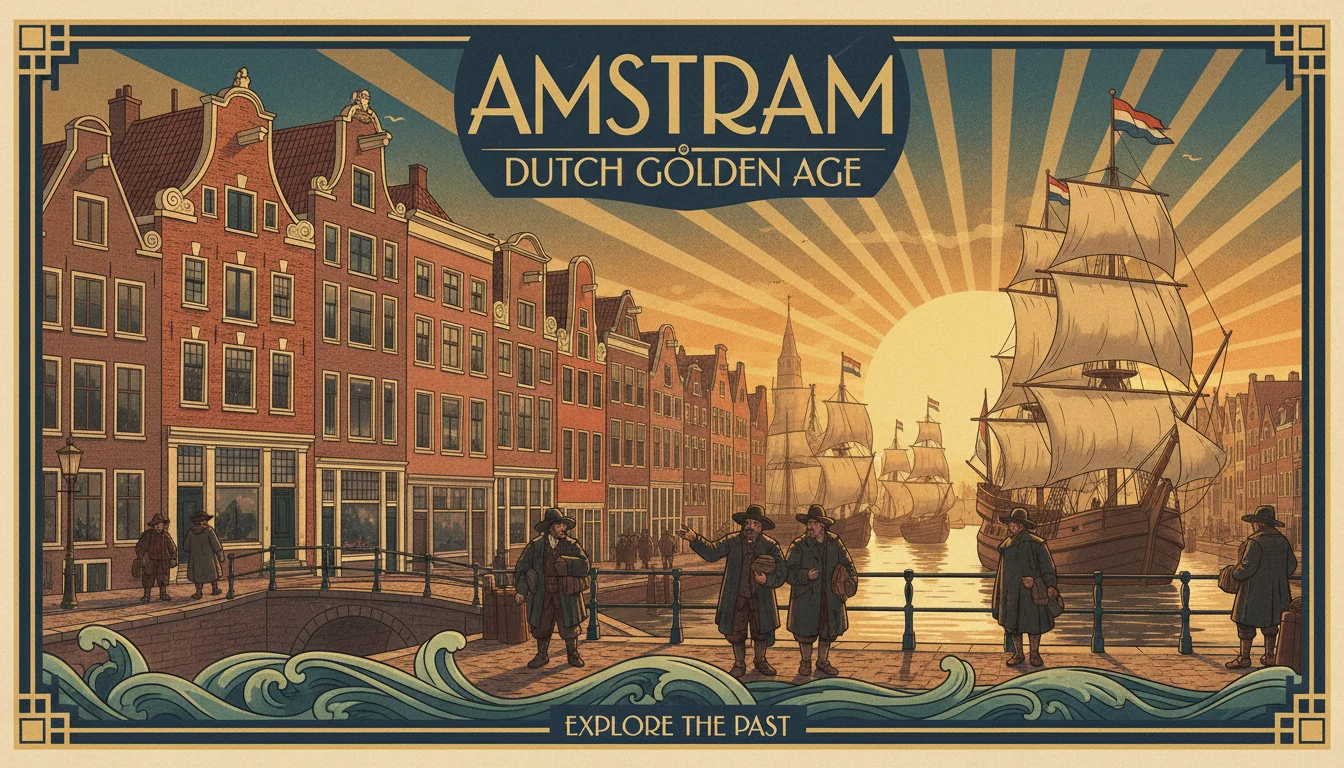
You've just materialized on a narrow cobblestone street beside a canal so still it mirrors the sky. The air hits you - a complex cocktail of sea salt, fresh bread, tobacco smoke, and something unmistakably fishy. Welcome to Amsterdam in 1660, the richest city in the world. A place where a single tulip bulb once sold for more than a house, where a private company commands a navy bigger than most nations, and where Rembrandt van Rijn is painting masterpieces while drowning in debt.
You've picked a fascinating moment. The Dutch Republic is at the absolute peak of its Golden Age. This tiny, soggy nation of barely two million people somehow dominates global trade, funds the world's finest art, and practices a level of religious tolerance that won't be matched for another two centuries. Let's make sure you survive long enough to appreciate it.
What to Wear
First things first - you need to blend in. Amsterdam fashion in 1660 is a study in contradictions. The Dutch are the wealthiest merchants in Europe, but their Calvinist faith frowns on flashy displays. The result? Expensive clothing that looks deliberately somber.
For men, you'll want a dark wool doublet (fitted jacket) over a white linen shirt with a wide, flat collar called a "millstone collar." Breeches that hit just below the knee, dark stockings, and leather shoes with modest buckles. A wide-brimmed felt hat is essential. Think of it as stealth wealth - that plain black fabric costs a fortune because the dye is incredibly expensive.
For women, a dark bodice over a linen shift, a full skirt in black or deep blue, and a white cap covering most of your hair. Married women wear their caps differently from unmarried ones, so pay attention or you'll send confusing signals. An apron isn't a sign of servitude here - it's standard daily wear for women of all classes.
One critical accessory for everyone: a small pouch or pocket. Pickpockets are absolutely everywhere, especially near the harbor and the Dam Square.
Getting Around
Amsterdam is built on water, and the canal ring you see being constructed right now - the Herengracht, Keizersgracht, and Prinsengracht - will eventually become a UNESCO World Heritage site. For now, they're part of an ambitious urban expansion project that's turning swampland into prime real estate.
Walking is your primary mode of transport. The city center is compact, and you can cross it in about twenty minutes. But watch your step - the streets are slippery with fish guts, horse manure, and whatever people dumped from their windows this morning. Wooden clogs (klompen) are popular for a reason.
For longer distances, you can hire a small boat to take you through the canals. It costs about two stuivers - roughly what a laborer earns in fifteen minutes. Horse-drawn carts navigate the streets, but they're more for goods than passengers. The trekschuit (horse-drawn canal barge) connects Amsterdam to other Dutch cities on a remarkably punctual schedule. The Dutch invented the concept of public transit timetables, and they're weirdly proud of it.
Money and Commerce
You've arrived in the financial capital of the world. The Amsterdam Exchange Bank (Wisselbank), founded in 1609, essentially invented modern banking. The Amsterdam Stock Exchange, the world's first, trades shares in the Dutch East India Company (VOC) - history's first publicly traded company.
The currency is the guilder (gulden), divided into 20 stuivers. A skilled worker earns about 2-3 guilders per day. A decent meal at a tavern costs around 6-8 stuivers. A night's lodging at an inn runs about 1 guilder.
Here's your financial survival tip: avoid anyone offering you tulip bulbs as an investment. Yes, the great Tulip Mania crashed over twenty years ago, but speculative fever still runs hot in this city. The Dutch will bet on anything - shipping routes, herring catches, grain futures. If someone at a coffee house starts explaining a "guaranteed" opportunity, walk away.
What to Eat
Dutch cuisine in 1660 is... practical. The Calvinist mindset extends to the kitchen. But don't despair - there's genuinely good eating if you know where to look.
Breakfast is bread with butter and cheese, washed down with beer. Yes, beer for breakfast. The water isn't safe, and the Dutch haven't fully embraced tea or coffee yet (though coffee houses are just starting to appear).
Lunch (the main meal, eaten around noon) might be hutspot - a hearty stew of meat, carrots, onions, and parsnips. You'll also find erwtensoep, a thick split pea soup with smoked sausage that's practically a meal in a bowl. Fresh herring (nieuwe haring) is available from street vendors - tilt your head back, hold the fish by the tail, and lower it into your mouth. This is the correct technique. Locals will judge you if you use a fork.
Dinner is lighter - bread, cheese, perhaps some cold meat. The Dutch eat an astonishing amount of cheese. Gouda and Edam are everywhere, and they're significantly better than anything you've tasted in the 21st century.
For a treat, seek out oliebollen - fried dough balls dusted with sugar. The spice trade means cinnamon, nutmeg, and pepper are more available here than almost anywhere in Europe, and they show up in pastries and cookies. Speculaas (spiced shortcrust biscuits) are addictive.
Drinks: Beer remains the default, but jenever (the ancestor of gin) is gaining popularity. It's sweeter and maltier than modern gin. Wine is available but expensive - it's imported from France or the Rhine. And keep an eye out for the new coffee houses springing up - they'll become the social media of the 17th century.
The Social Scene
Amsterdam in 1660 is arguably the most tolerant city in Europe, which is a low bar, but still remarkable. Jews expelled from Spain and Portugal have built a thriving community here. French Huguenots, English Puritans, and various Protestant sects all find refuge. The deal is simple: worship however you want, just don't do it too publicly. Catholic services happen in "hidden churches" (schuilkerken) - buildings that look like houses or warehouses from outside but contain full churches within. Everyone knows they're there. Nobody raids them. It's a very Dutch arrangement.
The city is staggeringly international. Walk through the harbor district and you'll hear Dutch, Portuguese, German, Yiddish, Malay, and languages you can't identify. Sailors from Indonesia, merchants from the Ottoman Empire, scholars from across Europe - they all pass through Amsterdam.
Women here enjoy more rights than in most of Europe. Dutch women can own property, run businesses, and appear in court. Walk into any shop and there's a good chance a woman is running it. This shocks visitors from France and England, which tells you more about France and England than about the Netherlands.
What to See
The Dam Square - The heart of the city. The new Town Hall (Stadhuis) is under construction and will become the largest administrative building in Europe. It's being built on exactly 13,659 wooden piles driven into the marshy ground. The Dutch don't do anything halfway.
Rembrandt's Studio - The great painter lives on the Jodenbreestraat (now the Rembrandt House Museum). He's in financial trouble right now - declared insolvent in 1656 - but he's still producing extraordinary work. If you can talk your way into his studio, you'll witness genius at work. Bring cash; he might sell you something.
The Harbor - Over 2,000 ships pass through Amsterdam's port annually. VOC vessels arrive loaded with spices, silk, porcelain, and tea from Asia. The shipyards are a marvel of industrial efficiency, capable of assembling a ship in a matter of days using standardized parts.
The Waag (Weigh House) on Nieuwmarkt - Where goods are officially weighed for trade. The upper floors house guild rooms, including the Surgeons' Guild where anatomy lessons happen. Rembrandt painted one of these in "The Anatomy Lesson of Dr. Tulp."
Dangers and Warnings
Amsterdam is relatively safe for a 17th-century city, but "relatively" is doing heavy lifting here.
Disease is your biggest enemy. The plague visits periodically, and a nasty outbreak hit just a few years ago. Smallpox, typhus, and dysentery are constant threats. Stay clean (the Dutch are obsessed with cleanliness by period standards), drink beer instead of water, and avoid anyone who looks feverish.
Crime centers on the harbor district, especially at night. Sailors with pockets full of wages attract thieves, con artists, and worse. The Zeedijk area is particularly rough after dark.
The law is harsh. Theft can cost you a hand. Serious crimes lead to public execution on the Dam Square. The Dutch justice system includes torture as a standard investigative technique. Don't break any laws.
Religious discretion - Despite the tolerance, there are limits. Don't insult Calvinism publicly. Don't mock the Reformed Church. The tolerance is pragmatic, not ideological, and it has boundaries.
Canals - People fall into them constantly, especially after a night at the tavern. An alarming number of drownings happen every year. Watch your footing on the bridges - there are no railings.
One Last Thing
You're standing in what historians will call the world's first modern economy. Capitalism, speculation, global trade, central banking, a free press, religious pluralism - it's all being invented right here, right now, by merchants and sailors in a swampy river delta that has no business being a world power.
Enjoy the herring. Skip the tulips. And if a painter named Vermeer offers to sell you a small canvas of a girl in a blue headscarf, buy it. Trust me on that one.
For more time-travel guides to golden-age European cities, see A Time Traveler's Guide to Georgian London, 1780 and A Time Traveler's Guide to Renaissance Florence, 1490.

Need Advice from Someone Who Lived There?
Get firsthand accounts from people who actually lived through these moments in history.
Ask Them YourselfJoin the HistorIQly Club
Get smarter about the past.
Weekly stories, deep dives, and exclusive content straight to your inbox.