Time Traveler's Guide to Elizabethan London, 1590
Your survival guide to Elizabethan London, 1590 - dodge plague, navigate sumptuary laws, watch Shakespeare's first plays, and try not to offend the Queen.
Read Wikipedia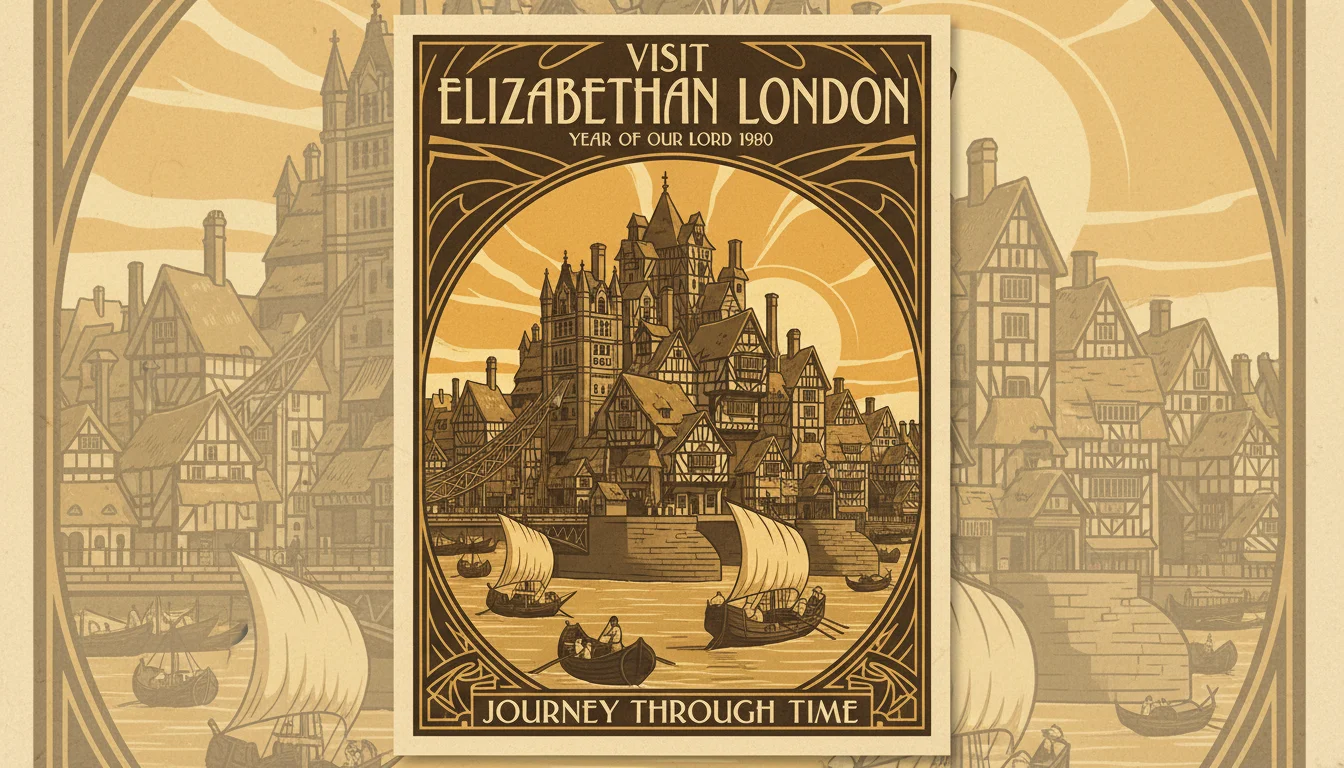
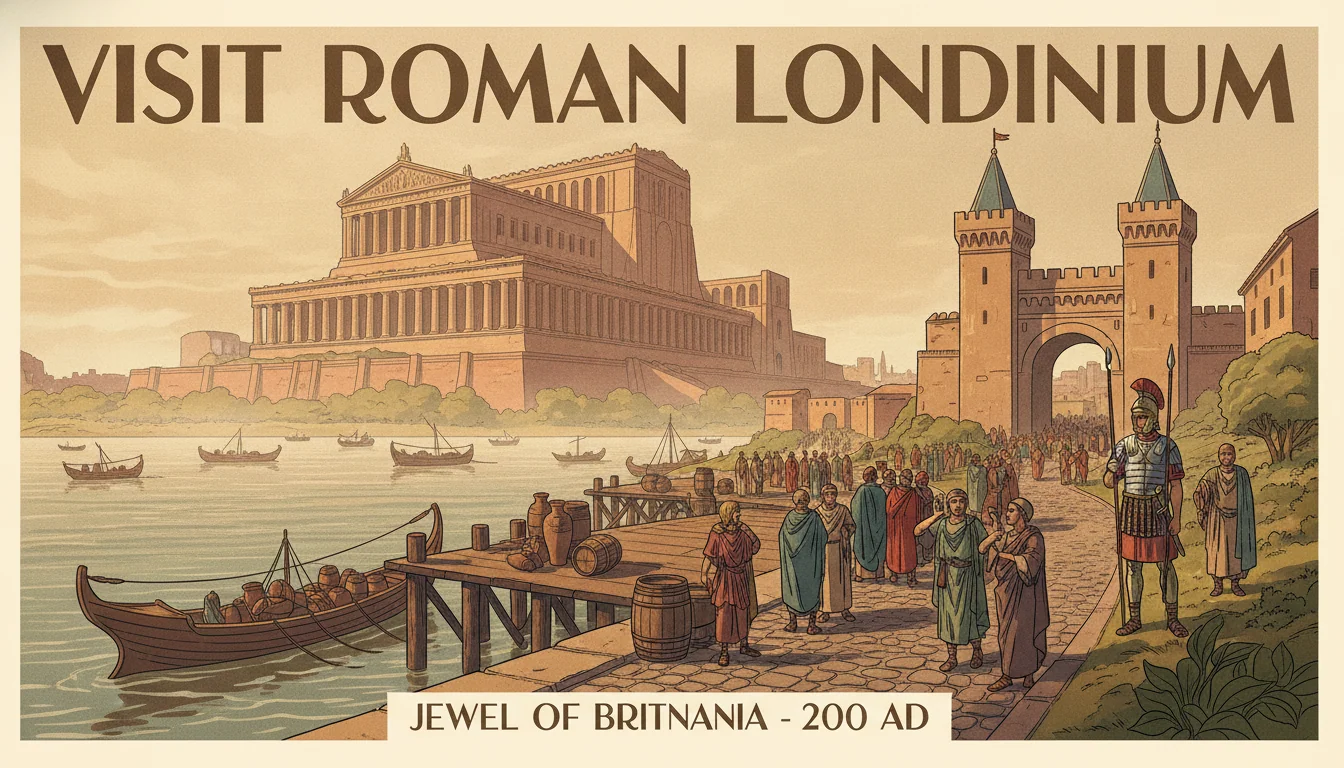
You've just materialized on the north bank of the Thames in 1590. The air hits you first - a thick cocktail of coal smoke, river mud, animal dung, and something that might be rotting fish. Welcome to London. Population: roughly 200,000 souls crammed into a medieval city built for a third of that. Elizabeth I sits on the throne, Shakespeare is a 26-year-old nobody scribbling his first plays, and Sir Francis Drake just singed the King of Spain's beard. This is England's moment, and London is the beating heart of it all.
Here's how to survive it.
What to Wear (Your Life Depends on It)
Elizabethan England enforces sumptuary laws, and they're not suggestions. Wear the wrong fabric and you could be fined or arrested. Purple silk? That's reserved for royalty. Scarlet red? Only for nobility above a certain rank.
For men: A linen shirt (your underwear, essentially), a doublet (fitted jacket), trunk hose (puffy shorts that look ridiculous but are absolutely standard), wool stockings, and leather shoes. Top it off with a flat cap - they're actually required by law for commoners on Sundays.
For women: A linen shift underneath, then a bodice and kirtle (skirt), topped with a gown. An apron marks you as working class, which is exactly what you want. Cover your hair with a coif or cap unless you want unwanted attention.
Critical rule: Stick to browns, grays, and muted greens. Undyed wool is your safest bet. Looking too wealthy when you clearly aren't will attract thieves. Looking too poor will get you picked up as a vagrant - and vagrancy laws here are brutal.
What to Eat (and What to Avoid)
Forget everything you know about English food being bland. Elizabethan cooking is aggressively spiced - nutmeg, cinnamon, cloves, ginger, saffron. The wealthy eat like it's a competition.
Breakfast doesn't really exist as a formal meal. Most people break their fast with bread, cheese, and ale. Yes, ale for breakfast. The water will kill you faster than the plague, so ale is genuinely the safer choice. Small beer (low alcohol) is what even children drink.
Your best bet for a meal: Find an ordinary - a tavern that serves a set meal at a set time for a set price, usually around a penny. You'll get pottage (thick vegetable stew), bread, maybe some mutton or beef, and all the ale you can drink. The Mermaid Tavern on Bread Street is where the literary crowd gathers, but any ordinary near Cheapside will feed you well.
Street food is everywhere. Meat pies from cookshops along Thames Street. Hot codlings (baked apples) in winter. Roasted chestnuts. Oysters are dirt cheap - a poor person's food, sold by the bucket along the riverbank.
Avoid: Anything from the river. The Thames is an open sewer. Fish from it is technically edible but genuinely risky. Also skip the eel pies unless your stomach is ironclad.
Getting Around
London is walkable - the whole city fits inside about one square mile, surrounded by ancient Roman walls with seven gates. But "walkable" doesn't mean pleasant.
The streets are narrow, unpaved in many areas, and feature an open gutter running down the center carrying... everything. Walk close to the buildings (the "wall side") to avoid being splashed by chamber pots emptied from upper windows. The cry of "Gardyloo!" (from the French gardez l'eau) means someone's about to dump waste - move fast.
London Bridge is the only bridge across the Thames, and it's an experience. Lined with shops and houses up to seven stories high, it's essentially a village suspended over the river. At the Southwark end, you'll notice the heads of traitors displayed on spikes. Don't stare. Don't comment. Just keep walking.
If you need to cross the river without using the bridge, hire a wherry (water taxi). Thousands of watermen work the Thames, and they'll row you across for a penny. Shout "Westward ho!" or "Eastward ho!" to hail one. They're the Uber drivers of 1590, complete with colorful opinions about everything.
The Dangers (There Are Many)
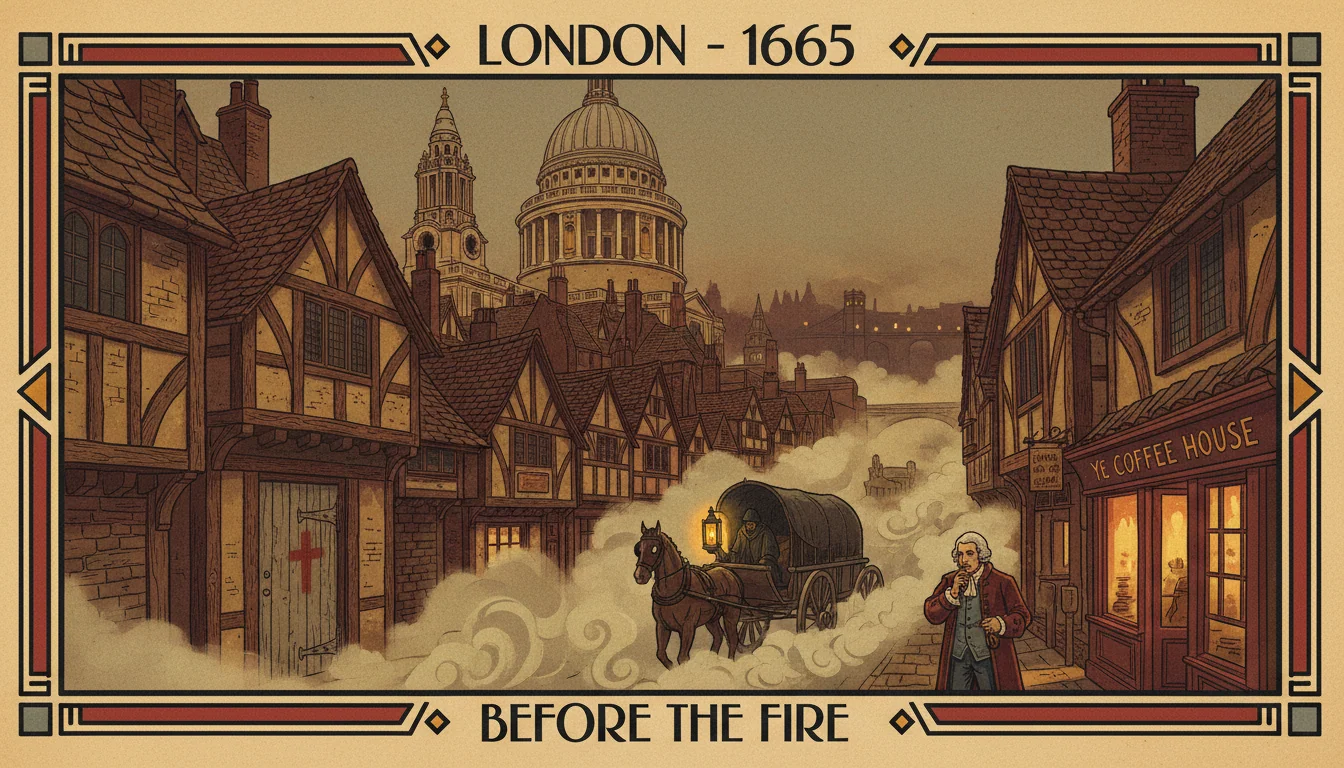
Plague is the big one. London hasn't had a major outbreak since 1563, but smaller flares happen constantly. When plague deaths exceed 30 per week, the authorities close the theaters and public gatherings. If you see red crosses painted on doors with the words "Lord have mercy upon us," that house is quarantined. Walk the other way. Quickly.
Crime is rampant, especially in the Liberties - areas outside city jurisdiction like Southwark, Alsatia near Fleet Street, and parts of Shoreditch. Cutpurses work the crowds at markets and playhouses. Coney-catchers (con artists) run elaborate scams on newcomers. A popular trick: someone "accidentally" drops a ring near you, then a partner appears claiming it's gold and offers to split the find for a small payment. It's brass. Walk away.
The law is harsh and public. Minor theft can get you branded on the thumb. Serious theft means hanging at Tyburn (near modern Marble Arch), which draws crowds like a sporting event. Traitors get hanged, drawn, and quartered. Being a Catholic priest is literally a capital offense. Keep your religious opinions to yourself.
Sanitation is nonexistent by modern standards. Butchers dump offal in the streets. Tanners use urine to cure leather. The smell near Smithfield market or along the Fleet Ditch will make your eyes water. Carry a pomander (orange studded with cloves) or a handkerchief soaked in rosewater if you can get one.
Must-See Experiences
The Theatre (Yes, Shakespeare)
Cross to Shoreditch to find The Theatre on Curtain Road - it's the original purpose-built playhouse, run by James Burbage. His son Richard is becoming the greatest actor in England. Admission to stand in the yard (as a "groundling") costs just one penny. For another penny, you get a seat in the galleries.
Shakespeare is writing early works right now - probably The Two Gentlemen of Verona or The Taming of the Shrew. The plays run in the afternoon (no artificial lighting), and the atmosphere is more like a football match than a quiet theater. People eat, drink, heckle, and throw things. The actors perform with minimal sets but spectacular costumes - the companies spend more on a single dress than an actor's yearly salary.
Bear-Baiting at the Bear Garden
South of the river in Southwark, the Bear Garden offers... well, exactly what the name suggests. Bears chained to a post, set upon by mastiffs. It's enormously popular - even the Queen attends. It's brutal, it's loud, and it's one of the defining entertainments of the age. You don't have to enjoy it, but you should understand it's as mainstream as cinema is in your time.
The Royal Exchange
Sir Thomas Gresham built this magnificent covered market and trading floor in 1571, modeled on the Antwerp Bourse. The ground floor is where merchants from across Europe conduct business - Venetian glass traders, Flemish cloth merchants, Spanish wine dealers. The upper galleries contain luxury shops. It's the closest thing London has to a shopping mall, and the architecture is genuinely impressive.
St. Paul's Cathedral
Not the Wren dome you know from postcards - that won't exist for another century. This is Old St. Paul's, a massive Gothic cathedral with a spire that was destroyed by lightning in 1561 and never rebuilt. The nave, called "Paul's Walk," functions as a bizarre combination of sacred space and public market. Lawyers meet clients, servants seek employment, and pickpockets work the crowds - all inside the cathedral. Notices posted on the pillars advertise everything from houses for sale to lost horses.
Customs That Will Save You
Greetings matter enormously. Remove your hat when addressing anyone of higher status. A bow for men, a curtsy for women. Use "sirrah" only for inferiors - getting this wrong is a quick way to start a fight.
Drinking customs: When offered a drink, accept. Refusing is an insult. The communal cup is standard in taverns - everyone drinks from the same vessel. Try not to think about it.
Religion: England is Protestant. Officially. Attending church on Sunday is legally required, with fines for absence. Keep any Catholic sympathies absolutely silent - Elizabeth's spy network, run by Sir Francis Walsingham, has informants everywhere.
Money: A laborer earns about 6-8 pence per day. A penny buys you a loaf of bread, a quart of ale, or standing room at the theater. A shilling (12 pence) gets you a decent meal at a good ordinary. Carry small coins - showing gold will mark you as a target.
Your Exit Strategy
Don't stay past 1592. That's when plague returns with a vengeance, killing roughly 15,000 Londoners and shutting the city down for nearly two years. The theaters close, companies go on tour, and London becomes a ghost town.
But right now, in 1590, you're catching the city at a golden moment - confident from the Armada victory, buzzing with new ideas, new theaters, new worlds being discovered. It's dirty, dangerous, and loud. The gap between rich and poor is staggering. The punishments are medieval (literally). But there's an energy here, a sense that anything is possible, that makes Elizabethan London one of the most thrilling cities in human history.
Just watch where you step.
For more London through time, our guide to Tudor London, 1540 takes you fifty years earlier under Henry VIII, and Georgian London, 1780 shows what the city became two centuries later.

Need Advice from Someone Who Lived There?
Get firsthand accounts from people who actually lived through these moments in history.
Create your free account →No card required. Some figures and features require a paid plan.
Join the HistorIQly Club
Get smarter about the past.
Weekly stories, deep dives, and exclusive content straight to your inbox.