Time Traveler's Guide to Fatimid Cairo, 970 AD
Survive Fatimid Cairo in 970 - the newly founded jewel of the Nile where Shia caliphs built a city to rival Baghdad and the bazaars never closed.
Read Wikipedia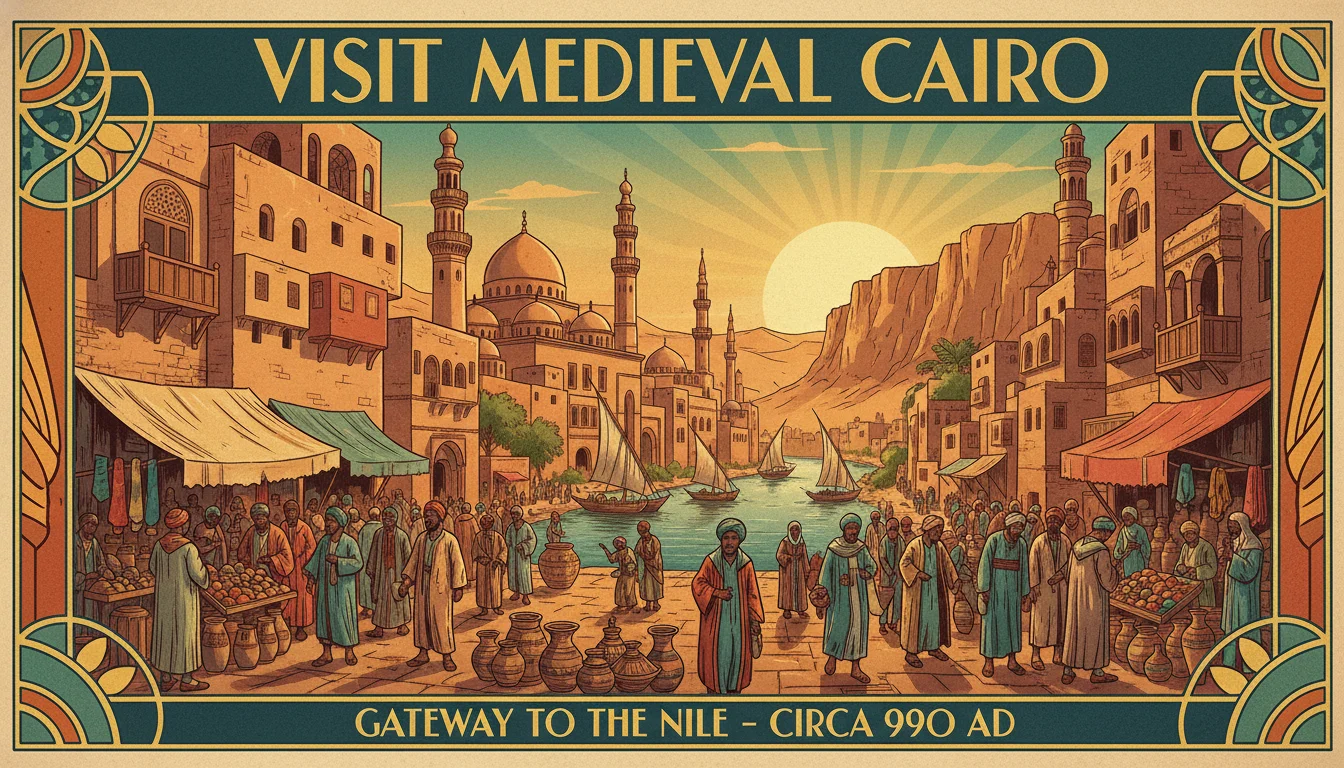
Welcome to al-Qahira - "The Victorious" - a city so new the mortar hasn't quite dried. You've arrived just three years after the Fatimid general Jawhar laid its foundations, and already it's becoming one of the medieval world's great metropolises. Here's how to navigate this ambitious caliphal capital without getting yourself executed for heresy.
When You've Actually Landed
The Fatimid Caliphate has just conquered Egypt from the Abbasids, and Caliph al-Mu'izz li-Din Allah is establishing his dynasty's new seat of power. Cairo isn't replacing ancient Fustat next door - it's being built as an exclusive royal enclave, though that distinction will blur over the coming decades. The atmosphere is electric with new construction, religious fervor, and imperial ambition.
What to Wear (Seriously, Get This Right)
Fatimid Cairo is color-coded. The caliphal family and their inner circle wear white - attempting this without proper status will get you arrested or worse. Most commoners wear undyed linen or cotton in natural tones. Women should wear loose robes with a head covering; a face veil isn't strictly required but is increasingly common among upper classes.
Pro tip: Avoid solid black. That's Abbasid colors - their defeated rivals in Baghdad. You might as well wear a sign saying "I support the enemy."
Green is generally safe and even favored as a color associated with the Prophet's family. Blue and brown work for everyday wear. Leather sandals are standard; fancy embroidered slippers signal wealth.
Where to Sleep
As a newly founded royal city, Cairo doesn't really have public inns yet - those are down in old Fustat. Your options:
In Cairo proper: You'll need a connection. Merchants sometimes offer rooms in exchange for news from abroad. Scholars can seek hospitality near the new mosque of al-Azhar, where religious students are already gathering.
In Fustat (recommended for newcomers): The older city to the south has established khans - caravanserais with rooms for travelers. They're basic but safe, typically 2-3 copper dirhams per night. Ask for one near Amr ibn al-As Mosque.
The harbor district: If you're posing as a merchant, warehouse managers sometimes let trustworthy traders sleep among the goods. Cheaper, but you're literally sleeping with the merchandise.
What to Eat (The Good News)
Egyptian cuisine in this era is spectacular, and the Fatimids are enthusiastic about food. The Nile provides abundance:
Breakfast: Fresh flatbread with labneh (strained yogurt), dates, and perhaps some ful medames - slow-cooked fava beans that are already an Egyptian staple. Street vendors sell it cheap.
Midday: Try kushary's ancient ancestor - lentils with rice (a newer introduction) and fried onions. Fish from the Nile is plentiful and affordable. Grilled perch or tilapia with cumin is a local favorite.
Evening: If you can wrangle an invitation to a wealthy household, you'll encounter elaborate stews (tagines), roasted lamb, and dishes sweetened with honey and rose water. The Fatimids imported Syrian and North African culinary traditions.
Street food gems: Look for vendors selling samosas (yes, they're here - brought via trade routes from India). Also try the date-filled pastries called ma'amoul.
Drinks: Fresh water is available from public fountains throughout Cairo - the Fatimids invested heavily in water infrastructure. Fruit juices, especially tamarind and pomegranate, are refreshing. Coffee won't arrive for another 500 years, but qahwa (a spiced hot drink made from grape juice) offers warmth.
The Currency Situation
The Fatimid dinar is among the most trusted gold coins in the medieval world - literally the "dollar" of its era. You'll also use silver dirhams and copper fulus for smaller transactions.
Rough prices:
- Simple meal: 1-2 copper fulus
- Night's lodging in Fustat: 2-3 silver dirhams
- Good quality robe: 1-2 dinars
- A donkey: 5-8 dinars
- Skilled craftsman's daily wage: 15-20 silver dirhams
Money changers operate near the major bazaars. They're regulated by the government, so you're unlikely to get completely swindled.
Navigating Social Customs
Religious sensitivity is paramount. The Fatimids are Ismaili Shia Muslims ruling over a predominantly Sunni population. They're relatively tolerant for the era - Christians and Jews have dhimmi status and can practice openly - but theological discussions can get heated fast.
- Don't ask too many questions about the Imam or the esoteric aspects of Ismaili belief. These are mysteries revealed only to initiates.
- During the call to prayer, stop what you're doing and be respectful, even if you don't pray.
- Friday midday prayer is the big one. Most commerce pauses.
Business etiquette: Bargaining is expected and ritualized. Start at about 40% of the asking price. Accepting the first price offered is considered naive at best, insulting at worst. Tea (or fruit drinks) may be offered during negotiations - refusing is rude.
Gender norms: Public spaces are more mixed than you might expect, but extended conversation between unrelated men and women raises eyebrows. The markets have plenty of female vendors and shoppers, but social mixing happens in defined contexts.
What to See
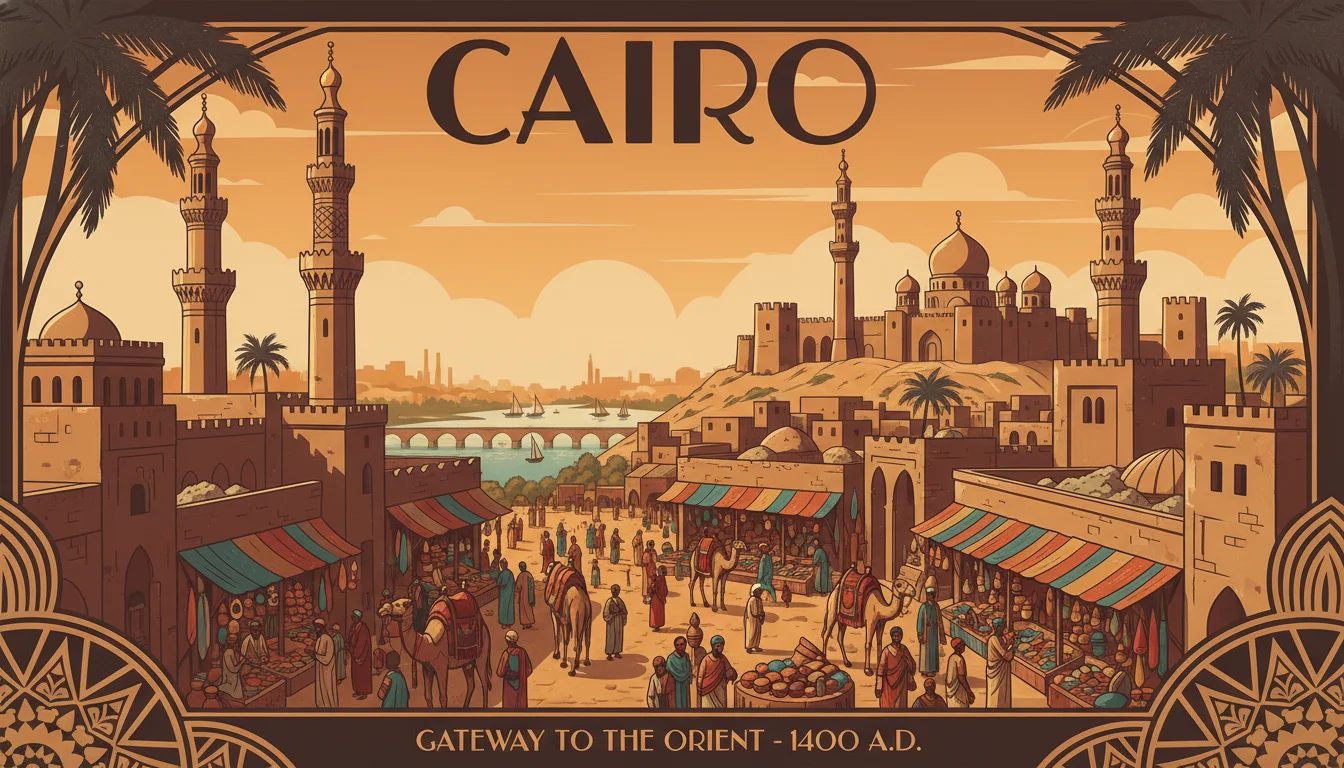
The Eastern and Western Palaces: The two massive caliphal palaces dominate Cairo, connected by a covered walkway. You won't get inside without serious connections, but the exterior architecture is stunning - intricate carved stonework and towering gates.
Al-Azhar Mosque: Just completed in 970 AD, this will become one of Islam's greatest centers of learning. In your era, it's fresh and magnificent, its minarets overlooking a city still under construction.
The Muqattam Hills: Overlooking Cairo, these limestone cliffs will eventually hold the citadel. For now, they offer spectacular views of the new city and the Nile valley.
Fustat's Amr Mosque: The oldest mosque in Africa, built in 642 AD when Arabs first conquered Egypt. It's been expanded multiple times and represents three centuries of Islamic architecture.
The Nilometer: On Rawda Island, this ancient device measures the Nile's flood levels - crucial for predicting agricultural yields and setting tax rates.
Dangers to Avoid
Politics: The Fatimid succession can get murderous. Don't express opinions about which caliph should follow which.
The desert routes: Bandits operate between Cairo and the Red Sea ports. Travel in caravans or not at all.
Plague: Outbreaks occur periodically. If you hear of one starting, consider leaving the city until it passes.
Legal trouble: Fatimid justice can be harsh but is relatively predictable. Theft loses you a hand. Murder means execution. Insulting the caliph or Ismaili beliefs... don't.
The Nile: Crocodiles still inhabit sections. Swimming isn't recreational.
Useful Phrases
Arabic is essential. The Egyptian dialect is already developing its distinctive character.
- "As-salamu alaykum" - Peace be upon you (standard greeting)
- "Bikam hadha?" - How much is this?
- "Ayna al-khan?" - Where is the inn?
- "La, shukran" - No, thank you
- "Insha'Allah" - God willing (use constantly)
- "Ma'a as-salama" - Goodbye (literally "with peace")
The Takeaway
Fatimid Cairo in 970 AD is a city of extraordinary ambition - a new capital being built from scratch to announce a dynasty's arrival as a major power. You're witnessing the birth of what will become one of the Islamic world's greatest cities, and four centuries later Mamluk Cairo will dwarf even Baghdad in size and wealth. The construction dust is still settling, the theological debates are passionate, and somewhere in the bazaars of Fustat, merchants are trading goods from three continents.
Just remember: wear neutral colors, praise the caliph if asked, and never, ever wear black.
Safe travels, time traveler. May your dinars hold their value and your Arabic pass muster.

Need Advice from Someone Who Lived There?
Get firsthand accounts from people who actually lived through these moments in history.
Create your free account →No card required. Some figures and features require a paid plan.
Join the HistorIQly Club
Get smarter about the past.
Weekly stories, deep dives, and exclusive content straight to your inbox.