Time Traveler's Guide to Mamluk Cairo, 1400
A practical survival guide to Mamluk Cairo in 1400 - what to wear, what to eat, and how not to embarrass yourself in the bazaars of the medieval Islamic world.
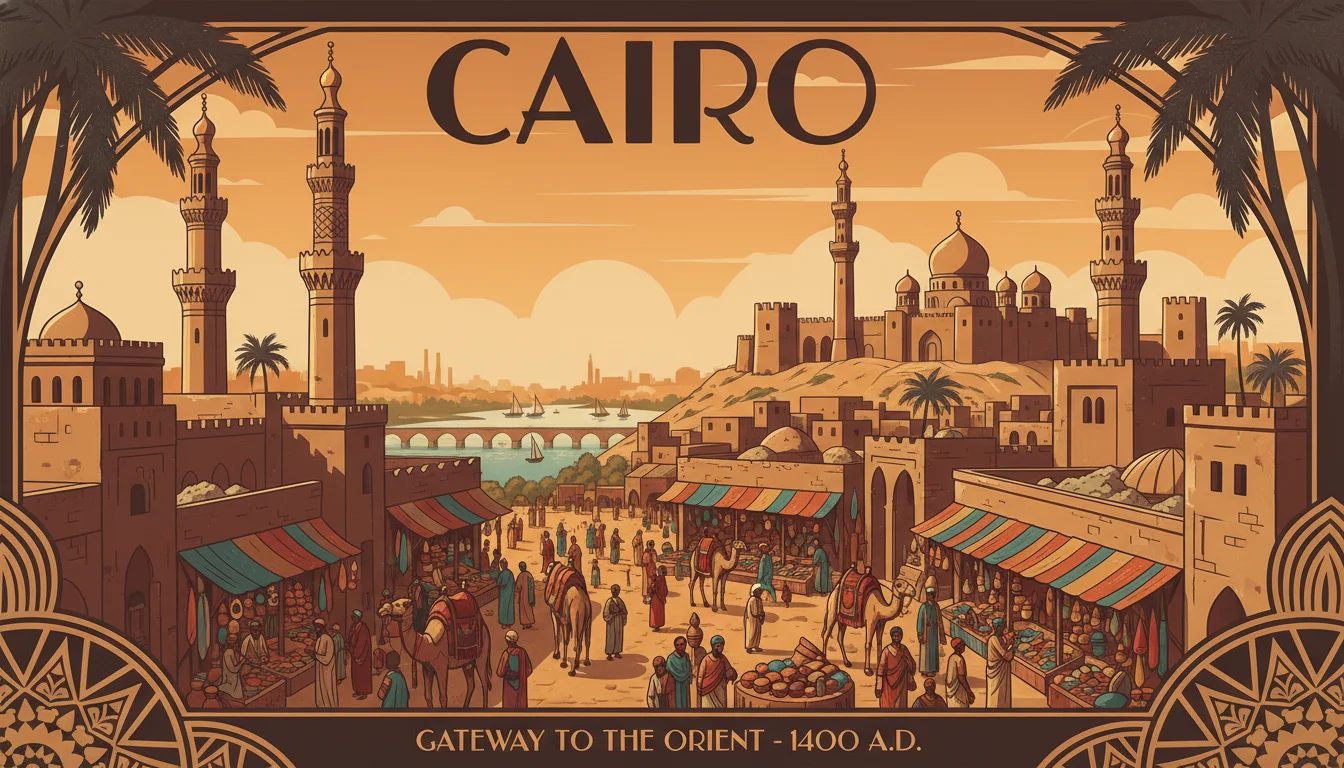
So, you have decided to visit Cairo in the year 1400. Excellent choice. Few cities on Earth can match it for noise, color, scholarship, commerce, and the general sensation that the whole known world has squeezed itself into one place and started haggling.
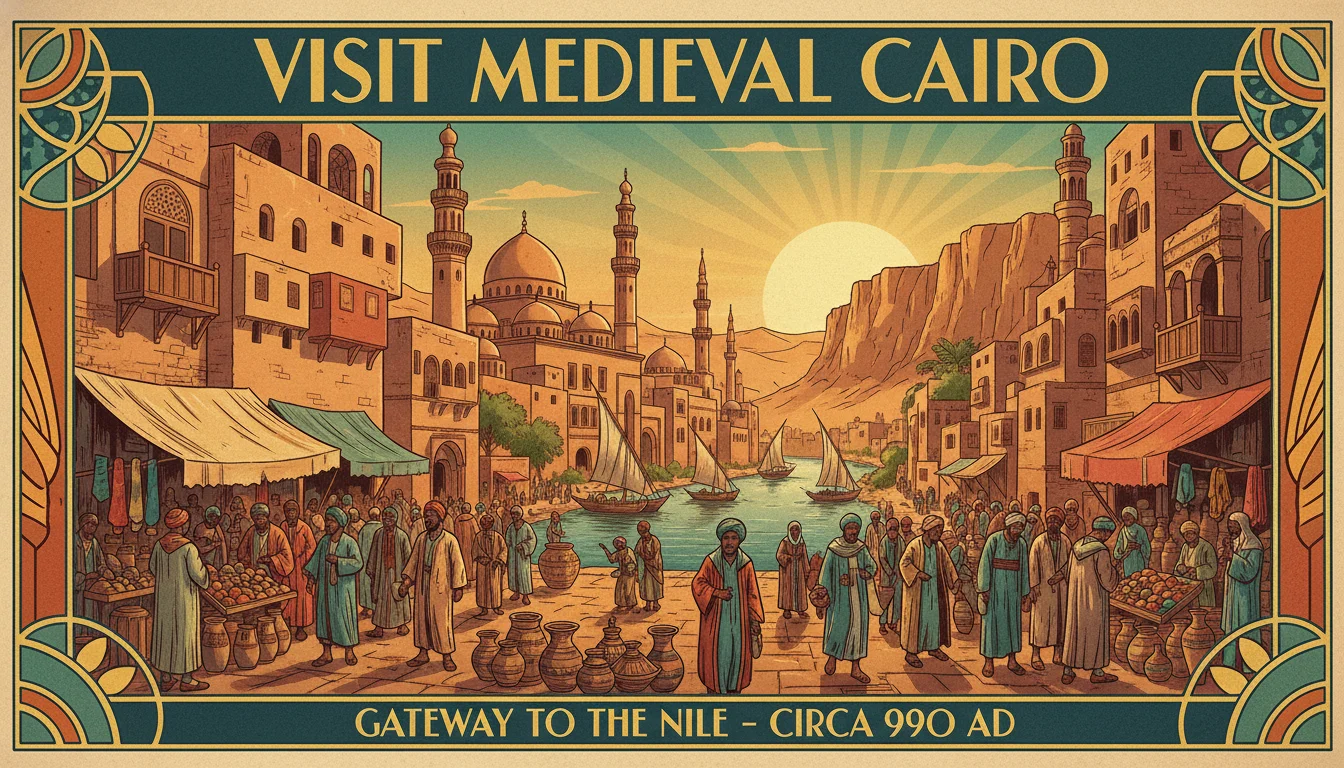
At this point Cairo is the beating heart of the Mamluk Sultanate, a city of mosques, madrasas, hospitals, markets, bathhouses, caravans, and enough donkeys to make modern traffic feel strangely elegant. Spices from India, gold from Africa, pilgrims en route to Mecca, diplomats, scholars, scribes, soldiers, and opportunists all pass through. If medieval cities had a "most likely to overwhelm a visitor in the first ten minutes" award, Cairo would win it with confidence.
Here is how to survive and enjoy it.
First, what are you walking into?
Cairo in 1400 is not one neat city block with a famous skyline. It is a dense urban world stretching across old Fustat, the main city of al-Qahira founded by the Fatimids in 970, and the bustling port zones tied to Nile traffic. The Citadel looms over everything like a reminder that somebody important can absolutely ruin your day if you cause trouble.
The streets are packed. The air smells like bread ovens, animals, wood smoke, perfume, lamp oil, leather, and the occasional reminder that sanitation is still a developing concept. Minarets punctuate the skyline. Water carriers shout. Craftsmen hammer metal. Muezzins call the faithful to prayer. Merchants sell silk, sugar, paper, brass lamps, soap, and carpets that will absolutely not fit in your return capsule.
In short, it is magnificent.
What to wear if you prefer not to be stared at
Your main goal is modesty, loose layers, and fabrics that do not scream "suspicious future person."
For men, a long tunic, loose trousers, and a robe are your safest options. A turban or headwrap will help you blend in and save you from the sun. For women, loose layered garments and a head covering are strongly advised. You do not need to dress like a palace noble. In fact, please do not. Rich fabrics and flashy jewelry invite attention from thieves, scammers, and anyone curious about why your hands look oddly moisturized.
Choose linen or light wool depending on season. Cairo is hot, dusty, and bright. Sandals are common, but sturdy shoes are smarter if you plan to walk all day. Streets are crowded, uneven, and shared by humans, animals, carts, and things you should not step in.
Avoid black synthetic clothing, visible zippers, plastic anything, printed logos, and eyewear that suggests you are either a sorcerer or very bad at costume planning.
What to eat, and what to avoid if your stomach is emotionally fragile
The good news is that Cairo feeds people well. Bread is everywhere, and you will quickly learn that fresh flatbread solves many problems. Expect lentils, chickpeas, beans, rice, stews, roasted meats, pickled vegetables, dates, figs, nuts, and sweets soaked in syrup.
Street food exists, though medieval food safety standards can be summarized as "in God's hands now." If you want the safest options, choose hot foods cooked in front of you. Bread from a busy oven is usually a good bet. Lentil dishes, grilled meats from high-turnover stalls, and fresh dates are sensible picks.
Drink with caution. Water quality is uneven, and your twenty-first-century digestive system may react like an insulted diplomat. If possible, drink boiled beverages or diluted syrups from reputable vendors. Fresh milk is riskier than it looks. So is anything sitting under the sun while flies hold a town meeting on it.
If invited to dine, accept graciously. Hospitality matters. Praise the food. Eat with your right hand. Do not demand a fork. That makes you look both rude and ridiculous.
Customs you really should not mess up
Cairo is cosmopolitan, but it is not casual in the modern sense. Religion shapes daily rhythm, public behavior, charity, law, and etiquette. You do not need to become an expert in Islamic jurisprudence by lunch, but you do need basic respect.
Dress modestly. Do not mock religious practices. Be aware of prayer times. Speak politely, especially to elders, scholars, and officials. Public drunkenness is a spectacularly bad plan. Public affection is also unwise unless your goal is to become market gossip by sunset.
Status matters here. So does reputation. Introductions help. If a local guide, merchant, or host offers advice about where to go and how to behave, listen. Medieval cities run on relationships and local knowledge, not on your confidence level.
Bargaining is normal in the markets. Treat it as theater, not warfare. Smile, protest mildly, admire the goods, pretend to leave, and accept that you are still probably paying the foreigner price. Congratulations, you are participating in history.
Money, language, and getting around without looking lost
The main language is Arabic, though you may also hear Turkish, Persian, Greek, Armenian, and other languages from traders and travelers. Learn a few Arabic greetings before arrival. Even bad pronunciation earns goodwill if the effort is genuine.
Carry small coins. Large payments are awkward, and flashing wealth is unwise. Keep your money in multiple places on your person. Cairo's markets are lively, but pickpockets are lively too.
Walking is the norm, but streets are narrow and crowded. Donkeys and pack animals are useful if you have goods or weak knees. If you are headed uphill to the Citadel under the midday sun, I recommend humility and a rented animal.
Dangers, because every good guidebook needs them
First, disease. Medieval cities are full of people, animals, standing water, and incomplete theories about microbes. Avoid obviously foul water, wash when you can, and do not assume your immune system is ready for this adventure.
Second, fire. Dense wooden structures, lamps, kitchens, and workshops make urban fires a recurring menace.
Third, authority. The Mamluk state is powerful, military, and not especially interested in your clever excuses. Do not wander into restricted areas. Do not sketch fortifications. Do not ask palace guards if the sultan is home.
Fourth, crime. Most people are just living their lives, but crowded markets reward distraction. Keep your belongings close and your time machine key closer.
Finally, politics. The late fourteenth and early fifteenth centuries are not exactly boring. Court intrigue, factional tension, and military power struggles are real. If locals start lowering their voices and glancing toward the Citadel, that is your cue to nod thoughtfully and change the subject to architecture.
What you absolutely must see
Start with the Citadel of Cairo, the city's great fortress and seat of power. The views alone are worth the climb.
Then head into the great market districts, especially the areas around what later generations will know as Khan al-Khalili. Even if the exact layout shifts over time, the commercial life here is astonishing. Brassworkers, spice sellers, book dealers, textile merchants, and perfumers compete for your attention with heroic determination.
Visit the major mosques and madrasas from the Mamluk age. Sultan Hasan's mosque-madrasa complex, built a few decades earlier, is a jaw-dropping statement in stone. It makes many modern government buildings look like they were assembled from office sadness.
If you can arrange access with a knowledgeable local, seek out scholars, book markets, and hospital complexes. Mamluk Cairo is not just rich, it is intellectually alive. This is a city where law, theology, medicine, astronomy, and literature all circulate with the trade goods - much as they did in Abbasid Baghdad at its 9th-century height.
And do not ignore the Nile. The river is Cairo's lifeline, highway, and mood regulator. A trip along the banks gives you a better sense of how the city breathes.
Final advice for the sensible time traveler
Go to Cairo with patience, curiosity, and a willingness to be slightly uncomfortable. You will sweat. You will get lost. You will misunderstand at least one important social cue. But if you slow down, observe, and respect the city on its own terms, Cairo in 1400 will reward you with one of the richest urban experiences in history.
Blend in, eat carefully, bargain cheerfully, and remember: if a merchant says a carpet is "light enough to carry easily," he is lying in a way that transcends time.
Safe travels.

Need Advice from Someone Who Lived There?
Get firsthand accounts from people who actually lived through these moments in history.
Ask Them YourselfJoin the HistorIQly Club
Get smarter about the past.
Weekly stories, deep dives, and exclusive content straight to your inbox.