Time Traveler's Guide to Georgian London, 1780
Explore Georgian London in 1780: survive the gin, dodge highwaymen, and experience the city's chaos at the dawn of the Industrial Revolution.
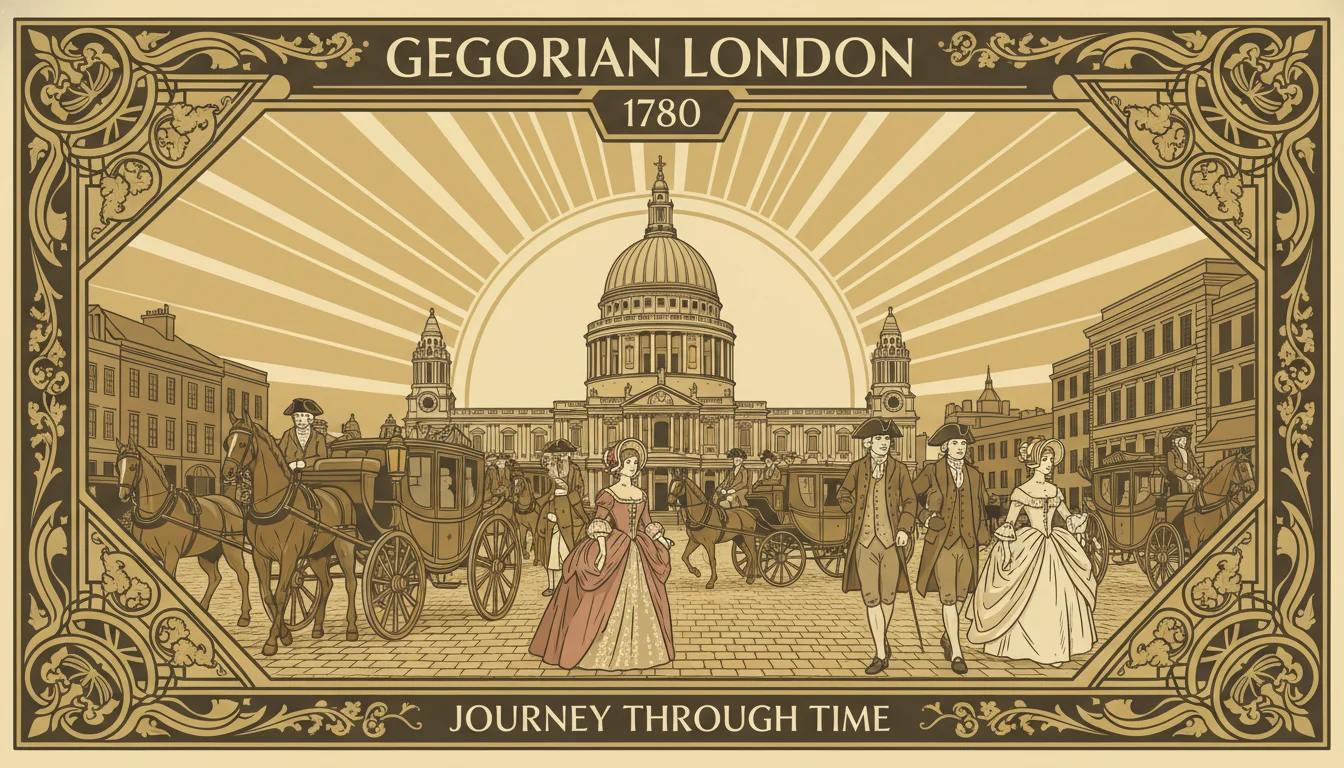
You've arrived in Georgian London, 1780. The city sprawls before you in all its grimy, magnificent chaos - a million souls crammed into streets that haven't changed much since the Great Fire rebuilt them a century ago. The Industrial Revolution is just beginning to rumble in the north, but here in the capital, it's still a world of coffeehouses, pleasure gardens, and public executions. Welcome to the age of elegance and filth, genius and depravity.
When You'll Arrive
The late Georgian period under King George III - yes, the one who'll "lose America" this very year as the Revolutionary War rages across the Atlantic. London doesn't care much. There are wigs to powder and gin to drink.
What to Wear
Get this wrong, and you'll be marked as either a criminal or a lunatic.
Men: Knee breeches, a waistcoat, and a long coat with large buttons. Your shirt should have ruffles at the wrist - the bigger the ruffles, the more important you think you are. A tricorn hat is essential. If you can't afford a powdered wig, tie your hair back with a ribbon. The smell of pomade and sweat is inescapable either way.
Women: Wide panniers (side hoops) that make doorways a navigational challenge. Your dress should be silk or cotton with a tight bodice and low neckline (even respectable women show considerable décolletage). Hair is piled high and powdered - some women add mouse-skin eyebrows for fashion. Yes, really.
Universal rule: Never go out without a pocket watch if you want to be taken seriously. Time is money, and Londoners are obsessed with both.
Where to Sleep
The wealthy option: A townhouse in Mayfair or a room at a respectable inn like the Saracen's Head in Aldgate. Expect to pay several shillings per night for a private room with a fireplace.
The practical option: A coffeehouse often rents rooms above the main floor. You'll get basic accommodations and access to newspapers, conversation, and the latest gossip for about a shilling.
Avoid: Anywhere in St. Giles, the notorious slum known as "The Rookery." The gin shops never close, and neither do the thieves. You'll wake up without your belongings - if you wake up at all.
What to Eat and Drink
Londoners eat heartily and drink constantly. Breakfast is bread, butter, and small beer (weak ale safe to drink because the brewing process kills bacteria). The Thames is essentially an open sewer - never drink the water.
Must try:
- Roast beef and Yorkshire pudding at a chophouse - Britain's national dish, and you'll understand why
- Eel pie from a street vendor near the river - surprisingly delicious
- Syllabub - cream whipped with wine and sugar, the dessert of the era
- Coffee at Lloyd's Coffee House (where the insurance market is being born) or the Grecian (where scientists and philosophers debate)
The gin warning: London has just emerged from the Gin Craze, when "Mother's Ruin" killed thousands. It's still everywhere and still dangerous. A penny will get you drunk, twopence gets you dead drunk. The tavern signs aren't joking.
How to Get Around
Walking is your primary option, but watch where you step - chamber pots are emptied from upper windows, and horse manure carpets every street. Shout "Gardyloo!" if you hear it from above and run.
Sedan chairs: Two men carry you through the streets in a covered box. Expensive but useful for crossing the most treacherous roads.
Hackney coaches: The Georgian taxi. Wave one down, negotiate fiercely, and hope your driver isn't drunk.
The Thames: Watermen row passengers across the river for a few pence. Faster than fighting through traffic on London Bridge, which is still covered with buildings.
What to See
Vauxhall Pleasure Gardens: Pay your shilling and enter a wonderland of tree-lined walks, illuminated with thousands of oil lamps, music playing, and people of all classes mingling freely. This is where respectable ladies pretend not to notice prostitutes, and everyone pretends the wafer-thin ham slices are worth the outrageous price.
Tyburn Tree: Every six weeks, crowds gather to watch public executions at what is now Marble Arch. Vendors sell refreshments, ballad-singers perform songs about the condemned, and pickpockets work the distracted crowd. It's simultaneously horrifying and the most popular entertainment in London.
The Royal Academy: Joshua Reynolds and Thomas Gainsborough are painting portraits of everyone who matters. The annual exhibition is the social event of the season.
Westminster Abbey and St. Paul's: Both open to visitors, though you'll need to tip the guides.
Dangers to Avoid
Highwaymen: The roads outside London are hunting grounds. "Stand and deliver!" isn't a joke - armed robbers on horseback target coaches. The legendary Sixteen String Jack was hanged just six years ago, and his imitators abound.
Press gangs: The Royal Navy needs sailors for the American war. Stay away from the docks unless you want to wake up on a ship bound for the Caribbean.
The Gordon Riots: If you've arrived in early June 1780, leave immediately. Anti-Catholic riots will destroy half of London, with mobs burning Newgate Prison, attacking the Bank of England, and killing hundreds. Parliament will call in the army.
Disease: Smallpox is everywhere. Typhus lurks in the slums. If you can find a doctor who practices the new "inoculation" method, get it done - but know that Georgian medicine involves heroic bleeding and mercury for almost everything.
Social Survival Guide
Georgian London runs on elaborate social rules:
- Never touch your hat when greeting a woman - only men receive that honor
- Coffee houses are men-only - women go to tea shops
- Dueling is illegal but common - an insult to honor demands satisfaction
- Servants are everywhere - speak to them firmly but fairly; they know all the gossip and control your comfort
The class system is absolute, but money can buy respectability. A successful merchant's daughter might marry an impoverished earl, trading wealth for title.
The Sounds of 1780
Street vendors create a constant musical chaos: "Fresh mackerel!" "Milk below!" "Buy my lavender!" Each trade has its distinctive cry. Church bells mark the hours from dozens of steeples. In the evening, pleasure gardens feature Handel's music (he died just twenty years ago, and his works are everywhere).
What to Bring Home
Don't even try: Taking anything significant will get you noticed. The antique dealers of the future will never believe your Wedgwood jasperware is authentic.
Memories to treasure: The sight of London from the top of St. Paul's, the taste of coffee at a genuine Georgian coffeehouse, the sheer energy of a city that believes it is the center of the civilized world - and in 1780, it might be right.
Georgian London is chaos and brilliance, squalor and elegance, all compressed into streets barely wide enough for two carriages. It's the world that produced Samuel Johnson, who declared that "when a man is tired of London, he is tired of life." After a week here, dodging highwaymen and drinking gin, you'll understand exactly what he meant. Safe travels, time traveler - and don't forget to powder your wig.
For contrast, our guide to Restoration London in 1665 shows the city a century earlier, still rebuilding from the Great Fire. If continental Europe appeals, Revolutionary Paris in 1793 is equally turbulent and even more dangerous.

Need Advice from Someone Who Lived There?
Get firsthand accounts from people who actually lived through these moments in history.
Ask Them YourselfJoin the HistorIQly Club
Get smarter about the past.
Weekly stories, deep dives, and exclusive content straight to your inbox.