Time Traveler's Guide to Great Zimbabwe, 1300 AD
Great Zimbabwe in 1300 ruled southern Africa's gold trade. A survival guide: what to wear, what to eat, and how not to offend a king who controls 40% of the world's gold.
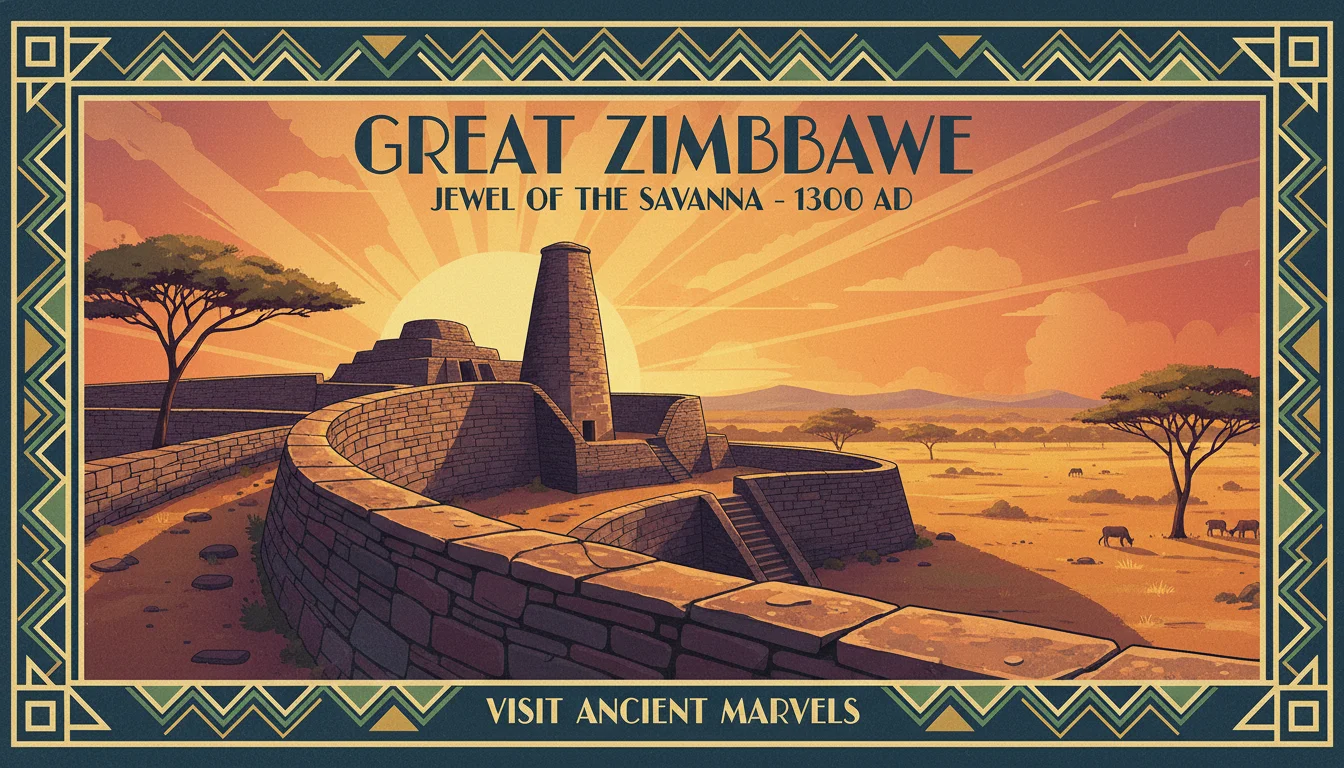
Your time machine deposits you on a granite hilltop in southeastern Africa, and the first thing you notice is the silence. Not an empty silence - this is the respectful hush of a sacred place. Then you see the walls.
Massive stone walls snake across the landscape, some reaching thirty feet high and sixteen feet thick. No mortar. No cement. Just millions of granite blocks, fitted together with such precision that you couldn't slip a knife blade between them. You've arrived at Great Zimbabwe, the largest stone structure in sub-Saharan Africa and the capital of an empire that controls the gold flowing from Africa to India, Persia, and China.
Welcome to 1300 AD. Try not to look poor.
What to Wear (Or: How Not to Get Mistaken for a Slave)
First things first - you need proper clothing, and in Zimbabwe, clothing is politics.
The common people wear cotton cloth wrapped around the waist, sometimes with animal skins. But you're standing near the king's enclosure, and showing up in commoner's garb will get you escorted out at spearpoint. Or worse.
What you need: cotton cloth dyed with indigo (imported from the East African coast), supplemented with elaborate beadwork. Glass beads from India and Arabia are currency here - the more you wear, the wealthier you appear. Gold? Surprisingly, only royalty wears gold jewelry openly. Showing up dripping in the stuff would be like walking into medieval Paris wearing the crown jewels.
Women of status wear layered cotton wraps reaching the ankles, with copper or bronze anklets that jingle as they walk. Men of the trading class wear shorter wraps with leather sandals and carry walking sticks that double as status symbols.
Pro tip: Get your earlobes pierced and stretched before arriving. Ear ornaments are essential. No ear jewelry means you're either a slave or profoundly strange. Neither helps.
What You'll Eat (It's Actually Pretty Good)
Zimbabwe cuisine in 1300 will feel familiar to anyone who's eaten in southern Africa today. The staple is sadza - a thick porridge made from finger millet or sorghum. You scoop it with your right hand (never the left, please) and use it to grab stewed vegetables, meat, or relish.
For breakfast: porridge with milk and wild honey. Cattle are wealth here - Zimbabwe's elite own herds numbering in the thousands - so dairy is abundant for those who can afford it.
Lunch and dinner options include:
- Beef and goat stewed with wild greens
- Fish from the nearby rivers (if you're lower class)
- Wild game for special occasions - zebra, antelope, and warthog
- Beans, pumpkins, and indigenous vegetables
- Fresh and dried fruits
The elite drink hwahwa, a millet beer that's slightly sour and moderately alcoholic. Refusing it is an insult. Over-drinking it is embarrassing but acceptable.
Warning: Never ask where the gold comes from. Seriously. The king maintains absolute secrecy about mine locations. Curious visitors have a habit of disappearing.
Navigating the City (Don't Wander Into the Wrong Enclosure)
Great Zimbabwe isn't one building - it's an entire urban complex spread across nearly 2,000 acres. The population is around 18,000, making it one of the largest cities in the world at this time.
The Hill Complex: The oldest part, perched on a granite hill. This is the king's spiritual center - religious ceremonies, oracle consultations, and ancestral worship happen here. Do not attempt to enter unless explicitly invited. The stone passageways are deliberately narrow and confusing, designed to disorient potential attackers. Guards patrol constantly.
The Great Enclosure: That massive oval wall you can see from anywhere in the city? That's it. Some walls here reach 36 feet high. Inside is a conical tower (still standing in our time), various smaller enclosures, and what scholars debate is either a royal residence, a sacred space, or both. Again - no casual visits.
The Valley Enclosures: Where most people actually live. Stone-walled compounds house extended families, workshops, and storage areas. This is where you'll find traders, craftspeople, and the bustling market economy that made Zimbabwe rich.
Market Protocol: Trade happens through a complex system of gifts and reciprocity. Don't haggle like a Mediterranean merchant - you'll seem crude. Instead, present your goods as a "gift," receive goods in return, and everyone pretends commerce isn't happening.
How the Economy Works (Gold, Ivory, and Why You Should Bring Cloth)
Great Zimbabwe sits at the center of a trade network stretching from the African interior to the Indian Ocean coast - the same circuit that enriched Swahili Kilwa a few hundred miles north. Here's what flows through:
Exports:
- Gold (so much gold - Zimbabwe controls perhaps 40% of global production)
- Ivory
- Copper
- Iron tools
- Animal skins
Imports:
- Glass beads from India
- Chinese porcelain (yes, really - archaeologists have found Chinese ceramics here)
- Persian glass
- Cotton cloth from the Swahili coast
- Cowrie shells (used as currency)
If you brought trade goods, cotton cloth from Asia or glass beads will be most welcome. Anything unusual - like a steel knife or a mirror - will make you rich, but also attract dangerous attention.
The currency system is bead-based. Small glass beads are everyday money. Larger ones are like gold coins. Cowrie shells work for small transactions. Actual gold? Only the king deals in raw gold.
Religion and Social Rules (Things That Will Get You Killed)
Zimbabwe's religion centers on Mwari - a supreme creator deity - and the spirits of ancestors. The king serves as intermediary between the living and the dead, and his power is absolutely sacred.
Absolutely do not:
- Touch the king or make eye contact unless invited
- Enter any enclosure with a soapstone bird carving (these mark sacred spaces)
- Mention death, disease, or misfortune directly - use euphemisms
- Point at rainbows (this is extremely taboo, don't ask why)
- Refuse to participate in communal rituals
- Speak the king's personal name aloud
Absolutely do:
- Clap twice when greeting someone of higher status
- Present yourself formally through an intermediary before approaching anyone important
- Bring gifts - always bring gifts
- Remove your sandals when entering someone's compound
- Participate in communal beer-drinking with appropriate enthusiasm
The king is believed to communicate with the rain-bringing spirits. Drought or famine might suggest his spiritual power is waning, which tends to result in new kings. This makes succession... complicated.
Things You Must See
The Conical Tower: Forty feet of solid stone, perfectly circular, no entrance or stairs. Scholars in our time still argue about its purpose. In 1300, you're better off not asking. It's clearly important; that's all you need to know.
Soapstone Birds: Eight carved soapstone birds perch on columns throughout the city. These aren't decorations - they're embodiments of ancestral spirits and symbols of royal power. They're also the reason Zimbabwe's modern flag has a bird on it.
The Metalworking Quarters: If you can get access (bring gifts to the master smith), watching Zimbabwe's ironworkers is remarkable. They produce steel tools rivaling anything in Europe at this time, using techniques passed down for centuries.
The Trading Caravans: When a caravan arrives from the coast - a journey of several weeks - the entire city turns out. Swahili merchants, Persian traders, possibly even the occasional Chinese emissary. Great Zimbabwe in 1300 is genuinely cosmopolitan.
Common Dangers
- Lions and leopards prowl the surrounding bush. Don't wander alone at night.
- Malaria is endemic. If you haven't brought modern prophylaxis, you're taking a serious risk.
- Snakebites are common. Puff adders hide in the grass; mambas live in trees. Watch your step.
- Political intrigue at court can be fatal for the unwary foreigner.
- Witchcraft accusations are serious. If someone accuses you, you'll face trial by ordeal.
When to Visit
The dry season (May to October) is most comfortable and when most trade caravans arrive. The rainy season brings the crops but also flooding, disease, and difficult travel.
If you can time your arrival for the annual mukwerera rain-calling ceremony, you'll witness Zimbabwe at its most spectacular - the king in full regalia, thousands of participants, and cattle sacrifices to ensure another year of prosperity.
Final Advice
Great Zimbabwe in 1300 is wealthy, sophisticated, and justifiably proud. The people here know they live in one of the great cities of their age. They trade with Asia, build monuments that will stand for seven hundred years, and produce art that will end up in museums worldwide - much like the West African powerhouse of Mali under Mansa Musa a generation later.
They don't need validation from outsiders, and they certainly don't need advice.
Come with respect, come with gifts, come with humility. Watch, listen, learn. And whatever you do, don't ask about the gold mines.
Safe travels, time traveler. The walls of Zimbabwe have stood for centuries. Try not to become part of the foundation.

Need Advice from Someone Who Lived There?
Get firsthand accounts from people who actually lived through these moments in history.
Ask Them YourselfJoin the HistorIQly Club
Get smarter about the past.
Weekly stories, deep dives, and exclusive content straight to your inbox.