Time Traveler's Guide to Swahili Kilwa Kisiwani, 1300 AD
Swahili Kilwa at its 1300 AD peak: East Africa's wealthiest trading port where monsoon winds, gold, and ivory connected the Indian Ocean world.
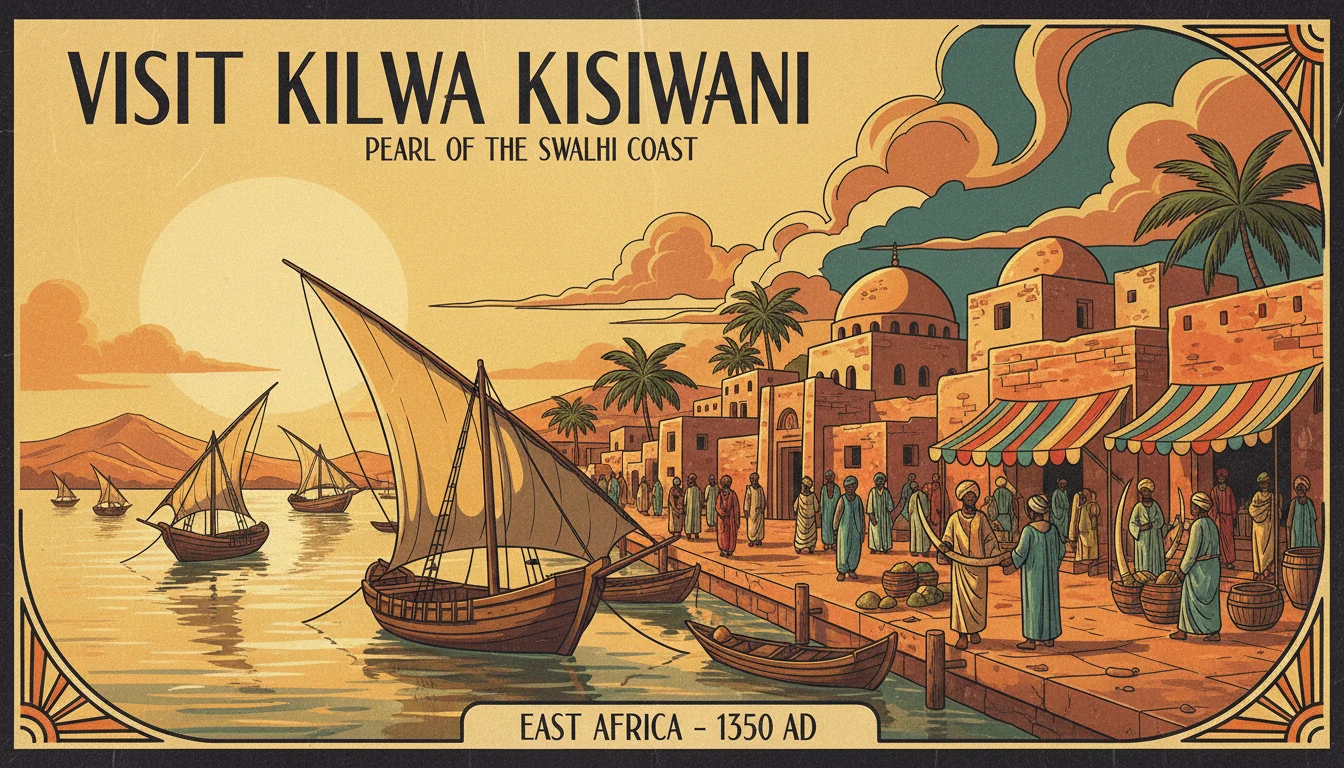
Welcome to Swahili Kilwa - Kilwa Kisiwani - the jewel of the Swahili Coast. Around 1300 AD, this small island off present-day Tanzania controls the gold trade flowing from Great Zimbabwe to the Indian Ocean world. The renowned traveler Ibn Battuta will visit in 1331 and declare it "one of the most beautiful and well-constructed towns in the world." You're arriving at the height of its prosperity.
When to Visit
Time your arrival with the monsoon winds - the rhythm that governs everything here. The kaskazi (northeast monsoon) blows from November to March, bringing Arab, Persian, and Indian merchants with ceramics, textiles, and spices. The kusi (southeast monsoon) from April to October carries ships back laden with gold, ivory, and enslaved people.
Best timing: December through February. The trading season is in full swing, the weather is hot but manageable, and the town buzzes with international commerce. Avoid the masika rains (March-May) - the streets turn to mud and ships delay departures.
Getting There
You'll approach by dhow, the elegant lateen-sailed vessels that have connected the Indian Ocean world for centuries. As you navigate the harbor, you'll see why the Kilwa sultans chose this island - the deep natural harbor protects ships while the narrow channel creates a defensive chokepoint.
The stone quays are sophisticated for their time. Dock masters collect tariffs, scribes record cargo, and porters swarm arriving vessels. Have your trade goods visible and valuables hidden. Customs here are thorough.
What to Wear
Swahili coast fashion reflects its cosmopolitan character. For men, a kanzu (long white cotton robe) is essential - the finer the cotton, the higher your perceived status. Important merchants add an embroidered cap (kofia) and leather sandals. Going barefoot marks you as poor or enslaved.
Women wear the kanga - colorful cotton wraps, often with Swahili proverbs printed on them (yes, this tradition is already ancient). Upper-class women rarely appear in public, but when they do, expect heavy gold jewelry and henna-decorated hands.
Critical: Cover your arms and legs regardless of the heat. Exposed limbs mark you as uncivilized. The Swahili elite are fastidious about appearance.
Where to Stay
The island has distinct neighborhoods. The stone town houses the elite - merchants, officials, and religious scholars living in coral-block mansions with indoor plumbing (yes, really). These houses have private wells, carved wooden doors, and recessed niches for displaying Chinese porcelain.
Foreign traders typically stay in the funduq (trading hostel) near the harbor. These are clean, secure, and come with meals. Expect to share a room. Bring your own bedding - a sleeping mat and light cotton blanket suffice.
If you arrive with letters of introduction to a local merchant family, you may receive hospitality in a private home. This is the premium option - you'll get your own room, servants, and invitations to feasts.
What to Eat
The Swahili kitchen is a delicious collision of African, Arab, and Indian influences. Breakfast is typically mahamri (fried bread similar to donuts) with spiced tea or coffee. Yes, coffee - the beans come from Ethiopia and Yemen.
For main meals, expect:
- Pilau - spiced rice with meat, the Indian Ocean's universal dish
- Mchuzi wa samaki - fish cooked in coconut curry
- Mishkaki - grilled meat skewers marinated in tamarind
- Tropical fruits - mangoes, coconuts, bananas, citrus
The water is generally safe (wells are maintained), but stick to boiled tea or fresh coconut water to be certain. Alcohol is forbidden under Islamic law, though some sailors have their sources.
Money and Trade
Kilwa mints its own copper coins (falus), making it one of the few sub-Saharan African sites with local currency. However, much trade operates on barter or credit. Gold dust serves as high-value currency, weighed on precise scales.
What to bring for trade:
- Indian textiles (always valuable)
- Glass beads (the Swahili love Venetian and Indian beads)
- Chinese ceramics (instant status symbols)
- Iron tools and weapons
- Dates and other preserved foods
What to buy:
- Gold (Kilwa controls the gold route from Zimbabwe)
- Ivory (elephant tusks are stacked on the docks)
- Amber and ambergris
- Tortoiseshell
- Rock crystal
Haggling is expected and respected. Start at half the asking price and work up. Never seem desperate.
Religion and Customs
Islam dominates public life. The Great Mosque of Kilwa - the largest mosque in sub-Saharan Africa at this time - anchors the city spiritually and socially. Five daily prayers structure the day; businesses close for Friday noon prayers.
Essential etiquette:
- Remove shoes before entering homes and mosques
- Eat only with your right hand (left hand is for... other purposes)
- Greetings are elaborate - learn "Hujambo" (how are you?) and the proper responses
- Men and women don't mix socially outside family settings
- Never discuss someone's enslaved workers as "slaves" to their face
The Kilwa elite practice Sunni Islam of the Shafi'i school, but you'll notice African traditions woven through daily life - spirit offerings, ancestral veneration, traditional healers working alongside Islamic scholars.
Dangers and Warnings
Health: Malaria is endemic. If you develop cyclical fevers, find a healer who can provide mti ajabu (cinchona-related bark treatments). Dysentery kills many visitors - eat only fresh-cooked foods and avoid anything that might have been sitting out.
Political: Kilwa's sultans maintain power through a complex web of alliances. Don't get involved in local politics. Succession disputes can turn violent quickly.
Pirates: The northern Swahili Coast has occasional piracy. If traveling by dhow, stick to convoy sailings during monsoon season.
Enslavement: Yes, it's a reality. Kilwa is a major slave-trading port. As a foreign visitor, you're generally safe, but don't wander into the interior without local guides and protection.
Must-See Experiences
-
The Great Mosque - Its domed roof and coral columns represent cutting-edge Islamic architecture. Non-Muslims can't enter during prayers, but the exterior is impressive anytime.
-
Husuni Kubwa - The sultan's palace complex, just north of the main town. Over 100 rooms including the only swimming pool in sub-Saharan Africa. The audience court where the sultan receives foreign ambassadors is breathtaking.
-
The Goldsmith Quarter - Watch craftsmen work African gold into jewelry using techniques blending local, Arab, and Indian traditions.
-
Harbor at dawn - When the dhows are preparing to sail, the quays are a symphony of languages - Swahili, Arabic, Persian, Gujarati, even occasional Chinese merchants.
-
A merchant feast - If you can wrangle an invitation, the hospitality is legendary. Expect twelve courses, poetry recitation, and business discussions that last past midnight.
What to Bring Home
- Gold jewelry (the craftsmanship is exquisite)
- Coconut-shell carved boxes
- Woven mats and baskets
- Swahili poetry manuscripts
- Local spices (cloves, cinnamon, cardamom)
Final Tips
Kilwa in 1300 represents something remarkable - a prosperous African city at the center of global trade, where monsoon winds connect Chinese ceramics to Zimbabwean gold. The stone architecture, sophisticated trade networks, and cosmopolitan culture challenge many preconceptions about pre-colonial Africa.
Learn some Swahili phrases, respect Islamic customs, bring valuable trade goods, and you'll find the Swahili Coast welcomes travelers who come with curiosity and respect. Just remember: the monsoon waits for no one. Miss your sailing season, and you're stranded for six months.
Kwaheri, msafiri - farewell, traveler. May the winds be with you.
If connected African trade cities appeal, our guide to Great Zimbabwe in 1300 covers the source of much of Kilwa's gold. For another peak of Islamic commerce on a different coast, the Abbasid capital of Baghdad in 800 AD operated the same monsoon-linked networks in a different direction.

Need Advice from Someone Who Lived There?
Get firsthand accounts from people who actually lived through these moments in history.
Ask Them YourselfJoin the HistorIQly Club
Get smarter about the past.
Weekly stories, deep dives, and exclusive content straight to your inbox.