Time Traveler's Guide to Hallstatt, 500 BC
Your survival guide to Hallstatt 500 BC: salt mines, Alpine vistas, and Iron Age aristocrats at the cradle of Celtic civilization in the Austrian Alps.
Read Wikipedia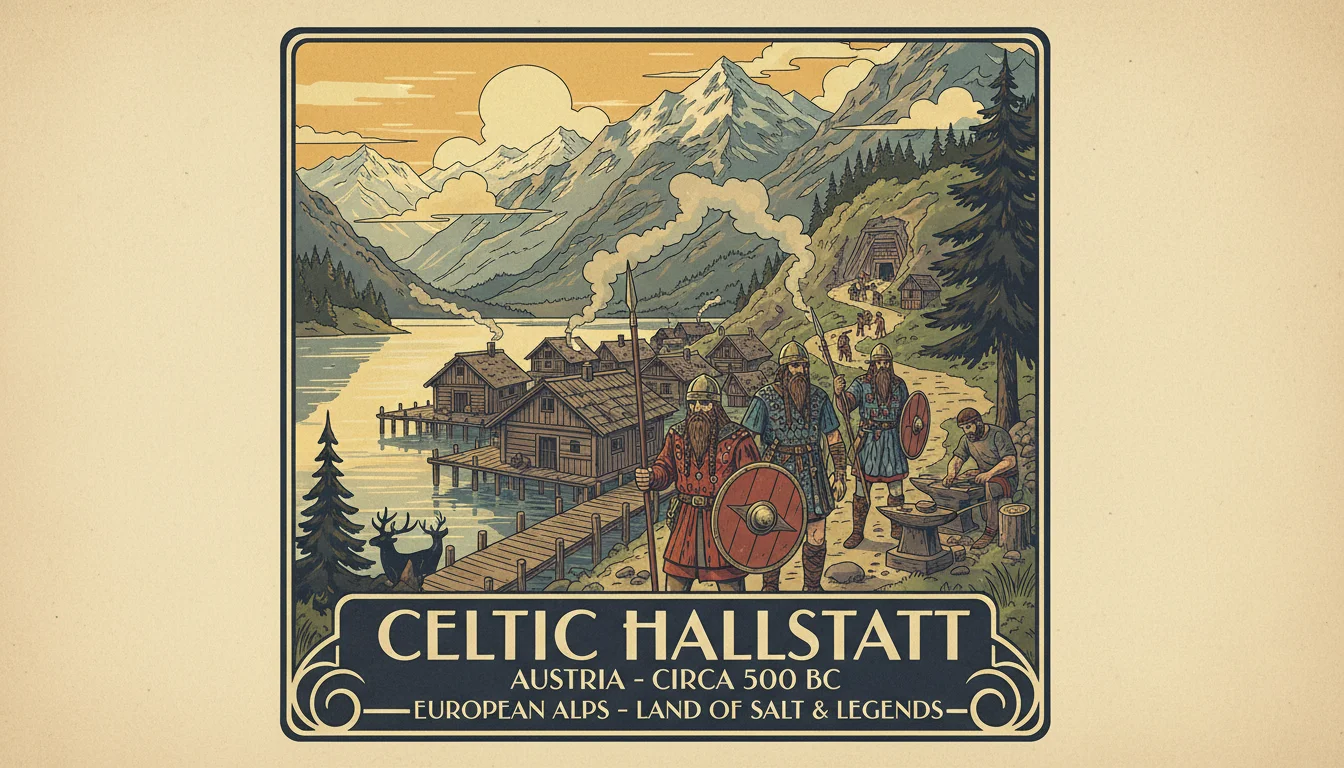
Welcome to Hallstatt, 500 BC - where salt is more valuable than gold, the mountains touch the clouds, and the Celtic elite dress like they're attending a perpetual fashion show. This small settlement perched above a glacial lake is the beating heart of early Celtic civilization, and you're about to experience Iron Age luxury at its finest.
When to Visit
Late spring through early autumn is your window. Winters here are no joke - the Alps don't care about your modern sensibilities, and the passes close with snow that won't melt until April. The mining operations run year-round, but surface activities and the all-important trading season peak from May to September when merchants from across Europe converge on this tiny Alpine powerhouse.
What to Wear
Forget everything you know about "barbarian" fashion. The Hallstatt Celts are arguably the best-dressed people in Iron Age Europe, and they will absolutely judge you.
For men: A woolen tunic reaching mid-thigh, cinched with a bronze belt - and the belt matters enormously here. The wealthier the man, the more elaborate the buckle. Trousers are a Celtic innovation (those toga-wearing Romans will eventually catch on), typically in plaid or checked patterns. A thick woolen cloak with a bronze fibula (that's a fancy brooch, not a bone) completes the look.
For women: Long woolen dresses in vibrant colors - they love their plant dyes here, especially woad blue and madder red. Layer with a shorter overdress and accessorize heavily. These people invented statement jewelry. Expect massive bronze neck rings (torcs), elaborate belt plates, and enough arm rings to hear yourself coming.
Pro tip: Your shoes matter. Leather boots or sturdy sandals for the rocky terrain. Anything that looks flimsy marks you as someone who's never climbed a mountain.
Currency and Commerce
Salt. It's always been about the salt.
Hallstatt sits atop one of the oldest salt mines in the world, and that white gold has made this community obscenely wealthy by Iron Age standards. The locals call it "white mountain blood," and it preserves food, cures leather, and serves as the universal currency of Celtic Europe.
For daily transactions, you'll use bronze ingots, raw salt blocks, or the barter system. Gold and amber are prestige items - save those for impressing aristocrats. The going rate for a good iron sword is roughly equivalent to a month's salt ration for a mining family.
Trading tip: Mediterranean merchants arrive in summer with wine, coral, and fancy Greek pottery. If you have any of those, you can write your own ticket here.
What to Eat
Celtic cuisine is hearty, meat-forward, and surprisingly sophisticated for people without grocery stores.
Breakfast: Barley porridge with honey and seasonal berries. Simple, filling, and available from any household that'll take you in.
Lunch: Smoked pork or preserved fish - the salt mines ensure nothing goes to waste. Served with flatbread and whatever vegetables are in season (turnips, beans, wild onions).
Dinner: This is where the Celts shine. Roasted meat is the centerpiece - usually pork, occasionally beef, sometimes game. The famous "warrior's portion" (the best cut of meat) goes to the highest-ranking person present, so don't reach for the leg unless you can back it up with a sword. Accompany with mead or imported wine if you've got connections.
Local specialty: Hallstatt smoked trout. The lake is full of them, and the salt-curing techniques here are unmatched.
Customs and Social Navigation
The Aristocracy Problem
Hallstatt society is rigidly hierarchical. The salt mine operators and major traders form an aristocratic class that controls everything from mineral rights to marriage alliances. These are the people buried with four-wheeled wagons and gold neck rings.
Approach with respect. Always let them speak first. Never sit in a higher position. And absolutely never touch their swords - those are sacred objects, often passed down through generations.
Women Hold Power
Unlike what Victorian historians might have told you, Celtic women here have significant rights. They own property, divorce husbands who displease them, and occasionally lead family enterprises. Do not make the mistake of assuming the quiet woman in the corner isn't the person making decisions.
Guest Rights Are Sacred
The Celtic hospitality code is no joke. Once you're accepted as a guest, the household will literally fight to protect you. The flip side: violating guest rights (stealing, lying, violence) brings shame on both parties and can escalate to blood feuds.
How to trigger hospitality: Approach a house, state your name and origin, and explicitly request guest-right. Bring a small gift - imported goods work wonders.
Dangers to Avoid
The Mines
You'll want to see the salt mines. Everyone does. But these are active industrial sites running 300+ meters into the mountain, lit by pine torches, and operated by people who've been doing this since childhood.
The dangers: cave-ins, gas pockets, getting lost in the labyrinth of tunnels, and the sheer physical toll of the work. Mining shifts run dawn to dusk, and even observation visits require physical fitness. If you're claustrophobic, admire the operation from the entrance.
Mountain Weather
The Alps are beautiful and completely unforgiving. Weather changes happen in minutes - clear mornings can become deadly storms by noon. Never venture into the high passes without a local guide, and always carry more food and water than you think you'll need.
Tribal Politics
This region is contested. The Hallstatt Celts maintain their wealth through a complex web of alliances, marriages, and occasional warfare with neighboring tribes. If you hear horns blowing from the watchtowers, find a household that'll take you in and stay there.
Must-See Experiences
The Salt Mines at Dawn
Arrive at the mine entrance just as the morning shift begins. The torchlight procession into the mountain, the rhythmic singing of the workers, and the scale of the Bronze Age engineering will humble you. These tunnels have been operating for 800 years by your arrival date.
A Chieftain's Feast
If you can wrangle an invitation (gifts help), attend one of the aristocratic drinking parties. These affairs feature the finest imported Greek wine, epic boasting competitions, and enough gold jewelry to blind you. The mead flows freely, the meat is carved with ceremony, and you'll witness oral poetry that won't be written down for another 500 years.
The Lake at Sunset
Hallstätter See sits in a glacier-carved bowl surrounded by peaks that glow pink at dusk. The Celtic settlement reflects in still water while smoke rises from iron forges. It's the same view tourists will pay premium prices for in 2,500 years - you get it for free.
The Artisan Quarter
Hallstatt's bronze smiths and iron workers are producing some of the finest metalwork in Europe. Watch them create the signature Hallstatt sword - a long slashing blade with elaborate handle decoration. The techniques here will spread across the continent and define Celtic material culture for centuries.
Getting There
You're heading to the northern Alps, specifically the Salzkammergut region of modern Austria. If approaching from the Mediterranean (the most common route), travel north through the Brenner Pass and follow Celtic trading roads west. Coming from the north, follow the Danube tributaries upstream into the mountains.
The journey from any major population center takes weeks. Hire local guides at each stage - the Alpine passes are no place for amateurs.
Final Advice
Hallstatt at 500 BC is caught between worlds. The Bronze Age traditions that built this place are fading; the classical La Tène style that will define "Celtic" for later historians is just emerging. You're visiting during a transition, when old wealth meets new ideas.
Be humble about what you know. These people mastered industrial mining while your ancestors were still figuring out agriculture in some places. They trade with Greece, negotiate with Etruscan merchants, and produce art that belongs in museums.
Bring salt home. Not because you need it - because everyone back in your time will laugh at how cheap it is now, and you'll know what those tiny white crystals really cost.
Safe travels, temporal tourist. The mountains are watching. If ancient European cultures interest you beyond the Celts, our guide to Mycenaean Greece in 1300 BC and Minoan Knossos in 1500 BC explore civilizations the Hallstatt people would have heard of through Mediterranean trade networks.

Need Advice from Someone Who Lived There?
Get firsthand accounts from people who actually lived through these moments in history.
Create your free account →No card required. Some figures and features require a paid plan.
Join the HistorIQly Club
Get smarter about the past.
Weekly stories, deep dives, and exclusive content straight to your inbox.