Time Traveler's Guide to Tiwanaku, 500 AD
Survive the thin air and respect the gods in Tiwanaku - one of history's most mysterious Andean civilizations, built at 12,500 feet above sea level.
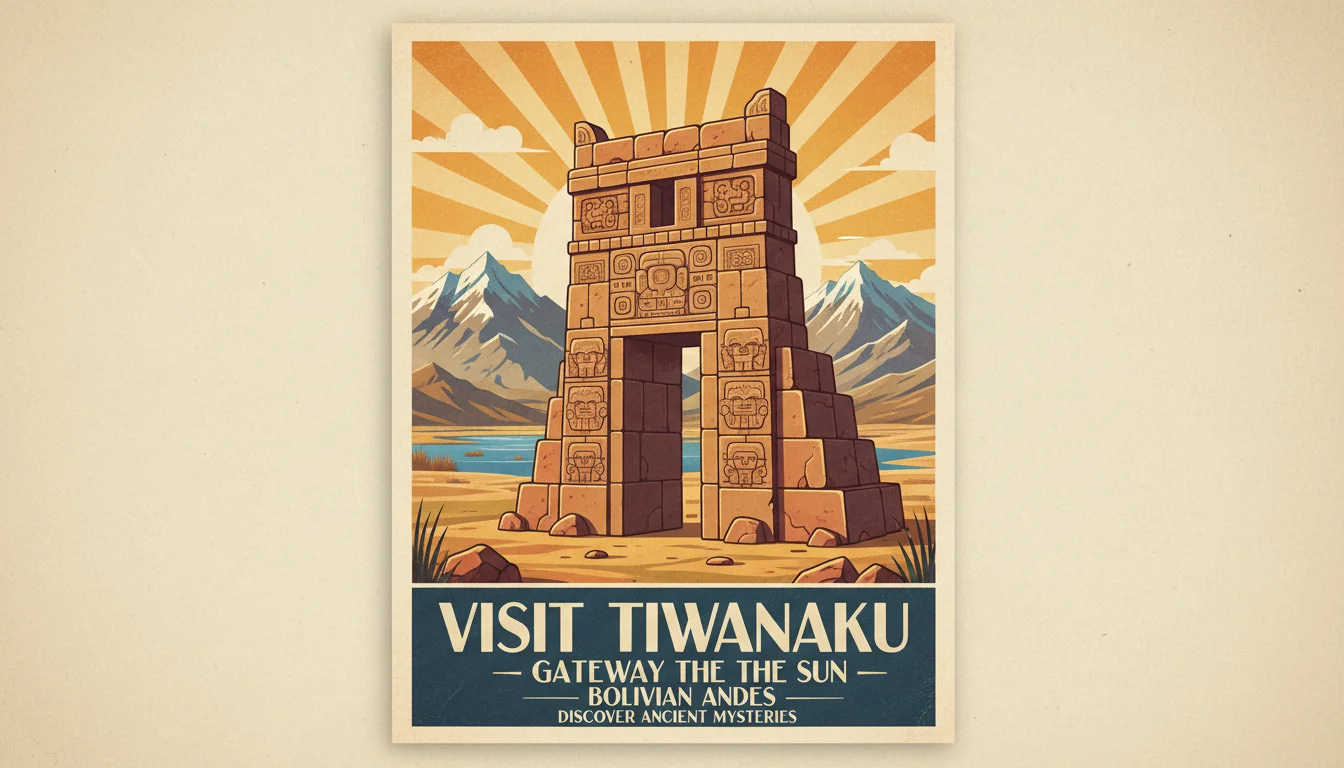
You step out of your time machine and immediately regret every life choice that brought you here. Your lungs burn. Your head pounds. You're gasping like a fish yanked from water. Welcome to Tiwanaku, 12,500 feet above sea level, where the very air conspires against lowland visitors.
But once your body adjusts - give it a few days of coca leaves and shallow breathing - you'll find yourself in one of history's most enigmatic cities. A place so advanced that Spanish conquistadors would later believe only demons could have built it.
First Impressions: City in the Clouds
Tiwanaku sprawls across the Bolivian altiplano, about 45 miles from Lake Titicaca. The landscape is lunar - vast, treeless plains surrounded by snow-capped peaks. The sky is impossibly blue, the sun impossibly bright, and the nights so cold you'll understand why locals invented alpaca wool.
The city itself defies expectations. You expected primitive huts. Instead, you find massive stone monuments, precisely carved gateways, and ceremonial platforms that would make Egyptian architects jealous. About 20,000 people call this place home, making it one of the largest cities in the Americas.
The locals watch you with curiosity but not hostility. Tiwanaku is a pilgrimage center, and strangers aren't unusual. They do, however, find your gasping and stumbling hilarious.
What to Wear
Forget everything you know about tropical South America. This is the high Andes, where temperatures swing wildly between scorching daytime sun and freezing nights.
Locals wear layers of alpaca and llama wool - tunics for men, long dresses for women, with thick mantles for everyone. Their textiles are stunning, woven with geometric patterns in reds, yellows, and browns that denote social status and regional origin.
As a visitor, you'll want to blend in. Acquire a thick wool tunic immediately. The locals will happily trade for almost anything shiny or unusual. Your modern sunglasses would fetch a fortune - but you'll need them. At this altitude, snow blindness is a genuine risk.
Footwear is simple leather sandals with wool socks. Your modern hiking boots will draw stares, but they might save your toes from frostbite, so it's your call.
What to Eat
The highland diet is surprisingly hearty. Potatoes dominate everything - and not the boring white ones you know. Tiwanaku farmers cultivate hundreds of varieties in purples, yellows, reds, and blues. They've perfected freeze-drying technology using the extreme altitude conditions, creating chuño - preserved potatoes that last years.
Quinoa is another staple, prepared as porridge, bread, or fermented into chicha beer. The locals consider quinoa sacred, calling it the "mother grain." You'll eat it at every meal.
Meat comes from llamas and alpacas - dried as charki (the origin of "jerky"), stewed, or roasted. Guinea pigs make occasional appearances at feasts. Fish from Lake Titicaca provides essential protein. The locals smoke and dry it for trade across the highlands.
Warning: the chicha beer looks innocent but packs a punch at altitude. One cup will have you seeing the gods whether you want to or not.
Social Customs and Taboos
Tiwanaku society is rigidly hierarchical. Priests and nobles live near the ceremonial center. Commoners live in outlying neighborhoods. Know your place and stay in it.
The religion centers on a creator god called Viracocha, though locals don't use that name directly - it's too sacred. The famous Gateway of the Sun depicts this deity, and pilgrims come from hundreds of miles to pay respects.
Important rules:
- Never approach the sacred platforms uninvited
- Always offer coca leaves before asking for anything
- Never walk between a priest and the sun during ceremonies
- Always accept food or drink when offered - refusal is deeply insulting
- Never mention death or illness in the presence of nobles
The Tiwanaku practice llama sacrifice, and occasionally human sacrifice during major events. If priests start eyeing you speculatively, it's time to blend into the crowd.
Dangers to Avoid
Altitude sickness will be your biggest enemy. Symptoms include headaches, nausea, and confusion. In severe cases, fluid builds up in lungs or brain. The locals use coca leaves constantly - not for the drug effect, but because it genuinely helps with altitude. Accept their offers.
The cold kills visitors who underestimate it. Nights drop well below freezing year-round. Hypothermia takes people in their sleep. Never travel without adequate wool clothing.
Political violence is less common than in other ancient civilizations, but Tiwanaku does war with neighbors occasionally. The elite warrior class carries bronze-tipped maces and wears elaborate headdresses. If you see troops assembling, find somewhere quiet to be.
Condors - those massive vultures circling overhead aren't just scenery. They're sacred animals, and harming one, even accidentally, brings severe punishment. Also, they've been known to attack solitary travelers who look sufficiently weak.
Must-See Sites
The Akapana - A massive stepped pyramid that dominates the city center. Originally covered in blue stone, it contains internal chambers and drainage systems that modern engineers still don't fully understand. Climb to the top at sunrise. The view across the altiplano, with Lake Titicaca glittering in the distance, will justify every painful breath.
The Kalasasaya - A semi-subterranean temple with walls of alternating pillar stones. The famous Gateway of the Sun stands here, carved from a single block of andesite with the image of the staff-bearing god. Time your visit for the solstices - the gateway aligns perfectly with the rising sun.
The Subterranean Temple - Literally underground, with walls lined by hundreds of carved stone heads. Each face is different, possibly representing conquered peoples or ancestor portraits. Stand in the center and whisper - the acoustics carry your voice in eerie ways.
Pumapunku - A short walk from the main complex, this site features the most mind-bending stonework you'll ever see. H-shaped blocks fitted so precisely that you can't slide paper between them. Stones transported from quarries miles away across impossible terrain. The locals say gods built it. You might start believing them.
How to Get Around
Walking. That's it. There are no wheeled vehicles in the pre-Columbian Americas. Llamas carry goods but not people. The city itself is compact enough to explore on foot, though you'll need frequent rest breaks until you acclimatize.
For longer journeys, Tiwanaku maintains an impressive road network across the altiplano. Trading caravans move constantly between the coast, the highlands, and the Amazon lowlands. If you need to leave, join one of these caravans - solo travel is dangerous and lonely.
The locals have an uncanny sense of direction and distance. They measure travel in "jornadas" - how far you can walk in a day. One jornada at sea level covers more ground than one jornada at 12,500 feet. Learn this lesson before you commit to a journey.
Getting Home
Your time machine is where you left it - presumably somewhere outside the sacred precinct where curious priests can't examine it. Retrieve it carefully. The Tiwanaku are curious people who would absolutely dismantle your machine to understand it.
If you've lost your machine (it happens), head for Lake Titicaca. The island of the Sun and the island of the Moon are sacred sites with their own temporal anomalies. Or so the legends say.
Either way, take a moment before leaving. Watch the last sunset paint the mountains gold and purple. Listen to the priests chanting from the Akapana. Feel the thin, ancient air in your lungs.
Tiwanaku will collapse in a few centuries. Climate change will dry up the fields. The population will disperse. The great monuments will be abandoned, then buried, then forgotten until Spanish priests stumble upon them and can't believe their eyes.
But right now, at this moment, you're standing in a city that commands an empire, worships the sun, and builds things that will puzzle humanity for millennia.
The altitude makes everything feel dreamlike anyway. You might as well enjoy it.
For more pre-Columbian time travel guides, see our editions on Aztec Tenochtitlan in 1500 and Inca Cusco in 1450.

Need Advice from Someone Who Lived There?
Get firsthand accounts from people who actually lived through these moments in history.
Ask Them YourselfJoin the HistorIQly Club
Get smarter about the past.
Weekly stories, deep dives, and exclusive content straight to your inbox.