Time Traveler's Guide to Han Dynasty Chang'an, 100 BC
A practical survival guide to navigating the mighty Han capital, from silk layers and market snacks to court etiquette and the dangers of annoying the wrong official.
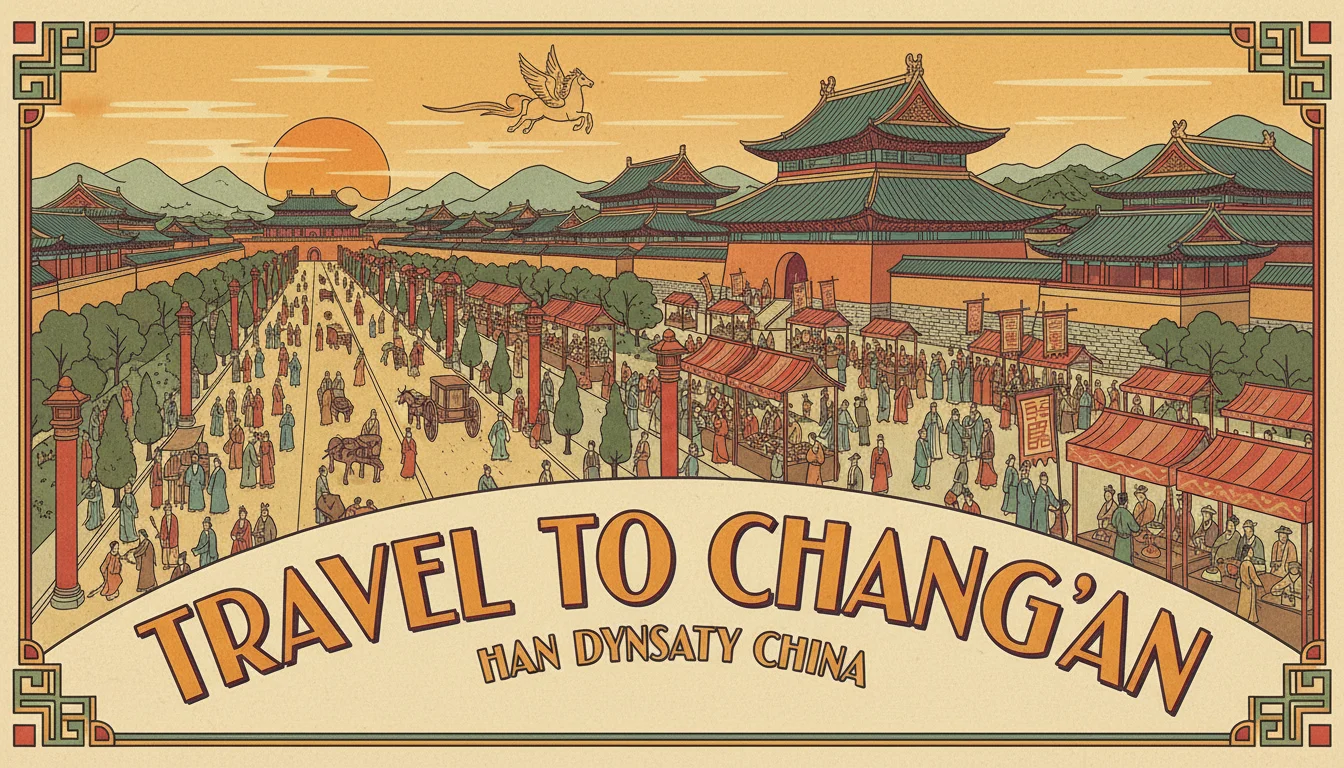
So, you have decided to visit Chang'an in 100 BC, the glittering capital of the Han Dynasty and one of the biggest, busiest, most politically charged cities on Earth. Excellent choice. If your usual vacations involve good infrastructure, carefully labeled food, and not accidentally insulting an imperial clerk, this will be a growth experience.
At this point in history, the Han Empire is powerful, wealthy, and very pleased with itself. Emperor Wu's long reign has projected Chinese power across Central Asia, expanded trade routes that will later be romanticized as the Silk Road, and filled Chang'an with officials, soldiers, merchants, scholars, laborers, and enough paperwork to bury a horse. The city is impressive, cultured, and packed with opportunities to learn something incredible. It is also full of rules, status signals, and diseases modern travelers would very much prefer to avoid.
Here is how to enjoy the trip and, ideally, return with all your limbs, dignity, and digestive stability intact.
What to wear so nobody stares too much
Your safest move is to dress like a modest, reasonably prosperous urban visitor who knows better than to show off. Han clothing is built around layered robes, crossed collars, wide sleeves, sashes, and soft shoes. Think elegance through fabric rather than spectacle.
For men, a plain but neat robe in undyed hemp or muted silk works best. For women, long flowing robes in subdued colors are a smart choice unless you have a specific reason to appear wealthier. Bright luxury fabrics do exist, but if you turn up draped like a minor celestial being, people will want to know who you are, why you are here, and whether they should report you.
A few hard rules:
- Avoid obviously synthetic fabrics. Polyester is not a Han Dynasty classic.
- Do not wear visible metal fasteners, printed logos, zippers, or eyeglasses.
- Keep your hair tidy. Headwear and hairstyle both communicate status.
- Bring layers. Chang'an can be dusty, windy, cold in winter, and brutally hot in summer.
If you can only pack one look, go for "respectable traveling scholar's cousin." It opens doors and attracts fewer questions than "mysterious foreign wizard."
What to eat, and what not to trust
Chang'an is a fantastic food city. You are in luck, because the capital draws ingredients and culinary styles from across the empire. Expect millet, wheat noodles, steamed buns, soups, roasted meats, pickled vegetables, beans, chestnuts, and plenty of sauces. Northern China at this time leans more on wheat and millet than rice, so prepare your palate accordingly.
Good bets include:
- Freshly cooked noodles from a busy stall
- Steamed grain dishes
- Roasted or boiled meats served hot
- Flatbreads and buns prepared in front of you
- Seasonal fruit you can peel yourself
Exercise caution with:
- Raw vegetables washed in questionable water
- Anything lukewarm and fishy in both senses of the word
- Dairy, unless you know exactly who made it and why
- Street wine of unclear origin that smells like varnish and regret
Tea will not yet be your standard easy solution. Boiled water is your friend, but you may need to be discreetly diligent about obtaining it. If your time machine has room for one luxury item, make it modern water purification tablets. This is not cheating. This is survival.
How to behave without accidentally causing a diplomatic incident
Han society runs on hierarchy, ritual, and knowing your place. You do not need to become a Confucian master overnight, but you do need to project humility and basic social awareness.
A few survival principles:
- Be polite to everyone, but especially to officials, scribes, and household staff.
- Do not launch into strong opinions about government unless you are very sure of your audience.
- Accept and offer items with both hands when appropriate.
- Let older or higher-status people take the lead in conversation.
- Do not touch people casually.
- Do not joke about the emperor. Truly, I cannot stress this enough.
If asked where you are from, have a simple answer ready. "A distant western region" works better than trying to explain quantum mechanics. Chang'an is already a cosmopolitan city by ancient standards, and traders, envoys, and travelers do pass through. Sound vague, courteous, and faintly boring.
Literacy is respected, but pretending to be more educated than you are can backfire fast. If someone asks about the Classics and your plan is to freestyle, you may soon find yourself trapped in the worst dinner party in history.
Dangers to avoid, besides the obvious one of time travel
First, disease. You are visiting a dense ancient city with animals, waste, parasites, and periodic outbreaks of illness. Keep your distance from stagnant water, dirty alleys, and visibly sick people. Wash your hands whenever possible. Yes, you will sound like a tedious future person. Better tedious than dead.
Second, bureaucracy. Chang'an is the imperial capital, which means laws, permits, checkpoints, tax officials, and a lot of people who can ruin your week with a bamboo slip. Do not wander into administrative compounds unless invited. Do not photograph military sites, mostly because cameras will create more problems than they solve.
Third, crime. Large capitals attract thieves. Keep valuables hidden and divided. Do not flash coins, jewels, or miracle materials from the future. If you bring gold, use it sparingly. If you bring antibiotics, guard them like dragon treasure.
Fourth, politics. This city is full of court factions, ambitious families, and rumors with legs. If two richly dressed men are whispering intensely in a courtyard, keep walking. Nothing good happens when a time tourist becomes a side character in palace intrigue.
What you absolutely must see
Start with the great markets. Chang'an's marketplaces are the city's beating commercial heart, crowded with traders, officials, carts, food sellers, craftsmen, and gossip in motion. You will see luxury goods, imported curiosities, practical tools, bolts of silk, lacquerware, and enough human activity to make the modern world feel oddly quiet.
If you can manage access through a guide or contact, seek out the imperial avenues and administrative districts. The scale of the capital matters almost as much as any individual building. Chang'an is laid out as a statement of order and power. It wants you to understand that empire lives here.
Visit workshops where artisans produce bronzes, lacquered goods, textiles, and fine ceramics. Han craftsmanship is astonishing, and seeing skilled labor up close will teach you more than staring at elite architecture all day.
Religious and ritual spaces are also worth your time. Ancestor worship, state ritual, and cosmological ideas shape everyday life. Even if you miss the finer theological points, you will feel how seriously people connect order in the family, order in the state, and order in the universe.
And if you have scholarly inclinations, listen for conversations about the frontier, trade routes, and diplomacy. Han China in this period is looking outward as well as inward. The empire is not isolated, and Chang'an is one of the places where that growing world starts to meet itself.
Final advice for the sensible time traveler
Stay clean, stay modest, stay curious. Eat hot food, speak softly, and never assume an ancient city is simpler than a modern one. Chang'an in 100 BC is not a museum. It is a living capital full of ambition, elegance, work, ritual, and danger.
Treat it with respect and it will reward you with one of the great urban experiences in human history.
Treat it like historical cosplay and you will, at best, be mocked. At worst, you will spend the afternoon explaining your strange footwear to a suspicious official while your stomach loses a separate battle with unreliably washed scallions.
Have a wonderful trip.
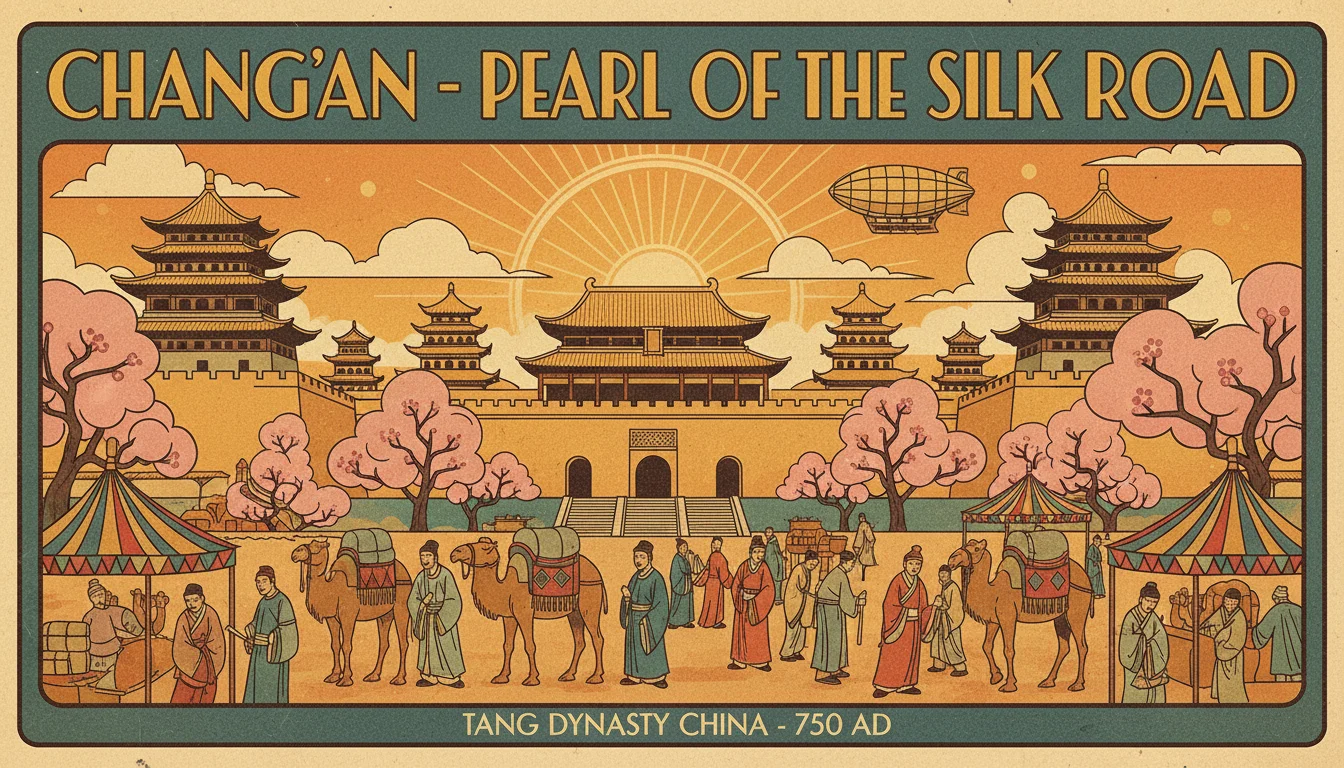
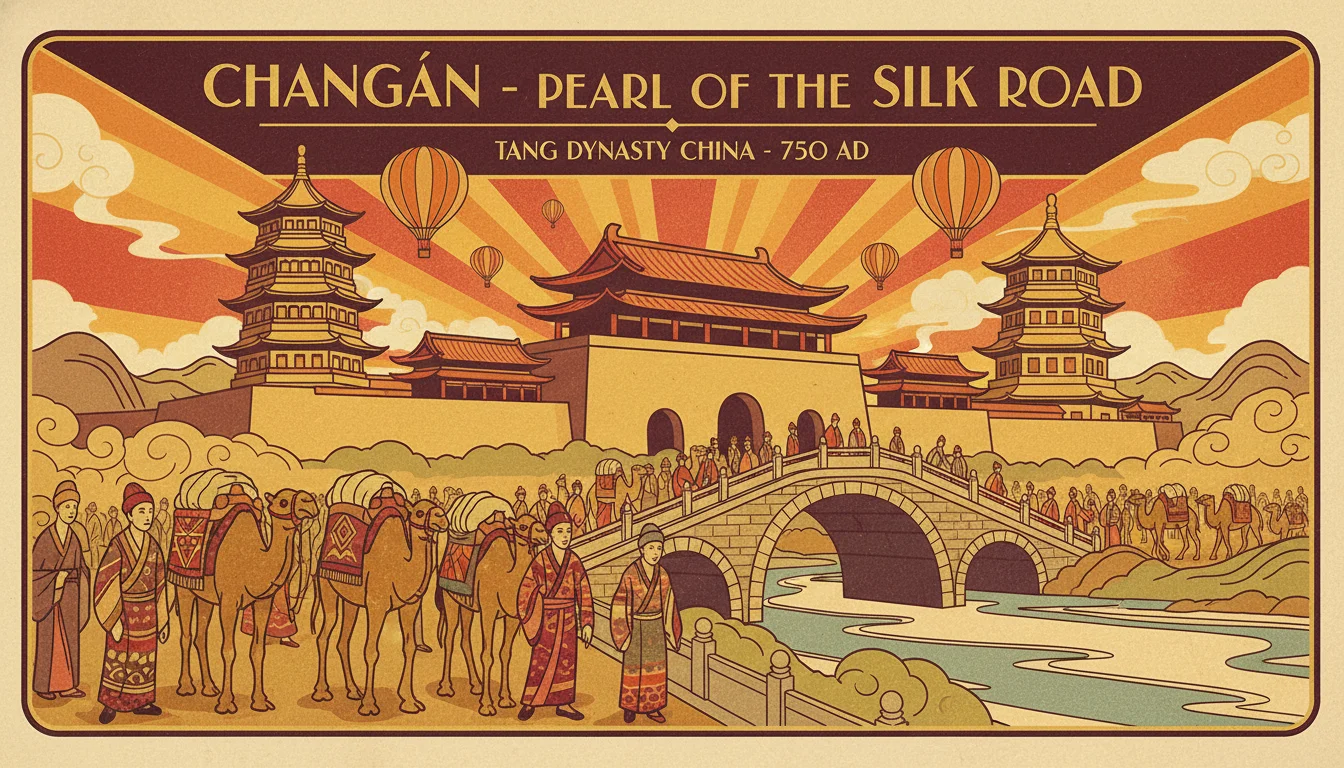
Chang'an would remain one of the world's great cities for centuries. Our guide to Tang Dynasty Chang'an, 750 AD covers the same streets seven hundred years later at the height of a different dynasty's power.

Need Advice from Someone Who Lived There?
Get firsthand accounts from people who actually lived through these moments in history.
Ask Them YourselfJoin the HistorIQly Club
Get smarter about the past.
Weekly stories, deep dives, and exclusive content straight to your inbox.