Time Traveler's Guide to Tang Dynasty Chang'an (750 AD)
Your survival guide to Tang Dynasty Chang'an in 750 AD - the world's largest city, where poetry recitals, silk merchants, and a strict night curfew define daily life.
Read Wikipedia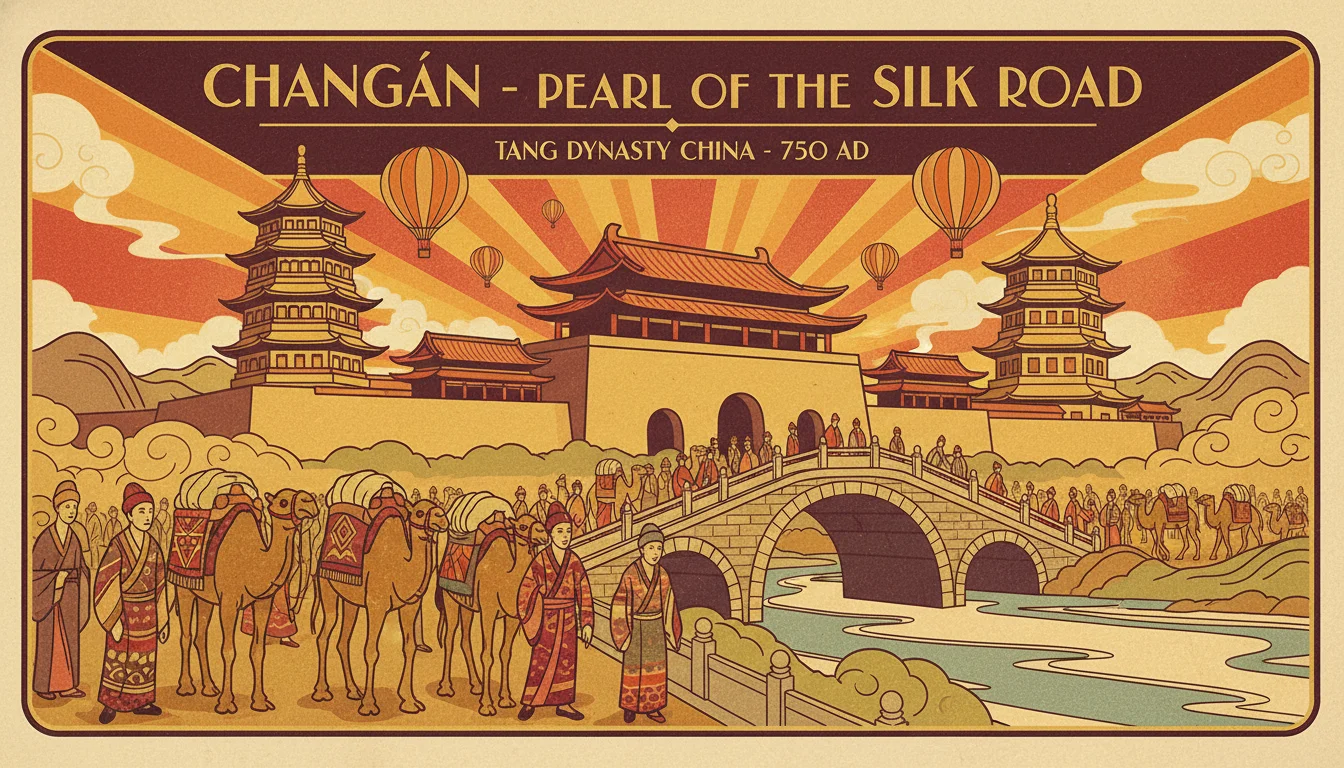
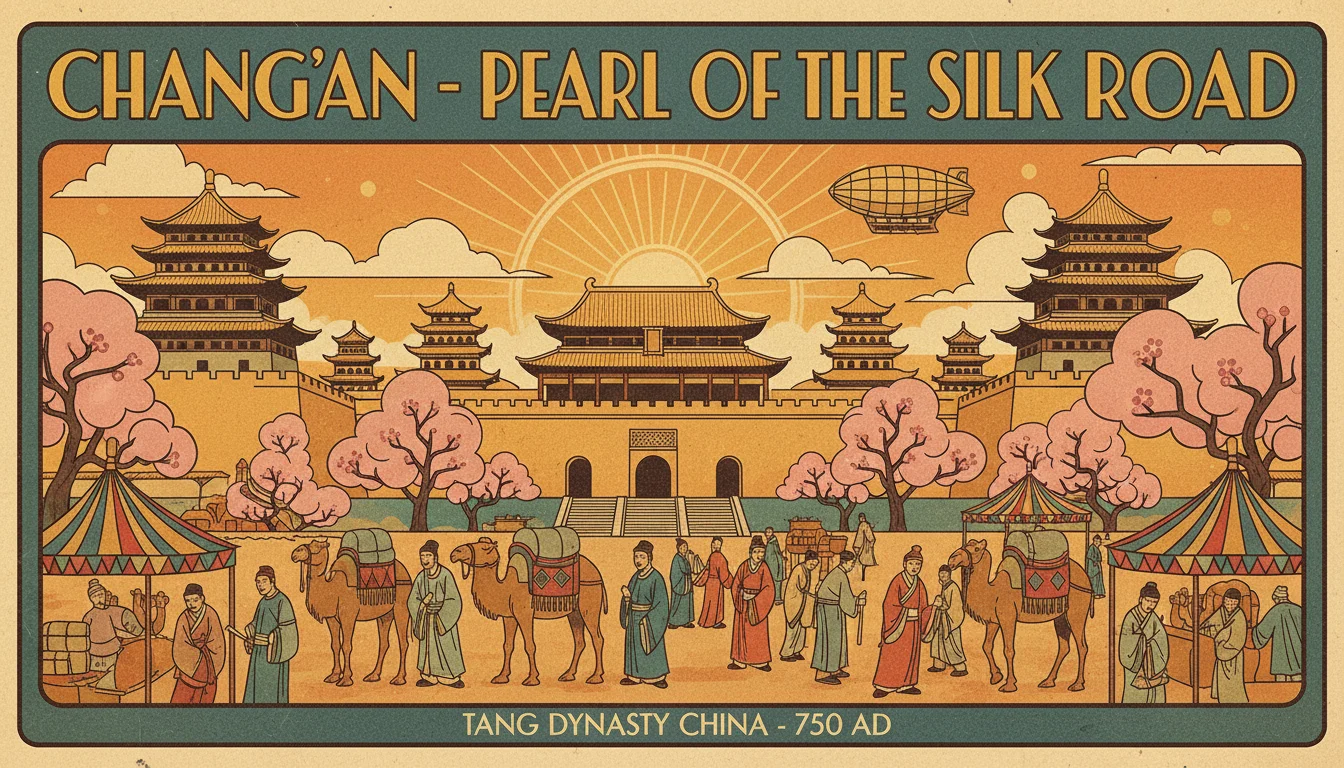
Welcome to Tang Dynasty Chang'an, the million-strong capital and quite possibly the greatest city on Earth in 750 AD. With over one million residents, this metropolis makes contemporary London (population: about 10,000) look like a sleepy village. You've arrived during China's Golden Age - a time of unprecedented cultural flowering, international trade, and surprisingly relaxed attitudes toward foreigners. Let's make sure you survive it.
First Impressions: The Grid That Puts Modern Cities to Shame
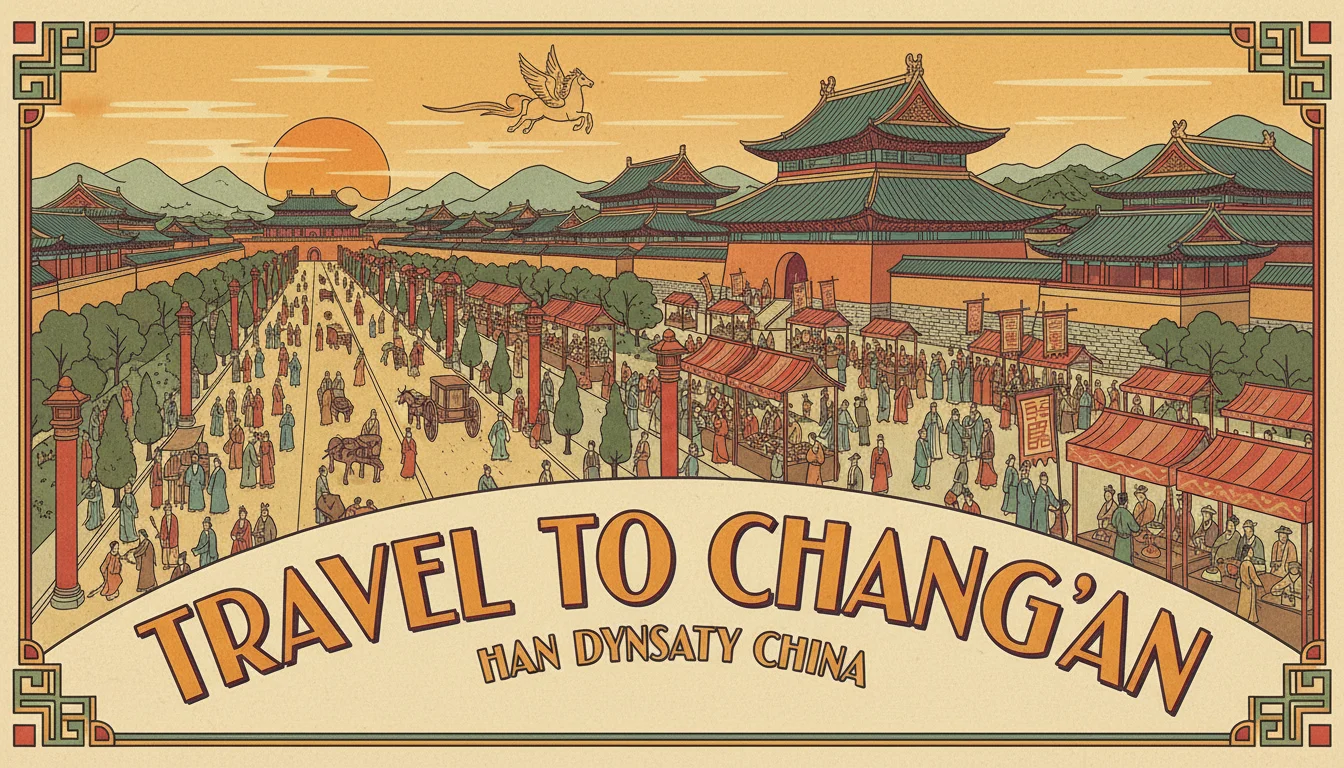
Stepping through one of Chang'an's massive gates, you'll immediately notice something remarkable: the city actually makes sense. Unlike the chaotic medieval European cities you might be familiar with, Chang'an is laid out in a perfect grid pattern stretching roughly 8 kilometers east to west and 10 kilometers north to south.
The city is divided into 108 residential wards, each surrounded by walls with gates that close at sunset. Yes, you read that correctly - there's a city-wide curfew. Drum towers signal the closing of ward gates at dusk, and anyone caught wandering the main avenues after dark faces arrest and a beating. Plan your evenings accordingly.
What to Wear: Silk, Colors, and the Art of Looking Wealthy
Your modern clothes will mark you as dangerously strange. Fortunately, Chang'an's markets offer everything you need - just bring silver or copper coins (convert at the city's many money changers, who are remarkably honest by medieval standards).
Men should aim for a round-collared robe (yuanlingpao) with narrow sleeves. The color matters enormously - purple and red are reserved for high officials, so stick with greens, blues, or white unless you want to explain yourself to the authorities. A black gauze cap completes the look.
Women in Tang Chang'an enjoy remarkable fashion freedom. The characteristic high-waisted dress with a flowing skirt is everywhere, often paired with a short jacket. Shockingly by later Chinese standards, low-cut necklines are fashionable. Many women also wear men's clothing - including riding trousers - without raising eyebrows. The Tang are refreshingly relaxed about gender expression.
What to Eat: From Street Food to Imperial Banquets
Good news for adventurous eaters: Tang cuisine is varied and delicious. The Western Market buzzes with food stalls run by merchants from Persia, Arabia, and Central Asia. Try the hu bing - flatbread stuffed with lamb and spices, brought by Sogdian traders along the Silk Road. It's essentially the ancestor of modern Chinese flatbreads and utterly delicious.
For a proper meal, look for restaurants near the entertainment districts. You'll find dishes featuring pork, duck, fish, and an impressive variety of vegetables. Tea is becoming fashionable among the elite - the scholar Lu Yu, still a teenager, won't write his famous "Classic of Tea" for a few more years yet - but most commoners still drink wine or a type of fermented millet drink.
Fair warning: dairy is primarily consumed by foreigners and nomadic visitors. If you're offered kumis (fermented mare's milk) by a Central Asian merchant, accept graciously - refusing hospitality is a serious faux pas.
Where to Stay: Inns, Monasteries, and Knowing the Right People
The Eastern and Western Markets both have numerous inns catering to travelers and merchants. Expect shared rooms, basic amenities, and surprisingly decent food. Always secure your valuables - thieves exist in every era.
For a more comfortable stay, Buddhist and Daoist monasteries often accept travelers. A donation is expected, and you'll need to follow their rules, but the quarters are clean and the vegetarian food is excellent.
If you can somehow wrangle a letter of introduction to a scholar-official family, you'll experience legendary Tang hospitality. These households maintain guest quarters specifically for visitors, and refusing to host a recommended guest would cause tremendous loss of face.
Customs to Know: Poetry, Politeness, and the Civil Service Exam
The Tang elite are obsessed with poetry. Seriously, everyone writes it - officials, merchants, courtesans, even generals. If you can compose a decent quatrain or two, doors will open. The great poets Li Bai and Du Fu are alive right now, and you might actually encounter them at a wine shop or poetry gathering. Li Bai, known for writing while drunk, is particularly easy to find near any establishment serving alcohol.
When meeting anyone of higher status, bow from the waist. For equals, a slight bow or clasped-hand salute suffices. Never address someone directly by their personal name - use their title, courtesy name, or position. Getting this wrong marks you as hopelessly uncultured.
The civil service examination system is in full swing, and scholars from across the empire flock to Chang'an hoping to pass the tests and secure government positions. This creates a vibrant community of young, educated men - many of them broke - who gather in wine houses to debate philosophy and bemoan their fate. They're generally excellent company.
Dangers to Avoid: Politics, Diseases, and That Curfew Again
Chang'an in 750 AD sits five years before the devastating An Lushan Rebellion that will, by some estimates, kill tens of millions and end the Tang golden age. For now, things seem peaceful, but court intrigue is vicious. The emperor's favorite consort, Yang Guifei, and her relatives wield enormous influence. Don't get involved in any political discussions - the wrong word about the wrong person can lead to execution.
Disease is always a risk. Smallpox and various fevers sweep through periodically. Boil your water, avoid visibly sick people, and consider staying in the cleaner residential districts rather than the crowded market areas.
And I cannot stress this enough: observe the curfew. The night watch takes their job seriously, and being caught outside your ward after dark means being hauled before a magistrate. The punishment for first offenders is typically twenty strokes of the light cane. It hurts.
Must-See Attractions
The Daming Palace: The emperor's residence complex in the northeast covers an area larger than the Palace of Versailles. You won't get inside without official business, but the gates and walls are impressive enough.
The Great Wild Goose Pagoda: Built to house Buddhist scriptures brought from India by the monk Xuanzang, this seven-story tower is both a religious site and an excellent viewpoint over the city.
The Western Market: Two square kilometers of commercial chaos - silk, spices, gems, slaves, exotic animals, and every luxury good the Silk Road can provide. Plan to spend a full day.
The Pingkang Ward: The entertainment district. Poetry readings, music performances, and the famous courtesans (who are cultured entertainers, not simply prostitutes) make this the center of Chang'an nightlife. Just get back to your ward before the drums sound.
Final Advice
Chang'an in 750 AD offers something rare in human history: a genuinely cosmopolitan city where foreigners are welcomed rather than feared. Nestorian Christians, Zoroastrians, Manichaeans, Muslims, and Buddhists all practice their faiths openly. Merchants from Constantinople trade alongside those from Japan and Korea.
Learn a few phrases of Literary Chinese (the educated lingua franca), bring plenty of silver, and approach everything with curiosity rather than judgment. The Tang aren't superior to your time, but they've created something extraordinary here - a city where human civilization reaches a genuine peak.
Just remember: be back before the drums. The curfew is no joke.
For China at different imperial peaks, our guide to Ming Dynasty Beijing, 1420 shows the capital after the Tang golden age ended, and Qing Dynasty Beijing, 1750 takes you to the dynasty that ruled China into the modern era.

Need Advice from Someone Who Lived There?
Get firsthand accounts from people who actually lived through these moments in history.
Create your free account →No card required. Some figures and features require a paid plan.
Join the HistorIQly Club
Get smarter about the past.
Weekly stories, deep dives, and exclusive content straight to your inbox.