Time Traveler's Guide to Nabataean Petra, 100 AD
Your guide to Nabataean Petra at 100 AD - the rose-red city carved from cliffs, where desert traders mastered water engineering and carved palaces into mountains.
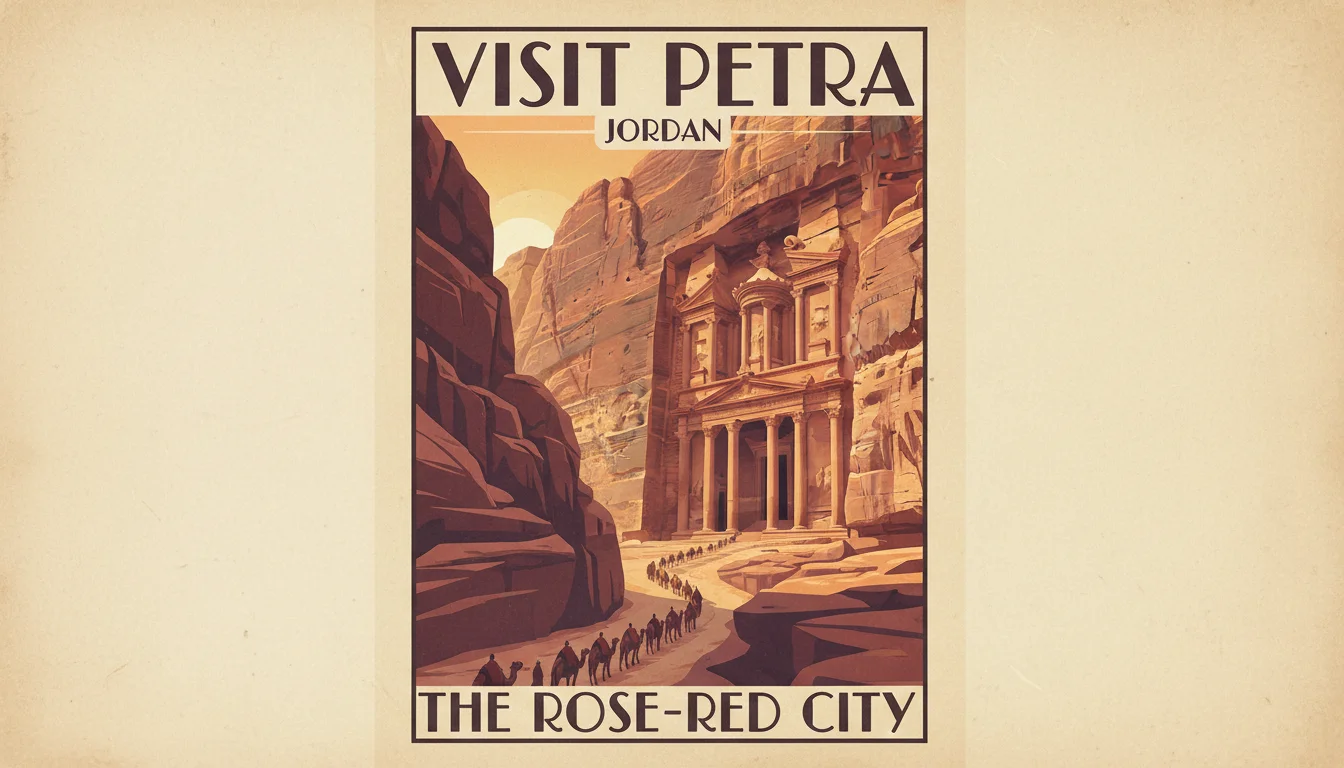
Congratulations on your temporal visa to one of the ancient world's most improbable cities. Petra at its zenith is a monument to human stubbornness - a civilization that looked at a barren desert canyon and said "this would make an excellent metropolis."
The Nabataeans turned sand into gold and rock into art. Here's how to survive (and appreciate) their rose-red masterpiece.
When You've Arrived
You'll know you're in the right era when you squeeze through the Siq - that narrow, winding canyon that serves as Petra's front door - and emerge to see the Treasury (Al-Khazneh) gleaming pink in the morning sun. At 100 AD, under King Aretas IV or his successors, Petra is at the peak of its power. The city controls the incense trade between Arabia, Egypt, and the Mediterranean. Everyone wants what flows through here: frankincense, myrrh, spices, silk.
The population hovers around 20,000-30,000, which sounds modest until you remember you're standing in a desert canyon where the nearest reliable water source is... well, wherever the Nabataeans engineered one.
What to Wear
Desert smart is the order of the day. Think loose, layered clothing in natural fibers - wool or linen - that can handle scorching afternoons and surprisingly cold nights. The Nabataeans favor robes and cloaks in earthy tones, though the wealthy display their status through fine fabrics and dyes.
Cover your head. The Jordanian sun is not playing around, and neither should you. A cloth wrap or hood protects against both sun and the sandstorms that occasionally rip through the canyon.
Sandals are standard footwear. The Nabataeans are excellent leatherworkers - treat yourself to a local pair. Just watch your step on the carved rock staircases; centuries of foot traffic have polished them slippery.
What NOT to Wear: Anything marking you as Roman. While Petra trades happily with Rome, the Nabataeans are fiercely independent and sensitive about their autonomy. Roman togas will earn suspicious looks. You're in Arabia, dress the part.
What to Eat
The Nabataean diet is surprisingly sophisticated for a "desert people." Their hydraulic engineering doesn't just provide drinking water - it supports agriculture in surrounding valleys.
Must Try:
- Lamb and goat - slow-roasted in clay ovens, seasoned with cumin, coriander, and local herbs
- Dates - the currency, the snack, the obsession. Nabataean dates are legendary
- Bread - flatbreads baked on heated stones, often served with olive oil or honey
- Wine - yes, wine. The Nabataeans cultivated grapes in the hills around Petra. It's not Falernian, but it's surprisingly good
- Camel milk - an acquired taste, but highly nutritious for desert travel
Street Food: The marketplace near the colonnaded street buzzes with vendors selling grilled meats, dried fruits, and nuts. Follow the smoke and your nose.
Avoid: Asking too many questions about ingredients. Sometimes the answer is "camel" and you didn't want to know.
Customs and Social Survival
Money Matters: The Nabataeans mint their own coins, but they're practical traders - Roman denarii and Greek drachmas are accepted everywhere. Silver is king. Bring extra; everything in Petra is expensive because everything has to travel to get here.
Greetings: Hospitality is sacred. When invited somewhere, accept graciously. Refusing hospitality is an insult. You'll be offered water first (precious), then coffee or wine, then food. The more courses, the more honored you are.
Women in Petra: Unlike many ancient societies, Nabataean women held significant status. They owned property, ran businesses, and appeared prominently in religious ceremonies. Don't assume the wealthy merchant you're negotiating with is the husband - it might be the wife.
Religion: The Nabataeans worship a pantheon headed by Dushara (a storm/mountain god) and Al-Uzza (a goddess of fertility and power). You'll see sacred stones (betyls) everywhere - don't touch them, don't mock them, don't even look at them wrong. The Nabataeans are tolerant of foreign beliefs but protective of their own.
Language: Aramaic is the lingua franca of trade, but the Nabataeans have their own script (which will eventually evolve into Arabic). Greek also works in commercial contexts. If all else fails, gesture toward goods and hold up fingers - trade is universal.
Dangers to Avoid
Flash Floods: This is crucial. The Siq and other canyons are natural flood channels. When it rains in the distant mountains - sometimes storms you can't even see - water rushes through these channels with killing force. The Nabataeans built an elaborate dam and channel system to redirect floods, but don't trust it absolutely. If locals start moving to high ground, follow immediately.
Dehydration: The Nabataeans solved their water problems through engineering genius, but that doesn't mean water is abundant. Drink constantly. The dry heat fools you into thinking you're not sweating until you collapse.
Thieves: Petra is wealthy, which attracts criminals. The trade caravans are well-guarded, but solo travelers on the outskirts are vulnerable. Stick to populated areas after dark.
Political Tensions: In 100 AD, Rome is eyeing Nabataea covetously. In just six years (106 AD), Emperor Trajan will annex the kingdom, and Petra will become just another provincial city. Don't mention this timeline. Don't make predictions. The Nabataeans are proud - implying their independence has an expiration date is a good way to experience their hospitality's limits.
Must-See Attractions
The Treasury (Al-Khazneh): The icon. The facade is actually a royal tomb, probably for Aretas IV, carved directly into the cliff face. The Hellenistic-influenced architecture - columns, urns, figures - showcases Nabataean ambition. Go at dawn when the light paints it gold and pink.
The High Place of Sacrifice (Al-Madbah): Climb 800 rock-cut steps to the mountain altar where the Nabataeans performed rituals to Dushara. The views alone justify the burning thighs. Just... try not to arrive during an active sacrifice unless you have a strong stomach.
The Royal Tombs: A row of monumental facades carved into the cliff face opposite the city center. Each tells a story of wealth, power, and the Nabataean belief that death deserved architecture as impressive as life.
The Colonnaded Street: Petra's main boulevard, lined with shops, temples, and public buildings. This is where commercial life happens. The market here trades goods from India, China, Egypt, Rome, and everywhere between.
The Great Temple: A massive religious complex that demonstrates Nabataean engineering at its finest. The carved elephants on the capitals hint at connections to distant lands.
The Water Systems: Not a single site but an obsession worth appreciating. Every inch of Petra includes channels, cisterns, pipes, and reservoirs. The Nabataeans turned a desert canyon into a water-rich oasis through sheer engineering will. Ask a local to show you - they're proud of it.
Getting Around
Petra sprawls across multiple canyons and up several mountains. Walking is your primary option, and comfortable footwear matters.
For longer distances, donkeys are available for hire. Camels are for the caravan routes outside the city - within Petra's narrow passages, they're impractical.
The Siq entrance is the main access point, but locals know alternative routes through the mountains. Hire a guide if you want to explore beyond the obvious.
Insider Tips
-
Sunrise at the Treasury - Beat the crowds. The light is magical and the silence lets you appreciate what human hands carved from living rock.
-
Befriend a trader - The merchants know everyone and everything. A few drinks and genuine interest in their work opens doors throughout the city.
-
Visit the tombs at noon - When everyone else is sheltering from the heat, the tomb facades are empty and eerily beautiful.
-
Carry your own water container - The Nabataeans have public fountains, but having your own vessel shows you understand desert travel.
-
Learn three phrases in Nabataean - "Thank you for your hospitality," "Your city honors the gods," and "How much?" These cover 90% of social situations.
Departure Thoughts
Petra at 100 AD is a city that shouldn't exist. No river, no reliable rainfall, surrounded by enemies and harsh geography - and yet here it stands, wealthy and proud, a monument to what determined people can achieve when they refuse to accept limitations.
In six years, Rome will end Nabataean independence. In centuries, the city will fade as trade routes shift. Eventually, sand will reclaim the tombs and the West will "discover" Petra as if it had been lost rather than simply abandoned.
But right now, in 100 AD, Petra is alive - traders shouting, incense burning, water flowing through channels carved by genius, and rose-red cliffs glowing in the desert sun.
Don't forget to look up as you leave through the Siq. The Nabataeans carved their story into these walls. They wanted to be remembered.
Safe travels, time walker. May your water hold out and your bargaining skills be sharp. For other ancient cities at their peak, see our guides to Achaemenid Persepolis in 500 BC and Pompeii in 79 AD, the last moment before the eruption.

Need Advice from Someone Who Lived There?
Get firsthand accounts from people who actually lived through these moments in history.
Ask Them YourselfJoin the HistorIQly Club
Get smarter about the past.
Weekly stories, deep dives, and exclusive content straight to your inbox.