Time Traveler's Guide to Ming Beijing, 1420
Your guide to Ming Beijing in 1420 - when the Forbidden City was brand new, fashion was legally mandated, and one wrong word could end your life.
Read Wikipedia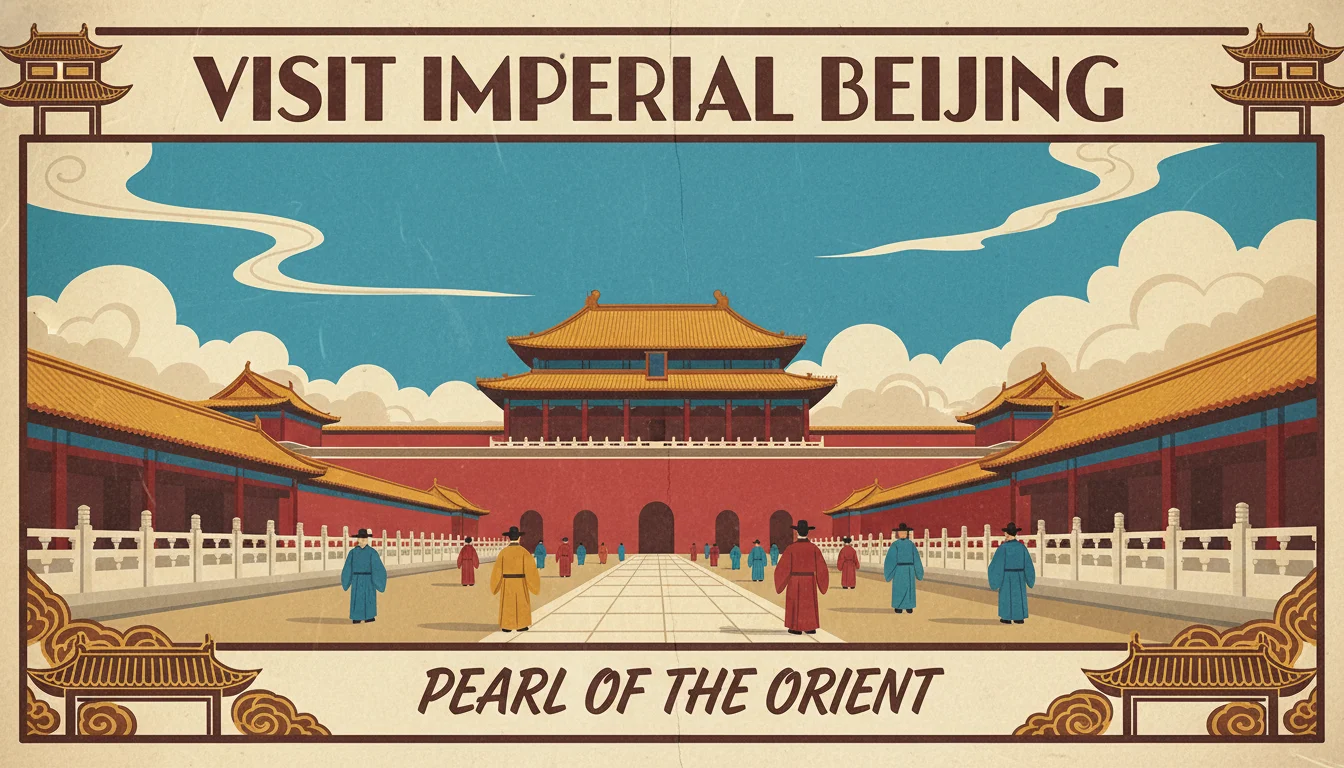
Welcome to Beijing in 1420 - or as locals call it, Shuntian (顺天), the "Obedient to Heaven." You've arrived at perhaps the most spectacular moment in the city's history: the Yongle Emperor has just finished building the Forbidden City, the largest palace complex ever constructed, and moved the entire capital here from Nanjing. You're witnessing the birth of what will remain the center of Chinese power for the next 500 years.
But fair warning: this is also a city where looking at the wrong person can get you executed, where fashion choices are legally mandated by social class, and where the punishment for minor crimes might involve being beaten with bamboo until your bones are visible. So let's make sure you survive long enough to enjoy those magnificent views.
When to Visit
You've picked an interesting year. The Yongle Emperor, Zhu Di, is 60 years old and at the height of his power. He's the same ruler who commissioned the treasure fleets that are currently sailing as far as East Africa under Admiral Zheng He. He's also the guy who killed roughly 10,000 people during his rise to power, so... mixed reviews.
Spring (March-May) and autumn (September-October) are ideal. Summers are brutally hot and humid, while winters bring Siberian winds that will make you understand why fur-lined silk robes exist. The lunar New Year celebrations (late January/early February) are spectacular but crowded, with weeks of festivities, fireworks, and dragon dances.
Avoid the summer monsoon season unless you enjoy trudging through muddy streets while your silk clothes disintegrate.
What to Wear
This is where your survival starts. Ming China has some of the strictest sumptuary laws in history, and the wrong outfit can literally get you killed.
For men: If you're pretending to be a commoner (safest option), wear simple cotton robes in dark blue, black, or brown. No bright colors - yellow is reserved exclusively for the Emperor, and wearing it is punishable by death. Purple, bright red, and certain greens are restricted to officials. Your best bet is a dark blue changpao (long robe) with a simple cloth belt.
For women: A simple cotton ao (upper garment) with a skirt in muted colors. No elaborate hairpins or jewelry unless you want to be arrested for impersonating nobility. Foot binding is widespread among Han Chinese women of any status, but as a traveler, you can claim foreign origin.
Absolutely forbidden: Dragon motifs (Emperor only), certain color combinations that indicate official rank, and anything that could be mistaken for imperial regalia. When in doubt, dress boring.
Getting Around
Beijing in 1420 is a planned city, one of the largest in the world with roughly 1 million inhabitants. It's organized on a strict north-south axis, with the Emperor's palace at the exact center - because symbolically, the Emperor IS the center of the universe.
The city is divided into three nested rectangles:
- The Forbidden City (紫禁城): Don't even think about it. Entering without permission means death.
- The Imperial City (皇城): Restricted areas including government offices and imperial gardens.
- The Outer City: Where you'll actually spend your time.
Walking is your main transport option. Horses and sedan chairs exist, but they indicate wealth and status - attracting attention you don't want. The streets are laid out in a grid pattern, so navigation is actually pretty easy compared to European cities of this era.
Pro tip: The city gates close at sunset and don't reopen until dawn. Getting caught outside after curfew results in arrest and beating. Plan accordingly.
What to Eat
Finally, some good news: Ming Beijing has incredible food, and eating is one of the few activities that won't get you executed.
Street food you must try:
- Jiaozi (饺子): Dumplings filled with pork, lamb, or vegetables. Street vendors sell them everywhere, and they're cheap - a few copper wen coins for a portion.
- Mantou (馒头): Steamed buns, either plain or filled with sweet bean paste or savory meat.
- Baozi (包子): The filled version of mantou, often stuffed with pork and vegetables.
- Mianshi (面食): Hand-pulled noodles in countless varieties.
At a proper restaurant: Ming cuisine is sophisticated but less spicy than what you might expect from later Chinese cooking - chili peppers won't arrive from the Americas for another century. Instead, you'll encounter dishes flavored with ginger, Sichuan peppercorn (a numbing rather than hot spice), soy sauce, rice wine, and star anise.
Try the Beijing roast duck - yes, it already exists, and it's already famous. The version you'll eat uses a different roasting technique than the modern version, but it's still spectacular.
What to drink:
- Baijiu (白酒): Clear grain spirit. Strong. Very strong.
- Rice wine: More civilized for everyday drinking.
- Tea: The Ming have just revolutionized tea preparation. Instead of whisking powdered tea (Song Dynasty style), they're steeping loose leaves in hot water - the method that will eventually spread worldwide.
Avoid: Anything sold by vendors near the execution grounds. Just... trust me on this one.
Money Matters
The Ming use a complex currency system:
- Paper money (Da Ming Baochao): Official currency but increasingly worthless due to hyperinflation. Everyone accepts it because refusing is illegal.
- Copper coins (wen): What people actually use for daily transactions. They have square holes so you can string them together.
- Silver (liang or taels): For larger transactions. Weighed rather than counted.
A working person earns maybe 2-3 taels of silver per month. A bowl of noodles costs a few wen. A night at a decent inn might cost 50-100 wen. The exchange rate is roughly 1,000 wen to 1 tael, but it fluctuates constantly.
Pro tip: Carry copper for daily purchases. Flashing silver marks you as wealthy and potentially worth robbing.
Things to See
The Forbidden City Walls (From Outside)
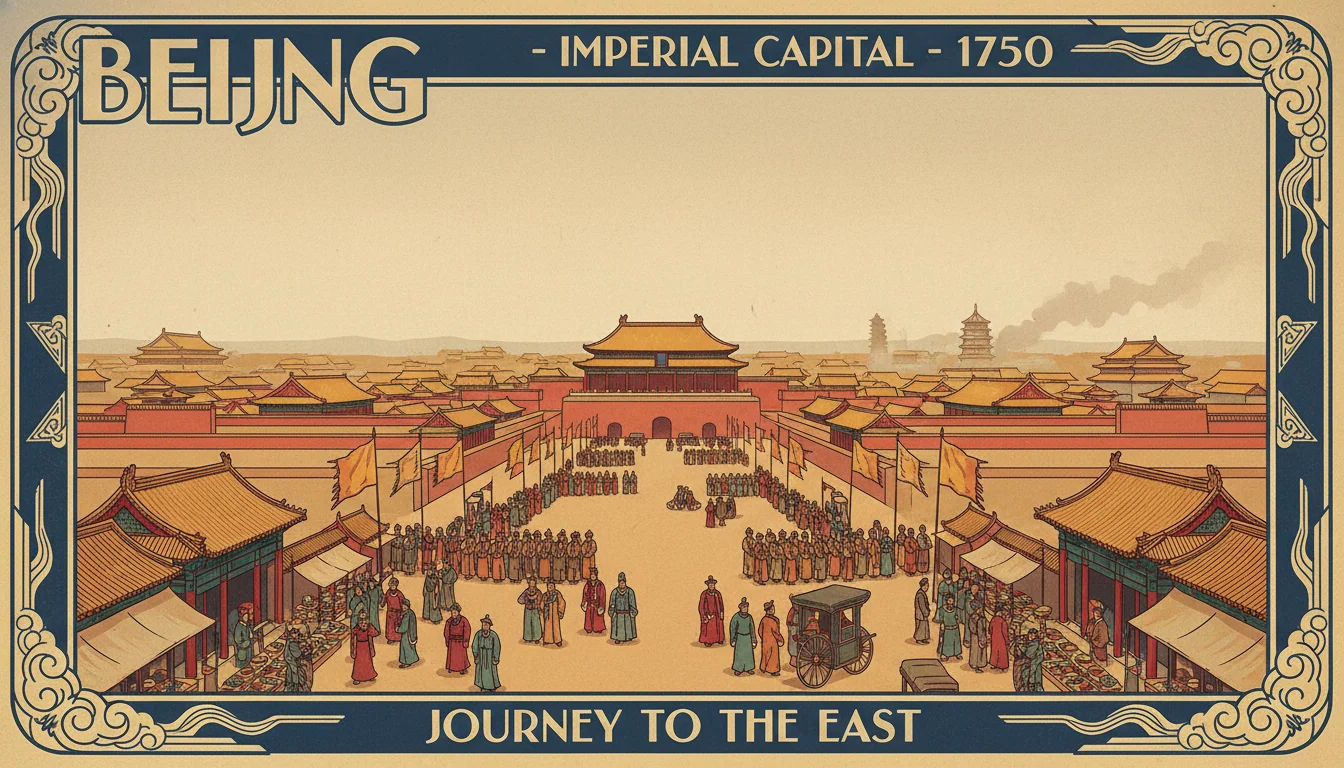
You cannot go inside unless you want to die. But the exterior is impressive enough - massive red walls with golden roof tiles visible above them. Stand at the Meridian Gate (Wumen) during the early morning and watch officials filing in for court audience, dressed in their elaborate robes with embroidered badges indicating their rank. It's like watching a living bureaucratic rainbow.
The Temple of Heaven (Under Construction)
The Yongle Emperor is building this too, though it won't be fully completed until 1420. The circular design and blue tiles are already visible. If you can get close enough, you'll see one of the most perfect pieces of architecture humans have ever created.
The Drum and Bell Towers
These massive structures mark time for the entire city. The drum sounds at sunset, the bell at dawn. Standing nearby when they sound is a full-body experience.
The Markets
The city's commercial districts are thriving. Look for:
- Silk merchants near the Imperial City walls
- The book market (printing is highly developed - you can buy novels, poetry, history, even erotic fiction)
- Medicine shops selling everything from ginseng to tiger bones
- Tea houses for entertainment, storytelling, and occasional drama performances
Dangers to Avoid
The Law
Ming law is comprehensive and terrifying. Punishments include:
- Beating with bamboo: For minor offenses. Can range from 10 to 100 strokes.
- Penal servitude: Years of hard labor.
- Exile: Being sent to frontier military colonies.
- Death: By strangulation, decapitation, or the dreaded lingchi (slow slicing) for serious crimes like treason.
The good news: as a foreigner, you might be treated with curiosity rather than hostility. The bad news: if you break any law, you'll be treated just like anyone else.
The Secret Police
The Yongle Emperor created the Jinyiwei (锦衣卫), the "Brocade Guard," as his personal secret police. They have authority to arrest, interrogate, and execute anyone. They wear distinctive gold-embroidered uniforms but also operate in plain clothes. Be very careful what you say, especially about politics.
Disease
Smallpox and plague are both present. Beijing has reasonable sanitation for the era, but still - avoid close contact with anyone showing symptoms of illness, and consider staying away from the poorest districts.
Fire
The Forbidden City will burn down multiple times over the coming centuries. The whole city is mostly wooden, and fire is a constant danger. Know where your exits are.
Cultural Tips
The Bow: Learn to kowtow properly - kneeling and touching your forehead to the ground. You'll need to do this before any official, and failure to do so is a punishable offense. Practice until it's automatic.
Names: Never, ever use the Emperor's personal name. It's taboo. Even characters that sound similar to his name are avoided. If someone asks about the Emperor, call him Huangdi (Emperor) or use his reign title, Yongle.
Numbers: Four is unlucky (sounds like "death"). Eight is lucky (sounds like "prosperity"). The number thirteen doesn't mean anything special yet - that's a Western superstition.
Gifts: If you're invited anywhere, bring a gift. Tea, fruit, or a small amount of silver wrapped in red paper are all appropriate. Never give clocks (doesn't apply yet - mechanical clocks are unknown) or anything in white wrapping (funerary color).
Religion: Buddhism, Taoism, and Confucianism coexist peacefully. Temples are everywhere. Feel free to visit any of them, but be respectful - remove shoes, don't point at statues, and make a small offering if you light incense.
Getting Home
Your best exit strategy is through one of the city gates at dawn, blending with the merchants and farmers entering to sell goods. Head south toward Nanjing or east toward the coast if you need to catch a ship. The Grand Canal - recently rebuilt by the Yongle Emperor - offers boat transport southward.
Or just find a quiet alley, activate your temporal device, and hope nobody notices the strange lights.
Final Thoughts
Beijing in 1420 is a city of extremes. It's one of the largest, most sophisticated urban centers in human history, home to art, literature, and architecture that will inspire admiration for centuries. It's also a place where casual cruelty is embedded in the legal system and where one wrong word can end your life.
But if you keep your head down (sometimes literally), dress appropriately, and avoid politics, you'll witness something extraordinary: a civilization at its confident peak, building monuments to itself that still stand 600 years later.
Just remember: don't wear yellow, don't look at the Emperor, and always kowtow to anyone in fancy robes. Follow these rules, and you might just make it home with some amazing stories and only a few emotional scars. For the East Asian world neighboring Ming Beijing, see our guides to Joseon Hanyang in 1450 and Edo Tokyo in 1700.
Safe travels, time wanderer. The Middle Kingdom awaits.

Need Advice from Someone Who Lived There?
Get firsthand accounts from people who actually lived through these moments in history.
Create your free account →No card required. Some figures and features require a paid plan.
Join the HistorIQly Club
Get smarter about the past.
Weekly stories, deep dives, and exclusive content straight to your inbox.