Time Traveler's Guide to Minoan Knossos, 1500 BC
Your survival guide to Minoan Knossos - where bull-leaping is the national sport, women hold real power, and indoor plumbing puts medieval Europe to shame.
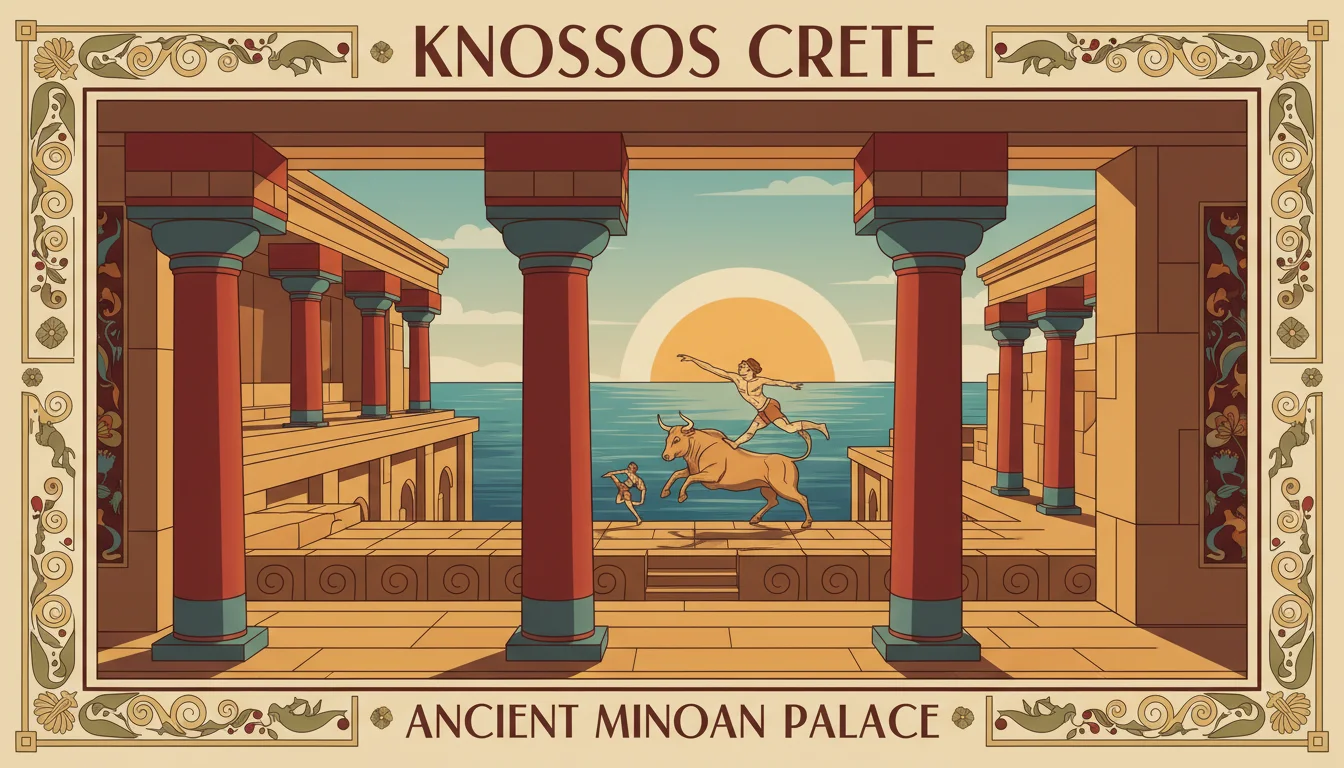
Welcome to Knossos, the beating heart of Minoan Crete and quite possibly the most advanced civilization you've never properly appreciated. While your great-great-ancestors are still figuring out bronze tools in most of Europe, the Minoans have hot and cold running water, flushing toilets, and a fashion sense that would make a Parisian boutique owner weep with envy.
When to Visit
You're arriving during the height of Minoan civilization - the Late Minoan period, roughly 1500 BC. The great palace complex has been rebuilt after earthquake damage (this happens a lot here - the Mediterranean isn't gentle), and Knossos is the undisputed center of Aegean trade and culture.
The climate is Mediterranean perfect: warm summers, mild winters, and that crystal-clear light that makes everything look like it belongs on a fresco. Spring is ideal for visiting - the hills are carpeted with wildflowers, the seas are calm enough for trading ships, and the palace festivals are in full swing.
What to Wear
Leave your robes at home. Minoan fashion is... revealing by ancient world standards.
For women: The standard look involves a tight, open-fronted bodice that leaves the breasts exposed (yes, really - this is entirely normal here), a bell-shaped tiered skirt reaching the ankles, and a fitted belt cinching the waist. Hair should be elaborately styled with ringlets framing the face. Add some gold jewelry and you'll fit right in with the palace elite.
For men: A simple loincloth or kilt is the everyday uniform, regardless of social class. The wealthy distinguish themselves through elaborate belts, jewelry, and finely woven materials. In cooler weather, you might add a short cape. Shave your face but let your hair grow long - sometimes styled in elaborate locks.
Pro tip: Minoans love color. Their dyes produce brilliant reds, blues, yellows, and purples. Wearing drab earth tones marks you as either very poor or very foreign.
Getting Around
The Palace of Knossos sprawls across nearly six acres with over 1,300 rooms connected by corridors, staircases, and light wells. Greek visitors centuries later will call it a "labyrinth" (from labrys, the double-headed axe sacred to the Minoans), and honestly, they're not wrong. Getting lost is practically a rite of passage.
Key areas to know:
- The Central Court - The main open plaza where the action happens, including bull-leaping performances
- The Throne Room - A surprisingly intimate space with a carved gypsum throne (possibly for a priestess, not a king)
- The West Wing - Religious and administrative center with elaborate shrines
- The East Wing - Royal apartments, workshops, and storage magazines
- The North Entrance - The grand ceremonial approach with its iconic red columns
The palace isn't just a residence - it's a city within a city, containing workshops, storage facilities, and administrative centers. Expect crowds during the day as artisans, scribes, and priests go about their business.
What to Eat and Drink
Minoan cuisine is basically the original Mediterranean diet, and your cardiologist would approve.
Staples:
- Barley and wheat bread (often mixed with honey, olives, or herbs)
- Olive oil - used for everything from cooking to cosmetics
- Wine - stored in those giant clay jars called pithoi that stand taller than most people
- Figs, grapes, pomegranates, and honey
Protein:
- Seafood dominates: octopus, fish, shellfish
- Goat, sheep, and pork for meat (cattle are too valuable for bull-leaping to eat casually)
- Cheese - the Minoans make excellent varieties
Dining etiquette: Meals are communal affairs. Wash your hands before eating (the Minoans are obsessed with cleanliness). Food is often served on beautifully painted pottery - these aren't just dishes, they're art objects.
Warning: The local wine is stronger than you're used to, and the Minoans drink it unwatered at festivals. Pace yourself.
Local Customs and Survival Tips
Gender dynamics: Unlike most ancient civilizations, women hold significant power here. The primary deity is a goddess (or goddesses - it's complicated), priestesses run major religious ceremonies, and women appear prominently in all public and religious imagery. Don't make assumptions about who's in charge based on gender.
Bull-leaping: This is THE prestige activity. Young athletes (both male and female) perform acrobatic leaps over charging bulls in the Central Court. It's religious ritual, sport, and entertainment combined. Watch respectfully - these performers are celebrities. Absolutely do not volunteer unless you've trained for years.
Religious protocol: The Minoans worship a complex pantheon centered on a Great Goddess associated with snakes, birds, and nature. Double-headed axes (labrys) and "horns of consecration" mark sacred spaces - treat them with respect. Peak sanctuaries on mountaintops are pilgrimage sites. If someone offers you a rhyton (a ceremonial drinking vessel shaped like a bull's head), participate graciously.
The snake handlers: Priestesses sometimes handle live snakes during ceremonies. Don't panic. These are sacred animals associated with household protection and the goddess herself.
Linear A: The Minoans have a writing system for palace administration, but we still can't read it in your century. (Linear B, used later by the Mycenaean Greeks, we cracked. Linear A remains a mystery.) Don't expect to understand any written records.
What Will Kill You
Earthquakes: The Mediterranean is seismically active, and Crete sits near major fault lines. The palace has been destroyed and rebuilt multiple times. If the ground starts shaking, get to an open courtyard immediately. The Minoans build light wells and open spaces partly for this reason.
Thera: In about 1500 BC (the timing is debated), the volcanic island of Thera (modern Santorini) will experience one of the largest eruptions in recorded history. The resulting tsunami, ash fall, and climate effects may contribute to the eventual decline of Minoan civilization. If you see an unusually dark sky to the north, consider cutting your visit short.
Bulls: Those magnificent creatures in the Central Court are dangerous. Stay well back from the leaping arena. Bulls are sacred but absolutely lethal.
Pirates: While the Minoan navy (the thalassocracy) controls the seas, piracy exists at the edges. Don't travel by ship without a proper merchant fleet.
Palace politics: We don't fully understand Minoan political structure, but any complex palace society has factions and intrigues. As a foreigner with no patron, be careful about taking sides in disputes you don't understand.
Must-See Experiences
The Grand Staircase: Five stories of architectural brilliance, with red columns, frescoes, and light wells that illuminate the interior naturally. This is engineering centuries ahead of its time.
The Queen's Megaron: Private apartments with a famous dolphin fresco, bathing facilities, and a ventilation system that keeps the space comfortable in summer. Indoor luxury you won't see again in Europe for millennia.
The storage magazines: Rows of giant pithoi containing olive oil, wine, and grain. Each jar is taller than a person and decorated with rope patterns. The scale demonstrates the palace's economic power.
Bull-leaping in the Central Court: Time your visit for a festival day. The combination of athletic prowess, religious significance, and sheer danger makes this unlike anything else in the ancient world.
The harbor town of Amnisos: A short journey from Knossos, this port gives you a sense of Minoan maritime power. Ships from Egypt, Anatolia, and the Levant anchor here, making it one of the ancient world's most cosmopolitan locations.
Departing Thoughts
The Minoans built something remarkable on this earthquake-prone island - a civilization of beauty, sophistication, and surprising modernity. Their plumbing won't be matched until Roman times. Their art influences Greek civilization for centuries. Their goddess worship and bull iconography echo through Mediterranean religion for millennia.
In a few centuries, the Mycenaean Greeks will absorb this culture, and the palace of Knossos will fade into legend - remembered only as the labyrinth of the Minotaur, a story that preserves distorted echoes of bull-leaping athletes and the confusing palace corridors.
Enjoy it while it lasts. You're witnessing one of humanity's great achievements before history forgets how remarkable it truly was.
For other ancient Mediterranean time-travel destinations, our guides to Mycenae in 1300 BC and ancient Sparta in 450 BC cover the civilizations that followed in Knossos's wake.

Need Advice from Someone Who Lived There?
Get firsthand accounts from people who actually lived through these moments in history.
Ask Them YourselfJoin the HistorIQly Club
Get smarter about the past.
Weekly stories, deep dives, and exclusive content straight to your inbox.