A Time Traveler's Guide to Mughal Agra, 1630
Your guide to Mughal Agra in 1630: Shah Jahan's glittering capital where the Taj Mahal is rising, the food will blow your mind, and one wrong move costs a hand.
Read Wikipedia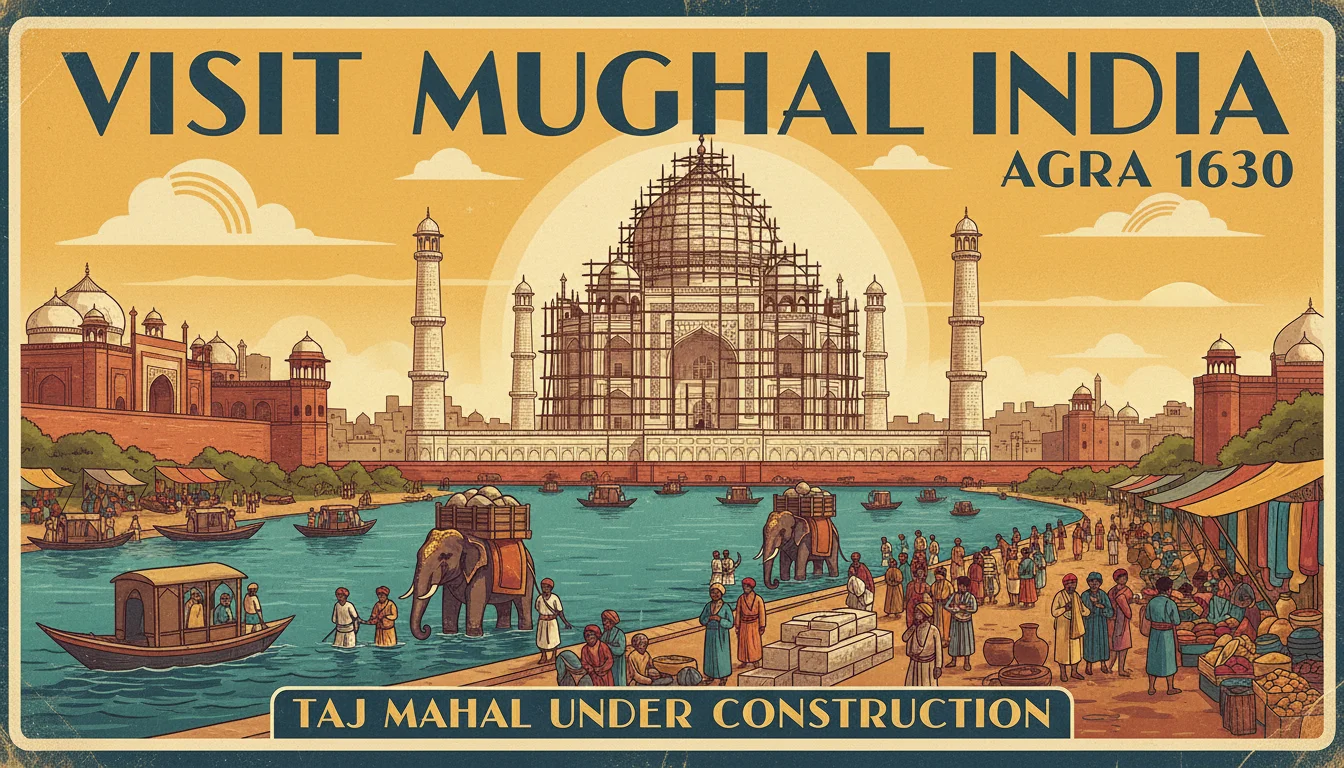
You've just materialized on the banks of the Yamuna River, and the air hits you like a warm, spice-scented wall. Welcome to Agra, 1630 - the beating heart of the Mughal Empire, one of the wealthiest and most powerful states on Earth. Shah Jahan sits on the Peacock Throne, and somewhere behind you, thousands of workers are beginning construction on what will become the most beautiful building ever created.
Here's how to survive - and maybe even enjoy - your visit.
What to Wear
First things first: whatever you're wearing right now is wrong. Agra in 1630 is a fashion-forward city, and people will absolutely judge you.
Men should aim for a jama - a long, crossover robe tied at the left side, paired with a patka (sash) around the waist and fitted trousers called churidar. A turban is non-negotiable. The style, fabric, and color of your turban broadcasts your religion, caste, and social rank. Get it wrong and you'll confuse everyone. Cotton or muslin works for commoners. If you want to blend in at court, you'll need silk - but only certain colors. The emperor literally dictates which nobles can wear which shades.
Women wear a peshwaz (long gown) or kurta with a flowing dupatta (scarf). Cover your head when outdoors. Mughal women of status are rarely seen in public at all - the zenana (women's quarters) is strictly private territory.
Footwear: Leather juttis with curled toes. Going barefoot marks you as desperately poor.
What to Eat (and What Will Ruin You)
Mughal cuisine in 1630 is genuinely spectacular. The royal kitchens employ hundreds of cooks, and the food culture has been refined over a century of Persian, Central Asian, and Indian fusion.
Eat this: Biryani is already a thing, and it's magnificent - layered rice with slow-cooked meat, saffron, and dried fruits. Kebabs of every variety are street food. Naan baked in tandoor ovens. Halwa and jalebi for your sweet tooth. The fruit is incredible - mangoes are practically a religion here. Shah Jahan himself is obsessed with Alphonso mangoes.
Drink this: Sherbet - chilled drinks made from rose water, tamarind, or lemon. The Mughals have an ice supply chain from the Himalayas. Yes, really. Ice in the Indian plains in 1630. Lassi (yogurt drink) is everywhere.
Avoid: Tap water. Obviously. Stick to boiled chai, sherbet, or anything that's been heated. Street food from dubious vendors carries the same risks it always has. The Mughals are Muslim, so alcohol is officially forbidden, but in practice, the court drinks plenty of wine. Common people brew toddy from palm sap. Be discreet about it.
The Social Rules That Could Save Your Life
Mughal Agra is cosmopolitan - Hindus, Muslims, Jains, Christians, Jews, Armenians, Portuguese, and English merchants all live here. But cosmopolitan does not mean casual.
The Emperor is God-adjacent. Shah Jahan appears daily at the jharokha (palace window) for public audiences. When he does, you bow - deeply. Touching the ground with your right hand and placing it on your head (kornish) is the standard greeting. Never turn your back on the emperor. Never sit in his presence unless invited.
Hierarchy is everything. Every interaction requires you to know who outranks whom. Nobles (mansabdars) have numerical ranks that determine their salary, their cavalry obligations, and how many people have to bow to them. Getting the greeting wrong isn't just rude - it's potentially dangerous.
Left hand rules apply. Eat with your right hand only. The left hand is considered unclean. Offering something with your left hand is a serious insult.
Religious sensitivity. The Mughals are Muslims ruling a Hindu-majority population. Shah Jahan is more orthodox than his predecessors (his grandfather Akbar was famously tolerant). Don't eat beef in Hindu areas. Don't eat pork around Muslims. When in doubt, go vegetarian - the Jains have been doing it for centuries and nobody hassles them about it.
The Taj Mahal (Under Construction)
The reason the city buzzes with unusual energy in 1630 is that Shah Jahan's beloved wife Mumtaz Mahal died in 1631, and the emperor has commissioned the most expensive tomb in human history. If you arrive in the early 1630s, you'll see an enormous construction site on the south bank of the Yamuna.
Over 20,000 workers and 1,000 elephants are hauling white marble from Rajasthan, jasper from Punjab, turquoise from Tibet, and lapis lazuli from Afghanistan. The project will take 22 years and cost roughly 32 million rupees (about $1 billion in modern money). You won't see the finished product, but watching the foundations being laid is witnessing history in real time.
Don't try to sneak onto the construction site. It's heavily guarded, and the penalty for theft of imperial materials is amputation.
The Biggest Dangers
The justice system is harsh. Mughal law blends Islamic sharia with imperial decree. Theft can cost you a hand. Murder means death. Insulting the emperor... don't insult the emperor. The kotwal (city police chief) runs a surprisingly effective surveillance network. Travelers are tracked and registered.
Disease. Plague, cholera, and dysentery are the invisible killers. Agra is a city of over 500,000 people in 1630, with sanitation that ranges from "impressive for the era" (the fort has running water) to "open sewer" (everywhere else). Stay clean, drink safe water, and avoid the riverbank during monsoon season.
The heat. April through June in Agra regularly hits 45 degrees Celsius (113 Fahrenheit). The Mughals built their palaces with sophisticated cooling systems - water channels, windcatchers, and thick marble walls. You'll be outside. Carry water. Rest during midday. The monsoon (July-September) brings relief but also flooding and mosquitoes.
Political intrigue. Shah Jahan's sons are already jockeying for succession. By the 1650s, this will explode into a brutal civil war. In 1630, the court seems stable, but trust no one who asks about your "opinions on the princes."
What You Must See
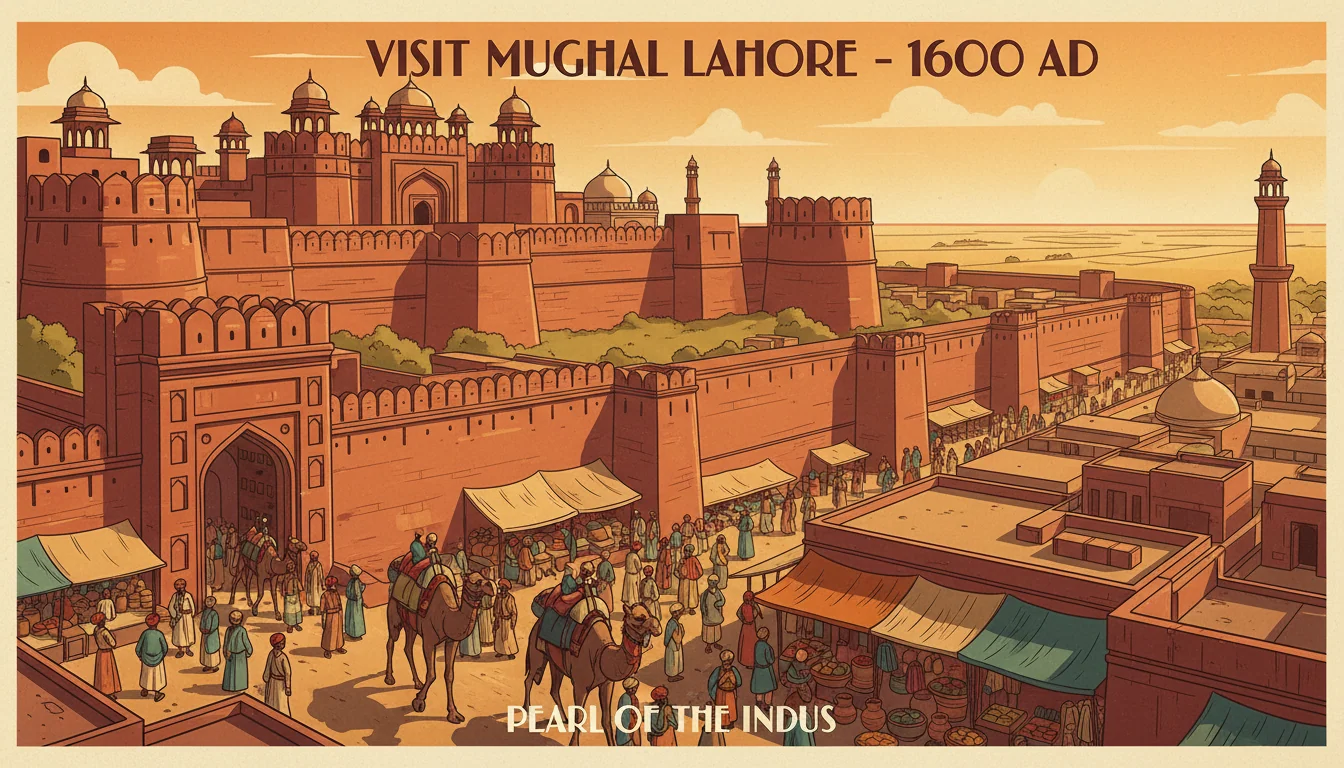
Agra Fort. The Red Fort is the emperor's primary residence - a city within a city, with palaces, gardens, mosques, and audience halls all made of red sandstone and white marble. The Diwan-i-Am (Hall of Public Audience) is where Shah Jahan dispenses justice daily. You can enter the outer courtyards as a commoner. The inner palace is strictly off-limits.
The Bazaars. Agra's markets are among the richest in the world. The Kinari Bazaar sells gold embroidery, jewels, and brocade silks. Spice merchants display pyramids of turmeric, cardamom, and saffron. Diamond merchants from Golconda set up shop here. If you have silver rupees, you can buy things that would cost a fortune back home.
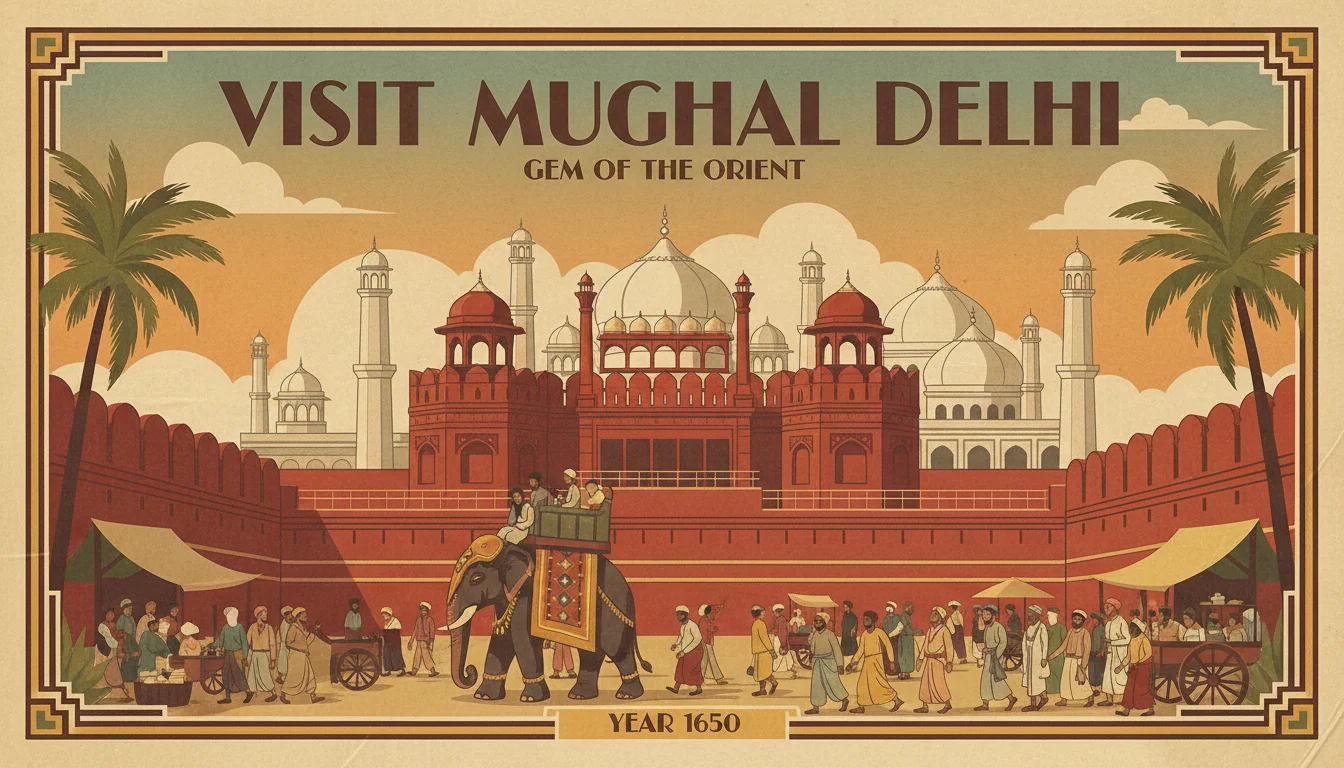
Fatehpur Sikri. Just 40 kilometers west, this abandoned capital built by Shah Jahan's grandfather Akbar still stands in near-perfect condition. It's eerie and beautiful - an entire ghost city of red sandstone palaces. The Panch Mahal (five-story pavilion) offers views across the plains. Hire a horse or join a caravan heading west. For how the empire looks two decades on, see our guide to Mughal Delhi in 1650.
The Yamuna at sunset. Find a spot on the riverbank at dusk. The call to prayer echoes from a dozen mosques. Boats drift past carrying cotton and indigo. The unfinished Taj Mahal site glows in the dying light. In a few decades, this will be the most photographed view on Earth. Right now, it's just another evening in Agra - and it's perfect.
Survival Summary
- Dress local, turban on, shoes on
- Eat biryani, drink sherbet, skip the river water
- Bow to anyone important, bow deeper to the emperor
- Right hand only, always
- Avoid the construction site, the midday sun, and political conversations
- Carry silver rupees (the ATMs haven't been invented yet)
Mughal Agra in 1630 is loud, hot, fragrant, dangerous, and absolutely magnificent. It's the capital of an empire that stretches from Kabul to Bengal, ruled by a man so grief-stricken by love that he's building the world's most beautiful monument to prove it. You could do worse for a time travel destination.
Just remember the turban.
For another great imperial capital of the same era, see our guide to Yuan Khanbaliq in 1280, the Mongol predecessor empire whose Central Asian trade networks shaped the Mughal world.

Need Advice from Someone Who Lived There?
Get firsthand accounts from people who actually lived through these moments in history.
Create your free account →No card required. Some figures and features require a paid plan.
Join the HistorIQly Club
Get smarter about the past.
Weekly stories, deep dives, and exclusive content straight to your inbox.