Time Traveler's Guide to Nasrid Granada, 1360
Your practical guide to Nasrid Granada in 1360 - what to wear, what to eat, and how not to embarrass yourself in the shadow of the Alhambra.
Read Wikipedia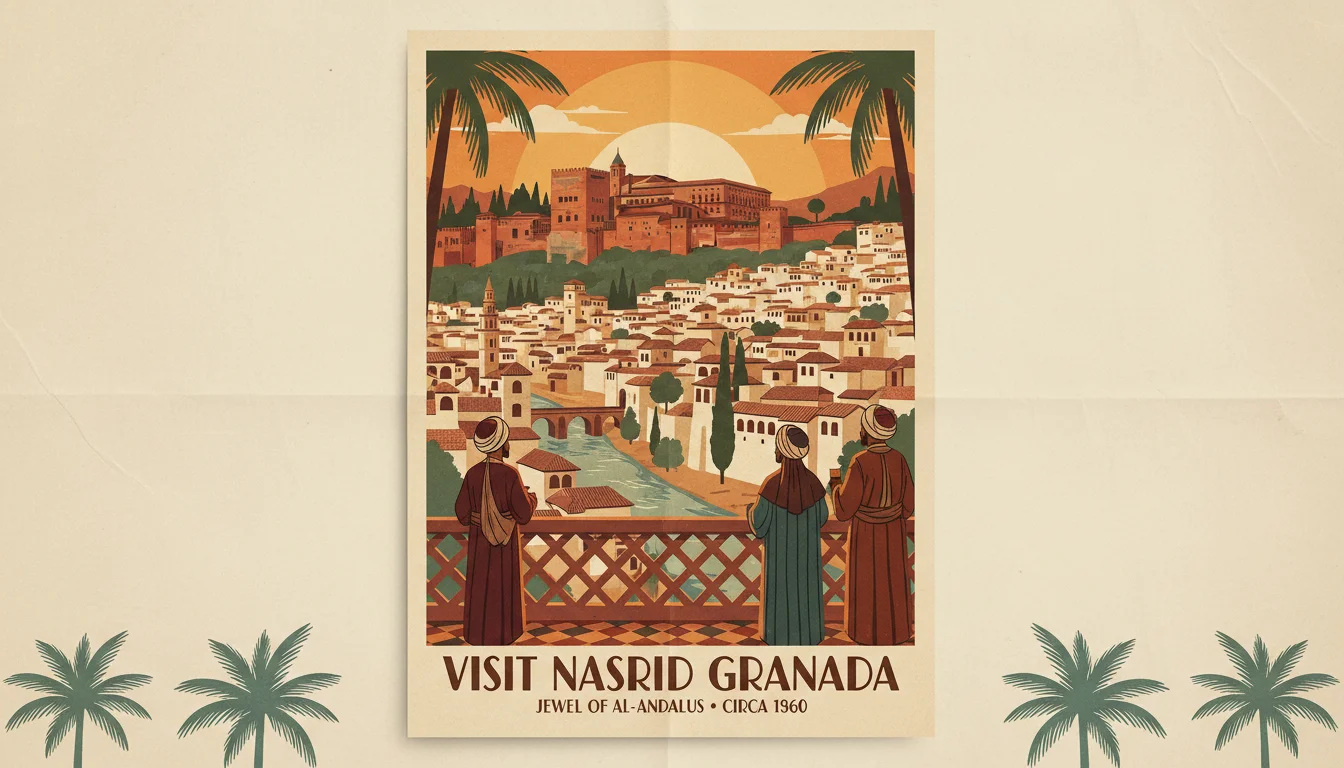
So you've decided to visit Granada in 1360. Excellent choice. You get mountain air, splendid palaces, advanced hydraulic engineering, excellent fruit, and one of the most beautiful urban skylines in the medieval world. You also get political intrigue, strict social etiquette, and a very real chance of making a fool of yourself if you stroll in dressed like a Renaissance pirate.
Granada in 1360 is the capital of the Nasrid Emirate, the last major Muslim-ruled state in Iberia. The city sits below the Sierra Nevada, wrapped in orchards, gardens, walls, markets, bathhouses, mosques, and busy residential quarters. Looming above it all is the Alhambra, less a single palace than an entire fortified royal city. Think of it as a luxury hilltop complex where every wall has poetry on it and everyone important seems to be plotting something.
Your main goal is simple: blend in, stay respectful, eat well, admire the architecture, and avoid ending up in either a dungeon or an argument about theology.
What to Wear
First, forget black synthetic fabrics, sunglasses, and anything with zippers. Medieval Granada favors natural materials: wool, linen, leather, and layered garments suited to mornings that can feel cool and afternoons that turn warm in the sun.
If you're presenting as a man, aim for a long tunic over trousers, a cloak for chillier hours, and soft leather shoes or boots. A sash will help. A head covering is wise, both for practicality and because bareheaded wandering in the sun marks you as either careless or foreign. If you're presenting as a woman, long layered garments with a mantle or veil will draw less attention than anything fitted or flashy. In either case, modesty is the safe choice.
Colors are welcome, but keep your outfit plausible. Earth tones, deep reds, blues, creams, and browns work well. Avoid looking too rich unless you can explain yourself. Fine silk and elaborately decorated cloth can attract the wrong sort of curiosity, especially if your accent already sounds suspicious.
Most important: keep clean. Granada has bathhouse culture, and while medieval people are not the permanently muddy caricatures of bad television, grime still tells a story. You want yours to say respectable traveler, not sewer goblin.
What to Eat and Drink
Granada is a very good place to arrive hungry. The region is rich in irrigation-fed agriculture, and the markets offer bread, olives, figs, grapes, almonds, pomegranates, chickpeas, lentils, cheeses, and plenty of vegetables. Expect stews, flatbreads, roasted meats if you have the means, and sweets perfumed with honey and spices.
Rice dishes are worth your time. So are eggplant preparations, which medieval Andalusi cooks take seriously. You may also encounter dishes flavored with saffron, coriander, cinnamon, cumin, and mint. If your modern palate thinks medieval food was bland, Granada is here to correct you.
Water is available, but you should still be selective. Fresh flowing sources are your friend. So are diluted drinks, broths, and beverages served in reputable households or respectable establishments. If offered fruit syrups or sherbets, accept enthusiastically but not greedily. Looking delighted is charming. Looking like you have never seen sugar before is less so.
As always in time travel, street food should pass the smell test. If the meat appears to have fought a losing battle with the sun for several hours, move along.
Customs That Will Save You From Trouble
Granada is cosmopolitan by medieval standards, with Muslims, Christians, and Jews all present in and around the city, but that does not mean social rules are loose. Quite the opposite. Manners matter.
Greet politely. Speak calmly. Do not touch strangers casually. Do not barge into private spaces. Hospitality is valued, but so is decorum. If invited into a home, remove the energy of a tourist and adopt the posture of a grateful guest. Compliment the house, the garden, or the refreshments. This translates well across centuries.
Religion is woven into daily life. Even if you're trying to pass as a traveler from afar, avoid making clever comments about belief, law, or local rulers. This is not the setting for hot takes. If you hear the call to prayer, treat it as normal. If you enter a sacred or elite space, watch what others do and follow the most conservative version of it.
Also, do not try to impress anyone with fake Arabic unless you actually know Arabic. Bad pronunciation can create hilarious misunderstandings for everyone except you.
Dangers to Avoid
The first danger is politics. In fourteenth-century Granada, dynastic tension is practically part of the weather. Court factions, rival noble families, and diplomacy with Christian kingdoms mean rumors travel fast and suspicion travels faster. Therefore: do not claim connections. Do not pretend to be a messenger. Do not imply that you know what the sultan is planning. If someone powerful notices you, your best strategy is to seem harmless, useful, and immediately somewhere else.
The second danger is crime. Granada is prosperous, and prosperous cities attract pickpockets, hustlers, and opportunists. Keep valuables hidden. Better yet, do not bring anything that glows, beeps, or could collapse medieval philosophy.
The third danger is health. Even sophisticated cities are still medieval cities. Food can spoil. Waste exists. Medical treatment is impressive for the era in theory and alarming in practice when applied to your specific body. Avoid injuries, aggressive dogs, and heroic ideas.
The fourth danger is saying the wrong thing about ethnicity, faith, or status in a crowded market. Modern casualness is a luxury item not yet in circulation.
Must-See Sights
Obviously, the Alhambra is the crown jewel. Go if you can plausibly gain access. Its courtyards, gardens, carved stucco, flowing water, and geometric decoration are worth the trip alone. Look for the interplay of light and shadow, the poetry on the walls, and the sense that architecture here is trying to become music.
The Albaicín, spread across the hill opposite the Alhambra, is essential for wandering. Its lanes twist, climb, and surprise you with views over rooftops, cypress trees, and fortress walls. This is where Granada feels lived in rather than merely admired.
Seek out the markets too. They are the best place to understand the city's rhythms: textiles, ceramics, metalwork, spices, paper, leather goods, and gossip all circulating together. If you want a souvenir, buy something humble and portable. A carved bowl says cultured traveler. A stolen palace tile says future museum scandal.
And if you get the chance to experience a bathhouse, take it. Medieval Islamic urban culture valued bathing, conversation, and the civilizing power of not smelling terrible. Frankly, some modern cities could relearn this.
Practical Survival Tips
Arrive with a cover story. Merchant's assistant, copyist, translator, minor scholar, or traveler seeking work are all safer than mysterious wanderer with unusual vocabulary. Learn a few believable place names in al-Andalus and North Africa so you do not freeze when questioned.
Carry coin in small amounts. Walk with purpose. Show curiosity, but not the kind that gets you invited into an interrogation.
Best season? Late spring. The gardens are lush, the heat is manageable, and the Sierra Nevada still glimmers above the city like a dramatic backdrop commissioned by a poet.
Worst season? High summer if you hate heat, winter if you packed optimistically, and any week in which palace politics become exciting.
Final Verdict
Nasrid Granada is one of the finest stops in the medieval Mediterranean world: elegant, cultivated, fragrant, and visually absurd in the best possible way. It rewards travelers who can appreciate beauty quietly and survive complexity gracefully.
Dress modestly, eat widely, speak carefully, and never assume the prettiest city on your itinerary is also the safest. If you leave with all your possessions, your dignity, and a clear memory of the Alhambra at sunset, consider your trip a triumph.
And if someone at court asks too many questions about where you're from, say you are from very far away and change the subject to the gardens. In Granada, that just might work.
For more medieval Mediterranean time-travel stops, see our guides to Mamluk Cairo, 1400 AD and Carolingian Aachen, 800 AD.

Need Advice from Someone Who Lived There?
Get firsthand accounts from people who actually lived through these moments in history.
Create your free account →No card required. Some figures and features require a paid plan.
Join the HistorIQly Club
Get smarter about the past.
Weekly stories, deep dives, and exclusive content straight to your inbox.