Time Traveler's Guide to Pompeii, 79 AD
A survival guide to Pompeii in 79 AD, just weeks before Vesuvius erupts and changes everything. What to eat, wear, and when to run for the harbor.
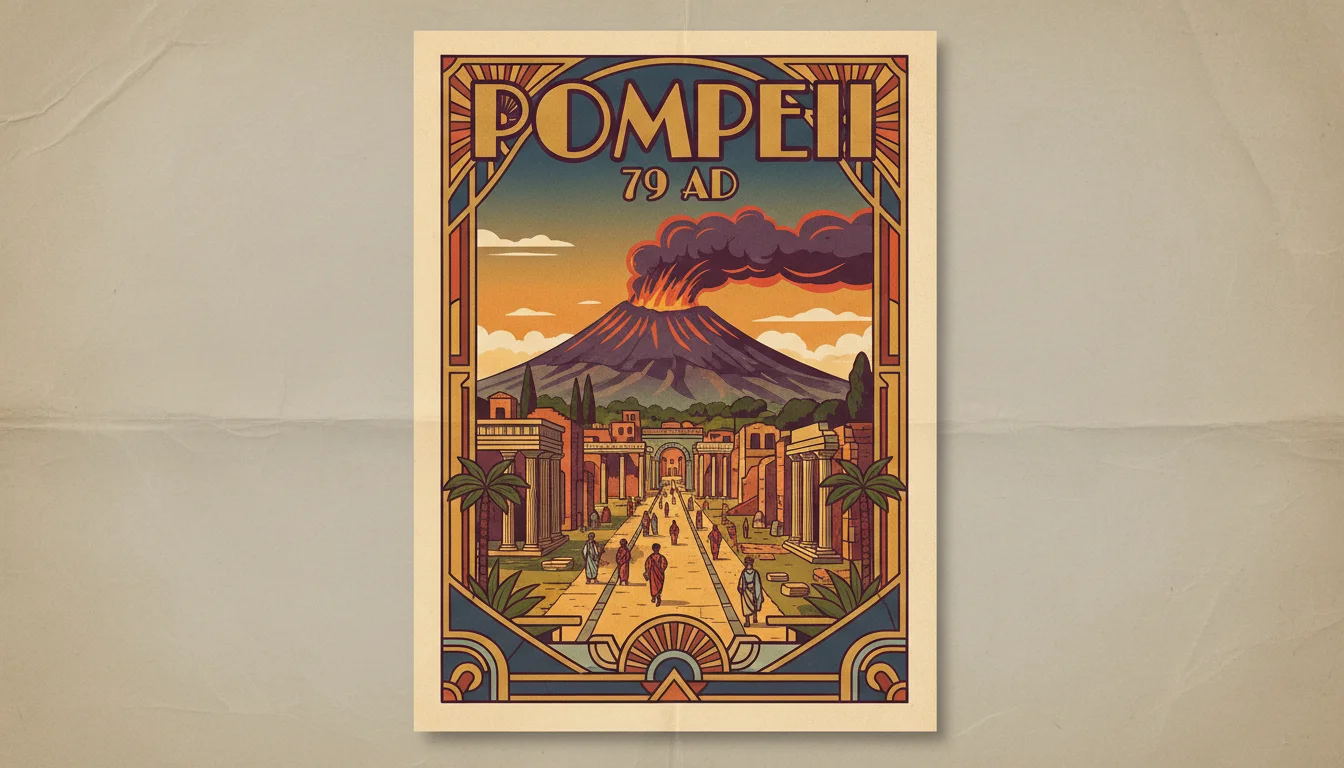
You've just materialized in the bustling streets of Pompeii, a prosperous Roman resort town nestled in the shadow of Mount Vesuvius. The year is 79 AD - early August, to be precise. The sun is blazing, the wine is flowing, and that mountain over there? Everyone says it's perfectly harmless. Just a big hill covered in vineyards.
You have about two weeks. Let's make them count - and get you out alive.
When Exactly Are You?
Pompeii in the summer of 79 AD is a city at its peak. Emperor Titus has just taken the throne, gladiatorial games are the hottest entertainment, and the local economy is booming thanks to wine exports and the tourist trade. The city has roughly 11,000 residents, plus thousands of visitors who flock here for the mild climate, thermal baths, and legendary nightlife.
Oh, and seventeen years ago there was a massive earthquake that wrecked half the city. You'll notice construction crews everywhere - Pompeii is still rebuilding. Think of it as the ancient Roman version of a city perpetually "under renovation."
What to Wear
Roman fashion is surprisingly practical for the Mediterranean heat. Men should wear a simple tunic (tunica) - a knee-length garment belted at the waist. If you want to look respectable, throw a toga over it, though locals mostly save that for formal occasions. It's August. Nobody's wearing a wool toga voluntarily.
Women wear a longer tunic called a stola, often layered with a palla (a large rectangular shawl). Bright colors signal wealth - saffron yellow, Tyrian purple, and deep reds are all fashionable. Sandals (sandalia) or enclosed leather shoes (calcei) complete the look.
Pro tip: Avoid wearing trousers. Romans associate them with barbarians, and you'll get strange looks at best, hostile questions at worst.
What to Eat and Drink
Pompeii is a foodie paradise. The city has over 80 thermopolia - ancient fast-food joints with L-shaped counters and built-in terracotta pots keeping stews warm. Look for the ones with the most foot traffic. Romans eat out constantly because most apartments don't have kitchens.
Must-try dishes:
- Garum - Fermented fish sauce that goes on literally everything. It smells horrifying and tastes surprisingly umami. Think of it as Roman ketchup.
- Panis - Fresh bread from one of the 30+ bakeries. The round loaves are scored into eight wedges for easy sharing.
- Isicia omentata - Minced meat patties seasoned with pepper, pine nuts, and garum. Basically Roman hamburgers.
- Dulcia domestica - Dates stuffed with nuts, rolled in salt, then fried in honey. Dangerously addictive.
For drinks, try the local wine. Pompeii's vineyards on the slopes of Vesuvius (yes, that Vesuvius) produce excellent vintages. Romans drink their wine diluted with water - drinking it straight marks you as a barbarian or an alcoholic. The ratio is usually two parts water to one part wine.
Warning: The water supply comes through lead pipes. This won't kill you in two weeks, but maybe stick to wine anyway. When in Rome - or near it.
Customs and Social Rules
Roman social hierarchy is everything. Free citizens, freedmen, and slaves all have distinct roles, and stepping outside your apparent station causes problems. If anyone asks, you're a traveling merchant from a distant province. Gaul or Hispania work well - it explains any accent oddities.
Greetings: A firm handshake (dextrarum iunctio) between equals. For someone of higher status, a slight nod of the head. Kissing was reserved for close friends and family.
Money: You'll need sestertii and denarii. One denarius equals four sestertii. A loaf of bread costs about 2 asses (half a sestertius). A night's lodging runs 1-2 sestertii. A full meal at a thermopolium costs about 2-3 sestertii. The gladiatorial games? Free - they're sponsored by local politicians buying votes.
Bathhouse etiquette: The baths are the social center of Roman life. Everyone goes, from senators to slaves (though at different hours). Strip down completely - nudity is expected. Start in the tepidarium (warm room), move to the caldarium (hot room), then plunge into the frigidarium (cold pool). Bring your own strigil (a curved scraping tool) and olive oil, or hire a slave attendant to do the scraping for you.
Religion: Pompeii is deeply religious, but it's polytheistic religion - temples to Jupiter, Apollo, Venus, and Isis dot the city. Participate respectfully in any public ceremonies. The household shrines (lararia) you'll see in every home are for the family's protective spirits. Don't touch them.
Dangers to Avoid
The obvious one: Mount Vesuvius will erupt on August 24th (or possibly October 24th - historians debate the exact date). When you see a pine-tree-shaped cloud rising from the summit, that's your cue to leave immediately. Head south toward Stabiae or, better yet, take a boat from the harbor. Do NOT go north toward Herculaneum - that town gets hit even harder.
Street traffic: Pompeii's streets double as sewers. Those raised stepping stones at intersections? They're not decorative - they keep your feet out of the muck while letting carts pass between them. Watch your step constantly.
Neighborhood gangs: Pompeii has a rough side. The area near the amphitheater saw a full-scale riot in 59 AD between Pompeians and visitors from nearby Nuceria. Stick to the main streets at night.
Wild dogs: Packs of stray dogs roam the streets. That famous "Cave Canem" (Beware of the Dog) mosaic at the House of the Tragic Poet isn't just decorative.
The brothels: Pompeii has at least one purpose-built lupanar (brothel) and several informal ones. They're not hard to find - just follow the phallic symbols carved into the street stones (they're directional markers, not graffiti). Exercise your own judgment here, but be aware that sexually transmitted diseases have no treatment in 79 AD.
Must-See Experiences
The Forum: Pompeii's main square is the beating heart of the city. Temples, law courts, markets, and political speeches all happen here. Visit in the morning when it's liveliest.
The Amphitheater: Built in 70 BC, it's one of the oldest surviving Roman amphitheaters. Seats 20,000 spectators for gladiatorial combat. The fights are brutal but rarely to the death - trained gladiators are expensive investments. The crowd decides the loser's fate with their thumbs (though historians still argue about which direction meant what).
The House of the Faun: The largest private residence in the city, covering an entire city block. The Alexander Mosaic on the floor - depicting Alexander the Great battling Darius III - is one of the greatest artworks of the ancient world. If the owner is in a good mood, wealthy visitors can sometimes arrange a viewing.
The Garden of the Fugitives: Well, not yet. That name comes later. But visit the vineyard on the southeast edge of the city and enjoy the view of Vesuvius while it's still covered in green.
The Villa of the Mysteries: Just outside the city walls, this suburban villa contains stunning frescoes depicting mysterious Dionysian initiation rites. The deep red pigment used is so distinctive it's still called "Pompeian red" today.
Your Exit Strategy
This is the one time-travel destination where your departure date is non-negotiable. By mid-August, start watching Vesuvius carefully. Minor earthquakes are normal here - Pompeians are used to them. But if you feel a sharp increase in tremors, see the mountain venting steam, or notice wells and springs drying up unexpectedly, move your timeline up.
When the eruption begins, you have roughly 18 hours before pyroclastic surges reach the city. That sounds like plenty of time, but the initial phase rains pumice stones that pile up at 15 centimeters per hour. Roofs collapse. Streets become impassable. Panic sets in.
Leave the city heading south by foot or by boat. Pliny the Elder will be sailing toward the eruption to observe it - do not get on that boat. He doesn't make it.
Pack light, cover your mouth with wet cloth against the ash, and don't look back. Pompeii will be perfectly preserved under six meters of volcanic debris for the next 1,700 years - a time capsule of everyday Roman life, frozen in its final ordinary morning.
The bread will still be in the ovens. The wine will still be in the cups. And the graffiti on the walls - rude jokes, love declarations, election slogans - will outlast every marble monument in Rome.
Sometimes the most permanent things are the ones nobody planned to keep.
For more ancient Mediterranean time-travel, see our guides to ancient Sparta in 450 BC and Achaemenid Persepolis.

Need Advice from Someone Who Lived There?
Get firsthand accounts from people who actually lived through these moments in history.
Ask Them YourselfJoin the HistorIQly Club
Get smarter about the past.
Weekly stories, deep dives, and exclusive content straight to your inbox.