Visiting Sengoku Japan in 1560: A Time Traveler's Survival Guide
Heading to Sengoku Japan in 1560, the Age of Warring States? Here's how to survive samurai, avoid ninjas, find a patron, and enjoy the chaos.
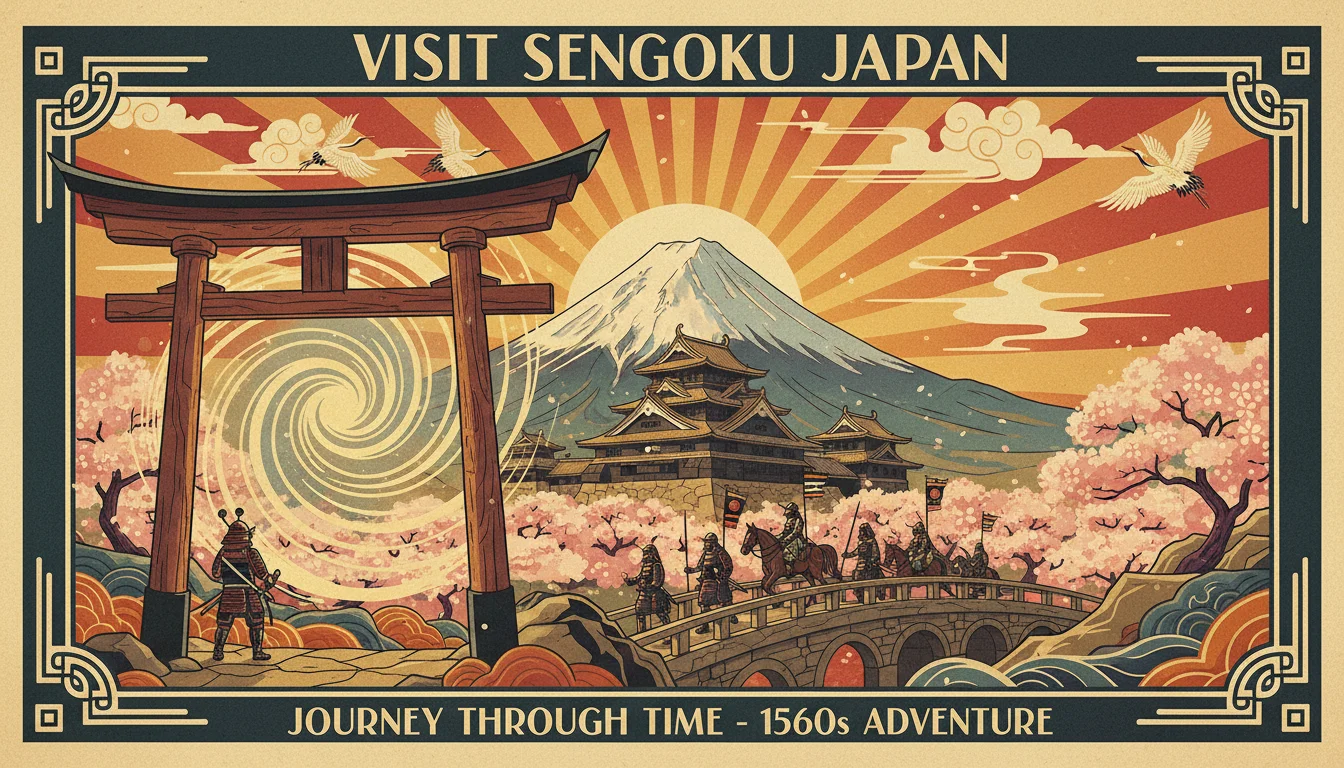
So you've set your temporal coordinates for Japan, 1560 AD. Bold choice. You're dropping into the Sengoku period - the "Age of Warring States" - when feudal lords carved up the archipelago like a particularly violent game of Risk. Buckle up. This one's going to be interesting.
When and Where Are We Going?
The year is 1560, and Japan is a patchwork of competing domains ruled by daimyo (feudal lords) who really, really don't like each other. The old shogunate has collapsed, central authority is a joke, and everyone with a castle thinks they deserve to rule the whole country.
You're arriving just in time for the Battle of Okehazama, where a young upstart named Oda Nobunaga will defeat an army ten times his size through sheer audacity. Pay attention to that name - he's about to change everything.
For your landing zone, I'd recommend Kyoto if you want culture, Sakai if you want commerce, or the countryside near Owari province if you want front-row seats to history being made. Just... maybe not too front-row.
What to Wear (Blend In!)
First rule: you cannot wear swords unless you're a samurai. Period. The social hierarchy here is rigid - warriors, farmers, artisans, merchants - and dressing above your station can get you killed.
For men, a simple kosode (short-sleeved robe) and hakama (wide-legged trousers) work for most situations. Stick with muted colors like indigo, brown, or gray. Only samurai and nobles wear bright colors and silk.
For women, a long kosode with an obi sash is standard. Keep your hair long and tied back. Married women blacken their teeth with iron filings (ohaguro) - yes, really - so if you skip this custom, claim to be unmarried or foreign.
Speaking of foreign: if you can't pass for Japanese, consider playing a Portuguese or Dutch trader. They've just started arriving, and the locals are fascinated by them. Just be ready to explain what a "Europe" is.
What to Eat (and Avoid)
Good news: Japanese cuisine in 1560 is fresh, seasonal, and delicious. Bad news: forget about sushi as you know it - that's an Edo-period invention.
Eat This:
- Rice (if you can afford it - it's currency here)
- Miso soup with seasonal vegetables
- Grilled river fish
- Pickled vegetables (tsukemono)
- Tofu and natto (fermented soybeans - acquired taste)
- Sake - the social lubricant of choice
Skip This:
- Meat from four-legged animals (Buddhist taboo, though secretly consumed)
- Anything offered by someone you just met (poison is a popular problem-solving tool)
- Street food near battlefields (supply chains get... disrupted)
Tea ceremony culture is exploding right now, championed by tea masters like Sen no Rikyu. If you get invited to one, accept graciously - it's networking with samurai.
Social Customs and Taboos
The Bow: Master it. Depth indicates respect - a slight nod for equals, deeper for superiors, practically touching the floor for high-ranking samurai. Get this wrong and you're signaling disrespect.
Names: Never use a samurai's given name unless you're family or close friends. Use their title or family name with "-sama" or "-dono." Oda Nobunaga is "Oda-dono" or simply "my lord" if you're addressing him directly.
Honor: The concept of face is everything. Never publicly shame a samurai, never refuse a gift from a superior, and never - ever - show your back to someone of higher rank.
Gifts: Always bring something when visiting someone's home. Even a small token shows respect. Wrap it beautifully - presentation matters as much as content.
Footwear: Remove your shoes when entering any building. Wear clean tabi socks. This is non-negotiable.
Dangers to Watch Out For
Where do I begin?
The Obvious: You're in a civil war. Armies march through constantly. Battles break out without warning. Stay away from castle towns under siege.
Bandits: With central authority gone, bandits (sanzoku) roam freely. Travel in groups, stick to major roads during daylight, and don't flash valuables.
Ninjas: Yes, they're real. No, they don't wear black pajamas - that's kabuki theater nonsense. Real shinobi dress as monks, merchants, or farmers. If your new friend asks oddly specific questions about troop movements, maybe stop talking.
Disease: Smallpox, measles, and dysentery are common. Bring modern antibiotics if your time machine allows it. Boil your water.
Samurai Having a Bad Day: A samurai can legally kill a commoner for perceived disrespect through "kirisute gomen" (permission to cut down). Keep your head low, literally and figuratively.
Must-See Attractions
Kyoto: The imperial capital is faded but still magnificent. Visit Kinkaku-ji (Golden Pavilion), though it's a bit war-worn. The court nobles are impoverished but cultured - great for poetry gatherings.
Sakai: This merchant city near Osaka operates as an independent commune with its own government. It's like medieval Venice - wealthy, cosmopolitan, and the best place to buy firearms (yes, they have guns now, imported from Portugal).
Ise Grand Shrine: The holiest Shinto site in Japan. Even warring samurai observe truces here. A rare pocket of peace.
Any Castle Town During a Festival: The Japanese know how to celebrate despite - or because of - the chaos. Bon festivals, harvest celebrations, and religious ceremonies offer glimpses of beauty amid the warfare.
How to Survive and Thrive
Find a Patron: Independent people are suspicious people. Attach yourself to a merchant house, monastery, or minor lord's household. Having someone vouch for you is essential.
Learn the Language: Japanese in 1560 differs from modern Japanese, but you can manage. Speak formally, err toward politeness, and when in doubt, bow.
Be Useful: Medicine, literacy, exotic knowledge - anything that makes you valuable keeps you alive. If you know anything about firearms, Nobunaga will hire you on the spot.
Stay Flexible: Alliances shift constantly. Your patron today might be executed tomorrow. Keep your options open and your belongings portable.
Document Everything: You're witnessing the birth of unified Japan. Nobunaga, Hideyoshi, Tokugawa - these three will forge a nation from chaos. Future historians would kill for your observations.
Final Thoughts
Sengoku Japan isn't for the faint-hearted. It's beautiful and brutal, cultured and chaotic. You'll drink tea in perfect silence with men who beheaded their enemies that morning. You'll see artistic masterpieces created while castles burn on the horizon.
But if you keep your wits about you, respect the customs, and pick the right side (Nobunaga, trust me), you might just make it home with the experience of a lifetime.
Just remember: the katana you're admiring belongs to someone who actually knows how to use it.
Safe travels, temporal tourist. And watch out for those ninjas.
For another Japan time-travel experience, our guide to Heian-kyo (Kyoto) in 1000 AD covers the imperial capital five centuries before Sengoku's chaos.
Want to debate strategy with Oda Nobunaga or discuss philosophy with a Zen master? Visit historiqly.com to chat with 144+ historical minds.

Need Advice from Someone Who Lived There?
Get firsthand accounts from people who actually lived through these moments in history.
Ask Them YourselfJoin the HistorIQly Club
Get smarter about the past.
Weekly stories, deep dives, and exclusive content straight to your inbox.