Time Traveler's Guide to Safavid Isfahan, 1680
Your survival guide to Safavid Isfahan in 1680 - where the Persians said Isfahan is half the world and weren't wrong. Blue mosques, silk bazaars, and hidden wine.
Read Wikipedia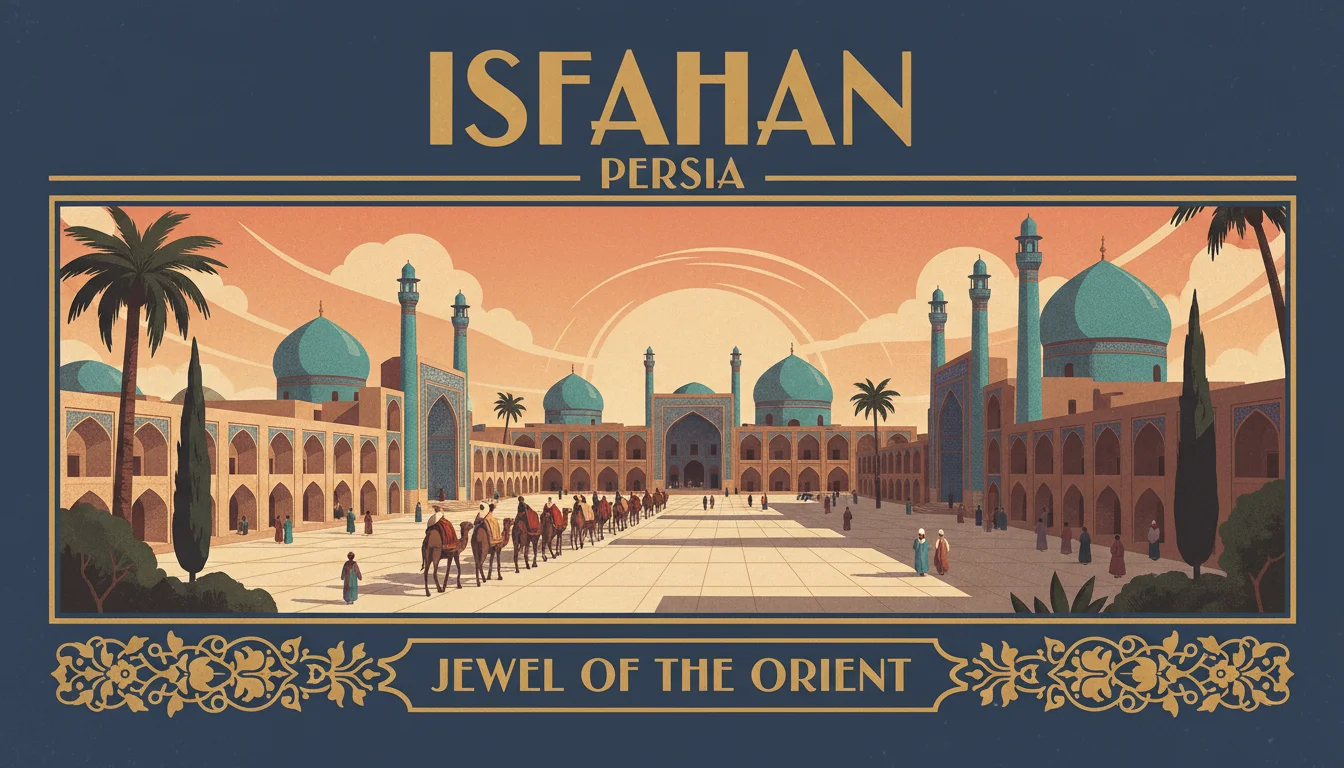
Congratulations, temporal tourist! You've just materialized in Safavid Isfahan, one of the most magnificent cities humanity has ever built. The Persians have a saying: Esfahān nesf-e jahān ast - "Isfahan is half the world." After spending a few days here, you'll wonder what the other half even bothered doing.
Under Shah Suleiman (don't worry, he's the quiet type), Isfahan sprawls across the Zayandeh River, home to roughly 600,000 souls making it one of the largest cities on Earth. The architecture alone is worth the trip - though surviving your visit requires knowing a few things first.
Blending In: What to Wear
For Men: You'll need a long qaba (robe) reaching your ankles, preferably in muted colors unless you're feeling fancy. A sash around the waist is mandatory - it's basically your utility belt where you'll tuck your money pouch. Top it off with a turban or felt cap. The turban style matters: white for religious scholars, colored for everyone else. Bright red or green? You're making a statement about your political allegiances. Stick with blue or brown until you understand the local politics.
For Women: A long, loose chador covering your body and hair is essential in public. Underneath, Persian women actually wear beautifully embroidered tunics and flowing trousers - the fashion sense here is exquisite. Face veils aren't always required, but a light rubandeh (face covering) won't hurt when navigating the bazaars.
Universal Tips:
- Shoes: Soft leather slippers. You'll be removing them constantly.
- Colors: Persians love color. That all-black ensemble screams "I'm mourning" or "I'm a Westerner."
- Fabric: Silk if you can afford it. The local silk industry is phenomenal.
Money and Commerce
The currency is the toman, subdivided into dinars. Silver coins called abbasi (named after the great Shah Abbas I) are your everyday money. A skilled craftsman earns about 3-4 tomans monthly, so calibrate your spending accordingly.
Pro tip: Armenian merchants in the Julfa district handle most international trade and are accustomed to dealing with foreigners. They speak multiple languages and won't cheat you - their entire business model depends on reputation.
The Grand Bazaar (Qeysariyeh) connected to Naqsh-e Jahan Square is where you'll find everything from spices to silk to spectacular metalwork. Haggling isn't just expected - it's an art form. Start at half the asking price and work up. Tea will be offered. Accept it. Multiple times.
Food and Drink
Persian cuisine is a revelation. Forget everything you know about "Middle Eastern food" - this is its own universe.
Must-Try Dishes:
- Chelow kabab - saffron rice with grilled lamb. The national dish for good reason.
- Fesenjan - chicken in pomegranate-walnut sauce. Complex, tangy, unforgettable.
- Ash reshteh - thick noodle soup with herbs and kashk (fermented whey).
- Tahdig - the crispy golden rice at the bottom of the pot. Locals fight over this.
Drinking: Officially, alcohol is haram (forbidden). Unofficially, the Armenian quarter in Julfa produces excellent wine, and certain establishments serve it discreetly. The Safavid court itself is famous for its wine consumption - Shah Suleiman himself is quite fond of it. But keep it private. Public drunkenness will get you flogged.
Coffee houses (qahveh-khaneh) are everywhere and serve as social hubs. Drink coffee, smoke a water pipe, listen to storytellers and poets. These places are the original social media.
Water: The qanat system brings fresh mountain water to the city through underground channels. Isfahan's water is actually quite safe by pre-modern standards. Drink from public fountains freely.
Getting Around
Isfahan is enormous, but well-organized. The maidan (Naqsh-e Jahan Square) is your central reference point - at 560 meters long, it's one of the largest public squares in the world.
Walking: Your main option for the city center. The covered bazaars keep you cool in summer and dry in winter.
Horses and Mules: Hire one for longer distances or trips to surrounding villages. Stables cluster near the city gates.
The Bridges: The Si-o-se-pol (Bridge of 33 Arches) and Khaju Bridge are pedestrian-friendly. Locals gather on the lower levels to socialize, especially at sunset. The Khaju Bridge even has small alcoves for private conversation - or other activities.
Caravanserais: If you're arriving from elsewhere on the Silk Road, these roadside inns offer food, lodging, and animal care. Inside the city, they also function as wholesale markets and warehouses.
Customs and Etiquette
Greetings: Hand on heart, slight bow, salaam alaykum. Wait for the invitation before sitting.
Hospitality: Persians invented ta'arof - an elaborate system of politeness where offers must be refused initially before being accepted. If someone offers you tea, decline once, accept on the second or third offer. This applies to everything.
Religion: Shia Islam is the state religion. Five daily prayers are called from mosques throughout the city. You don't need to pray if you're obviously foreign, but be respectful - no eating or drinking publicly during Ramadan, remove shoes before entering mosques, and avoid photographing... wait, wrong century.
The Shah: You probably won't meet Shah Suleiman - he prefers the harem to the throne room. But if you somehow find yourself at court, prostrate yourself immediately and don't speak unless spoken to.
Gender Separation: Men and women socialize separately in public. Public baths have separate hours or facilities. The harem is off-limits to men (obviously). Foreign women actually have surprising freedom as "honorary men."
Dangers and How to Avoid Them
Political Intrigue: The court is rife with factional struggles between the qizilbash (military elite) and the ghulams (slave soldiers). Don't get involved. Don't take sides. Don't repeat gossip.
Religious Controversy: This is the Shia Islamic heartland. Avoid religious debates. If you're asked about your faith, "I'm a traveler seeking knowledge" is a safe answer.
Theft: The bazaars are generally safe - merchants police their own. But watch your money pouch in crowded areas.
Illness: The hammams (public baths) are excellent and surprisingly hygienic. Use them. The local physicians follow Avicenna's medical tradition - they're actually quite good by contemporary standards. Avoid raw vegetables washed in questionable water.
The Wrong Neighborhoods: Every city has them. Ask your host or a reputable merchant before wandering into unfamiliar districts at night.
Must-See Attractions
Naqsh-e Jahan Square: The crown jewel. This enormous public space is surrounded by the Shah Mosque, Sheikh Lotfollah Mosque, Ali Qapu Palace, and the Grand Bazaar. Polo matches happen here. Executions too. Mostly polo.
The Shah Mosque (Masjed-e Shah): Those blue tiles aren't just beautiful - they're a statement of imperial power. The acoustics are engineered so the imam's voice carries throughout. Stand under the dome and whisper. You'll understand.
Sheikh Lotfollah Mosque: Smaller but arguably more exquisite. Built for the royal family's private worship. That peacock design on the interior dome changes color with the light throughout the day.
Chehel Sotoun Palace: "Forty Columns" - though there are actually only twenty. The reflecting pool doubles them. Persian humor. The interior murals depict court life and historical battles in vivid detail.
The Armenian Quarter (Julfa): Shah Abbas I relocated thousands of Armenian Christians here a century ago to boost trade. Vank Cathedral's interior is stunning - Christian iconography executed in Persian artistic style. The Armenians also run the best taverns.
Time-Sensitive Activities
Evening Promenade: Locals stroll the Chahar Bagh avenue at dusk - a tree-lined boulevard with water channels, perfect for people-watching.
Friday Prayers: The mosques are most impressive when full. Stand respectfully in the courtyard.
Market Days: Every day is market day in the Grand Bazaar, but specific sections have their peak days. Ask your host.
Sunset on Khaju Bridge: Locals gather to recite poetry, sing, and watch the light change on the river. Bring a musical instrument if you play.
Final Advice
Isfahan in 1680 is past its absolute peak under Shah Abbas I, but still dazzling. The empire is wealthy, the arts flourish, and foreign visitors are treated with genuine curiosity rather than suspicion. The Persians consider themselves the civilized center of the world - and standing in Naqsh-e Jahan Square, you'll find it hard to argue.
Learn a few phrases of Persian. Bring gifts for your hosts (European curiosities are prized). Accept every cup of tea offered. And when someone tells you Isfahan is half the world, nod solemnly.
They might be underselling it.
Safe travels, temporal tourist. Try not to alter the timeline - these tiles are too beautiful to risk.
For neighboring civilizations on the same Silk Road corridor, our guide to Timurid Samarkand, 1400 covers the Central Asian empire that preceded the Safavid era, while Ottoman Istanbul, 1555 explores the great rival power across the frontier.

Need Advice from Someone Who Lived There?
Get firsthand accounts from people who actually lived through these moments in history.
Create your free account →No card required. Some figures and features require a paid plan.
Join the HistorIQly Club
Get smarter about the past.
Weekly stories, deep dives, and exclusive content straight to your inbox.