Time Traveler's Guide to Seleucid Antioch, 200 BC
Seleucid Antioch in 200 BC: a survival guide to the gleaming Hellenistic capital where Greek culture meets Syrian splendor. What to wear, eat, and avoid.
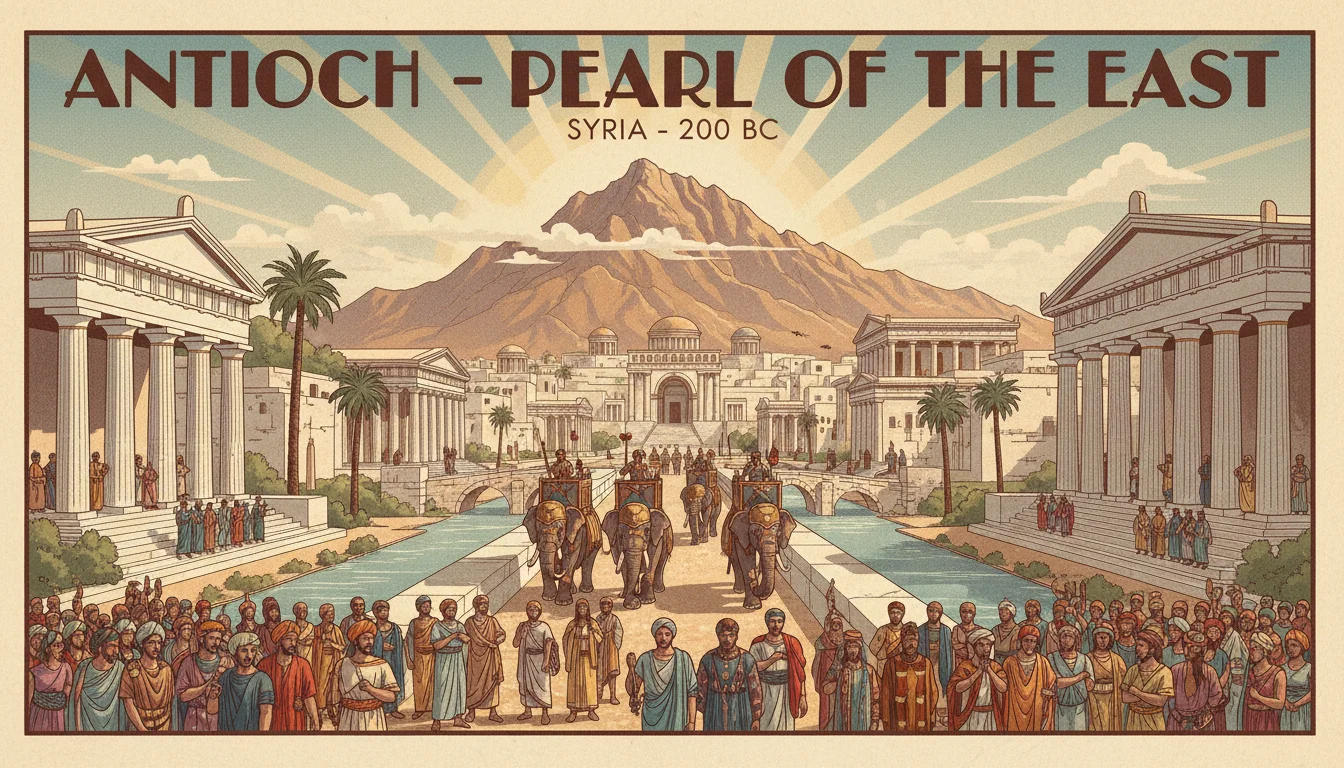
Welcome to Antioch, time traveler. You've just materialized in one of the greatest cities you've never heard of - a metropolis that rivals Alexandria and will eventually become the third-largest city in the Roman world. In 200 BC, you're arriving at its golden moment, when the Seleucid Empire still controls territory from the Mediterranean to the borders of India, and Antioch is its glittering capital.
Founded by Seleucus I Nicator (one of Alexander the Great's generals who carved up his empire), this city on the Orontes River is where Greek civilization meets the ancient Near East. Think of it as the ultimate fusion restaurant of cultures - but with more statues and considerably more intrigue. (Heading deeper into the Hellenistic world? Pair this with our guides to Pergamon in 180 BC and ancient Athens around 450 BC.)
Getting Your Bearings
Antioch sprawls across the eastern bank of the Orontes, with Mount Silpius rising dramatically behind it. The city is laid out on the Hippodamian grid plan - those neat perpendicular streets the Greeks loved - making navigation surprisingly easy. The main colonnaded street runs roughly north-south, and you can orient yourself by the massive palace complex at the city's edge.
The current king is Antiochus III, known as "the Great" - and in 200 BC, he's actually earning that epithet. He's just completed his anabasis, a decade-long campaign to reclaim the eastern territories, marching his armies all the way to India. The city is flush with confidence, wealth, and that particular swagger of an empire at its peak.
What to Wear
Greek dress is your safest bet here, but Antioch's cosmopolitan nature gives you flexibility. Men should wear a chiton (a tunic of linen or wool reaching the knees) with a himation (a larger draped cloth) for formal occasions. The Persian-influenced locals often add colorful embroidery that would scandalize a proper Athenian, but here it's fashionable.
Women wear longer chitons, often belted under the bust in the style popularized by Alexander's sister. Jewelry is abundant and ostentatious - gold, garnets, and pearls mark status. Leave the modest Athenian aesthetic behind; in Antioch, more is more.
Critical: Your sandals matter enormously. Cheap sandals mark you as lower class instantly. Spring for the ones with red leather straps if you want to be taken seriously.
What to Eat (and Where)
Antioch's food scene reflects its position at the crossroads of civilizations. The agora (marketplace) near the center offers:
- Fresh fish from the Orontes - grilled with garum (fermented fish sauce) and olive oil. Don't make that face; it's delicious.
- Flatbreads with za'atar - the local herb blend that will survive largely unchanged into your era
- Dates, figs, and pomegranates - the holy trinity of Hellenistic fruit
- Wine mixed with water - drinking unmixed wine marks you as a barbarian or a drunk (often both)
For a proper meal, find a symposium invitation. These dinner parties are the social networking events of the ancient world. Recline on your left side, use your right hand to eat, and for the love of Zeus, don't discuss politics until the drinking portion begins.
Warning: The street food near the docks is legendary but aggressive on unprepared digestive systems. Build up your tolerance gradually.
The Dangers
Political Intrigue
The Seleucid court makes Game of Thrones look like a children's tea party. Antiochus III has multiple wives, numerous children by various mothers, and a court full of ambitious Greeks, Macedonians, and local nobility all jockeying for position. Keep your opinions to yourself. The wrong word about the wrong prince could end your visit permanently.
The Ethnic Divide
While Antioch is multicultural, it's not exactly egalitarian. Greeks and Macedonians hold the top positions, while Syrians, Jews, and others occupy a complex hierarchy beneath them. As a stranger, you'll be scrutinized. Claim Macedonian ancestry if pressed - it opens doors, but be ready for follow-up questions about obscure villages.
Crime
The waterfront district after dark is exactly as dangerous as you'd expect. The city guard exists but operates more like a protection racket in certain neighborhoods. Stick to the main colonnaded street after sunset.
Malaria
The Orontes creates swampy areas that breed mosquitoes. If you're staying more than a few days, find lodging on higher ground near Mount Silpius. The wealthy citizens already know this, which is why the finest houses climb the hillside.
What to See
The Palace of the Seleucids: You won't get inside without connections, but the exterior is spectacular. White marble, gold trim, and gardens that attempt to recreate the legendary Hanging Gardens of Babylon (which are only a few hundred miles away, if you fancy a side trip).
The Temple of Apollo at Daphne: Just five miles south of the city lies Daphne, a suburb that's basically an ancient resort town. The sacred grove of Apollo features natural springs, centuries-old cypress trees, and a famous oracle. The local legend says Apollo himself pursued the nymph Daphne here. The parties held in this grove are notorious across the Hellenistic world.
The Great Library: Smaller than Alexandria's but still impressive. The Seleucids collect texts aggressively, and you'll find works here that don't exist elsewhere. If you read Greek, this is a treasure trove.
The Elephant Stables: Antiochus III maintains a force of Indian war elephants from his eastern campaigns. These are kept outside the city proper, but you can arrange to see them. Just don't get too close - they're military assets, not tourist attractions.
Social Customs
Greetings: A firm handshake for equals, a slight bow for superiors. Don't touch people casually - personal space matters here more than in many ancient cultures.
Religion: Antioch is religiously diverse. Greeks worship the Olympian gods, locals maintain Syrian and Mesopotamian traditions, and there's a significant Jewish community. Attend whatever ceremonies you're invited to, participate respectfully, and keep theological opinions private.
Language: Greek is the prestige language, but you'll hear Aramaic everywhere. Even basic Aramaic phrases will help in the markets and with servants.
Gifts: Never visit someone's home empty-handed. Wine, oil, or imported goods work well. Avoid giving anything with religious significance unless you know the recipient's beliefs.
Money Matters
The Seleucid tetradrachm is the standard currency - large silver coins bearing the king's portrait. Smaller bronze coins handle daily transactions. Money changers cluster around the main agora, but their rates are predatory. Bring goods to trade if possible; spices, dyes, and textiles from anywhere unusual will fetch premium prices.
Tip: The Seleucids minted coins showing Antiochus III with elephant headdress after his Indian campaign. These are currently fashionable and slightly overvalued - good to spend, bad to collect.
When to Visit
You've arrived in spring, which is ideal. Summers in Antioch are brutal - the city essentially shuts down during afternoon hours. Winters are mild by northern standards but can bring heavy rains that flood the lower districts.
The major festivals worth catching: the Apollonia at Daphne (spring), featuring athletic games and theatrical performances, and the Basileia (royal festival) celebrating the Seleucid dynasty, usually tied to military victories.
Your Exit Strategy
When it's time to leave, head for the harbor district in the early morning. Ships depart regularly for Cyprus, Rhodes, and Egypt. Overland caravans head east toward Mesopotamia or south toward Damascus. Get your travel papers from the royal administration - attempting to leave through unofficial channels marks you as a spy or criminal.
Antioch in 200 BC represents the Hellenistic world at its most ambitious and cosmopolitan. This is the moment before Rome's shadow falls across the eastern Mediterranean, before the Seleucid Empire fractures into squabbling fragments. You're standing in a city that genuinely believes it has inherited Alexander's dream of fusing Greek and Asian civilization.
Enjoy it. The Greeks would say such moments are gifts from the gods - beautiful precisely because they cannot last.
Safe travels, chrononauts. And remember: when in doubt, pour a libation to Tyche, goddess of fortune. In Antioch, you'll need all the luck you can get.

Need Advice from Someone Who Lived There?
Get firsthand accounts from people who actually lived through these moments in history.
Ask Them YourselfJoin the HistorIQly Club
Get smarter about the past.
Weekly stories, deep dives, and exclusive content straight to your inbox.