Time Traveler's Guide to Srivijaya Palembang, 850 AD
Survive Srivijaya Palembang, the maritime empire controlling the Strait of Malacca. Pack your gold, learn some Sanskrit, and never insult the Buddha.
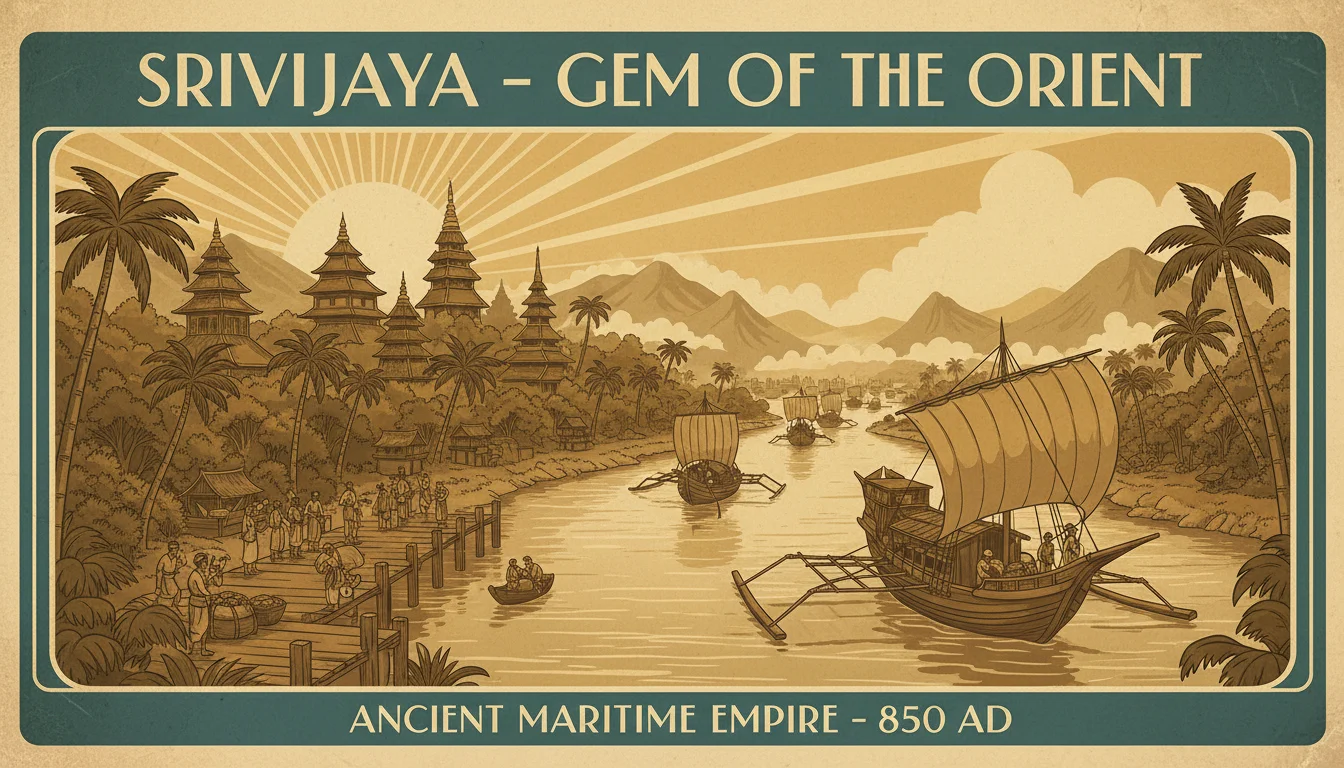
You've materialized on a wooden dock in Palembang, the beating heart of the Srivijaya Empire. The air is thick with humidity, incense, and the smell of a thousand spices you can't identify. Congratulations - you've landed in the world's most important port city that nobody in the 21st century has heard of.
The year is 850 AD. While Europe is stumbling through the Dark Ages and the Vikings are just starting to get ambitious, Srivijaya controls the Strait of Malacca - the maritime chokepoint through which flows Chinese silk, Indian textiles, Arabian perfumes, and every trade good worth stealing. Think of it as the Panama Canal of the ancient world, except instead of a canal, it's an entire empire of Buddhist sailor-merchants who got very, very rich by taxing everyone who wanted to pass through.
Your First Challenge: Getting Accepted
That jade pendant you're wearing? The locals have already noticed. Srivijaya society runs on trade, which means everyone is constantly evaluating what you're worth. Before you've spoken a word, three merchants have mentally calculated your net worth and two port officials are wondering if you're a spy from the Chola kingdom.
Rule number one: Have something to trade. Anything. Srivijaya doesn't have a "just passing through" category. You're either a merchant, a monk, or suspicious. Since you probably didn't bring a shipload of Chinese ceramics, try presenting yourself as a scholar. The Srivijayans are obsessed with Buddhist learning - the Chinese monk Yijing spent years here in the 7th century specifically because it was Asia's premier Buddhist university.
If someone asks where you're from, say you're a pilgrim from beyond the western seas seeking wisdom. Vague enough to be plausible, exotic enough to be interesting.
What to Wear (And What Will Get You Killed)
Forget everything you know about Southeast Asian fashion from movies. This isn't the age of silk robes and elaborate headdresses - that's later Javanese courts you're thinking of.
Men: A simple dhoti-style garment wrapped around the waist, bare chest unless you're royalty or a high priest. Gold armbands and earrings are essential status markers. No gold? You're nobody. Too much gold? You're a target. Aim for modest prosperity.
Women: Long skirt-wraps called kain panjang, usually in earth tones. Upper body covering is optional for common women but increasingly expected as you move up the social ladder. Heavy ear ornaments are practically mandatory - the stretched earlobes you'll see everywhere aren't a birth defect, they're a beauty standard.
Everyone: Absolutely no leather from cows. This is a Buddhist society, and even though they're not as strict as Indian Buddhists, cow-leather will mark you as a barbarian or worse, a Hindu missionary. Stick to plant fibers and bark cloth.
How to Eat Without Poisoning Yourself
The good news: Srivijayan cuisine is delicious. The bad news: Your modern stomach is about to meet fish sauce that's been fermenting since the Tang Dynasty.
Street food is your friend: The floating markets along the Musi River sell grilled fish wrapped in banana leaves, rice cakes in coconut milk, and fruit you won't see again for 1,200 years. Try the durian if you dare - yes, it smelled this bad in 850 AD too.
Avoid the water: Not the river water, obviously - even the locals aren't drinking that. But be careful with coconut wine and rice beer. They're safe enough, but they're also extremely potent, and a drunk foreigner is a robbed foreigner.
Table manners: Eat with your right hand. Always the right hand. The left hand is for... other purposes. If you're invited to a merchant's home, wait for the host to begin, take small portions, and praise everything lavishly. Refusing food is an insult. Eating too enthusiastically is also an insult. Welcome to diplomatic dining.
The Real Dangers
Pirates: Srivijaya rose to power partly by organizing the region's pirates into something resembling a coast guard. They still exist, but now they work for the empire. Sort of. Stay near the main port areas and travel only on officially sanctioned vessels.
Malaria: It's everywhere. The locals have partial immunity; you don't. Burn neem leaves in your sleeping quarters, stay away from standing water at dusk, and accept that you're going to be sick. A lot.
Religious mistakes: Srivijaya is tolerant for its era, but there are limits. Don't touch statues of the Buddha. Don't enter a temple without removing your footwear. Don't point your feet at monks. And never, ever criticize the Maharaja's devotion to the faith - religious legitimacy is his entire claim to power.
The slave trade: It exists, it's massive, and you could end up in it. Debt slavery is legal and common. Never accept a loan from anyone, never gamble with locals, and if someone offers you a "business opportunity," assume it's a trap. Captured foreigners make excellent galley rowers.
Must-See Sites (That No Longer Exist)
The Royal Palace: Located on the riverbank, it's built on wooden stilts and decorated with carved panels depicting Buddhist stories and naval victories. You can't enter without an invitation, but you can see the golden spires from the river.
The Kedukan Bukit inscription site: This stone inscription - still surviving in your time - was carved just 32 years ago in 818 AD. It commemorates a military expedition and features some of the earliest known Malay writing. The locals aren't particularly impressed by it. They don't know it'll be the oldest historical evidence of their civilization.
The thousand temples: Srivijayan Buddhism isn't about one big temple - it's about hundreds of small shrines scattered throughout the city, each maintained by merchant families as merit-making gestures. The cumulative effect is a city where you're never more than a few hundred meters from a Buddha statue.
The shipyards: This is where Srivijaya's real power lies. The empire's ships - outrigger vessels that can sail against the wind - are the most advanced in the world. You won't be allowed close to the military yards, but the commercial docks showcase the same technology on a smaller scale.
How to Get Rich (Or at Least Survive)
Translation services: If you speak any Chinese, Tamil, or Arabic - even badly - you're valuable. The empire runs on trade, and trade runs on communication.
Medicine: Your basic knowledge of germ theory makes you more medically competent than anyone alive. Don't try surgery, but boiling water before drinking and basic wound cleaning will seem miraculous.
Cartography: The Srivijayans are excellent navigators, but they work from memory and oral tradition. If you can produce written maps, you're useful to merchant captains who want to train new crews.
Avoid military service: The empire is constantly fighting wars - against the Khmer, against the Chola, against rebellious vassals. Foreigners with no local family ties make excellent conscripts because nobody complains when they die. Make yourself valuable enough to be protected, but not so valuable that you're forced into service.
Getting Out
If you need to leave Srivijaya in a hurry, your options are limited but not impossible. Ships leave regularly for China (two-month journey), India (one month), and the various ports of Java and the spice islands. Book passage as a paying passenger - never accept "working passage" offers, which is how people end up as slaves.
The best time to leave is during the monsoon season shifts in April or October, when the winds change direction and ships depart in convoys for protection against pirates. Miss these windows and you're stuck for months.
The Real Srivijaya Experience
Strip away the exotic setting, and Srivijaya is a story you'll recognize: ambitious merchants, religious politics, the eternal tension between military power and commercial wealth. The empire that controls the strait controls the money. The one who controls the money controls the empire.
Walk along the Musi River at sunset, watching the cargo ships being loaded with pepper and sandalwood, and you'll understand something about globalization that your history books missed. The world was already connected. Srivijaya was the server room.
The empire will last another four centuries before the Chola raids break its monopoly and the rising Majapahit finish the job. But in 850 AD, none of that matters. Tonight, you're in the richest port city in Southeast Asia, surrounded by merchants from three continents, listening to Buddhist chants drift across the water.
Not bad for a Tuesday in the Dark Ages.
For neighboring Southeast Asian civilizations, see our time-travel guides to Khmer Angkor in 1150 and Sukhothai in 1300.

Need Advice from Someone Who Lived There?
Get firsthand accounts from people who actually lived through these moments in history.
Ask Them YourselfJoin the HistorIQly Club
Get smarter about the past.
Weekly stories, deep dives, and exclusive content straight to your inbox.