Time Traveler's Guide to Umayyad Cordoba, 950 AD
Survive and thrive in Umayyad Cordoba, 950 AD - the most sophisticated city in Western Europe, where Muslims, Christians, and Jews built something extraordinary together.
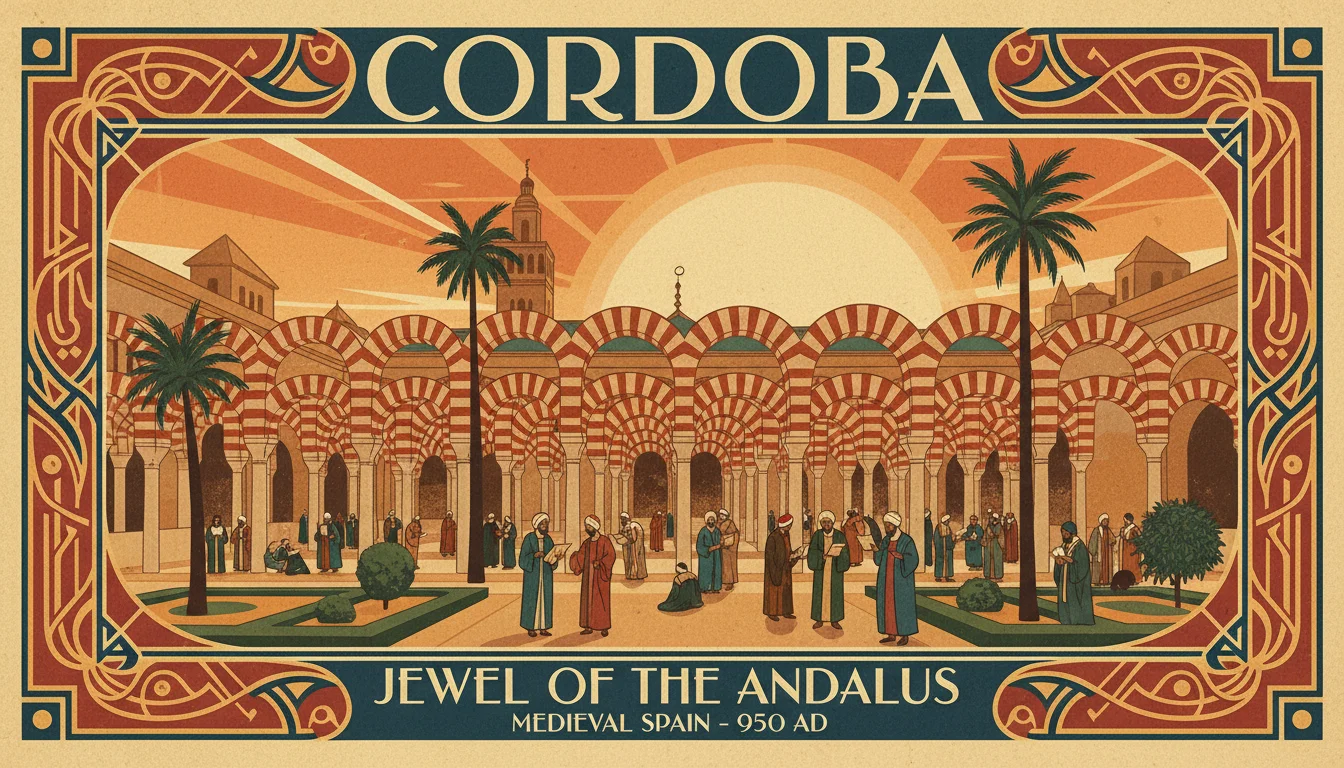
Welcome to Umayyad Cordoba - known then as Qurtuba - the undisputed jewel of Western Europe in 950 AD. While Paris and London are muddy villages of a few thousand souls, you're about to walk the paved, lit streets of a metropolis of half a million people. Pack your sense of wonder and leave your medieval European expectations at the door. You're entering the future.
When to Visit
You've arrived during the reign of Abd al-Rahman III, who recently declared himself Caliph, and his son al-Hakam II continues the golden age. Spring (April-May) and autumn (September-October) are ideal. Summers here are brutal - the Guadalquivir River valley becomes a furnace. Winters are mild by European standards but can get chilly at night.
The city operates on Islamic time, meaning the day revolves around the five prayers. Don't be startled by the muezzin's call echoing across the city at dawn - it's basically a pre-modern alarm clock, and everyone runs on this schedule.
What to Wear
Fashion here reflects the multicultural mashup. For men, the standard outfit is a long tunic (qamis) reaching to mid-calf, loose trousers (sirwal), and a head covering. Turbans indicate Muslim men, though styles vary by social class. Christians might wear similar clothing but without the turban.
For women, loose robes (thawb) with a veil (khimar) covering the hair are standard for Muslim women in public. Christian and Jewish women have more flexibility but modest dress is universal. Colors matter - white is for scholars and religious men, bright colors indicate wealth, and black is reserved for Abbasid supporters (politically risky here).
Shoes are crucial. The streets may be paved, but you'll be doing a lot of walking. Leather slippers (khuff) are ubiquitous. Remove them before entering any home or mosque - leaving them on indoors is roughly equivalent to spitting on someone's grandmother.
First Day Survival
Language is key. Arabic is the prestige language, and even the Jewish and Christian populations speak it fluently. You might hear Romance languages (the ancestor of Spanish) among the common folk and Latin in churches. Learn these phrases:
- "As-salamu alaykum" (Peace be upon you) - universal greeting
- "Shukran" (Thank you)
- "Kayfa haluk?" (How are you?)
- "La afham" (I don't understand)
Money matters. The gold dinar is the standard currency, but you'll use silver dirhams for daily purchases. One dinar equals about 12-15 dirhams. A day's worth of bread costs about 1 dirham. If you flash gold around carelessly, you'll attract the wrong kind of attention.
Don't drink the tap water. Just kidding - there is no tap water. But seriously, Cordoba has an impressive water system of aqueducts and underground channels. Public fountains are everywhere and the water is clean. The hammams (public baths) have their own water supplies.
Where to Stay
The city is divided into twenty-one districts, each with its own character. The medina (central city) around the Great Mosque is the heart of everything, but accommodations here are expensive. Look for funduqs (merchant hostels) in the commercial districts - they're clean, safe, and include stabling for your horse if you have one.
Avoid the areas near the Alcazar (royal palace) unless you enjoy being questioned by guards. The Jewish quarter (al-Yahud) and Christian quarter are welcoming to outsiders and offer good lodging at reasonable rates.
A modest room costs about 2-3 dirhams per night. For that, you get a bed, possibly shared with strangers, and access to basic facilities. Higher-end funduqs offer private rooms for 5-10 dirhams.
Eating in Cordoba
Prepare your palate for a revolution. The cuisine here blends Arab, Berber, and Iberian traditions into something extraordinary. Breakfast is simple - bread with olive oil and perhaps some dates or cheese. The main meal comes in the afternoon.
Must-try dishes:
- Tharid - a meat and bread stew said to be the Prophet's favorite
- Lamb with saffron and almonds
- Fried fish from the Guadalquivir
- Harisa - a wheat and meat porridge, perfect comfort food
- Ziryab's innovations - the legendary musician revolutionized dining here, introducing asparagus, tablecloths, and the concept of serving courses in sequence
Drink: Wine flows freely among Christians and many Muslims (religious observance varies). Sherbet drinks flavored with rose water or citrus are popular non-alcoholic options. Coffee doesn't exist yet - you'll have to manage without it.
Markets open early and close for the midday heat. The main suq (market) near the Great Mosque is a sensory overload of spices, textiles, leather, and metalwork.
The Must-See List
The Great Mosque (La Mezquita): This is the reason to come. The forest of 856 columns supporting double arches in red and white stripes is one of humanity's great architectural achievements. Construction began in 784 and continues in your time. The mihrab (prayer niche) is decorated with Byzantine mosaics sent by the Emperor in Constantinople as a diplomatic gift. Non-Muslims can enter but dress respectfully and avoid prayer times.
The Alcazar: The caliphal palace complex is mostly off-limits, but you can admire it from the river. The gardens are legendary.
Madinat al-Zahra: Just outside the city, Abd al-Rahman III built this palace-city from scratch. It's essentially a government center, and getting inside requires connections, but even seeing the walls is impressive.
The Bridge: The Roman bridge across the Guadalquivir still stands (it will for another thousand years). Walk across at sunset for an unforgettable view.
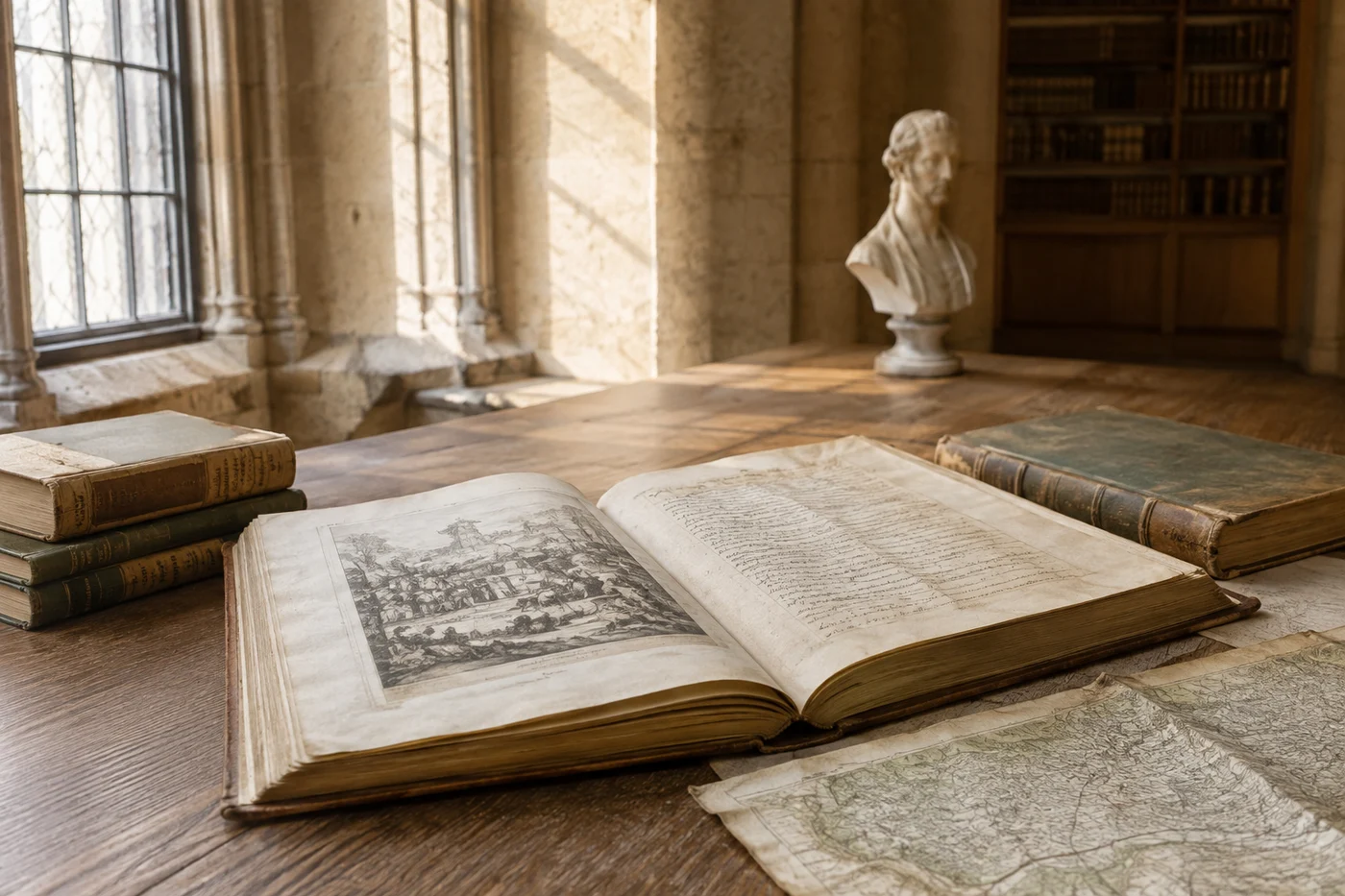
The Libraries: Cordoba is drowning in books. Al-Hakam II's royal library contains 400,000 volumes - more than all the libraries of Christian Europe combined. Public and private libraries dot the city. If you can wrangle an introduction, the scholarly community here is conducting some of humanity's most advanced work in mathematics, astronomy, medicine, and philosophy.
Customs That Will Save Your Life
Religious tolerance is real but fragile. Muslims, Christians, and Jews live and work together here in relative harmony. But don't test it. Respect all three faiths. Don't blaspheme any of them. Don't try to convert anyone.
The left hand is unclean. Eat, gesture, and exchange items with your right hand only.
The hammam is essential. Public baths are social institutions. Go regularly. Personal hygiene here far exceeds anything in contemporary Christian Europe.
Hospitality is sacred. If offered food or drink, accept at least a symbolic amount. Refusing is insulting. If you're invited to someone's home, bring a small gift.
Markets close on Friday for Muslims, Saturday for Jews, Sunday for Christians. Plan accordingly.
Dangers to Watch For
Political intrigue: The caliphate is stable under Abd al-Rahman III, but court politics can be lethal. Don't get involved. Don't carry messages. Don't take sides.
Street crime exists but is relatively controlled. The market inspector (muhtasib) and his officers keep order. Avoid dark streets at night.
Disease: Medicine here is advanced for the era - Cordoba has hospitals and pharmacies - but plague, dysentery, and various fevers still kill. Wash your hands. Drink clean water. Don't eat suspicious meat.
The Slavs: Not the ethnicity - "Saqaliba" is the term for imported slave-soldiers, many from Eastern Europe. They're organized, powerful, and involved in palace politics. Stay out of their way.
The Intellectual Scene
This is why scholars from across Europe and the Islamic world flock here. Want to study medicine? Learn from physicians using texts translated from Greek originals unavailable elsewhere. Interested in astronomy? The instruments and observations here are centuries ahead. Philosophy? The great debates between different schools of Islamic thought happen in these streets.
The translation movement is in full swing. Greek classics lost to Western Europe are being translated into Arabic and, increasingly, Latin. In a few centuries, this work will spark the European Renaissance.
If you have any scholarly credentials, use them. Intellectuals here receive patronage, respect, and access to resources unimaginable elsewhere.
Souvenirs to Bring Back
- Leather goods from Cordoba's workshops - the word "cordwainer" (leatherworker) derives from this city
- Silk textiles - the workshops here rival anything in the Islamic East
- Ivory carvings - small boxes and containers are particularly exquisite
- Scientific instruments - astrolabes, quadrants, and precision tools
- Books - if you can get them out, manuscripts from here are treasures
Final Advice
You're visiting arguably the most advanced urban civilization in the Western world of 950 AD. The street lighting (oil lamps maintained by public servants), the paved roads, the running water, the libraries, the multicultural tolerance - none of this exists at this level anywhere else in Europe.
Appreciate it. Learn from it. And remember that in about 85 years, the caliphate will fracture. The golden age doesn't last forever.
Walk these streets. Talk to the scholars. Eat the food. Take a hammam. Listen to music - Ziryab's influence has created a musical tradition that will eventually evolve into flamenco. This is humanity at one of its peaks.
Don't be that tourist who misses the miracle because they were looking for something else.
Welcome to Cordoba. You're in the future.
For related guides to the Islamic world, see Time Traveler's Guide to Abbasid Baghdad, 800 AD and Time Traveler's Guide to Fatimid Cairo, 970 AD.

Need Advice from Someone Who Lived There?
Get firsthand accounts from people who actually lived through these moments in history.
Ask Them YourselfJoin the HistorIQly Club
Get smarter about the past.
Weekly stories, deep dives, and exclusive content straight to your inbox.