Time Traveler's Guide to Viking Dublin, 1000 AD
Survive the muddy streets, mead halls, and merchant docks of Viking Dublin 1000 AD - the Norse trading capital on the edge of the Irish world.
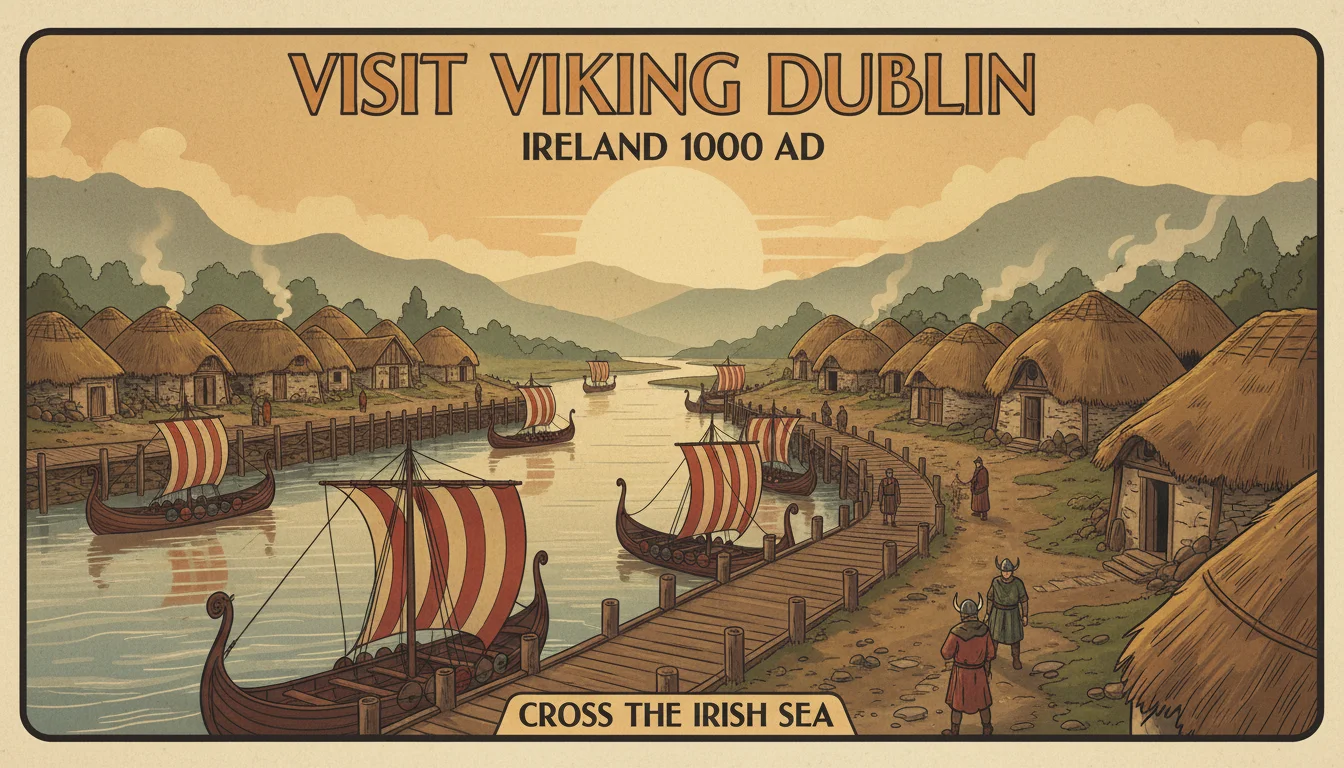
You step off a longship onto a wooden dock slick with fish guts and rain. The air hits you first - salt, smoke, wet wool, and something deeply organic rising from the streets. Welcome to Dyflinn, or as the Irish call it, Dubh Linn. The "Black Pool." It earned the name.
By 1000 AD, Viking Dublin is no longer a raiding camp. It is a thriving Norse-Irish trading city of roughly 4,000 to 5,000 people, crammed inside a wooden palisade along the south bank of the River Liffey. The Vikings who settled here have been around for over 150 years - they have Irish wives, Irish enemies, and Irish trading partners, sometimes all three in the same family.
What to Wear
Leave the horned helmet at home. That never happened. Real Norse Dubliners dress in layered wool tunics dyed with plant-based colors - rust red, mustard yellow, deep blue if you have money. Over that goes a heavy wool cloak pinned at the shoulder with a brooch. The fancier the brooch, the more important you are. If you show up without one, people will assume you are a thrall (slave), and that is a problem you do not want.
Footwear matters. Dublin's streets are not paved - they are layers of compacted wattle (woven branches), wood planks, animal bones, and organic waste laid over mud. Ankle-high leather boots with a single-piece sole are standard. The cobblers of Dublin are actually excellent, and archaeologists have found thousands of their shoes preserved in the waterlogged ground.
Women wear long linen underdresses with a wool overdress fastened with paired oval brooches at the shoulders. Between the brooches hangs a string of beads - amber from the Baltic, glass from the Rhine, jet from England. Your bead collection is your resume.
Where to Stay
There are no inns. Hospitality in Norse Dublin works on social obligation. If you arrive as a trader, head to the merchant quarter near the waterfront and find a householder willing to host you in exchange for news and a share of your goods. Norse society takes guest-right seriously - your host feeds you and protects you, and in return you do not steal from them or insult their family. Breaking guest-right is one of the few things that genuinely shocks people here.
Houses are rectangular, about 8 meters long, built from post-and-wattle walls packed with mud and straw. The roof is thatched. Inside there is a central hearth, raised sleeping platforms along the walls, and very little privacy. You will sleep on straw with a wool blanket, surrounded by your host's family, their dogs, and possibly a goat. The smoke from the hearth has nowhere to go except a hole in the roof, so everything you own will smell like peat for weeks.
What to Eat
Dublin's cuisine is hearty and monotonous. Expect porridge (oats or barley) in the morning. The main meal comes in the late afternoon: stewed meat (usually beef, mutton, or pork), root vegetables, bread made from coarse barley flour, and butter. Lots of butter. The Norse-Irish are obsessed with butter. They bury it in bogs to preserve and age it - bog butter is a delicacy, and yes, it tastes exactly like you think thousand-year-old swamp butter would taste.
Fish is everywhere. Dublin sits at the mouth of the Liffey, and the Norse are expert fishermen. Herring, cod, and salmon appear at nearly every meal, smoked, dried, or boiled. Shellfish - oysters, mussels, cockles - are cheap food for the poor and snack food for everyone else.
Mead (fermented honey) is the prestige drink, but ale made from barley is what people actually consume daily. The water is not safe, so everyone drinks ale, including children. It is weak ale, but still - it explains a lot about Viking decision-making.
Customs and Social Rules
Dublin in 1000 AD operates under a blend of Norse law and Irish influence. The city is ruled by a Norse king, currently Sitric Silkenbeard, who is simultaneously allied with and fighting against various Irish kings. Do not try to understand the political alliances. Nobody fully understands them.
The Thing: Major disputes are settled at the Thing - an open-air assembly where free men argue their cases. It is part court, part parliament, part public entertainment. Attendance is expected. If someone accuses you of something and you do not show up, you lose by default.
Slavery: About 10-15% of Dublin's population are thralls (slaves), many of them captured Irish. Dublin is one of the largest slave-trading ports in Northern Europe. This is deeply uncomfortable to witness, and there is nothing you can do about it. Be aware that if you have no visible social connections, you could be mistaken for an escaped thrall.
Religion: Dublin is in the middle of converting to Christianity. Sitric Silkenbeard will soon commission Christ Church Cathedral on the same hill where the Norse settlement stands. But the conversion is messy - people wear Thor's hammer pendants and Christian crosses simultaneously, hedge their bets with both traditions, and see no contradiction. Do not start theological arguments.
Dangers
Disease: Sanitation is exactly what you would expect from 5,000 people packed inside wooden walls with no sewage system. Dysentery and parasitic infections are endemic. Do not drink the water. Stick to ale.
Violence: Dublin is safer than the countryside, but fights break out regularly, especially at feasts and trading disputes. Everyone carries a knife. Many carry a seax (a large single-edged blade). If someone challenges you, do not laugh it off - honor culture means they will follow through.
The Irish: The relationship between Dublin's Norse population and the surrounding Irish kingdoms is complicated. Trade happens daily, intermarriage is common, but raids and cattle-theft go both ways. If you wander outside the city walls without escort, you may encounter people who do not distinguish between "Norse trader" and "Norse raider."
Fire: The entire city is made of wood, wattle, and thatch. Fires are catastrophic and semi-regular. Know where the nearest city gate is at all times.
Must-See
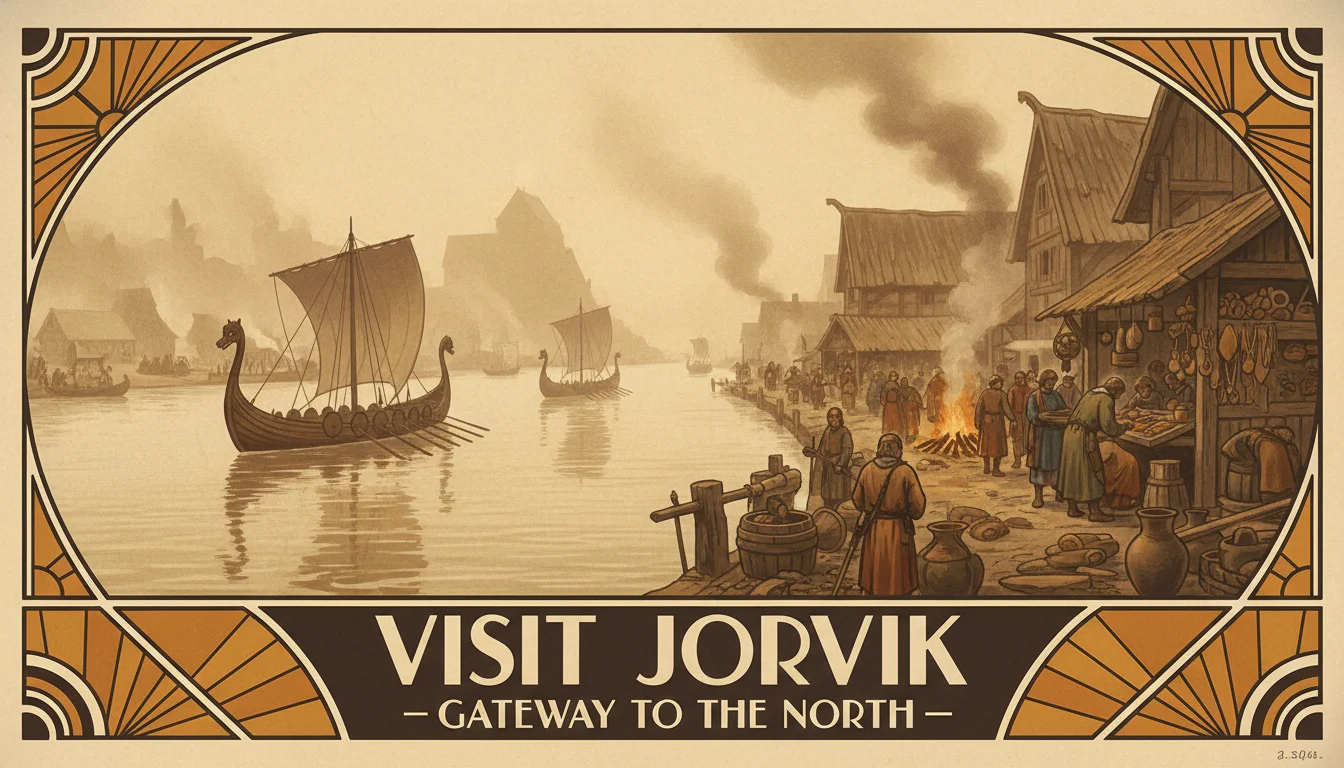
The Waterfront: Dublin's docks are the city's beating heart. On any given day you will see longships from Norway, trading vessels from Iceland, merchant craft from Chester and Bristol, and hide-covered currachs from up the Irish coast. The goods being unloaded tell the story of the Viking world - walrus ivory from Greenland, silk from Byzantium (via several middlemen), silver from the Islamic world, amber from the Baltic, wine from Francia.
The Metalworkers' Quarter: Dublin's craftsmen are superb. Silversmiths, bronze-casters, and bone-carvers work in open-fronted workshops near the waterfront. The quality of Dublin-made jewelry rivals anything in Scandinavia. If you want a souvenir, commission a silver arm-ring - it doubles as portable currency.
Wood Quay: The area along the river where much of daily commerce happens. Fishmongers, leather workers, comb-makers (combs are essential - the Norse are surprisingly vain about their hair), and food vendors crowd the muddy lanes. The smell is extraordinary.
Sitric's Hall: The king's hall on the high ground overlooking the river. You will not get inside unless you are someone important, but the exterior and the activity around it give you a sense of Norse-Irish power politics in action.
Survival Tips
- Learn three phrases in Old Norse: "Ek heiti..." (my name is), "Hvar er mungat?" (where is the ale?), and "Ek em kaupmadr" (I am a merchant). That last one keeps you out of most trouble.
- Carry silver. Dublin runs on a weight-based silver economy - coins, hack-silver (chopped-up jewelry), and ingots all work. Everyone carries a small scale.
- Keep your shoes dry. Impossible, but try. Foot rot is a real problem on Dublin's perpetually soggy streets.
- Compliment your host's mead, even if it tastes like fermented dishwater.
- If you hear church bells AND war horns on the same morning, the Battle of Clontarf is about to happen (1014). Leave immediately. Head south. Do not look back.
Viking Dublin is not glamorous. It is muddy, smoky, crowded, and smells like a fish market built on top of a barnyard. But it is also one of the great crossroads of the medieval world - a place where Norse, Irish, English, Frankish, and even Byzantine cultures collide in a chaotic, creative mess. For a city that started as a raiding camp, it turned out remarkably well.
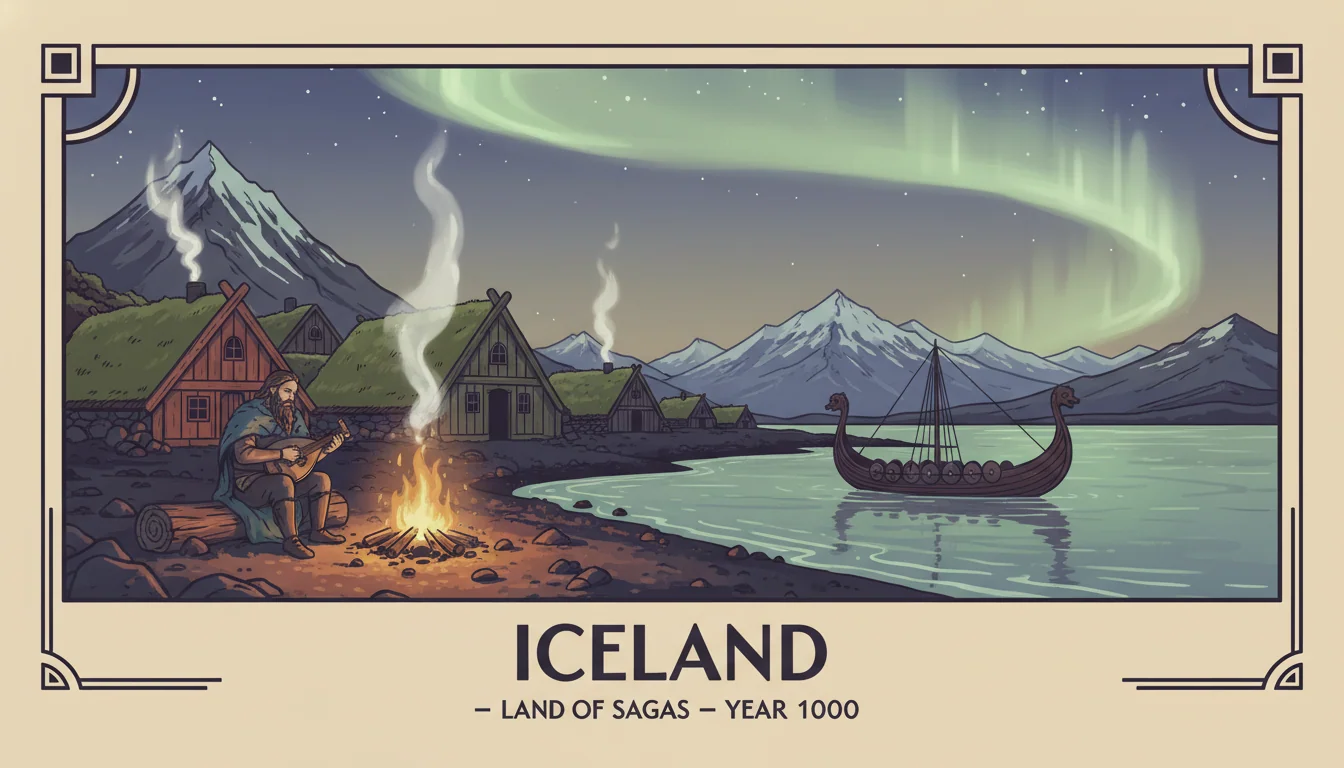
Just watch where you step. If the Norse world beyond Dublin interests you, our guide to Viking Scandinavia in 900 AD takes you to the source, and the guide to Norse Iceland in 1000 shows where many of the merchants you'll meet on the Dublin docks came from.

Need Advice from Someone Who Lived There?
Get firsthand accounts from people who actually lived through these moments in history.
Ask Them YourselfJoin the HistorIQly Club
Get smarter about the past.
Weekly stories, deep dives, and exclusive content straight to your inbox.