The Voynich Manuscript: 600 Years of Unbreakable Code
The Voynich Manuscript - a 15th-century book in an unknown script - has defeated every codebreaker, linguist, and AI system for over 600 years. Its meaning remains entirely unknown.
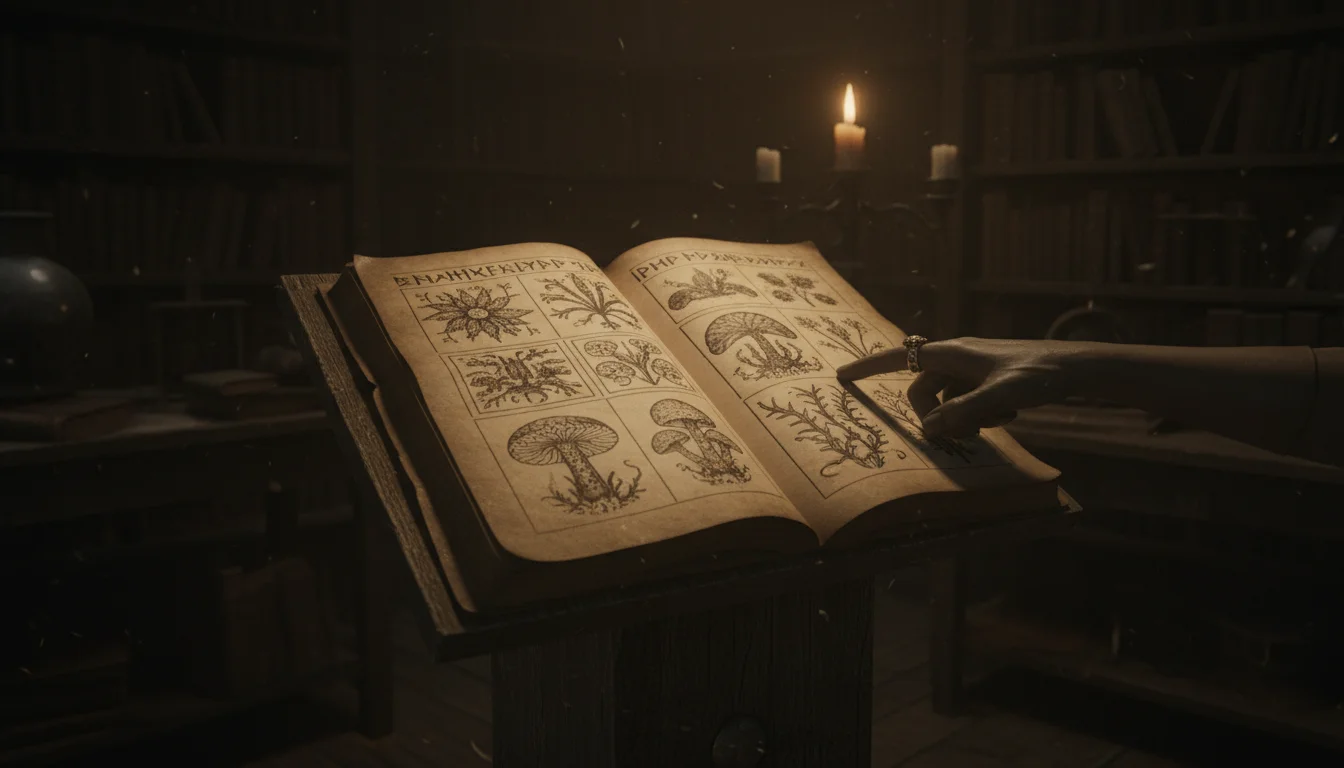
It sits behind glass at Yale University's Beinecke Rare Book Library - 240 pages of vellum covered in an elegant, flowing script that no human has ever been able to read. The illustrations are stranger still: plants that don't exist in nature, astronomical diagrams that match no known system, and naked women bathing in networks of green tubes connected to mysterious organs.
The Voynich Manuscript has been called the most mysterious book in the world. And after six centuries, that title remains unchallenged.
Discovery and Dating
The manuscript takes its name from Wilfrid Voynich, a Polish-Lithuanian book dealer who purchased it in 1912 from a Jesuit college near Rome. Voynich claimed he found a letter inside dating the book's known history to 1665 or 1666, when it was sent to the Jesuit scholar Athanasius Kircher in Rome.
But the book itself is far older. In 2009, radiocarbon dating of the vellum placed its creation between 1404 and 1438, firmly in the early 15th century. The inks and paints are consistent with this period. Whatever the Voynich Manuscript is, it was written during the age of Chaucer and the early Renaissance.
The Unreadable Script
The text is written left to right in a script containing roughly 20 to 30 distinct characters. The writing flows naturally, without corrections or hesitations, suggesting the author was fluent in whatever system they were using. Statistical analysis reveals patterns consistent with natural language: certain characters appear more frequently, words follow predictable length distributions, and there are patterns resembling prefixes and suffixes.
Yet it matches no known language. Not Latin, not Arabic, not Chinese, not any European vernacular of the period. The word structure follows Zipf's law (a statistical pattern found in all natural languages), which would be extraordinarily difficult to fake, especially in the 15th century.
Some words repeat with suspicious frequency. Others appear only in specific sections of the manuscript. The text shows almost no single-letter or two-letter words, which is unusual for most European languages.
The Impossible Illustrations
The manuscript is divided into sections, each with distinct illustration styles.
The botanical section contains drawings of over 100 plants. Roughly a dozen can be tentatively matched to real species. The rest depict plants that have never existed - roots that twist into faces, leaves arranged in impossible spirals, flowers with geometric precision that nature never produces.
The astronomical section shows circular diagrams with stars, suns, and moons. Some pages fold out into elaborate charts. None correspond to any known astronomical system from any culture.
The biological section is the strangest. Small naked women (called "nymphs" by researchers) bathe in pools connected by elaborate plumbing systems. Some appear to be floating in green liquid. The imagery has no parallel in medieval art.
The pharmaceutical section depicts what appear to be jars and containers alongside plant roots and leaves, suggesting herbal medicine. But the plants remain unidentifiable.
Who Failed to Crack It
The roster of defeated codebreakers reads like a hall of fame.
William Friedman, the man who broke Japan's PURPLE cipher in World War II and is considered the father of modern American cryptanalysis, spent decades on the manuscript. He concluded it was an early attempt at constructing an artificial language but could never prove it.
The British codebreakers at Bletchley Park, fresh from cracking Enigma, took their shot. They failed.
The NSA reportedly studied it during the Cold War. No results were ever published.
In the 21st century, researchers have aimed neural networks, machine learning algorithms, and sophisticated statistical tools at the text. Every approach has produced a different "solution," none reproducible or verifiable. In 2018, a Canadian team claimed they'd identified the language as Hebrew. A year later, a British researcher declared it was proto-Romance. Neither finding survived peer review.
The Leading Theories
A genuine unknown language or cipher. The statistical properties strongly suggest real linguistic content. Some researchers believe it may be written in an otherwise unrecorded natural language using a unique script, perhaps a language spoken by a small community that left no other written records.
An elaborate hoax. Skeptics point to the unidentifiable plants and impossible biology. Could someone have created 240 pages of gibberish with fake illustrations? In 2003, computer scientist Gordon Rugg demonstrated that a Cardan grille (a 16th-century encryption tool) could generate text with similar statistical properties. But his method couldn't reproduce all the manuscript's linguistic features.
Constructed language. Friedman's theory. Someone in the 15th century invented a language from scratch, complete with grammar and vocabulary, then wrote an entire book in it. This would make the Voynich Manuscript the earliest known constructed language by several centuries.
Glossolalia or visionary writing. Perhaps the author was writing in a trance state or recording what they believed to be divinely inspired text. This would explain the fluency of the writing alongside its incomprehensibility.
The Roger Bacon Connection
Early researchers, including Voynich himself, attributed the manuscript to Roger Bacon, the 13th-century English friar and polymath. The radiocarbon dating ruled this out conclusively, since the vellum dates to at least a century after Bacon's death.
A more intriguing candidate is the book's possible connection to Emperor Rudolf II of Prague, who allegedly paid 600 gold ducats for it in the late 16th century (roughly $85,000 in modern value). Rudolf was famously obsessed with the occult, alchemy, and mysteries. If the provenance chain is accurate, someone convinced a Holy Roman Emperor that this book contained genuine secrets worth a fortune.
What Makes It So Difficult
The Voynich Manuscript defies categorization. If it's a cipher, it uses a system more sophisticated than anything else produced in its era. If it's a language, it's one that left no other trace. If it's a hoax, it's one that perfectly mimics statistical properties of natural language centuries before anyone understood those properties existed.
The manuscript contains no obvious errors, no crossed-out words, no visible corrections. Whoever wrote it did so with confidence and purpose. The illustrations, however bizarre, are detailed and consistent within their own logic.
And it remains, after six centuries, completely unread.
The Mystery Today
The Beinecke Library digitized the entire manuscript in 2004, making it freely available online. This has spawned a global community of amateur codebreakers, linguists, and enthusiasts who continue to propose solutions, none yet accepted by the academic community.
Every few years, a new claim of decipherment makes headlines. Every few years, it collapses under scrutiny.
The Voynich Manuscript asks a simple question that no one can answer: what does it say? And until someone can read even a single verified word, the most mysterious book in history will keep its secrets.
Perhaps that's exactly what its author intended.
For more historical mysteries that resist every explanation, see our investigations into the Dyatlov Pass incident and the Flannan Isles lighthouse mystery.

Want to Interrogate the Suspects?
Chat with historical figures and uncover the truth behind history's greatest mysteries.
Start Your InvestigationJoin the HistorIQly Club
Get smarter about the past.
Weekly stories, deep dives, and exclusive content straight to your inbox.