The Final Hours of Constantinople
An hour-by-hour account of May 29, 1453, when Ottoman forces breached the walls and the last Byzantine emperor vanished into the fighting.
Read Wikipedia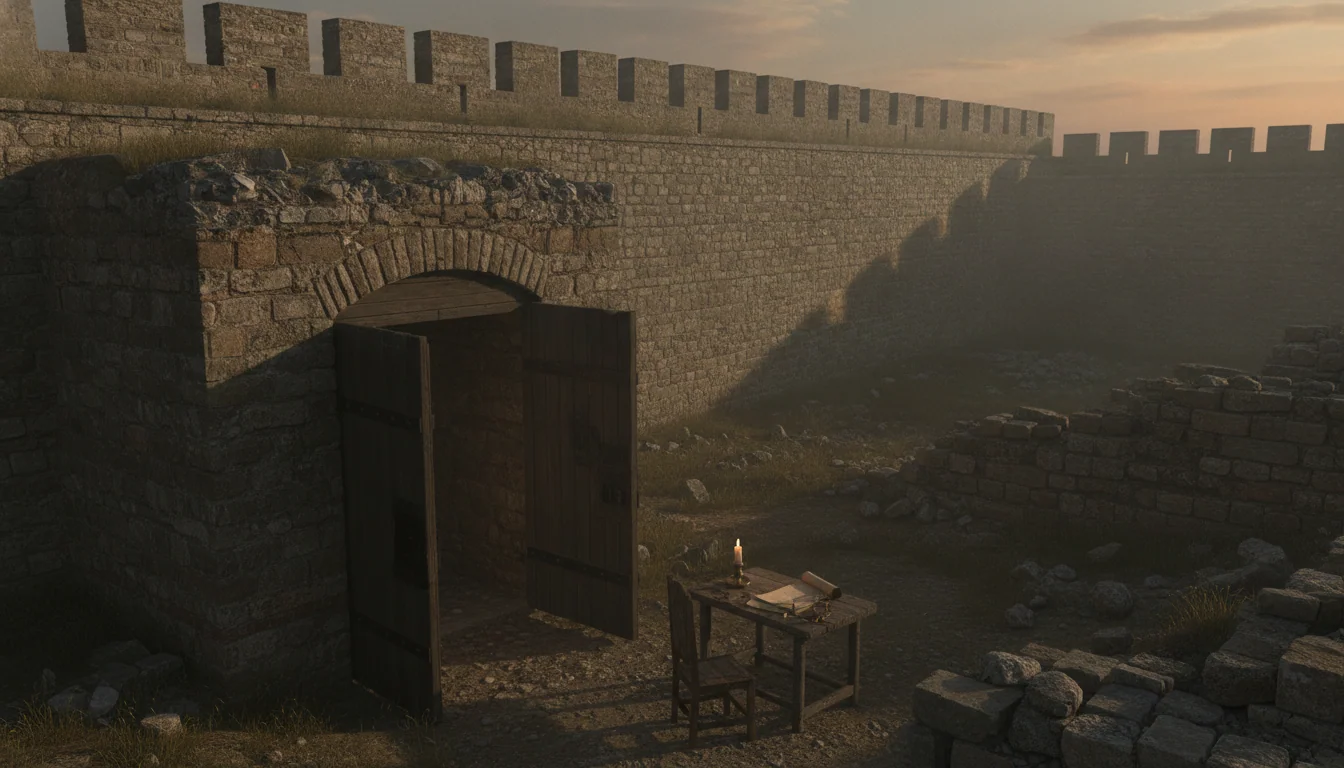
By the last week of May 1453, the city that called itself the New Rome had been under siege for nearly two months, and its people had run out of reasons to hope. Constantine XI Palaiologos, the last emperor of a state that had once stretched from Spain to Persia, commanded a garrison of perhaps seven or eight thousand men behind walls built eleven centuries earlier, facing an Ottoman army many times that size. What follows is the reconstructed sequence of the city's final day, drawn from the handful of eyewitnesses and near-contemporary chroniclers who survived to describe it.
The day before
On May 28, the fighting stopped. Sultan Mehmed II had ordered a day of rest and preparation for his troops after weeks of bombardment from his siege guns, including a massive cannon cast by the Hungarian engineer Orban that had spent weeks grinding at the Theodosian Walls. Inside the city, the silence was its own kind of dread. Constantine XI led a solemn procession through the streets, carrying icons and relics along the walls in a final appeal for divine protection, a rite that mixed Orthodox devotion with plain, practical fear.
That evening, by the account of the Greek historian Doukas, an extraordinary service was held in the Hagia Sophia, the great cathedral that had stood at the heart of the city for nine hundred years. Latin and Greek clergy, who had spent years quarreling bitterly over church union, prayed together inside its walls for what would be the last time before the building's centuries as a church came to an end. Constantine XI attended, took communion, and reportedly asked forgiveness of his household and officials for any wrong he had done them. He then rode out to inspect the walls one final time before the assault everyone now expected.
The turning point
The point of no return had arrived earlier than that final night, though it was not obvious as a single moment. Through April, Ottoman engineers had battered the land walls near the Fifth Military Gate, in the Lycus valley section where the terrain dipped and the defenses were weakest. Byzantine and Genoese defenders under the Genoese commander Giovanni Giustiniani Longo had managed, again and again, to patch breaches with makeshift barricades of earth and timber, holding a line that by any ordinary military logic should already have failed.
What made the end unavoidable was the accumulation of small failures rather than one dramatic blow. A relief fleet the Byzantines had hoped for from Venice or the Papacy never arrived in time. An attempt in April to block the Golden Horn with a chain across its mouth held for weeks, until Mehmed had ships hauled overland on greased rollers to bypass it entirely, a feat that let Ottoman vessels threaten the sea walls as well as the land walls. By the war council Mehmed convened on May 26 and 27, in which he overruled advisers urging a negotiated withdrawal and instead committed to one final, decisive assault, the fate of the city had effectively been settled, even if the defenders inside did not yet know the date.
The final hours
The assault began in darkness, in the early hours of May 29, 1453, with Ottoman trumpets, drums, and cymbals sounding along the entire line of walls at once, according to the Venetian eyewitness Nicolo Barbaro, who kept a diary of the siege from a ship in the harbor. Sometime around 1:30 in the morning, the first wave struck: irregular troops, the bashi-bazouks, thrown at the walls in a wave meant to exhaust the defenders and draw out their reserves before the real assault came.
A second wave of Anatolian regulars followed within an hour or two, pressing hardest at the damaged section near the Fifth Military Gate, where a portion of the outer wall had collapsed under the bombardment. The defenders held, but exhaustion was setting in after weeks of nearly continuous alarm.
The third wave, in the deeper hours before dawn, was the Sultan's elite Janissary corps, fresh troops thrown into the weakened point with a discipline the earlier waves had lacked. It was during this phase, sometime before first light, that Giustiniani Longo was struck and severely wounded, by most accounts by a crossbow bolt or handgun shot that pierced his armor. He was carried from the wall for treatment, and his Genoese contingent's withdrawal, meant to be temporary, spread panic along a line that had been holding by will as much as by numbers.
At roughly the same hour, according to the chronicler Doukas, a small postern gate in the Blachernae section of the walls known as the Kerkoporta was found open or unbarred, apparently forgotten in the chaos of the retreat, and Ottoman soldiers slipped through it and began raising their standard on a nearby tower. The exact sequence, whether the gate was carelessly left open, deliberately breached, or simply overwhelmed alongside the main collapse near the Fifth Military Gate, remains disputed among historians, and some later scholars have questioned how much weight the single small gate really carried against a wall already failing elsewhere. What is agreed is that within a short span, defenders along multiple points of the wall saw Ottoman banners rising behind them and understood that the line had been turned.
The end
Constantine XI, informed that the walls had been breached in more than one place, reportedly cast aside the imperial insignia that marked him as emperor, so as not to be recognized and captured alive, and rode with a small group of companions into the fighting near the breach. This account comes chiefly from later chroniclers, including the Ottoman-sympathetic historian Kritovoulos and the Byzantine courtier George Sphrantzes, writing after the fact rather than as direct witnesses to the emperor's last moments, and the precise words attributed to him in some retellings should be treated as later elaboration rather than verified quotation.
No reliable account describes his death directly. Doukas records that a body was later found among the slain near the gate, identifiable, if at all, only by the purple-dyed boots or slippers that marked imperial rank, since the corpse had been stripped in the chaos. Whether this was truly Constantine XI has never been established with certainty, and no tomb or relic tradition commands general scholarly acceptance. The last Roman emperor, in the line that traced itself back to Constantine the Great more than eleven centuries earlier, simply disappeared into the fighting on the morning of May 29, 1453.
By full daylight, organized resistance had collapsed. Ottoman troops poured through the breaches and gates, and the city that had withstood sieges for over a thousand years fell before midday. Mehmed II entered the city that afternoon and rode to the Hagia Sophia, where he ordered its conversion from church to mosque, a transformation that would define the building for centuries afterward.
Aftermath
What is known of that night comes from a small circle of sources: Barbaro's diary, written by a Venetian who watched much of the assault from a ship in the harbor; Doukas and Sphrantzes, Byzantine-side chroniclers writing in the years just after; Kritovoulos, an Ottoman Greek historian who wrote a history favorable to Mehmed II; and the Genoese cleric Leonard of Chios, who survived the fall and wrote an account soon after reaching safety. These accounts agree on the broad shape of events but differ on details of timing, on how the Kerkoporta came to be open, and above all on the emperor's final moments, which no source claims to have witnessed directly.
Tradition holds a great deal that the sources do not confirm: that Constantine XI's last words urged his men to die for their faith and their city, that the Kerkoporta was betrayed rather than simply overlooked, that his body was recovered and quietly buried by the victors out of respect for a fallen sovereign. None of this can be verified against contemporary testimony, and historians today generally present the emperor's end as an absence rather than a scene, a disappearance rather than a death that anyone recorded. What is certain is the date, the sequence of the assault's waves, and the outcome: by the afternoon of May 29, 1453, the Byzantine Empire, the last continuous thread running back to ancient Rome, had ended.
Quick Answers
Common questions about this topic
What happened to Constantine XI's body?
No contemporary source records a certain identification. Chroniclers such as Doukas describe a body found among the dead near the walls, stripped and unrecognizable except for imperial purple boots or slippers, but the emperor's remains were never conclusively confirmed, and no tomb has ever been verified as his.
How did the Ottomans get into Constantinople?
The main breach came near the Fifth Military Gate after weeks of cannon bombardment and a massed night assault on May 29, 1453. A smaller postern gate called the Kerkoporta was also found open or unbarred during the final assault, and Ottoman troops entered through it, though the exact sequence and how deliberate the opening was remain disputed among historians.
How long did the siege of Constantinople last?
The Ottoman siege began on April 6, 1453, and the city fell on May 29, 1453, a span of roughly fifty-three days.
Who was the last Byzantine emperor?
Constantine XI Palaiologos, who ruled from 1449 until his death during the fall of the city on May 29, 1453, ending an imperial line that traced itself back to Constantine the Great.

Ask Them About the End
Chat with historical figures about their final days, in their own words.
Create your free account →No card required. Some figures and features require a paid plan.
Join the HistorIQly Club
Get smarter about the past.
Weekly stories, deep dives, and exclusive content straight to your inbox.