The Final Hours of Cleopatra
Antony was already dead, Octavian's legions held Alexandria, and Egypt's last pharaoh had days left. What the record says really happened.
Read Wikipedia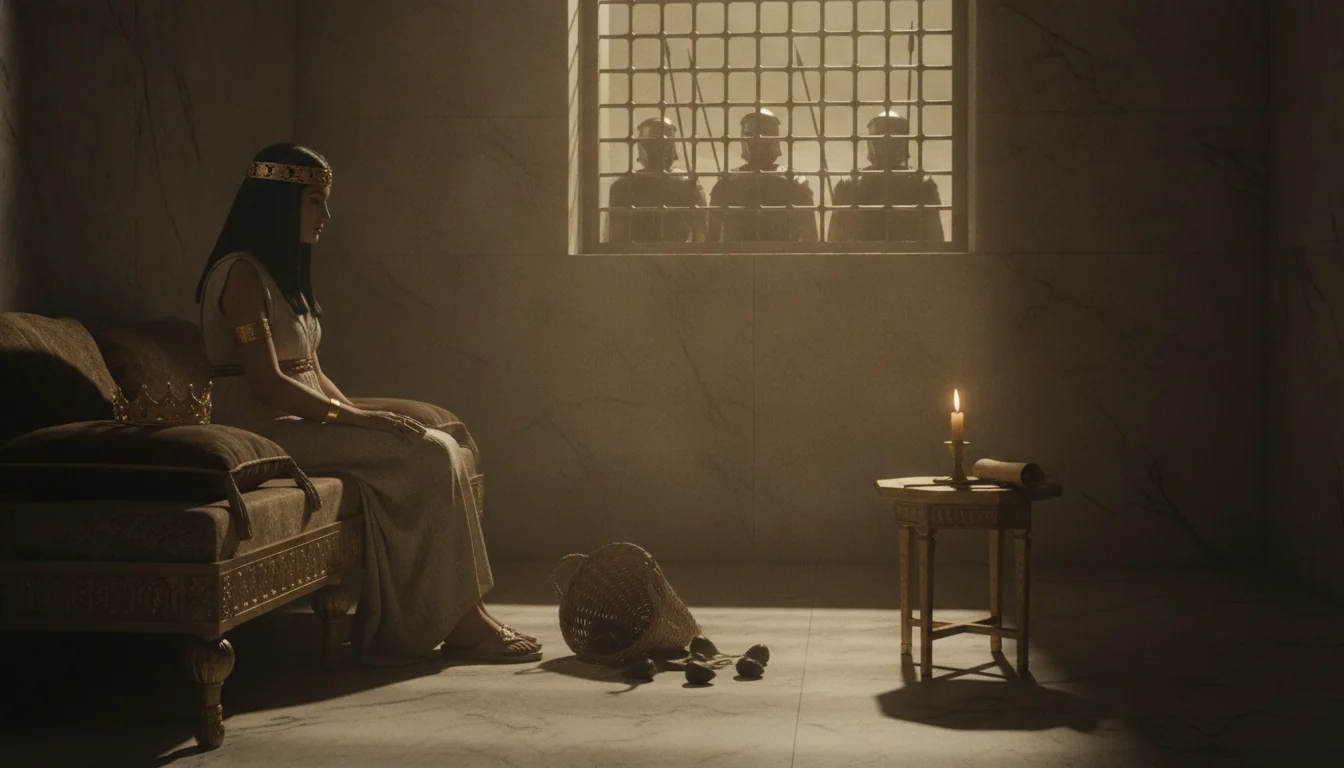
By the summer of 30 BC, the queen of Egypt had already lost the war. What remained was the far narrower question of how she would lose everything else, and on what terms.
Cleopatra VII had ruled Egypt for about two decades, the last independent pharaoh of a dynasty descended from one of Alexander the Great's own generals. She had allied herself first with Julius Caesar and then with Mark Antony, and with Antony she had gambled the kingdom on a war against Octavian, Caesar's adopted heir. At the Battle of Actium, fought off the Greek coast in September of 31 BC, that gamble collapsed. Octavian's fleet, commanded by his admiral Agrippa, broke Antony and Cleopatra's navy. Both fled back to Alexandria, arriving separately, to wait for an invasion neither could any longer prevent.
A city already rehearsing its own ending
The months between Actium and the final siege were, by the account that survives, strange and theatrical. Plutarch records that Antony and Cleopatra dissolved the drinking society they had once called "The Inimitable Livers" and refounded it under a grimmer name, sometimes rendered as "The Order of the Inseparable in Death," a circle of friends who continued to feast nightly while quietly preparing for the end. Cleopatra, according to the same account, spent part of this period testing poisons on condemned prisoners, searching for one that killed without visible pain or disfigurement, and concluded that the bite of a particular snake produced something close to a peaceful sleep rather than a convulsive death.
Whether that detail is precise or embellished by a biographer writing generations later, it captures the mood correctly. Nobody in Alexandria that winter believed the war was still winnable. The only question left open was how the ending would be managed, and by whom.
When the end became unavoidable
The turning point came in the summer of 30 BC, when Octavian's army crossed into Egypt from the east and took the border fortress of Pelusium. Some ancient writers accused Cleopatra of having the fortress handed over deliberately to curry favor with Octavian, a charge she denied and one modern historians treat with real skepticism, since it conveniently blamed a woman for a defeat that had many other causes. What is not disputed is that Pelusium fell quickly, and that Octavian's legions then advanced on Alexandria itself with little to stop them.
Antony still commanded loyal troops and made a final stand outside the city, reportedly winning a small cavalry skirmish that briefly lifted his spirits. It did not last. Days later his fleet sailed out to meet Octavian's ships and, instead of fighting, saluted the enemy and went over to them. His remaining cavalry deserted at almost the same moment. Antony returned to the palace convinced, correctly, that Cleopatra had betrayed him, a belief she may never have gotten the chance to deny.
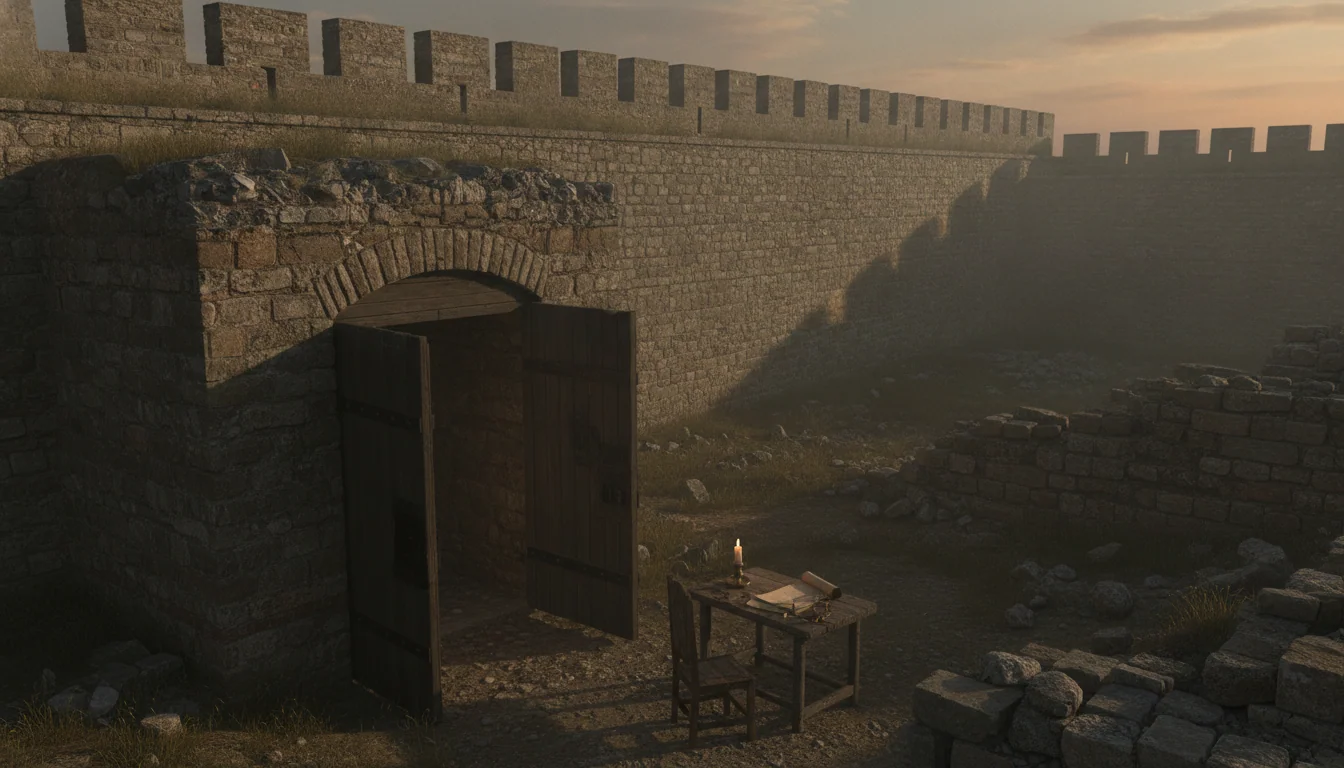
Cleopatra, for her part, withdrew into a mausoleum she had already built near the Temple of Isis, a stone structure stocked with the crown treasury: gold, silver, emeralds, ebony, ivory, and enough dry timber to burn the entire fortune rather than let it be paraded through Rome. She barred the doors from inside and, either as a genuine act of despair or as a calculated move to draw Antony to her, sent word that she had already killed herself.
Antony's death
Antony believed the message. According to Plutarch, he asked his attendant Eros to kill him rather than let him fall into Octavian's hands. Eros drew his sword, turned it on himself instead, and died at his master's feet. Antony then fell on his own blade, but the wound was not immediately fatal. While he lay bleeding, a second messenger arrived with the truth: Cleopatra was alive, still barricaded in her tomb.
Antony asked to be carried to her. Because the doors could not safely be opened, servants hauled him up to a window using ropes while Cleopatra and her two remaining attendants, Iras and Charmion, pulled from inside. He died in her arms shortly afterward, reportedly on the first of August, 30 BC, still telling her, by Plutarch's account, not to mourn his final defeat but to remember the honors of his life instead.
Captive in her own tomb
Octavian's officers moved quickly to prevent Cleopatra from following Antony. An officer named Proculeius was sent to negotiate with her through the barred door, and while he kept her talking, a small party scaled the outside wall and entered through the same window Antony's body had been hauled through. They reached Cleopatra before she could stab herself with a dagger she had reportedly kept ready at her side.
She was allowed to bury Antony with full honors, and Octavian himself met with her afterward, by most accounts treating her with outward courtesy while privately intending to bring her to Rome as the central trophy of his triumph. When Cleopatra tried to starve herself in the days that followed, Octavian's response was to threaten her surviving children, and she abandoned the attempt. Then, according to Plutarch, a young Roman named Cornelius Dolabella, who had grown sympathetic to her, quietly warned her that Octavian planned to send her and her children to Rome within days, to be marched through the streets in his triumphal procession.
That warning is generally treated as the moment Cleopatra decided the manner and timing of her death would be hers to choose, if nothing else was left to her.
Cleopatra's Last Day
On what tradition holds was her final morning, Cleopatra asked to be taken once more to Antony's tomb, where she reportedly wept and asked to be buried beside him. She returned to her rooms, bathed, and ate a final meal prepared with unusual care. A basket of figs was delivered that day by a local peasant and passed the guards' inspection without incident.
Not long after, she sent Octavian a written petition, asking again to be buried with Antony. Realizing what the request meant, his guards ran to her chamber and broke in. They found Cleopatra already dead, laid out on a golden couch in full royal dress and crown, with Iras dead at her feet. Charmion, still alive but failing, was adjusting the diadem on her mistress's head when the soldiers arrived. Asked angrily whether this was well done, Charmion reportedly answered that it was, and fitting for the descendant of so many kings, before she too fell dead beside the body.
Plutarch records two small marks on Cleopatra's arm and says a servant later claimed to have noticed slither-marks near a window, but he is careful to add that no one present actually witnessed a snake bite her. Octavian's men reportedly sent for the Psylli, snake charmers believed capable of drawing out venom, but by then there was nothing left to save. Cleopatra was 39 years old.
Aftermath, and what we may never pin down
The asp story became the accepted version almost immediately, not least because it suited Octavian's own propaganda. A queen who chose a swift, regal death by a creature long associated with Egyptian royalty denied him the humiliation of having failed to keep her alive for his triumph, while still letting him claim total victory over Egypt. He reportedly carried a wax effigy of Cleopatra with a snake at her arm in his triumphal procession in Rome anyway, ensuring the image outlived the argument over the facts.
Modern historians remain unconvinced that a single snake, smuggled under fruit and leaves, could plausibly have killed Cleopatra and left enough venom to also kill Iras and Charmion, without repeated and clearly witnessed bites. Cobra venom, moreover, rarely produces the calm, quick death ancient writers described. Some researchers favor a competing theory instead: a prepared mixture, perhaps combining hemlock, aconite, and opium, applied through a small wound, with the fig basket serving as cover for the ruse rather than the actual weapon. No ancient source is fully reliable on this point, including Plutarch himself, and even the Roman historian Cassius Dio, writing later still, treated the manner of death as genuinely uncertain.
The account survives at all mainly because Plutarch, writing more than a century afterward, had access to the report of Olympos, Cleopatra's own physician, whose original memoir has not survived independently. Everything modern readers know passes through that one filtered retelling, which is why the "final hours" of one of antiquity's most documented rulers still contain gaps no historian has closed.
Cleopatra's children fared unevenly in what followed. Caesarion, her son by Julius Caesar and the last claimant with a plausible tie to Caesar's own bloodline, was captured and executed on Octavian's orders soon after his mother's death. Her three children by Antony survived and were raised in Rome by Antony's Roman wife, Octavia; one of them, Cleopatra Selene, later became a queen in her own right in North Africa. And the tomb Cleopatra died trying to reach, the one she shares with Antony by her own final request, has never been found. Searches continue at sites west of Alexandria, including the temple complex of Taposiris Magna, but much of the ancient city's palace quarter has long since subsided beneath the harbor. The queen who spent her last days trying to control every detail of her own ending is, in that one respect, still getting her wish.
For more on the two people at the center of these final hours, see if Cleopatra lived today and if Mark Antony lived today.
Quick Answers
Common questions about this topic
What were Cleopatra's last words?
No source records a final statement from Cleopatra herself. The closest thing on record is a line from her maid Charmion, who was found dying beside her body. Asked by a Roman soldier whether this was well done, Charmion reportedly answered that it was, and fitting for the descendant of so many kings, before she too collapsed.
How did Cleopatra actually die?
The tradition, recorded by Plutarch, holds that a poisonous snake, usually described as an asp, was smuggled to her hidden in a basket of figs. No attendant reported actually seeing a bite happen, and ancient writers already disagreed on the details, which is why many historians treat a prepared poison as at least as likely.
How do we know what happened in Cleopatra's final hours?
The main account comes from the Greek biographer Plutarch, writing more than a century after her death, who drew partly on the record of her personal physician, Olympos. His book has not survived on its own, so almost everything is filtered through a later retelling rather than a direct eyewitness source.
Has Cleopatra's tomb ever been found?
No. She was reportedly buried alongside Mark Antony in a mausoleum she had built near Alexandria, but the site has never been definitively located. Parts of ancient Alexandria's palace quarter sank beneath the harbor through earthquakes and subsidence, and searches at other sites, including the temple complex of Taposiris Magna, have not produced a confirmed find.

Ask Them About the End
Chat with historical figures about their final days, in their own words.
Create your free account →No card required. Some figures and features require a paid plan.
Join the HistorIQly Club
Get smarter about the past.
Weekly stories, deep dives, and exclusive content straight to your inbox.