Fly Me to the Moon vs. History: How Real Is the Apollo Thriller?
Fly Me to the Moon's historical accuracy holds up for the Apollo 11 backdrop, but the film's central conspiracy plot is entirely invented and has no basis in history.
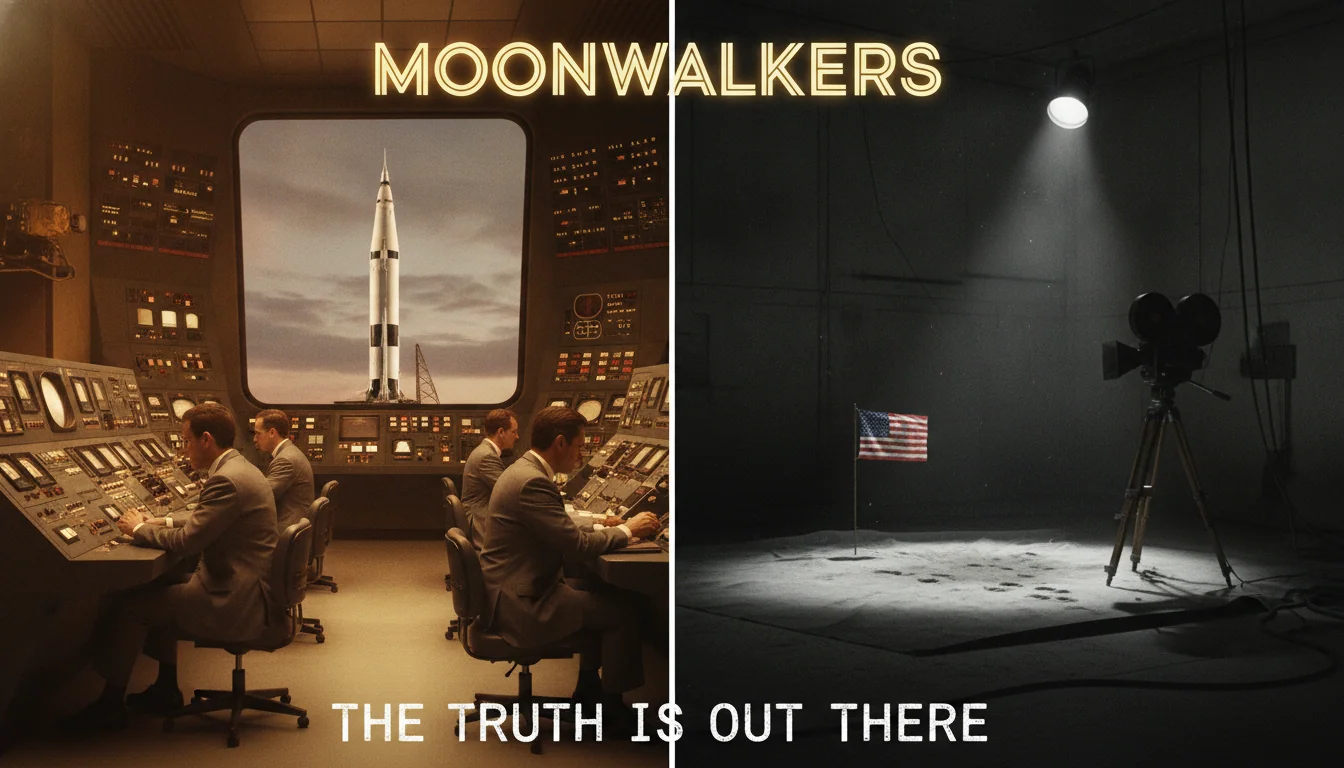
Greg Berlanti's 2024 film uses the most consequential space mission in history as the backdrop for a romantic comedy, which is either a bold creative choice or a peculiar misuse of genuine drama, depending on your tolerance for the premise. Scarlett Johansson plays Kelly Jones, a marketing executive with a murky past hired to sell Apollo 11 to a skeptical American public. Channing Tatum plays Cole Davis, the launch director who falls for her. Woody Harrelson plays a shadowy government operative who, midway through the film, instructs Kelly to film a fake backup moon landing, just in case the real one fails.
The mission is real. The characters are not. And the central conceit rests on a conspiracy theory with no historical foundation.
So how accurately does Fly Me to the Moon handle the history surrounding July 20, 1969?
What Hollywood Got RIGHT
The Apollo 11 mission timeline and crew
The film anchors itself to a real sequence of events, and it does not get the basics wrong. Apollo 11 launched from Kennedy Space Center on July 16, 1969, on a Saturn V rocket. The crew was Commander Neil Armstrong, Lunar Module Pilot Buzz Aldrin, and Command Module Pilot Michael Collins. Armstrong and Aldrin descended in the lunar module Eagle to the Sea of Tranquility on July 20. Armstrong stepped onto the surface first. Collins remained in lunar orbit aboard the command module Columbia. The crew splashed down in the Pacific on July 24.
The film presents this correctly, incorporating archival footage and period-accurate imagery of the launch, mission control, and the landing itself. Viewers who paid attention in school will not find the film revising the fundamentals.
The public relations challenge was real
Kelly Jones exists as a character precisely because the film's screenwriters understood something accurate: NASA in 1969 was fighting for public support. The Apollo program was expensive, the country was fractured by Vietnam and civil rights, and the Soviet space program had scored enough firsts - Sputnik, Yuri Gagarin, the first spacewalk - to make American confidence in its space leadership anything but guaranteed.
The effort to sell the Apollo missions to the public through television coverage, press access, and carefully managed public appearances was a real and substantial undertaking. NASA's media strategy for Apollo 11 was sophisticated. CBS News anchor Walter Cronkite's extended live coverage became one of the defining media events of the era. An estimated 600 million people watched the landing worldwide, which represented a stunning fraction of the global population at the time. The film's premise that a professional marketer would have been involved in shaping that coverage is more grounded in reality than the rest of the plot suggests.
Nixon's disaster speech is a real document
The film references, accurately, that the Nixon White House prepared a contingency statement in the event that Armstrong and Aldrin could not be recovered from the lunar surface. That document, drafted by speechwriter William Safire, is real. It begins: "Fate has ordained that the men who went to the moon to explore in peace will stay on the moon to rest in peace." It was declassified decades after the mission and is now one of the more striking artifacts in American political history. The film's use of this detail is one of its most genuinely historical moments.
The Cape Canaveral atmosphere
The production design is careful. The film reproduces the look of Kennedy Space Center in 1969 with attention to period detail: the launch control center, the uniforms, the communication gear, the early computing equipment, the social dynamics of a workplace built around a single enormous technical objective. Veterans of the era who have spoken about the film have not complained significantly about the physical environment the film creates. The visual language of 1969 Cape Canaveral lands.
What Hollywood Got WRONG
The fake landing backup has no historical basis
The film's central drama is the instruction to film a backup fake moon landing for use if the mission fails, with a subplot involving Stanley Kubrick being tapped to direct it. This is not history. There is no credible documentation that NASA planned, filmed, or was instructed by any government authority to produce a fake landing. The Kubrick angle references a specific conspiracy theory - that Kubrick actually directed the real moon landing footage, staged on a set - which likewise has no evidentiary support.
The filmmakers clearly know the film is fantasy; the romantic comedy framing signals as much. But the conspiracy thread is presented with enough plot machinery that some viewers may leave uncertain which parts of the premise are invented. Treating the Kubrick moon-hoax theory as a story device, even ironically, lends it a kind of cinematic credibility it has not earned from the historical record.
Both lead characters are fictional
Kelly Jones and Cole Davis do not represent or loosely correspond to real people. They are invented for the film's romantic arc. This is not unusual for a historical drama with a fictional framework, and the film does not claim otherwise. But it does mean that any viewer looking to the film for insight into the actual human beings who ran the Apollo 11 program will not find it here. The real figures - flight director Gene Kranz, launch director Rocco Petrone, the engineers and technicians who actually ran the program - are background atmosphere rather than characters.
The NASA-government relationship is simplified
The film's government operative character, who instructs Kelly to prepare the fake backup, implies a Cold War paranoia so complete that Washington would essentially distrust NASA's ability to land on the moon even as the mission launched. The real relationship between the Nixon White House and NASA in 1969 was complicated, politically charged, and sometimes tense, but the specific dynamic the film constructs has no documented parallel. The actual pressure on NASA in 1969 was financial and competitive, not conspiratorial.
The romantic comedy structure works against the historical weight
Fly Me to the Moon chooses to treat the most significant achievement in the history of human exploration as the setting for a meet-cute. That is a creative decision, not a historical error. But it does mean the film cannot fully reckon with what the Apollo 11 mission actually meant: the years of effort, the astronauts who died in the Apollo 1 fire in 1967, the hundreds of thousands of engineers and workers whose careers bent toward this single objective. The film decorates itself with that history. It does not inhabit it.
Historical Accuracy Score: 6/10
Fly Me to the Moon handles the period detail and the factual frame of Apollo 11 better than a romantic comedy is typically required to. The timeline is right, the crew is right, the Nixon speech is right, and the marketing-and-public-pressure angle is grounded in reality.
What the film gets most right: the Apollo 11 mission specifics and the genuine public relations dimension of the space race.
What it gets most wrong: the invented conspiracy backbone, which has no historical basis and which amplifies, however playfully, a fabricated theory about one of the most documented events in the 20th century.
The bottom line is that the history of Apollo 11 is already more dramatic than any invented conspiracy plot. Armstrong, Aldrin, and Collins flew a mission that the engineers who built the Saturn V gave a roughly one-in-three chance of killing them. They went anyway. No fake backup required.
For other films that place fictional characters against real events with varying degrees of accuracy, see our analyses of Zero Dark Thirty and United 93.
Quick Answers
Common questions about this topic
Is Fly Me to the Moon based on a true story?
The historical setting is real: the 2024 film is set during the actual Apollo 11 moon landing mission of July 1969. However, the central characters - marketing consultant Kelly Jones and launch director Cole Davis - are entirely fictional, as is the film's core premise that NASA was instructed to film a fake backup moon landing for use if the mission failed.
Did NASA actually film a fake moon landing?
No. The premise that NASA filmed a fake landing as an insurance policy has no historical basis. The film's conspiracy subplot references the Stanley Kubrick moon-landing hoax theory, which is likewise unsupported by any credible evidence. The Apollo 11 mission was real, its footage is authentic, and no credible documentation supports the existence of a backup fake.
What does Fly Me to the Moon get right about Apollo 11?
The film accurately depicts the July 1969 timeline, the names and roles of Armstrong, Aldrin, and Collins, the Kennedy Space Center atmosphere, and the genuine public relations pressure NASA faced. President Nixon's prepared disaster speech is a real document. The film's period detail and launch logistics are well researched.
Who are the real people in Fly Me to the Moon?
Neil Armstrong, Buzz Aldrin, and Michael Collins are the real historical figures central to the actual Apollo 11 mission. They appear in the film through archival footage and brief dramatization. The lead characters - Kelly Jones, Cole Davis, and the government operative who hires Kelly - are all fictional.

Debate the Accuracy with the Real Figures
Ask the real people what Hollywood got wrong about their lives.
Chat with HistoryJoin the HistorIQly Club
Get smarter about the past.
Weekly stories, deep dives, and exclusive content straight to your inbox.