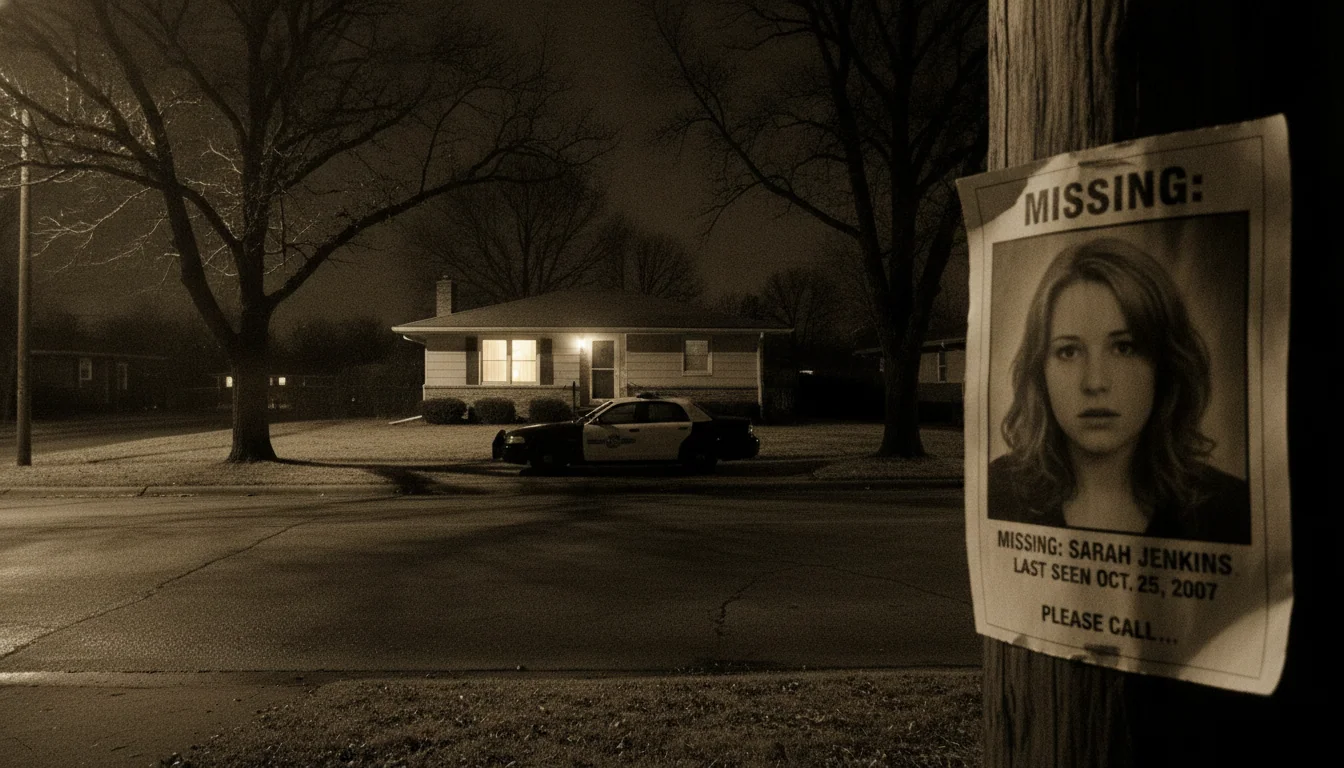
The Disappearance of Genette Tate: A Cold Case That Took 27 Years to Close
Genette Tate's 1978 disappearance in Devon stayed unsolved for 27 years until DNA evidence identified serial killer Robert Black as her murderer - and linked him to three other victims.
Read Wikipedia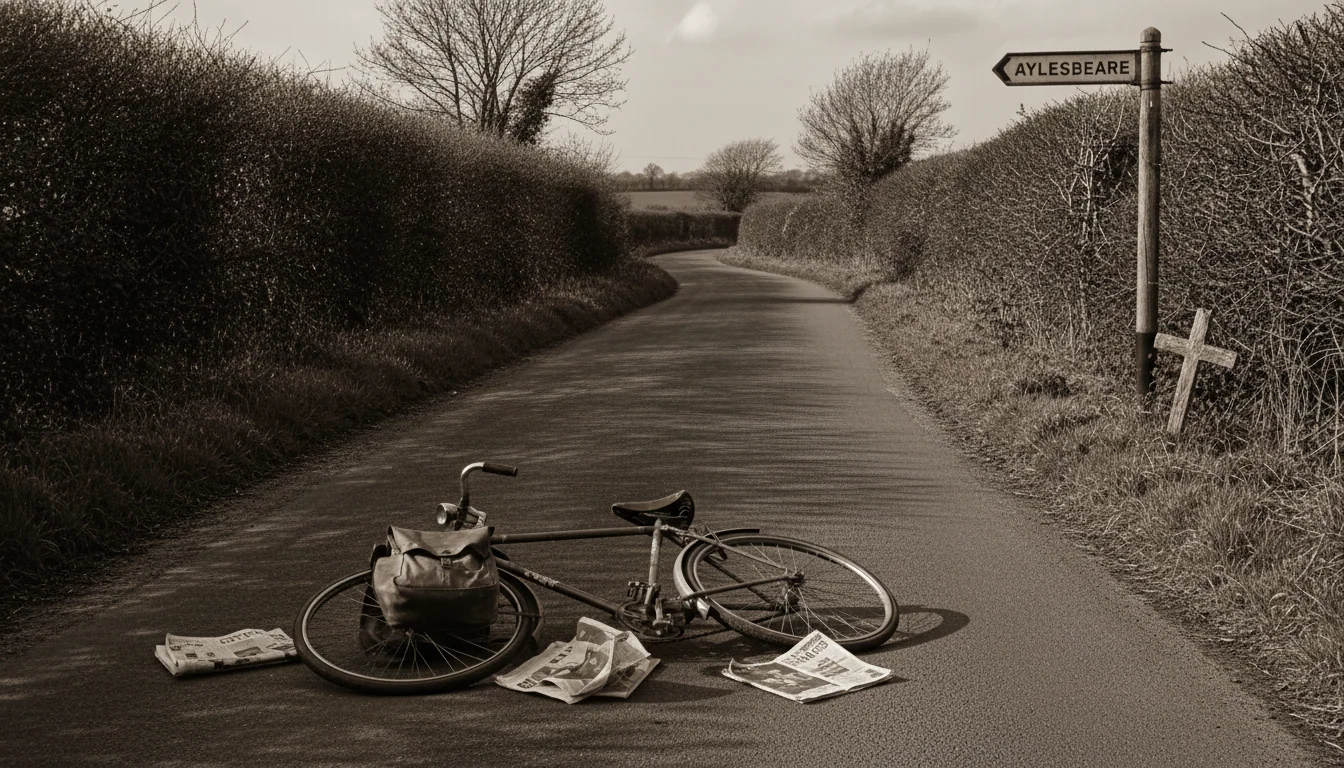
The Genette Tate disappearance case is in one sense simple - a thirteen-year-old vanished from a country lane in Devon - and in another sense a 27-year demonstration of how structural failures in police intelligence-sharing can let a killer operate across an entire country undetected. The paper round Genette Tate had covered for a year took about 45 minutes on a good morning. She was 13, reliable, and knew the lanes between Aylesbeare and the surrounding farms well enough to ride them without thinking. On August 19, 1978, a Saturday, she set off on her bicycle and somewhere along that quiet stretch of Devon road she disappeared as completely as if the afternoon had swallowed her.
Two friends passed her on the lane at around 3:40 p.m. She was cycling, smiling, moving along in the direction she always went. Fifteen minutes later a passing driver spotted her bicycle lying in the road. The newspapers were still in the saddlebag. Some had spilled across the tarmac. Genette was not there and would not be seen again for over a decade.
A search with no trail
Devon and Cornwall Police launched one of the largest searches in the county's history. Hundreds of officers combed fields and hedgerows. Helicopters flew the lanes. Dogs worked the ditches. John and Violet Tate made appeals on television. The search found nothing: no footprint, no sign of a struggle, no witness who had seen anything after the moment Genette's friends had passed her.
For eleven years the case produced no body and no viable suspect. The investigation accumulated thousands of witness statements and interviewed hundreds of individuals but remained, in the precise language of the law, a missing-persons inquiry rather than a murder investigation. Without a body, there was no confirmed cause of death. Without a cause of death, there was no crime to prosecute.
The absence of a body does something specific to a case. It removes the clock. Investigators cannot establish how long a victim was alive, what direction she was taken, or the sequence of events that followed. Everything becomes inference. In the Genette Tate case, inference was all anyone had.
A small wooden cross was placed at the spot where her bicycle had been found. It stayed there for years. The newspapers that had spilled across the lane became the defining image of what happened - an ordinary afternoon, a bicycle, papers scattered as if something had moved very fast.
The body, and the pattern
Years after her disappearance, skeletal remains were discovered in a field far from Devon and confirmed as Genette Tate's through dental records. She had been strangled. She had been murdered on the day she vanished. The man who killed her had transported her body across Britain and disposed of it in a location that had no obvious connection to Devon, to Genette, or to any known person of interest in the original inquiry.
The geography was deliberate. It put distance between the crime and the evidence. It was also, investigators would later understand, a signature.
Robert Black
By the time Genette's remains were identified, Robert Black had already made a fatal mistake.
Black was born in Falkirk, Scotland in 1947 and raised in local authority care after his mother gave him up in infancy. He had convictions for sexual offenses against children from an early age. By the mid-1970s he was working as a long-distance lorry driver for a London-based poster and display firm, delivering across the whole of Britain. The job gave him something that would prove devastating: a legitimate reason to drive thousands of miles a week, stopping anywhere, at any time, without arousing suspicion. His route was his freedom and his cover simultaneously.
On July 14, 1990, a member of the public in the Scottish Borders village of Stow watched Black bundle a six-year-old girl named Laura Turner into his Transit van. He called the police. Officers intercepted the vehicle on the M74 motorway and found the child unconscious, hidden in a sleeping bag in the back. She survived.
The arrest opened a ledger. Police from multiple forces, led by Lothian and Borders detectives, began quietly connecting Black to three other cases of abducted and murdered children that had remained unsolved across a decade.
Susan Maxwell, 11, had vanished in July 1982 from the A697 near Cornhill-on-Tweed on the English-Scottish border. Caroline Hogg, 5, was taken from a funfair at Portobello Beach near Edinburgh in July 1983. Sarah Harper, 10, disappeared from Morley, near Leeds, in March 1986. All three girls had been found dead, their bodies disposed of far from where they had last been seen. The distances were enormous. The method was consistent.
At Newcastle Crown Court in 1994, Black was convicted of all three murders and received ten life sentences. He sat in court and heard the verdicts without visible emotion.
The DNA bridge
Genette Tate's case had been flagged as a probable Black crime almost from his arrest. The geography matched his driving routes. The method matched his pattern. The era matched the gap between his earliest known offenses and his confirmed murders. But suspicion built from pattern is not evidence, and Black refused to speak.
Forensic advances in the late 1990s changed the picture. DNA recovered from Genette's clothing, preserved for over two decades by the Devon investigation, was analyzed against Black's profile. The result pointed to him.
Proceedings formally began in 2004. Black was charged with Genette's murder and committed for trial to Chelmsford Crown Court in Essex, far enough from Devon that a jury could be drawn without a lifetime of exposure to the case.
The 2005 trial presented the DNA evidence alongside the methodical reconstruction of Black's movements in the south-west during the summer of 1978. His delivery routes placed him in Devon in the relevant period. His known method - a fast vehicle stop, a child bundled inside, a long drive to disposal - fit the physical evidence. The defence offered no credible alternative. The jury convicted unanimously.
Black was sentenced to a further mandatory life term. He would never leave prison.
What the investigation exposed
Twenty-seven years between a crime and a conviction is not just a tragedy of one family's grief. It is an institutional failure with a specific shape.
In the late 1970s and through the 1980s, British police forces operated in effective silos. Devon and Cornwall held their own records in their own filing system. Lothian and Borders held theirs. Northumbria held theirs. A suspect who murdered in one county and disposed of bodies in three others did not automatically appear in any connected database, because no connected database existed. Intelligence on child predators was not shared systematically between forces. Lorry drivers and delivery workers, who by definition crossed multiple jurisdictions every week, represented a category of suspect that the system was not built to track.
Robert Black exploited that structural gap not through calculation but through the ordinary logistics of his working life. He drove where his employer sent him, stopped where he chose to stop, and trusted that four or five counties and four or five forces would not find a way to speak to each other. He was right for over a decade.
In the wake of the Black convictions and those of similar serial killers identified in the same era, British policing undertook significant reform of how forces shared intelligence on child predators. National databases of offenders, coordinated major-crime review teams, and eventually the Serious and Organised Crime Agency and then the National Crime Agency owed a direct intellectual debt to these failures. They were built, in part, because cases like Genette Tate's demonstrated what happened when nothing was built at all.
The case that stays open
Robert Black died at Maghaberry Prison, Northern Ireland, on January 12, 2016. He was 68. In more than 25 years of custody he never confessed to any murder and never explained his actions to investigators, families, or courts. He was suspected by some detectives of involvement in further unsolved cases of missing and murdered children across Britain and Western Europe, but suspicion without evidence is the state in which many cold cases permanently rest.
John Tate, Genette's father, had campaigned for harsher sentencing, was present at the 2005 conviction, and died in 2017, one year after the man responsible for his daughter's death. Violet Tate, Genette's mother, died in 2004, the year Black was finally charged, without seeing the trial. They lived with the absence for nearly three decades.
The wooden cross at the Aylesbeare lane was tended for years by the community. The case now has a verdict, a convicted killer, and a closed file. What it does not have - what no file can contain - is an explanation. Black took that with him. For another British cold case from the same era where a young woman's disappearance remained unsolved for decades, the Suzy Lamplugh case shows how the absence of a body blocks prosecution even when investigators are convinced they know the answer - and for a child disappearance case in America with comparable institutional failures, Asha Degree's disappearance makes the parallel explicit.
Quick Answers
Common questions about this topic
What happened to Genette Tate?
Genette Tate, aged 13, vanished from her newspaper delivery round near Aylesbeare in Devon on August 19, 1978. Her bicycle was found with newspapers still in the bag, scattered across the lane, but no trace of Genette was discovered for years. She had been murdered by Robert Black, a Scottish long-distance lorry driver and convicted paedophile, who was found guilty of her murder in 2005.
Who killed Genette Tate?
Robert Black, a serial child killer and lorry driver who preyed on young girls across Britain during the 1980s, was convicted of Genette Tate's murder in 2005 at Chelmsford Crown Court. DNA evidence linked him to the crime. He had already been convicted in 1994 of the murders of Susan Maxwell, Caroline Hogg, and Sarah Harper. Black died in prison in 2016 without ever confessing.
When was Robert Black caught?
Robert Black was caught on July 14, 1990, in the Scottish Borders, when a member of the public witnessed him bundle a six-year-old girl into his van near Stow. Police stopped his vehicle on the motorway and found the child unconscious in the back. This arrest unravelled his decade-long pattern of abductions and murders across Britain.
Why did it take so long to solve Genette Tate's murder?
British police forces in the late 1970s and 1980s operated in isolation. There was no national database linking child disappearances across county boundaries, and Robert Black's work as a long-distance lorry driver meant his crimes crossed dozens of force areas. Without forensic tools sophisticated enough to connect the evidence, and without a national intelligence-sharing system, the case remained open for over two decades.

Want to Interrogate the Suspects?
Chat with historical figures and uncover the truth behind history's greatest mysteries.
Create your free account →No card required. Talk to anyone in history with 8 free credits a day. Some features require a paid plan.
Join the HistorIQly Club
Get smarter about the past.
Weekly stories, deep dives, and exclusive content straight to your inbox.