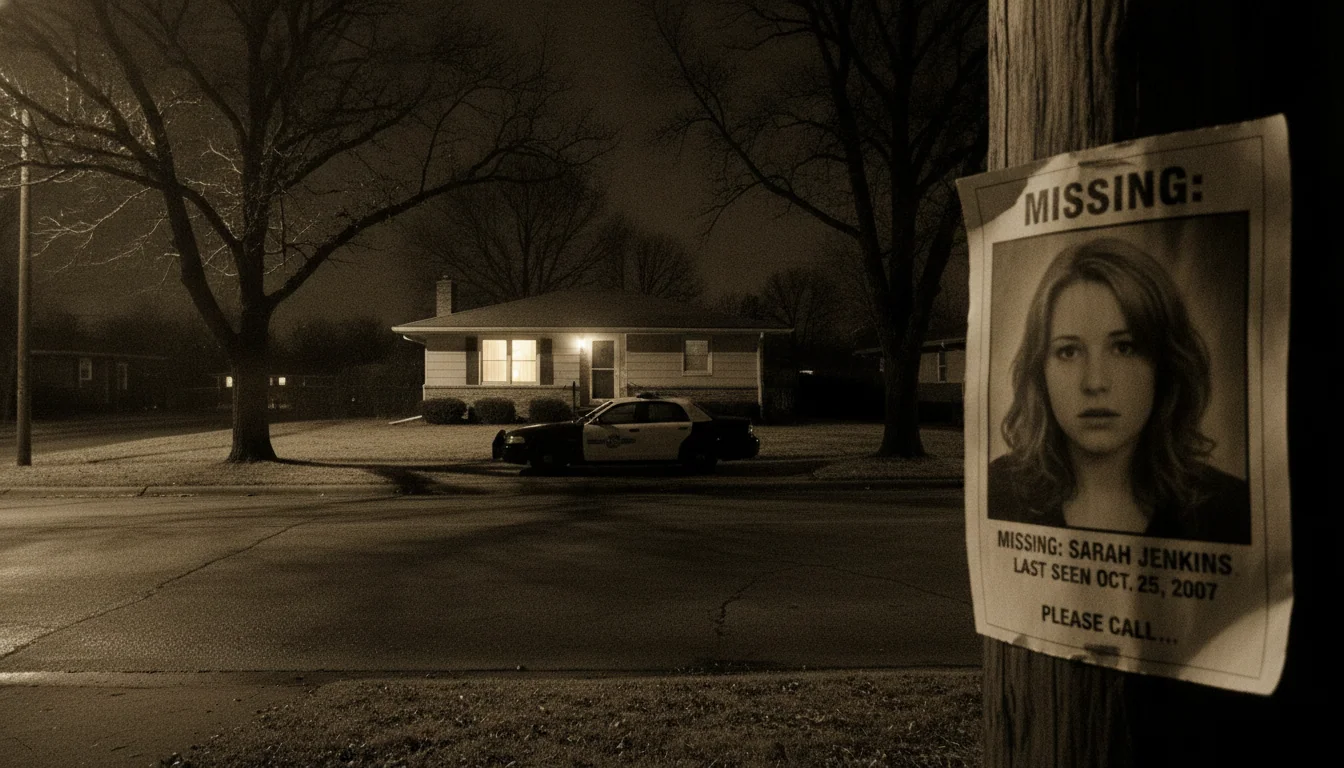
The Disappearance of Suzy Lamplugh: Britain's Most Baffling Cold Case
Suzy Lamplugh's disappearance on July 28, 1986 - when the estate agent vanished after a Fulham property viewing - remains unsolved forty years later. Nobody has been charged.
Read Wikipedia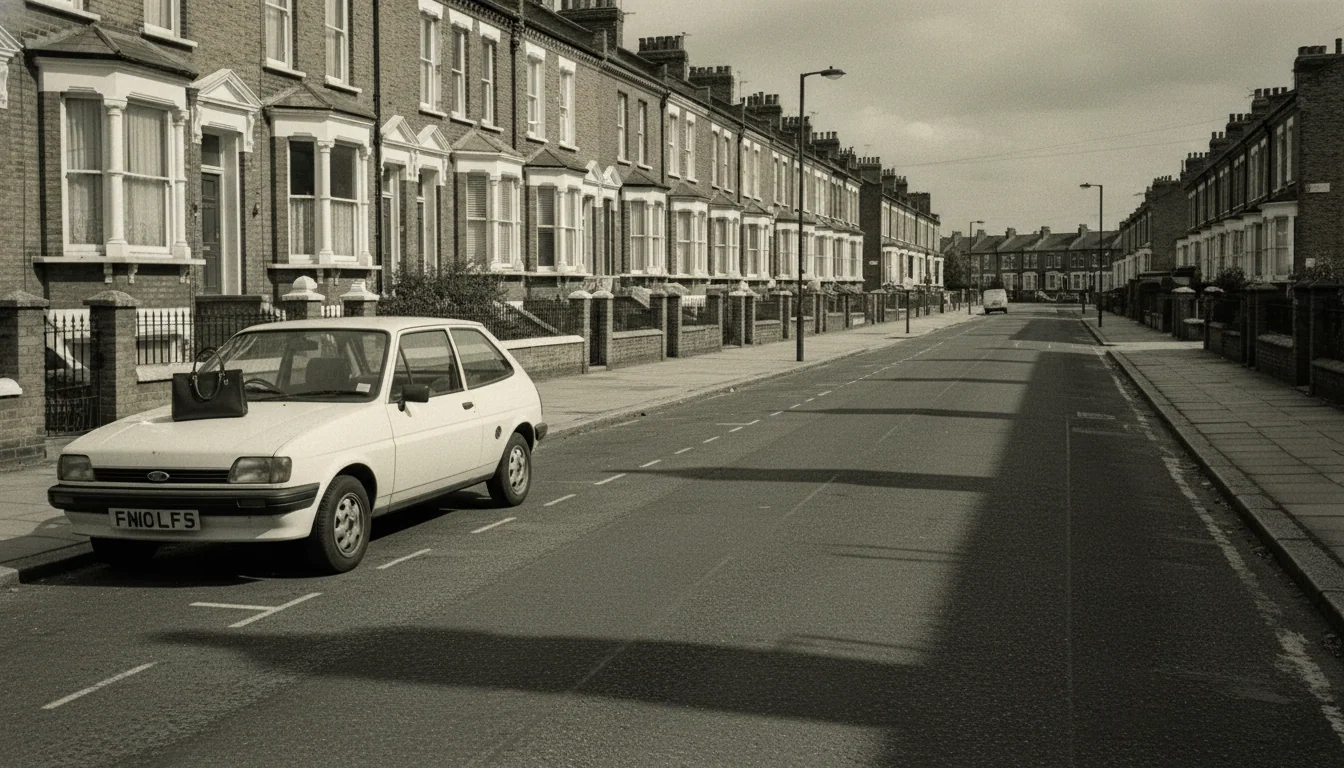
On the morning of July 28, 1986, Suzy Lamplugh wrote two words in her work diary: "Mr. Kipper." Below them she wrote an address: 37 Shorrolds Road, Fulham. She was showing a property to a prospective buyer. She was 25 years old, capable, experienced, and well-liked by her colleagues at the Sturgis & Co estate agency on Fulham Road. She drove to Shorrolds Road in her white Ford Fiesta sometime that Monday afternoon. She was never seen again.
Forty years later, no one has been charged with anything. The case remains one of the longest-running and most discussed cold cases in British history.
An ordinary appointment
There was nothing unusual about the Shorrolds Road appointment on its face. Suzy Lamplugh had been working at Sturgis for about a year, following a stint as a beautician aboard a cruise ship. She was good at her job and liked by clients. A house viewing on a Monday afternoon was unremarkable.
The property itself, a fairly modest terraced house in a quiet Fulham street, was not obviously the kind of place that would attract trouble. Suzy had conducted dozens of similar viewings on her own.
What was unusual was the name. "Mr. Kipper" did not correspond to any registered buyer on the agency's books. Staff at Sturgis could not identify who he was from their client records. The telephone number logged for him, if one was ever recorded, led nowhere. He had contacted the office and arranged the viewing, and that was all anyone knew.
When Suzy failed to return to the office and failed to appear at an evening engagement, her colleagues and then her parents raised the alarm. Police were called that night.
What the investigation found
The early evidence was both suggestive and incomplete. A witness had seen a young woman matching Suzy's description near Shorrolds Road that Monday afternoon with a man described as well-dressed, dark-haired, and personable. Another witness had noticed a silver BMW saloon parked near the address at around the right time - registration number B396 GAN was noted by at least one observer.
Suzy's white Ford Fiesta was found later that day, parked about a mile and a half away in Stevenage Road, not far from the Thames in Fulham. Her handbag was inside the car. Her purse was in the bag. The keys were in the ignition. She had not, by any reading of the evidence, gone somewhere voluntarily and taken anything with her.
The handbag's presence was the detail that lodged in public memory. An estate agent conducting a viewing leaves her bag in the car for convenience or at the property - she does not leave it forever with her keys and her money. The car told its own story: something happened between Shorrolds Road and that parking space, and whoever was involved did not need to take the car further.
Metropolitan Police launched a major inquiry. Officers traced the silver BMW through the Driver and Vehicle Licensing Agency. They interviewed thousands of people. The case received enormous media coverage throughout 1986 and into 1987, aided partly by Suzy's photogenic appearance and partly by the disturbing simplicity of the mystery: a young woman in broad daylight in a busy city, gone without a trace.
The inquiry produced no arrest, no body, and no definitive suspect.
The John Cannan connection
The investigation turned a decisive corner in 2002, when Metropolitan Police made public what investigators had been developing for some time: the prime suspect was John David Guise Cannan, then serving a life sentence at HM Prison Wakefield for the 1987 murder of Shirley Anne Banks.
Cannan's biography made him fit the case in multiple ways. In July 1986 he had recently been released from prison following a rape conviction and was living in Wormwood Scrubs area of west London. He was good-looking, articulate, drove a BMW, and was known to use charm as a primary tool. He worked briefly in a car dealership in the period around Suzy's disappearance, which would explain his ability to drive a variety of vehicles.
Most significantly, the nickname "Kipper" had been used in connection with Cannan by people who knew him. The precise route by which he might have come to book a Fulham property viewing under that name remains unconfirmed, but officers who worked the case became firmly convinced the link was real.
Cannan murdered Shirley Banks - a Bristol newlywed - in October 1987, just fifteen months after Suzy's disappearance. The Banks case showed his method: he abducted a woman in her car, held her captive, killed her, and buried her body in woodland in Somerset. He also attacked other women in the Bristol area in 1987. He was convicted in 1989 and given a whole-life tariff.
He has consistently denied any involvement in Suzy Lamplugh's disappearance.
Searches and dead ends
Police excavated the garden of Cannan's mother's house in Sutton Coldfield more than once over the years, finding nothing. They searched properties he was associated with in Bristol. In July 2022, Metropolitan Police and West Midlands officers carried out a fresh search of a farm in Sutton Coldfield acting on new information - the search was covered extensively in the press as the fortieth anniversary of the disappearance approached. Again, nothing directly linked to Suzy was recovered.
The absence of remains is not exculpatory, but it has been the wall every investigation eventually hits. A prosecution without a body and without forensic evidence tying Cannan to the victim is, in British law, not impossible but extremely difficult. The Crown Prosecution Service has not moved to charge him, and Cannan himself is aging and in deteriorating health.
Meanwhile, the physical evidence from 1986 has degraded over four decades. Witnesses have died. Memories have blurred. The silver BMW that people remembered is long destroyed.
A legacy written in law
One consequence of the case outlasted the investigation: Diana Lamplugh, Suzy's mother, refused to process her grief privately. Within weeks of her daughter's disappearance she founded the Suzy Lamplugh Trust, which rapidly became one of Britain's most influential personal safety organizations.
The Trust pushed for legislative change on lone worker safety, helping produce guidance that now governs how estate agents, social workers, nurses, and others who work alone are protected. It campaigned on stalking, producing research that eventually fed into the Protection of Freedoms Act 2012, which for the first time created a specific criminal offense of stalking in England and Wales. Diana Lamplugh was appointed OBE for this work. She died in 2011, still not knowing what happened to her daughter.
The Suzy Lamplugh Trust estimates that today over six million people in the UK are lone workers in occupations where their safety depends partly on protocols the Trust helped create. It is a peculiar kind of legacy: a woman who vanished from a quiet Fulham street in 1986 has directly shaped the working conditions of millions of people she never met.
Where it stands now
The Metropolitan Police have not closed the case. It is periodically reviewed, most recently and publicly in the run-up to the fortieth anniversary in July 2026. John Cannan remains in prison. He is the official prime suspect. He has never been charged.
The 2022 farm search is the most recent operational move investigators have made public. What it produced, beyond headlines, has not been disclosed.
Suzy Lamplugh was 25, drove a white Ford Fiesta, and wrote "Mr. Kipper" in her diary. The rest, after four decades of professional investigation, multiple excavations, and more press coverage than almost any missing-persons case in British history, is still blank. For another British cold case from the same era where a killer's identity took decades to establish, see the disappearance of Genette Tate, and for a case with a similarly persistent prime suspect who was never charged, Lord Lucan's disappearance covers comparable territory.
Quick Answers
Common questions about this topic
Who was Suzy Lamplugh?
Susan Jane Lamplugh was a 25-year-old estate agent working for Sturgis & Co in Fulham, southwest London. She disappeared on July 28, 1986, after leaving the office to show a property at 37 Shorrolds Road to a client she had entered in her diary as 'Mr. Kipper.' She was never seen again and was declared legally dead in 1994, presumed murdered.
Who is the prime suspect in the Suzy Lamplugh case?
John Cannan, a convicted murderer serving a life sentence for the 1987 abduction and murder of Shirley Banks in Bristol, has been the prime suspect since Metropolitan Police named him around 2002. Cannan matches the description of the well-dressed man seen near Shorrolds Road, and police have linked him to the nickname 'Kipper' used by associates. He has never been charged in connection with Suzy's disappearance.
What was the Suzy Lamplugh Trust?
Suzy's mother Diana Lamplugh founded the Suzy Lamplugh Trust in 1986 in the weeks after her daughter's disappearance. It became one of Britain's foremost personal safety charities, campaigning for lone worker protection laws, personal safety education, and the rights of stalking victims. Diana Lamplugh's tireless advocacy transformed UK workplace safety legislation.
Has Suzy Lamplugh's body ever been found?
No. Despite multiple searches of properties linked to John Cannan, including excavations at his mother's garden in Sutton Coldfield and a farm searched in 2022 following new information, no human remains positively identified as Suzy Lamplugh have been located. The absence of a body has made prosecution impossible.

Want to Interrogate the Suspects?
Chat with historical figures and uncover the truth behind history's greatest mysteries.
Create your free account →No card required. Talk to anyone in history with 8 free credits a day. Some features require a paid plan.
Join the HistorIQly Club
Get smarter about the past.
Weekly stories, deep dives, and exclusive content straight to your inbox.