The Disappearance of Emanuela Orlandi: Vatican's Unsolved Cold Case
In June 1983, Emanuela Orlandi walked out of a music lesson in Rome and never came home. Four decades later the Vatican's most haunting cold case remains officially open.
Read Wikipedia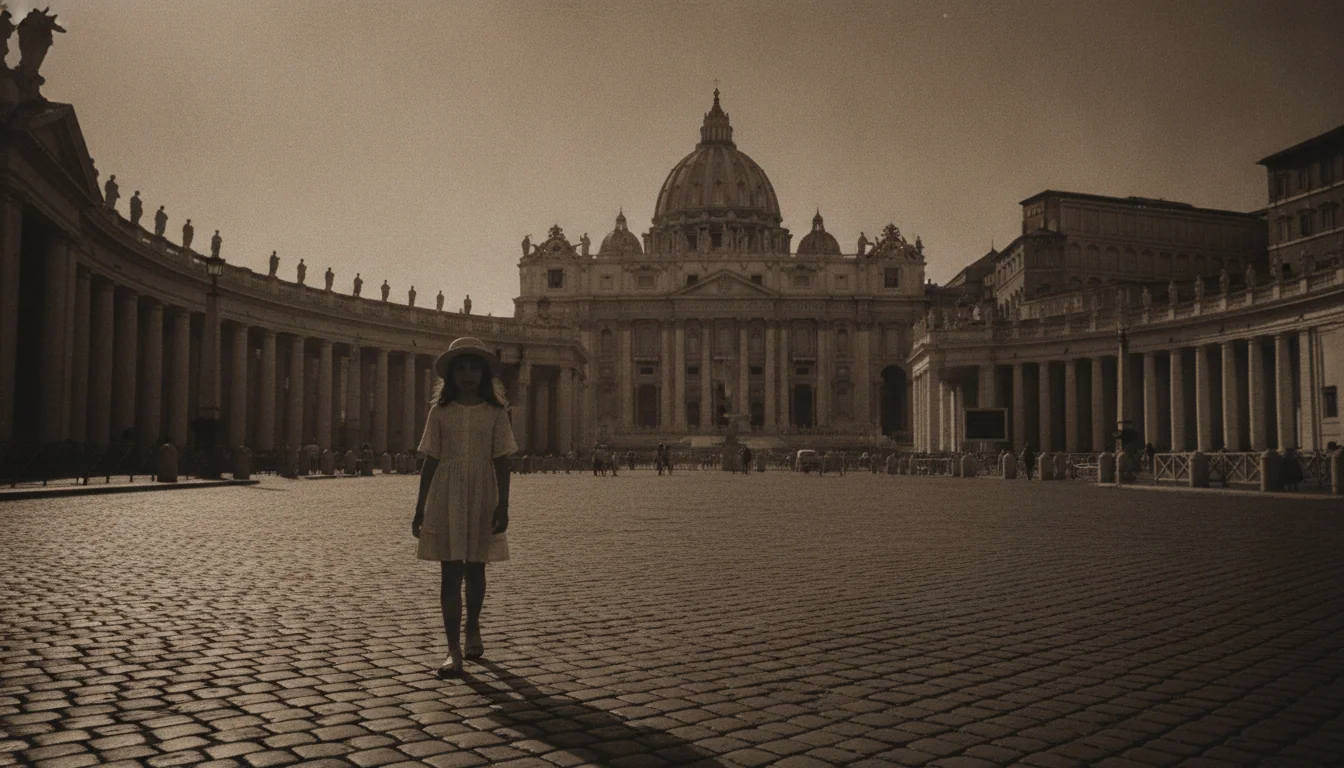
On the afternoon of June 22, 1983, fifteen-year-old Emanuela Orlandi left a music lesson in central Rome and called home. She told her family she had been approached near Piazza Navona about a part-time job distributing samples for a cosmetics company. Her parents told her to come home first and they would decide together. She agreed. She never arrived.
What makes this disappearance different from hundreds of unsolved missing-persons cases in any large city is the victim's address: Vatican City. Emanuela was the daughter of Ercole Orlandi, a lay employee of the Prefecture of the Papal Household. She held actual Vatican citizenship - one of a few hundred people on earth who do. She lived with her family inside the Leonine Walls. When she walked out to her music lesson that June afternoon, she walked out of one of the smallest, most secretive, and most powerful sovereign states in the world.
She has not been seen since. The case has accumulated four decades of anonymous tip-offs, contested forensic finds, political allegations, and a grief-stricken brother who has spent his adult life refusing to let it be forgotten.
The first hours
By the evening of June 22, Emanuela's family was calling friends and her music school. By the following morning, they had gone to the Italian police. The initial investigation quickly ran into a structural complication: Emanuela's status as a Vatican citizen meant that jurisdiction was genuinely murky. She had disappeared on Italian soil, so Italy had investigative authority. But her family lived inside Vatican City, her father worked for the Holy See, and any institutional connection to the Vatican would implicate a foreign sovereign state.
This ambiguity infected the case from the first week and never fully resolved. Italian investigators could question her family and retrace her steps through Rome, but they could not simply walk through the Vatican's gates and demand records or cooperation the way they might with any other employer.
Witnesses reported seeing Emanuela speaking with an unknown man near the area where she had her lesson. Another witness described a dark car stopping near her path. Neither lead produced a confirmed identification, and the trail went cold within days.
The ransom calls
Three days after the disappearance, anonymous calls began reaching Vatican Radio and the Orlandi family. The callers - whose voices varied and who may have been multiple individuals - claimed Emanuela was alive and being held. They linked her release to the freedom of Mehmet Ali Agca, the Turkish gunman who had shot Pope John Paul II in St. Peter's Square on May 13, 1981, and who was serving a life sentence in an Italian prison.
Agca had always maintained he had not acted alone. Intelligence speculation about Bulgarian and Soviet involvement in the assassination attempt had circulated for years. The anonymous callers framed Emanuela as a hostage in that broader geopolitical drama.
Whether she actually was is a question nobody has been able to answer. Italian investigators at the time considered the calls credible enough to pursue seriously. Pope John Paul II appealed publicly for her return in a Regina Caeli address - an extraordinary gesture that confirmed the case had reached the highest levels of Vatican concern.
The calls eventually stopped. No exchange took place. Emanuela did not return.
Mobsters and sealed tombs
In 2005, a woman named Sabrina Minardi - the former companion of a prominent figure in Rome's Banda della Magliana, one of Italy's most powerful organized crime syndicates - told investigators that she had witnessed Emanuela being held and later murdered. Her account alleged that the criminal network had used the girl as leverage in a dispute involving the Vatican Bank, which had documented financial entanglements with organized crime during the 1980s scandal surrounding the collapse of Banco Ambrosiano.
The testimony opened a new investigative chapter. Prosecutors noted that the Magliana figure she identified had been given an unusually prestigious burial inside the Basilica of Sant'Apollinare - a baroque church just steps from where Emanuela had last been seen - with what appeared to be Vatican sanction. In 2012, Italian police opened the tomb. Forensic analysis of remains found there did not produce a match with the Orlandi family's genetic profile.
The testimony remains unverified but has never been fully dismissed. The Banda della Magliana's documented connections to Vatican financial officials from the early 1980s lend the theory a structural plausibility even without confirmatory physical evidence.
The bones of 2019
In July 2019, workers undertaking restorations at an annex of the Teutonic College - a German national institution inside Vatican City - opened a subterranean vault and found bones. The Orlandi family raised immediate hopes. Italian media treated the discovery as a potential breakthrough. For about a week it appeared that the Vatican might finally have something concrete to report.
The Vatican announced with unusual speed that the remains had been analyzed and found to belong to at least two individuals, but that radiocarbon dating placed their deaths in the 17th or 18th century. They were not Emanuela's. They were not even close in age.
The discovery was archaeologically significant and entirely irrelevant to the criminal investigation. It also, depending on how you view the Vatican's handling of the case, raised more questions about what else may be stored in the institution's extensive underground property than it answered about where Emanuela went in 1983.
The long campaign of Pietro Orlandi
If the case has remained in public consciousness for over forty years, much of the credit - or burden - belongs to Emanuela's brother Pietro. He was sixteen when she vanished. He is now in his late fifties, and he has given hundreds of interviews, organized vigils, addressed Italian parliamentary committees, spoken to journalists in every country that would listen, and maintained an unrelenting public pressure on both Italian authorities and the Vatican.
Pietro has accused specific individuals of knowing more than they have admitted. He has been a disruptive presence in Italian public life for four decades, unwilling to accept official silence as a substitute for answers. In 2022, a Netflix documentary brought the case to a global audience who had never heard of it, and the response produced a new wave of calls for Vatican transparency.
The following year, Pope Francis announced that the Vatican would formally open its own investigation - a statement of intent that, as of mid-2026, has produced property searches and document reviews but no public findings and no charges.
What the case has become
After forty-three years, the disappearance of Emanuela Orlandi is simultaneously several different stories. It is a straightforward missing-persons tragedy: a teenager who went to a music lesson and did not come home. It is a Cold War-era geopolitical puzzle: the assassination attempt, the ransom calls, the intelligence agencies circling a girl's disappearance for reasons that had nothing to do with her. It is a financial scandal subplot: the organized crime connections, the Vatican Bank, the murky relationships between church finances and criminal networks that dominated Italian life in the 1980s. And it is an institutional story about sovereign secrecy - about the degree to which the Vatican's walls, archives, canonical procedures, and diplomatic status have functioned as a barrier to the kind of transparent external investigation that a comparable case in any normal state would long since have required.
Emanuela would be fifty-eight years old today. Whatever happened to her on that June afternoon - whether she was taken as a pawn in a political exchange, abducted by a criminal network, or the victim of something more personal that has been obscured by decades of competing interested parties - no one in a position to provide a confirmed answer has chosen to do so.
That silence has a shape. It is not proof of anything in particular. But after four decades, it is very, very loud. For other cases where political complexity and institutional secrecy prolonged the silence, the assassination of Olof Palme and the unsolved Jack the Ripper murders both show how official stonewalling can outlast any realistic hope of resolution.
Quick Answers
Common questions about this topic
Who was Emanuela Orlandi?
Emanuela Orlandi was a fifteen-year-old girl and Vatican citizen who disappeared on June 22, 1983, in Rome. She was the daughter of Ercole Orlandi, a lay employee of the Holy See, making her one of the few people ever to vanish from under the formal jurisdiction of the Vatican.
What happened to the bones found in 2019 near the Vatican?
In 2019, workers excavating beneath an annex of the Teutonic College inside Vatican City discovered bones. DNA and forensic analysis determined the remains dated to the 17th or 18th century and did not belong to Emanuela Orlandi.
Was Emanuela Orlandi's disappearance connected to the assassination attempt on Pope John Paul II?
An explicit connection was claimed by Mehmet Ali Agca, who shot Pope John Paul II in 1981. After Orlandi vanished, anonymous callers hinted she was being held as a bargaining chip for Agca's release. No evidence has ever confirmed a direct operational link, and Agca's claims have shifted dramatically over the decades.
Has anyone been charged in the Emanuela Orlandi case?
No one has ever been charged. The Vatican opened a formal investigation in 2023 after decades of pressure from Emanuela's brother Pietro. Searches of properties connected to a senior Vatican official were conducted in 2024. As of mid-2026 the investigation remains open.

Want to Interrogate the Suspects?
Chat with historical figures and uncover the truth behind history's greatest mysteries.
Create your free account →No card required. Talk to anyone in history with 8 free credits a day. Some features require a paid plan.
Join the HistorIQly Club
Get smarter about the past.
Weekly stories, deep dives, and exclusive content straight to your inbox.