Hotel Rwanda Accuracy: True Story vs. the 2004 Film
Hotel Rwanda accuracy: we compare the 2004 film with the real genocide, Paul Rusesabagina's contested role, survivor accounts, and what Hollywood changed.
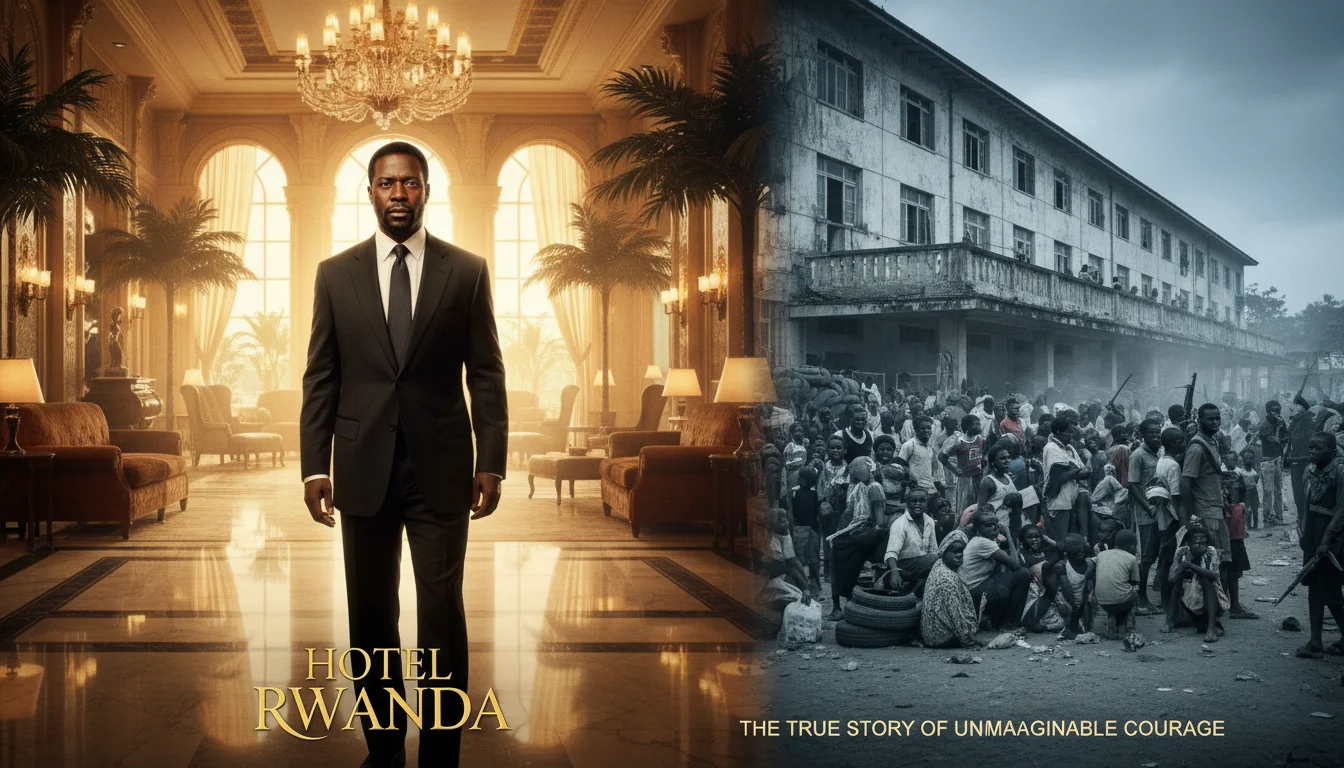
Hotel Rwanda (2004) introduced millions of viewers to the horrors of the 1994 Rwandan genocide through the story of Paul Rusesabagina, a hotel manager who sheltered over a thousand Tutsi refugees. Don Cheadle's Oscar-nominated performance turned Rusesabagina into an international hero. But the real story is far more complicated - and more controversial - than Hollywood would have you believe.
What Hollywood Got RIGHT
The Scale and Speed of the Genocide
The film accurately conveys the staggering brutality of the Rwandan genocide. Between April and July 1994, an estimated 800,000 to 1,000,000 Tutsi and moderate Hutu were killed in roughly 100 days. The movie does not shy away from showing the machete-wielding Interahamwe militia or the roadblocks where identity cards meant life or death. The speed of the killing - faster per day than the Holocaust - is faithfully represented.
The World Looked Away
One of the film's strongest historical points is its depiction of international abandonment. The UN peacekeeping force (UNAMIR), led by Canadian General Romeo Dallaire, was deliberately kept small and under-resourced. When violence erupted, Belgium withdrew its troops after ten soldiers were killed. The film's scene where UN Colonel Oliver (loosely based on Dallaire) tells Rusesabagina "you're not even a n***er, you're an African" captures the brutal calculus Western nations applied. The Clinton administration famously avoided using the word "genocide" to dodge intervention obligations.
The Hotel as Refuge
The Hotel des Mille Collines (renamed Hotel Rwanda in spirit) did serve as a refuge. At its peak, over 1,200 people sheltered there during the genocide. The hotel's international brand (it was a Sabena Belgian Airlines property) and its phone lines to the outside world provided a degree of protection. Refugees really did use the hotel's fax machines and phones to contact foreign officials begging for help.
The Role of Radio
The film correctly shows RTLM (Radio Television Libre des Mille Collines) broadcasting hate propaganda and even naming specific targets. RTLM played a documented role in coordinating and inciting the killings. "Cut down the tall trees" was indeed code for killing Tutsis.
Identity Cards as Death Warrants
The Belgian colonial system of issuing ethnic identity cards - classifying Rwandans as Hutu, Tutsi, or Twa - is accurately shown as the mechanism that enabled targeted killing at roadblocks. This detail is historically precise and essential to understanding how the genocide was administratively organized.
What Hollywood Got WRONG
Paul Rusesabagina: Hero or Profiteer?
This is the film's most significant distortion, and it has only grown more controversial over time. The movie portrays Rusesabagina as a selfless Schindler figure who risked everything to save lives. Multiple survivors tell a very different story. Edouard Kayihura, a refugee at the Mille Collines, wrote in his book "Inside the Hotel Rwanda" that Rusesabagina charged refugees for rooms, food, and even water during the genocide. Some survivors allege he threatened to expel people who could not pay or who angered him.
In 2021, Rusesabagina was convicted by a Rwandan court on terrorism charges related to his political opposition group MRCD-FLN, which carried out attacks in 2018-2019 killing nine people. While rights groups questioned the trial's fairness, the case shattered the hero narrative. His sentence was later commuted and he was released in 2023, but the debate over his character during the genocide remains unresolved.
Colonel Oliver is a Composite
Nick Nolte's Colonel Oliver is presented as a single frustrated UN commander. In reality, the character blends elements of General Romeo Dallaire (the UNAMIR force commander who desperately sought reinforcements) and several other UN officials. Dallaire himself has been critical of the film's simplifications. His own account, "Shake Hands with the Devil," paints a far more complex picture of UN paralysis.
The Hutu-Tutsi Divide Was Not Ancient
The film briefly mentions ethnic tensions but implies they were deep-rooted tribal hatreds. Historians emphasize that the rigid Hutu-Tutsi distinction was largely a colonial creation. Belgian colonizers elevated Tutsis as a ruling class, issued ethnic ID cards, and hardened what had been fluid social categories. The genocide was not an eruption of ancient hatred but a politically manufactured catastrophe decades in the making.
The Rescue Scene
The film's climax, where a convoy evacuates refugees under UN escort, compresses and dramatizes events. The actual evacuations were piecemeal, chaotic, and often failed. Many refugees who left the hotel were killed at roadblocks. The neat resolution the film suggests did not happen - the genocide ended when the RPF (Rwandan Patriotic Front) under Paul Kagame took military control of the country in July 1994.
The Genocide's Political Machinery
The movie focuses almost entirely on the street-level violence and one man's response. It largely skips the political architecture: the Hutu Power movement, the Arusha Accords' collapse, President Habyarimana's assassination (the triggering event), and the organized nature of the killing. The genocide was not spontaneous mob violence. It was planned, rehearsed, and administratively executed by government and military officials. Lists of targets were prepared in advance.
Hotel Rwanda Accuracy Score: 6/10
Hotel Rwanda gets the broad strokes right - the genocide happened, the world failed to act, the hotel was a real refuge. But its central narrative choice, turning a deeply contested figure into an uncomplicated hero, undermines its claim to historical truth. The film simplified a political genocide into a personal drama, and the real Paul Rusesabagina turned out to be a far more complicated man than Don Cheadle's portrayal.
As a gateway to learning about the Rwandan genocide, the film serves a purpose. As history, it should be the starting point, not the final word. Read Dallaire's memoir. Read the survivors' accounts. The real story is harder, messier, and more important than any Hollywood version.
For another African historical drama worth fact-checking, see our Last King of Scotland accuracy review. Our 12 Years a Slave vs. history examines similar questions about how Hollywood handles true stories of historical suffering.
Quick Answers
Common questions about this topic
How accurate is Hotel Rwanda?
Hotel Rwanda is accurate on the broad context of the 1994 Rwandan genocide and the Hotel des Mille Collines as a refuge, but it simplifies Paul Rusesabagina's disputed role and compresses several political events.
Was Paul Rusesabagina's role in Hotel Rwanda controversial?
Yes. The film presents him as an uncomplicated rescuer, while some survivors and later political events have made his real role much more contested.

Debate the Accuracy with the Real Figures
Ask the real people what Hollywood got wrong about their lives.
Chat with HistoryJoin the HistorIQly Club
Get smarter about the past.
Weekly stories, deep dives, and exclusive content straight to your inbox.