Troy (2004) vs History: How Accurate Is Brad Pitt's Achilles?
Troy movie historical accuracy: Brad Pitt's 2004 epic is 5/10 - it gets the Bronze Age right but condenses a decade into two weeks and removes all the gods.
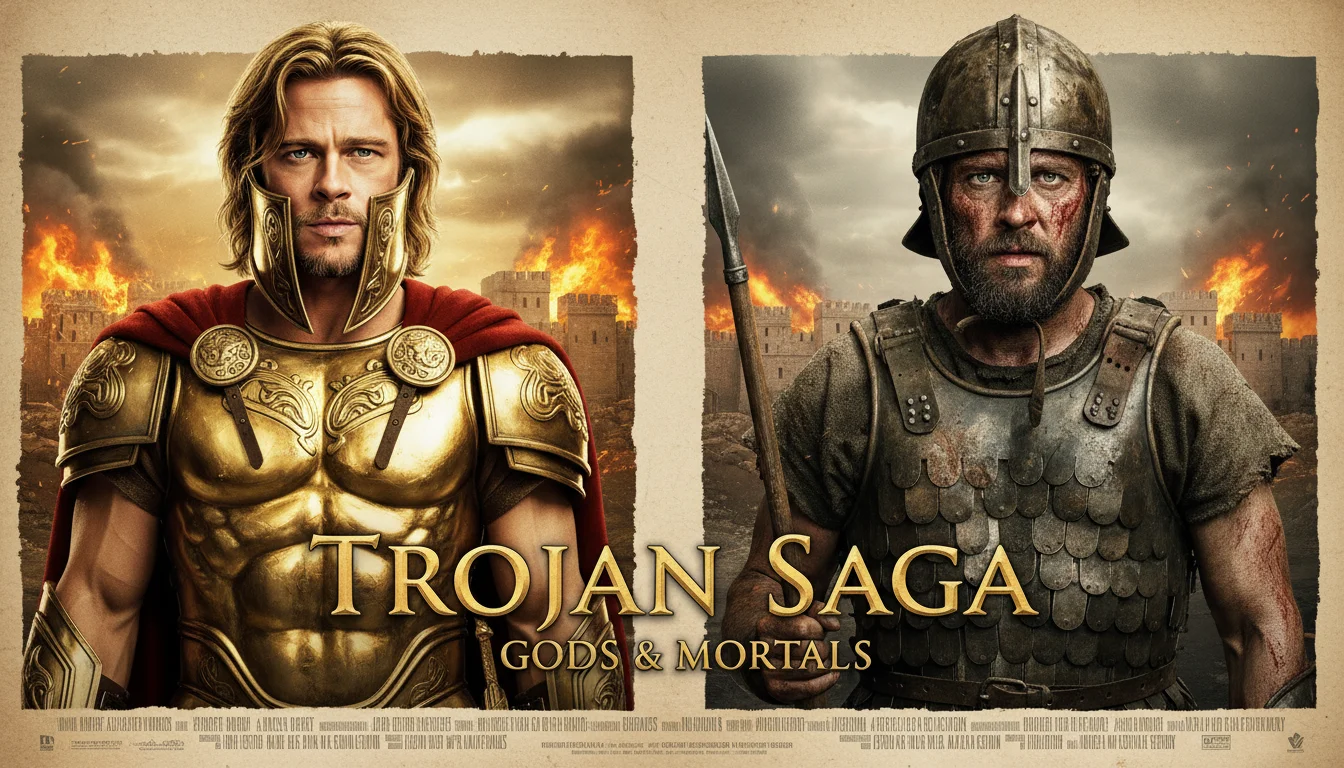
The year 2004 gave us Wolfgang Petersen's "Troy" - a $175 million epic starring Brad Pitt as the legendary warrior Achilles. The film promised to bring Homer's Iliad to life, but how much of it is actually historical? Let's separate the Hollywood fiction from the ancient facts.
The Big Question: Was the Trojan War Real?
Before we dive into the movie's accuracy, we need to address the elephant in the room. Did the Trojan War actually happen?
The verdict: Probably yes, but not like you think.
Archaeological excavations at Hisarlik in modern Turkey (ancient Troy) have revealed a city that was destroyed around 1180 BCE - roughly when ancient Greeks believed the war occurred. The site shows evidence of warfare: arrowheads, fire damage, and hasty repairs to walls.
However, the war was likely a much smaller conflict over trade routes and regional power - not a decade-long siege over a kidnapped queen. The romantic story we know was embellished over centuries of oral tradition before Homer wrote it down around 750 BCE.
What Hollywood Got RIGHT
The Bronze Age Setting
The film accurately depicts Bronze Age warfare in several key ways. The weapons are appropriately bronze, not iron. The chariots, while not used exactly as shown, were indeed crucial military technology. The emphasis on single combat between champions reflects what we know about early Greek warfare.
Achilles' Fighting Style
Brad Pitt trained extensively for the role, and his combat style actually reflects ancient Greek fighting techniques. The use of the round hoplon shield, the spear as primary weapon, and the distinctive "Achilles leap" were all grounded in research. The leaping attack became his signature move for good reason - ancient sources describe Achilles as incredibly fast and agile.
The Trojan Horse
Yes, the Greeks really did use some kind of trick to breach Troy's walls. While we cannot confirm it was literally a wooden horse, multiple ancient sources describe the stratagem. Some historians theorize it may have been a siege engine, or perhaps a ship with a horse figurehead. The movie's depiction is faithful to the legend.
The Importance of Honor Culture
The film captures the obsessive importance of personal honor (timē) and glory (kleos) in ancient Greek society. Achilles' entire motivation - fighting for eternal fame rather than wealth or patriotism - is spot-on. This was genuinely how elite warriors thought.
What Hollywood Got WRONG
The Timeline Disaster
The movie condenses events that supposedly took ten years into about two weeks. This makes for tighter storytelling but eliminates crucial context. In Homer's version, the Greeks struggled for nearly a decade, their camp became almost a permanent settlement, and multiple truces and negotiations occurred.
Accuracy score for timeline: 2/10
The Gods Are Missing
Homer's Iliad is fundamentally a story about divine intervention. The gods constantly meddle in human affairs - Athena deflects spears, Apollo spreads plague, and Thetis bargains with Zeus for her son Achilles. Petersen deliberately removed all supernatural elements to make the story "realistic."
This is actually a major problem. The ancient Greeks didn't see these as mere myths - the gods were explanations for why things happened. Removing them fundamentally changes what the story means.
Menelaus Dies Too Early
In the movie, Hector kills Menelaus during their duel. In Homer's account, Menelaus survives the entire war and reclaims Helen. He even lives happily (well, awkwardly) with her afterward. The movie kills him off for dramatic effect.
Ajax's Death Is Wrong
The Greater Ajax (the big guy) dies fighting Hector later in the film, not during the earlier beach assault, which he survives, famously shrugging off an arrow to the thigh. Historically, Ajax survived the war but killed himself afterward in shame after losing Achilles' armor to Odysseus. His death was one of the great tragedies of Greek mythology - not a random battlefield casualty.
Patroclus Is Achilles' Cousin
The film makes Patroclus (Garrett Hedlund) Achilles' younger cousin to avoid addressing their relationship in the original texts. Many ancient Greeks, especially by the Classical era, understood them as lovers - their bond became one of the most famous same-sex relationships in Greek literature, though Homer's own text never makes this explicit. The movie sanitizes this completely.
The Armor Problem
While the film's props are beautiful, they're not quite right. Mycenaean armor (from the actual Bronze Age) looked very different from the Classical Greek armor shown. Real Bronze Age warriors wore boar's tusk helmets and figure-eight shields - not the round shields and crested helmets in the film, which are from 500+ years later.
Helen's Characterization
In the film, Helen (Diane Kruger) is portrayed as genuinely in love with Paris and somewhat innocent. Ancient sources were less kind - many portrayed her as complicit or even villainous. The movie softens her considerably.
Agamemnon Was Actually Religious
The film portrays Agamemnon (Brian Cox) as a cynical manipulator who uses religion for political ends. The historical Agamemnon - based on Mycenaean kings we know about - would have been deeply religious. In the grimmest version of the myth, he sacrificed his own daughter Iphigenia to get favorable winds for the voyage (other ancient accounts have Artemis swap her for a deer at the last moment). That's not cynicism - that's terrifying devotion.
Historical Accuracy Score: 5/10
Troy is a fascinating case study in adaptation. It gets the broad strokes right - the general outline of the war, the importance of honor culture, the existence of Troy itself. But it makes significant changes that would have baffled ancient Greeks: removing the gods, altering deaths, and condensing the timeline.
The film works as entertainment and even introduces audiences to ancient history. However, it tells a fundamentally different story than Homer did. The Iliad is about the gods playing chess with human lives and the tragedy of mortality. Troy is about politics, betrayal, and Brad Pitt's abs.
If you want the real Trojan War experience, read the Iliad - but keep watching the movie for its stunning production design and genuinely impressive combat choreography.
The Bottom Line
Watch Troy for what it is: a spectacular ancient war film that uses the Trojan War as inspiration rather than source material. Just don't cite it in your classics essay.
Want to explore more ancient history? Check out our Time Travel to Ancient Rome guide for what daily life was really like in the ancient world. For another Hollywood take on a Roman epic, see Gladiator vs. History.

Debate the Accuracy with the Real Figures
Ask the real people what Hollywood got wrong about their lives.
Chat with HistoryJoin the HistorIQly Club
Get smarter about the past.
Weekly stories, deep dives, and exclusive content straight to your inbox.