All Quiet on the Western Front (2022) vs. History: How Accurate Is Netflix's Epic?
Examining All Quiet on the Western Front historical accuracy: what Netflix's Oscar-winning 2022 German film got right about WWI trench warfare and where it diverged.
Read Wikipedia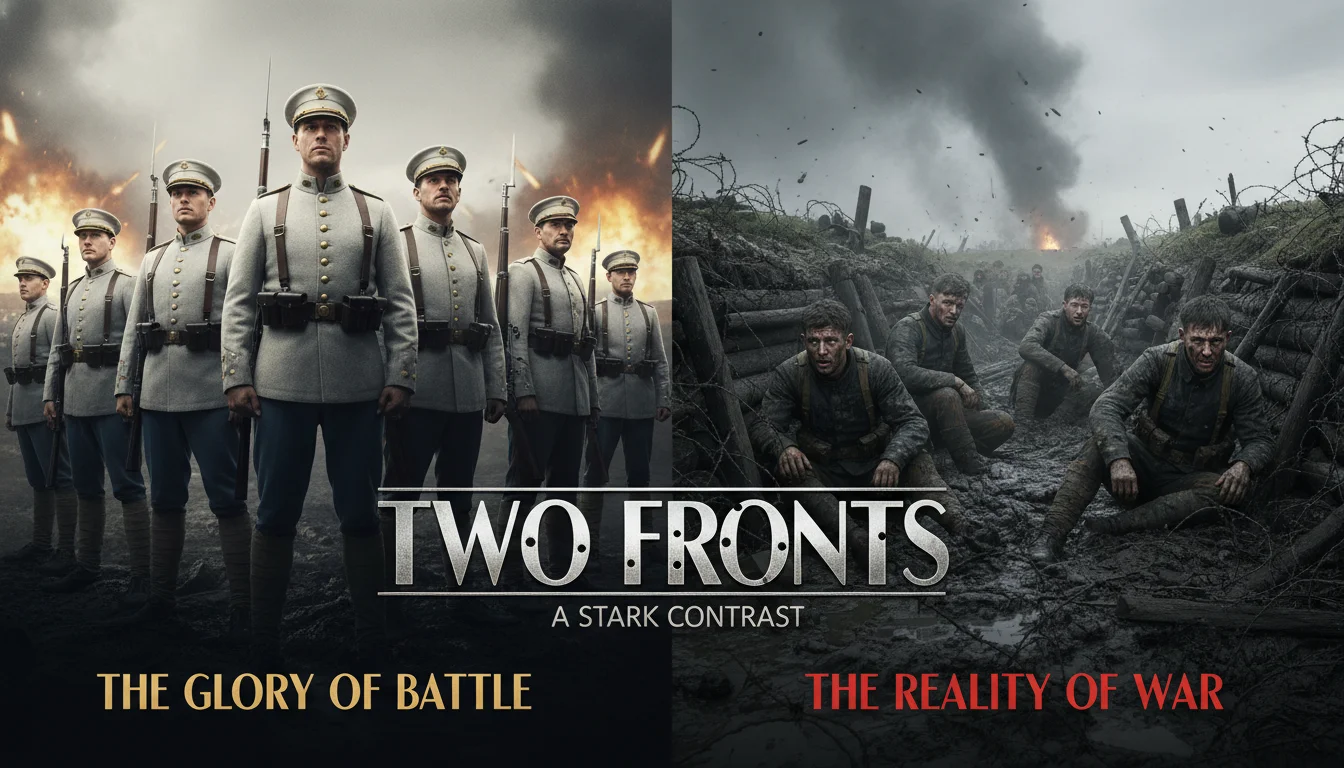
Edward Berger's 2022 adaptation of Erich Maria Remarque's antiwar masterpiece became the most awarded German film in Oscar history, winning four Academy Awards including Best International Feature Film. The Netflix production brought the horrors of World War I's Western Front to a new generation with unflinching brutality and technical brilliance.
But how accurately does this acclaimed film portray the reality of trench warfare? Let's separate historical fact from dramatic fiction.
What Hollywood Got Right
The Visceral Reality of Trench Warfare
The film's greatest achievement is its authentic depiction of daily life in the trenches. WWI historian Bethany Wyatt praised the film for capturing the soldier's everyday experiences with remarkable accuracy - the joy over receiving food, the deep misery when supplies ran thin, the excitement over letters from home, and the dark humor that soldiers developed as a coping mechanism.
Paul Baumer spends most battle scenes covered head to toe in mud, seeking shelter in shell holes, and crawling through the filth. This environmental accuracy reflects what countless memoirs and historical accounts describe about conditions on the Western Front.
The Armistice Train Car
The film accurately depicts Matthias Erzberger (played by Daniel Brühl) negotiating the armistice in a railway car in the Forest of Compiègne. The real Erzberger was indeed the leading member of the German delegation that signed the ceasefire with French Marshal Ferdinand Foch. The armistice was signed at 5:00 AM on November 11, 1918, to take effect at 11:00 AM - the eleventh hour of the eleventh day of the eleventh month.
The Author's Authentic Voice
The source material itself carries tremendous authenticity. Erich Maria Remarque was a German soldier conscripted at age 18 and transferred to the Western Front in June 1917. He fought in the trenches and was severely wounded by shrapnel in late July, spending the rest of the war recovering in a military hospital. Paul Baumer is essentially Remarque himself, filtered through fiction.
The Senselessness of War's Final Hours
Tragically, the film's depiction of fighting continuing until the very last moment is historically accurate. Although information about the imminent ceasefire had spread among forces at the front in the hours before 11:00 AM, fighting in many sections continued right until the appointed hour. Approximately 11,000 soldiers were killed, wounded, or went missing on the war's final day - after the armistice was already signed but before it took effect.
What Hollywood Got Wrong
The Timeline Compression
The film's opening caption reads "Spring 1917" when Paul and his classmates enlist. In Remarque's novel, they join up in 1914 or early 1915, closer to the war's outbreak. This is a significant change. By 1917, the Battle of the Somme had already killed over a million men. News of the slaughter had reached every corner of Germany. The idea that enthusiastic schoolboys would still be "merrily marching off to war" in spring 1917, lured by a nationalist teacher's rhetoric, strains credibility.
The Fabricated Final Battle
The film's most dramatic departure comes at the climax. A German general, unwilling to accept the armistice, orders one final attack just minutes before the 11:00 AM ceasefire. Paul dies in this assault mere seconds before the war officially ends.
This specific scenario is fictional. While fighting did continue until the armistice took effect, there was no documented case of a German general ordering a deliberate assault in the war's final minutes as depicted. Director Berger created this scene to illustrate how the German military's refusal to accept defeat would later fuel the "stab-in-the-back" myth that Hitler would exploit - but it's a dramatic invention, not history.
Missing the Home Leave Chapter
One of the novel's most powerful sections follows Paul on an eight-day leave to his village, where he discovers he can no longer relate to his family or former life. The war has utterly transformed him; what once mattered now seems meaningless. This haunting portrait of the "lost generation" is entirely absent from the film.
Underdeveloped Comrades
The novel richly develops Paul's fellow soldiers as distinct characters with their own backstories, fears, and humanity. The film focuses so heavily on spectacle and the Erzberger subplot that most of Paul's comrades remain sketches rather than fully realized people. Only Kat, the older mentor figure, receives genuine character development.
The Trench Orientation Problem
Military historians have noted technical inaccuracies in some battle sequences. In one scene, Germans capture a French trench that appears to be built facing the wrong direction - its defensive position oriented as if it were originally German. These details matter to specialists, though most viewers wouldn't notice.
All Quiet on the Western Front Historical Accuracy Score: 7/10
All Quiet on the Western Front (2022) succeeds where it matters most: conveying the psychological devastation and physical horror of industrial warfare. The environmental authenticity is exceptional, and the antiwar message that made Remarque's novel a classic translates powerfully to screen.
The timeline compression and invented final battle are the film's significant departures from both the source material and history. Director Berger made these choices deliberately - the compressed timeline keeps the runtime manageable, while the fabricated assault serves as a visual metaphor for the military leadership's stubborn refusal to accept reality that would poison German politics for decades.
The Historical Context
What elevates this adaptation is that it's the first German-language film of Remarque's story - remarkable given that it tells a German soldier's perspective by a German author. Previous adaptations were American (1930, directed by Lewis Milestone) and American-made for TV (1979).
Berger grew up watching American and British war films about heroic journeys. But as he explained in interviews, there's no heroic pride in Germany's story of 20th-century wars - only "a sense of shame, guilt, horror, terror, responsibility towards history." That perspective infuses every frame of his film.
The real Matthias Erzberger, depicted as a pragmatist seeking peace, was assassinated by right-wing nationalists in August 1921. The armistice he helped negotiate was seen by many Germans as a betrayal rather than a mercy. Understanding this context adds tragic weight to the film's portrayal of his efforts.
The Verdict
All Quiet on the Western Front (2022) is an extraordinary technical achievement and a devastating antiwar statement. Its departures from history serve the film's thematic goals rather than undermining them. While not a documentary, it captures something essential about what the Western Front did to the young men who fought and died there - and why Remarque's century-old novel remains desperately relevant.
The film's greatest accuracy isn't in dates or specific battles, but in its unflinching portrayal of war as industrialized slaughter that consumes the idealistic young people nations send to fight. That truth transcends any timeline liberties.
All Quiet on the Western Front (2022) is streaming on Netflix.
For the British side of the same war, see our 1917 vs. history breakdown of Sam Mendes's single-take epic. The Dunkirk accuracy review examines Nolan's portrait of the other defining moment of the World Wars.

Debate the Accuracy with the Real Figures
Ask the real people what Hollywood got wrong about their lives.
Create your free account →No card required. Some figures and features require a paid plan.
Join the HistorIQly Club
Get smarter about the past.
Weekly stories, deep dives, and exclusive content straight to your inbox.