Being the Ricardos vs. History: How Accurate Is the Lucille Ball Drama?
Being the Ricardos accuracy, checked: Aaron Sorkin's film compresses years of crisis into one week. Some of it is real, some is Sorkin - here is what it gets right.
Read Wikipedia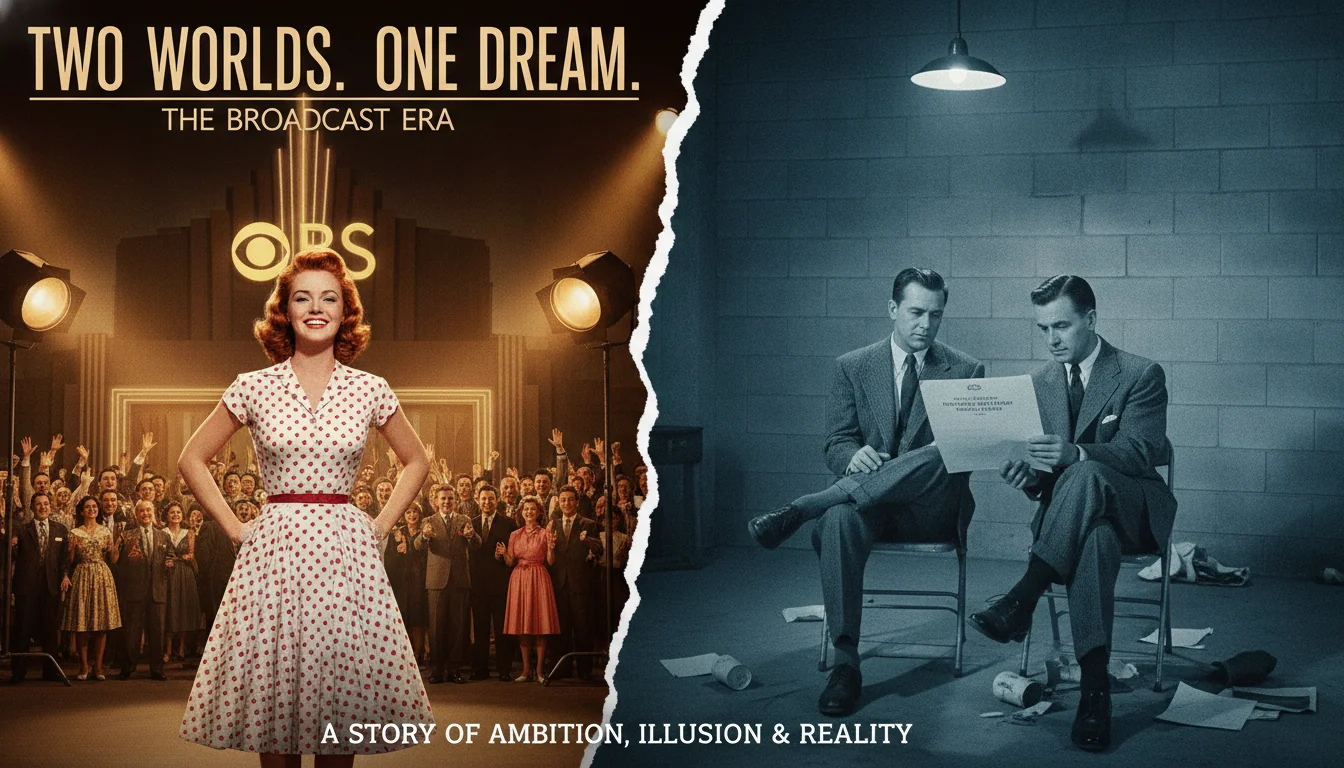
Aaron Sorkin's Being the Ricardos is a film about a week in the life of Lucille Ball and Desi Arnaz during the height of I Love Lucy - a week that, Sorkin argues, concentrated almost everything that was turbulent about their personal and professional lives into five days of table reads, blocking sessions, and existential crisis. The HUAC accusation. The pregnancy. The tabloid allegations about Desi's affairs. A script that isn't working. A marriage under pressure.
It is very much a Sorkin film: fast-talking, structurally clever, and willing to treat emotional truth as a license to rearrange chronological fact. The question is how much rearranging actually happened.
Being the Ricardos accuracy rating: 6/10
What Hollywood Got RIGHT
The HUAC accusation was real
On September 11, 1953, the gossip columnist Walter Winchell broke the story that Lucille Ball had been named in a HUAC report as a former registered communist. The timing was not incidental: the accusation dropped during the opening week of I Love Lucy's third season, and the country had just watched the Rosenberg executions in June. The red scare was at its most virulent.
Ball's explanation was essentially accurate. In 1936, as a young actress in Hollywood, she had registered to vote as a Communist Party member. The stated reason, which she gave to HUAC investigators in a private session, was that her grandfather Fred Hunt, a committed socialist, had asked the family to support the party. She voted as a Democrat in every subsequent election. HUAC cleared her within days.
The film gets the essential fact right: the accusation was real, the explanation was the grandfather, and the clearance came relatively quickly. Desi Arnaz did address the studio audience that week to announce that the woman playing Lucy Ricardo was not a communist. "The only thing red about Lucy," he said, "is her hair, and even that isn't real." This is documented and the film uses a version of it.
The pregnancy storyline was genuinely contested
Lucille Ball became pregnant with her second child in 1952. CBS and the show's sponsors, Philip Morris cigarettes, were initially resistant to the idea of depicting a visibly pregnant woman on American television. The discussion about whether and how to portray the pregnancy was real and contentious by the standards of 1952 network television.
The eventual compromise involved depicting Lucy Ricardo as expecting, never using the word "pregnant" on air, and having each episode reviewed by a rabbi, a minister, and a Catholic priest for propriety. Ball's real-life delivery of Desi Arnaz Jr. on January 19, 1953 coincided, by planned scheduling, with the broadcast of the episode in which Little Ricky was born. Forty-four million people watched, more than watched Dwight Eisenhower's inauguration the following day.
The film captures the general shape of this negotiation accurately, even if it conflates it with the HUAC moment into a single crisis week.
Desi was genuinely in charge of the business
One of Sorkin's consistent points is that Desi Arnaz was not merely a charming frontman but the operational intelligence behind Desilu Productions. This is well-documented. Arnaz negotiated a groundbreaking deal with CBS to film I Love Lucy on 35mm film rather than broadcast it live, which was standard practice for New York-produced shows. He owns the negative himself, which made Desilu enormously wealthy in syndication when filmed reruns became a business.
Arnaz also understood, better than most people in television in 1951, that filmed production allowed for quality control, retakes, and a product that did not degrade with distance. The film is right to present him as the shrewdest person in most rooms he entered.
The admission of infidelity
The tabloid stories about Desi Arnaz's affairs during the I Love Lucy years were substantially true. Arnaz acknowledged as much in his 1976 memoir. The film's depiction of Ball confronting this knowledge, and of the tension it created in their professional partnership as well as their marriage, is consistent with what both parties said about that period in later accounts.
What Hollywood Got WRONG
The timeline compression is significant
The HUAC accusation came in September 1953. Ball's pregnancy plotline was negotiated and filmed in late 1952 and early 1953. Sorkin places both crises in the same production week, which did not happen. The film presents this as dramatic necessity rather than historical record, but viewers who come away thinking the communist accusation and the pregnancy battle happened simultaneously are mistaken.
This matters because the two crises had different stakes and different resolutions. The HUAC story was cleared quickly and with minimal lasting damage, partly because Ball's actual political record was unremarkable. The pregnancy negotiation was a slower, more genuinely consequential battle that reshaped what American television could show.
The "Vitameatavegamin" portrayal
The film shows the development of the famous "Vitameatavegamin" episode, broadcast in May 1952, in which Lucy becomes progressively drunk while filming a television commercial for a patent medicine laced with 23 percent alcohol. The episode is one of the most praised pieces of physical comedy in American television history.
Sorkin uses the episode's production to illustrate how Ball worked - meticulously rehearsed, deeply technical, the opposite of spontaneous. This underlying characterization is generally accurate. But the specific rehearsal-room dynamics Sorkin depicts are invented for the film. Nobody's recollections of filming that episode include the scenes Sorkin dramatizes.
Lucy's personality off-camera
The film presents Ball as someone who was not funny in person - controlled, serious, focused entirely on technical craft rather than spontaneous wit. People who worked with her have disputed this characterization. Her longtime collaborators described her as genuinely funny in the writing room and quick in social situations, not the grimly technical perfectionist the film sometimes portrays.
Sorkin appears to have chosen this angle partly because it makes dramatic sense - the contrast between the chaotic on-screen Lucy and the controlled off-screen Lucille is a good story - and partly because it emphasizes his theme that great comedy is engineering, not personality. The real Ball was more complicated.
The CBS network dynamics
The film's network executives are largely presented as obstacles to be managed by the Arnaz-Ball creative partnership. The actual relationship between Desilu and CBS was more collaborative and less adversarial through most of the run. William Paley at CBS was a genuine admirer of the show and intervened on the couple's side in several contractual disputes with sponsors. The dynamic Sorkin depicts tilts toward a cleaner protagonist-antagonist structure than the historical record supports.
William Frawley and Vivian Vance
The film accurately notes that William Frawley, who played Fred Mertz, and Vivian Vance, who played Ethel, disliked each other off-camera. This is well-documented. What the film slightly mishandles is the nature of Vance's contract provisions: the story that she was contractually required to weigh more than Lucille Ball is often cited as fact but is more accurately described as a persistent and unverified rumor that Vance herself discussed ambiguously in interviews. The film treats it as established.
The verdict
Being the Ricardos is a well-made film about real events, constructed with the typical Sorkin trade-off: sharp dialogue and clear thematic architecture in exchange for chronological fidelity. The core portrait - Ball as a ruthless technical craftsman, Arnaz as an underestimated business genius, their marriage as a collaboration that their private life was eroding - has enough documentary grounding to qualify as honest dramatic interpretation.
The HUAC story is real. The pregnancy battle is real. The infidelity problem is real. The specific week in which all these things happened simultaneously is not.
For a film that similarly compresses real events into a heightened dramatic frame, see our reviews of Rush vs. History and Judas and the Black Messiah vs. History.
Quick Answers
Common questions about this topic
Was Lucille Ball actually accused of being a communist?
Yes. In September 1953, the House Un-American Activities Committee cited Lucille Ball's 1936 voter registration as a Communist Party member. She testified privately to HUAC investigators and explained she had registered to please her grandfather. The FBI and the committee publicly cleared her, and Desi Arnaz addressed the audience of that week's I Love Lucy filming to announce she had been cleared.
Was Lucille Ball's pregnancy hidden from CBS?
No. CBS and the sponsors were aware of the pregnancy but initially resisted depicting it on screen. After negotiation, the storyline was incorporated into the show with the word 'expecting' used instead of 'pregnant.' Lucy's real-life delivery on January 19, 1953, the same day as Little Ricky's TV birth, remains one of the most watched television events in American history.
How accurate is Being the Ricardos overall?
The film is moderately accurate about the broad facts - the HUAC accusation, the pregnancy storyline, and the tensions in the marriage - but Aaron Sorkin collapses events from different years into a single production week for dramatic effect. Several details about the creative process and internal studio relationships are fictionalized.
Did Desi Arnaz cheat on Lucille Ball?
Yes. Arnaz admitted in his 1976 memoir A Book that he was unfaithful throughout the marriage. The couple divorced in 1960 after 20 years together. Ball later said the tabloid stories about his infidelity during the I Love Lucy years were largely true.

Debate the Accuracy with the Real Figures
Ask the real people what Hollywood got wrong about their lives.
Create your free account →No card required. Some figures and features require a paid plan.
Join the HistorIQly Club
Get smarter about the past.
Weekly stories, deep dives, and exclusive content straight to your inbox.