United 93 vs. History: How Accurate Is the 9/11 Flight Drama?
Paul Greengrass's United 93 rebuilds Flight 93's final 90 minutes from CVR data and phone calls. Here's what the reconstruction gets right, and where it must hedge.
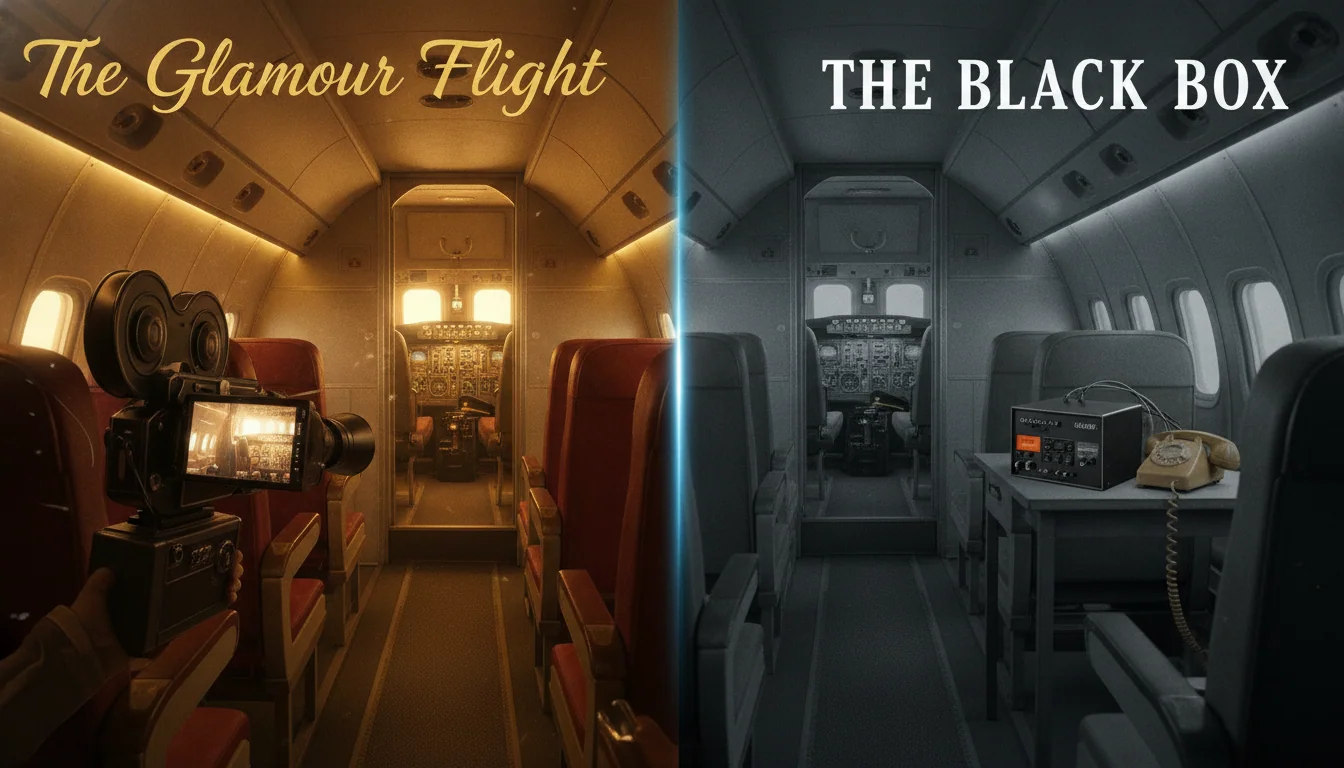
On the morning of September 11, 2001, United Airlines Flight 93 was the only one of the four hijacked aircraft that did not reach its intended target. It crashed into a field near Shanksville, Pennsylvania at 10:03 am, killing all 44 people aboard: 33 passengers, seven crew members, and four hijackers. Paul Greengrass's 2006 film United 93 reconstructs roughly ninety minutes of that morning almost in real time, drawing on cockpit voice recorder data, the phone calls passengers and crew made from the plane, and the findings of the 9/11 Commission Report.
Flight 93 left Newark roughly 25 minutes behind schedule, a small delay that later mattered enormously: it gave passengers time to learn, by phone, that three other planes had already been used as weapons against the World Trade Center and the Pentagon that same morning. That knowledge, unavailable to passengers on the earlier flights, is a central hinge of both the real story and the film.
So how close does the reconstruction come to the documented record? Closer than most films dare to get, though the honest answer requires some hedging, because no one who was in that cabin during the final minutes survived to describe it.
What Hollywood Got RIGHT
The real-time structure respects the timeline
Greengrass builds the film almost entirely in real time, with minimal flashback and no framing device to soften the momentum. That choice matches how the day actually unfolded: a normal, delayed morning flight that became a hijacking roughly 46 minutes after takeoff, followed by a fast, chaotic scramble on the ground as FAA controllers and military officers tried to understand what was happening. The film's refusal to slow down or explain things for the audience mirrors how confusing and compressed the real morning was for the people living through it.
Casting unknown actors, and letting real people play themselves
Greengrass deliberately avoided recognizable stars, and the choice pays off. Faces you don't recognize make the film feel less like a dramatization and more like an incident report. More striking still, several FAA and military personnel played themselves on screen, including Ben Sliney, the FAA's National Operations Manager. Sliney's presence is not a gimmick: his first day in that job was September 11, 2001, a detail confirmed by his own accounts and by Commission testimony, and the film uses that real coincidence rather than inventing a more dramatic one.
The phone calls are grounded in documented sources
The film's most emotionally difficult scenes, passengers calling loved ones from GTE airphones and cell phones to report the hijacking and to say goodbye, are built from calls that were actually made and later documented by the FBI and the 9/11 Commission. Todd Beamer's phrase "let's roll," which the film uses as its rallying cry, comes from his recorded call with a GTE Airfone supervisor. Other passengers, including Mark Bingham, Tom Burnett, Jeremy Glick, and flight attendants Sandra Bradshaw and CeeCee Lyles, also placed calls describing a hijacking in progress and, in several cases, a plan to act. The film does not need to invent drama here; it draws directly from a documented record, and it treats those calls with a restraint that avoids turning private final words into spectacle.
The confusion at FAA and NORAD is accurately grim
The 9/11 Commission Report was blunt about how poorly the FAA and NORAD communicated that morning: delayed notifications, incomplete information, jets scrambled without clear targets, and command centers working from bad or outdated data. United 93 dramatizes that dysfunction rather than exaggerating it. The frustration and disbelief shown among controllers and military officers as the scale of the attacks becomes clear tracks closely with the Commission's own findings, which is part of why those scenes feel less like a movie and more like a record of institutional failure under pressure.
What Hollywood Got WRONG
No one survived to confirm the exact cabin struggle
This is the film's central and unavoidable limitation. The cockpit voice recorder captured sounds, some voices, and fragments of the assault on the cockpit door, and passenger phone calls described an organized plan to retake the plane. But no survivor ever described the final minutes inside that cabin, and the precise sequence, who did what, in what order, with what result, was never confirmed. The film's climactic struggle is a careful, respectful reconstruction built from timing evidence and call transcripts, not a verified account of exact events. Historians and the Commission itself treated this period as informed reconstruction, and viewers should too.
Some dialogue and staging fill documented gaps
Where the record is thin, screenwriters had to make choices. Not every line of dialogue in the cockpit or cabin comes from a transcript; some is plausible reconstruction based on known personalities, known timing, and known outcomes. The film is careful not to wander far from the evidence, but it is not a verbatim transcript brought to the screen. Treating every line as confirmed fact would be a mistake, even though the broader shape of events, hijacking, phone calls, revolt, crash, is solidly supported.
Support from victims' families was not unanimous
Greengrass consulted extensively with families of those aboard Flight 93 during production, and a number of them publicly endorsed the finished film as a respectful and accurate account. But not everyone felt the same way. Some family members chose not to participate or later said they were uneasy with how their loved ones were depicted, and a 2006 trailer shown before other films in a Manhattan theater drew audible complaints from moviegoers who felt it was too soon and too raw for a coming-attractions reel, prompting at least one chain to pull it. The film's reception among those most directly affected was thoughtful and largely positive, but it was not a single unified verdict.
Minor compressions of timeline and characters
As with most real-time dramatizations, some minutes are compressed and some individual roles are simplified or combined to keep the film watchable within its runtime. Radio chatter between air traffic controllers, for instance, is tightened for clarity, and the pacing of some ground-based scenes is adjusted to keep multiple storylines moving together on screen. These adjustments are modest compared to the liberties taken in most historical dramas, but they mean the film should be read as a faithful compression of the record rather than a frame-by-frame replica of it.
Historical Accuracy Score: 8/10
United 93 earns a high score because it resists nearly every temptation that usually inflates historical dramas: no invented villains, no manufactured romance, no tidy speeches. Its foundation, the hijacking timeline, the phone calls, the institutional confusion at the FAA and NORAD, is drawn directly from the cockpit voice recorder and the 9/11 Commission Report.
Where it loses points is not really the film's fault. The final minutes inside that cabin were never witnessed by anyone who lived to describe them, which means the climactic struggle is necessarily a careful, evidence-based reconstruction rather than a confirmed account. Greengrass handles that gap with restraint rather than invention, and the film is honest enough in its method that it never pretends to know more than the record actually supports.
That combination, rigorous where evidence exists and appropriately hedged where it does not, is what separates United 93 from most vs-Hollywood subjects on this site. It is less a dramatization of a tragedy than a careful act of historical reconstruction under enormous constraint, and it treats its subject, and the 44 people who died that morning, with the seriousness they are owed.
Quick Answers
Common questions about this topic
Is United 93 based on a true story?
Yes. It reconstructs the hijacking of United Airlines Flight 93 on September 11, 2001, using the cockpit voice recorder, passenger phone calls, and the 9/11 Commission Report as its primary sources.
Did the passengers of Flight 93 really storm the cockpit?
Phone calls and cockpit voice recorder audio confirm passengers organized a revolt and moved toward the cockpit, but the exact sequence inside the cabin was never confirmed by any surviving witness. The plane crashed in a field near Shanksville, Pennsylvania at 10:03 am, killing all 44 people aboard.
Are the actors in United 93 playing real people?
Most of the cast are unknown actors playing passengers, crew, and hijackers. Several real aviation and military personnel, including FAA National Operations Manager Ben Sliney, played themselves.
Did the victims' families support the movie?
Many family members were consulted during production and some publicly endorsed the finished film, while others declined to participate or objected to how a 2006 trailer was marketed. Support was not unanimous.

Debate the Accuracy with the Real Figures
Ask the real people what Hollywood got wrong about their lives.
Chat with HistoryJoin the HistorIQly Club
Get smarter about the past.
Weekly stories, deep dives, and exclusive content straight to your inbox.