The Brandon Lawson Disappearance: The 911 Call That Vanished
In 2013, the Brandon Lawson disappearance began on a dark Texas highway with a frantic 911 call no one has fully decoded. He was never found.
Read Wikipedia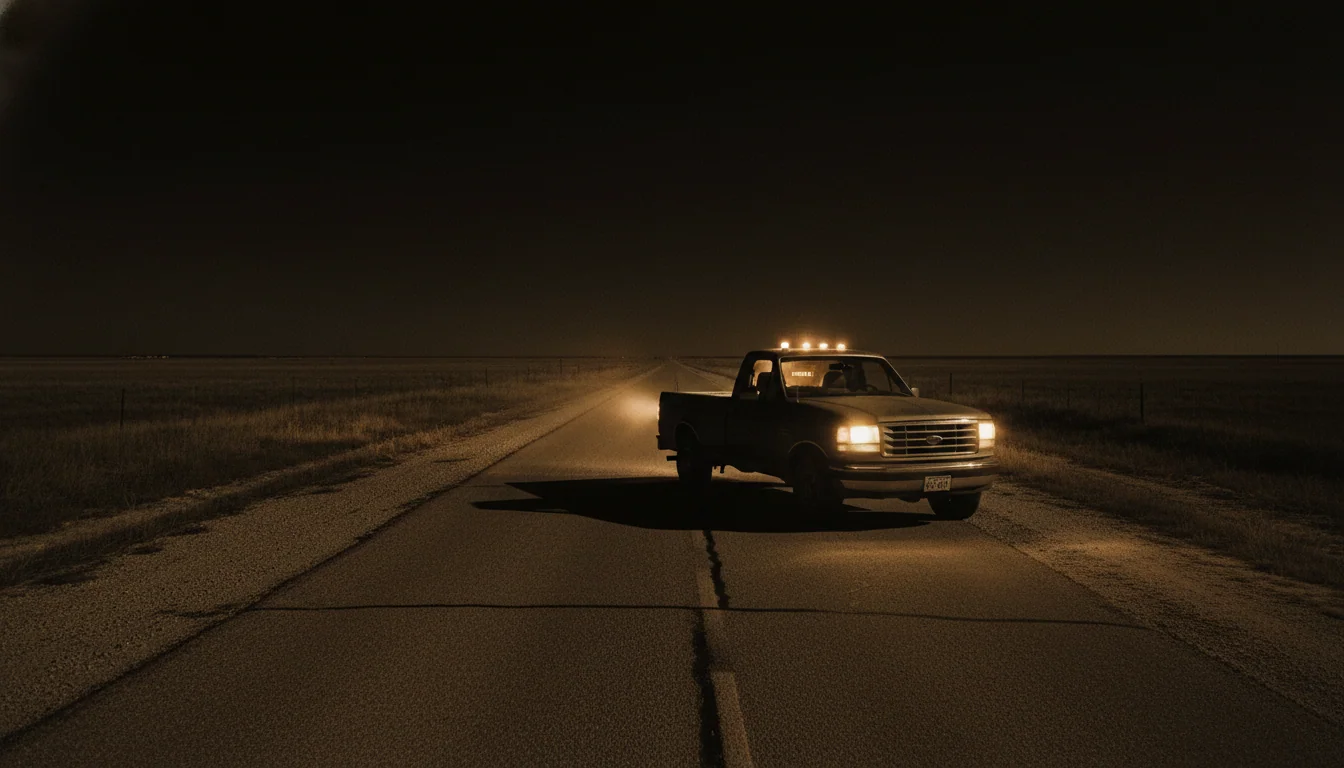
At 12:49 in the morning on August 9, 2013, a 911 dispatcher in Childress County, Texas, picked up a call. The man on the other end was hard to understand. He appeared distressed. He mentioned something about a field, possibly about someone needing help, possibly about a shooting, possibly about something else entirely. The call lasted under two minutes. Then he was gone.
The caller was Brandon Lawson, 26 years old, a pipe fitter from San Angelo, Texas. He has not been seen since.
A night that started with a fight
The hours before Brandon Lawson disappeared are documented in rough outline through phone records, family accounts, and police reports.
Brandon and his girlfriend, Ladessa Lofton, had an argument at their home in San Angelo on the evening of August 8, 2013. Shortly after midnight, Brandon left. He called his brother Kyle and said he was driving north to their family's place in Lubbock, a route that runs through US Highway 277 across sparsely populated Texas ranch country.
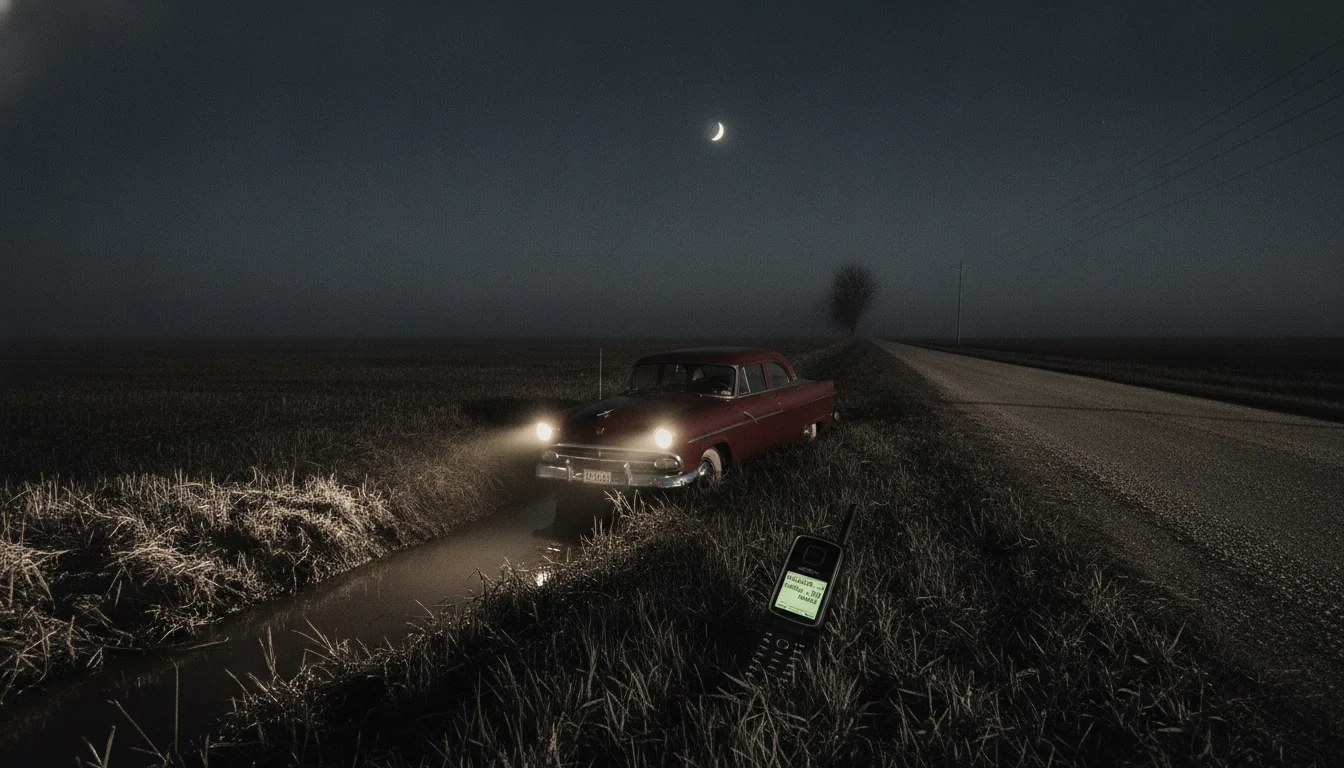
He did not make it far. Near the small community of Hazel Dell - a crossroads in Childress County with a grain elevator and not much else - Brandon's truck ran out of gas. He pulled over on the shoulder of the highway and called 911.
That call is what separates this case from hundreds of thousands of ordinary missing persons files.
The call
The recording is public. Anyone can find and listen to it. Millions of people have.
The problem is that no one can fully agree on what Brandon is saying.
The dispatcher struggled to understand him. She asked him to repeat himself. She asked where he was. He gave an approximate location but seemed to be moving, or at least turning, and his words blurred against what sounds like road noise and distress.
Some words surface in nearly every transcription: "hurry," "please," and "highway 277" appear consistently. The rest is disputed in ways that matter.
One common reading suggests he said something like: "We're not in Hazel Dell - I'm in the middle of a field. Please hurry. Come on. There's people all over here. I'm in Hazel Dell - the guy got shot, I was watching him." Another interpretation holds that he himself was shot or injured rather than describing an external event. A third reading hears a man who is simply lost in the dark, panicking, trying to explain a location he cannot clearly identify.
The dispatcher did not treat the call as an emergency involving a shooting. She asked him to confirm his location. The call ended.
At approximately the same time, or shortly after, Brandon also called his brother Kyle and asked him to bring gas. Kyle and his girlfriend drove toward Hazel Dell.
What Kyle found
Kyle Lawson arrived at the truck before the police did. The pickup was there on the shoulder, empty of fuel. Brandon was not.
Kyle searched the area in the dark. He called out. He found no one. When Childress County sheriff's deputies arrived, they swept the immediate vicinity and found no trace of Brandon.
His phone and other belongings were later described by family members as being at or near the scene, though the precise inventory of what was in the truck versus what Brandon had on him when he walked away is not fully established in public accounts.
No one came forward who saw him after the truck was parked on that shoulder. The highway at that hour carried very little traffic.
The search
The subsequent search covered fields, the Pease River tributary system nearby, ranchland, and drainage areas. Volunteers, family members, and law enforcement conducted multiple organized searches over the following weeks and months. None produced any sign of Brandon.
The landscape around Hazel Dell is flat, dry, and enormous. Cotton fields and mesquite grass stretch in every direction without obvious landmarks. If someone walked into that terrain at night and could not or did not call for help again, the distances involved are severe.
Search dogs were reportedly deployed. Aerial searches were conducted. The results were negative. Brandon's remains were not found in any of the areas covered.
What the family has said
Brandon's family kept the case alive through social media, press interviews, and ongoing contact with investigators. His brother Kyle, in particular, has been a persistent public presence.
The family raised questions about the original search - whether enough ground was covered quickly enough, whether the right areas were prioritized in the first hours. They have pointed to what they describe as inconsistencies in the official account and maintained that something in the 911 call points to an encounter with other people rather than a solo mechanical breakdown.
They have also addressed the obvious question about Brandon's background. He had prior felony convictions and was reportedly concerned about a probation matter at the time, which some observers have cited as a possible reason he might have walked away voluntarily rather than waited for help.
His family rejects this. They note that he called his brother and asked for gas, waited at the vehicle, and made a 911 call that conveyed urgency and fear. These are not the actions of a man choosing to disappear. They also note that Brandon had four children and was, by family accounts, devoted to them.
Why the 911 call keeps pulling people back
The case sits at the intersection of two things that hold attention: an unresolved disappearance and an audio recording that resists definitive interpretation.
The 911 call has been analyzed in threads on Reddit's r/UnresolvedMysteries, in YouTube breakdowns with millions of views, and in TikTok videos that keep the case reaching new audiences a decade after it happened. People run the audio through noise-reduction filters, slow it down, boost specific frequencies, and post their competing transcriptions.
The results conflict. Some hear a shooting. Some hear a man describing people nearby. Some hear nothing more sinister than a man lost in the dark, panicking, trying to make himself understood to a dispatcher who cannot hear him clearly.
The dispatcher's inability to extract actionable information from the call has itself become a point of analysis. Could more have been understood with different techniques? Would a different response to the call have changed what happened next?
There is no way to answer that now.
An uncomfortable category of case
The Brandon Lawson case fits a particular kind of unsolved disappearance: one where something clearly went wrong, where the evidence points to a genuine emergency, but where the emergency ended before anyone could reach it.
The truck was found. The family came. The police arrived. The person who called for help was already gone.
This pattern - the missing person who left a trace of distress but no trace of themselves - tends to produce one of two outcomes: a body found within some distance of the last known location, or a permanent mystery. In Brandon Lawson's case it is the latter.
The 911 call is also, in a specific sense, a problem rather than a clue. An audio recording that cannot be definitively decoded generates endless interpretation without resolution. Each analysis confirms the interpreter's preferred theory. The case remains genuinely open to multiple explanations precisely because the primary evidence refuses to close it.
Twelve years on
Texas law enforcement has handled this as a missing persons case throughout. No one has been named as a suspect. No remains have been recovered. The file is still open in Childress County.
A number of individuals have come forward over the years claiming to have information. None of it has led to anything verifiable. The case has attracted a dedicated community of independent researchers, several of whom have conducted their own field searches and documented their findings in detail online.
Brandon Lawson would be 38 years old in 2026. His four children are now teenagers and young adults who grew up without a father and without an answer.
The highway where his truck sat that August night runs straight and flat through ranch country that keeps what it holds. The 911 recording sits on servers that were not built when he made the call, played every day by people trying to hear past the static to something that resolves.
It has not resolved yet. Two other cases share the same structure - a clear sign of distress, a vanished person, and no physical resolution. Maura Murray's disappearance left a crashed car and an open file. Amelia Earhart's final transmission left a radio call and nothing else.
Quick Answers
Common questions about this topic
What happened to Brandon Lawson?
Brandon Lawson, 26, disappeared on August 9, 2013, after pulling his truck over on US Highway 277 near Hazel Dell, Texas. He made a frantic 911 call and called his brother and girlfriend for help, but by the time anyone arrived he was gone. His body has never been found and no one has been charged in connection with his disappearance.
What did Brandon Lawson say in the 911 call?
The call is heavily disputed. He appears to mention people in a field, a possible shooting or injury, and his approximate location, but the audio is difficult to decipher. The dispatcher could not understand him clearly. Multiple crowdsourced transcriptions exist and none are considered authoritative.
Was Brandon Lawson's truck found?
Yes. Brandon's pickup truck was found on the shoulder of US Highway 277 near Hazel Dell, Texas, empty of gas. His brother Kyle arrived at the scene before police and searched the area but could not find Brandon anywhere nearby.
Is the Brandon Lawson case still open?
Yes. The case remains open and unsolved as of 2026. No suspect has been named, no body has been recovered, and Lawson has not been found alive. Texas authorities continue to classify it as a missing persons investigation.

Want to Interrogate the Suspects?
Chat with historical figures and uncover the truth behind history's greatest mysteries.
Create your free account →No card required. Some figures and features require a paid plan.
Join the HistorIQly Club
Get smarter about the past.
Weekly stories, deep dives, and exclusive content straight to your inbox.